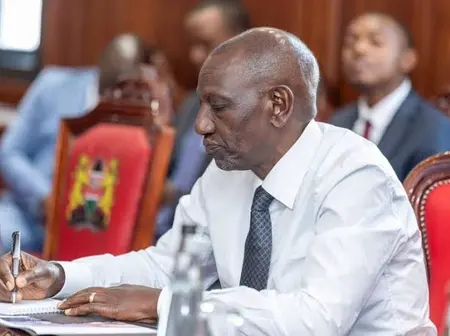
Speaking about the government's commitment to equality, Kindiki said ordinary Kenyans, including mama mboga and security guards, can now access State House, unlike in previous administrations when such groups were allegedly kept away from the presidential residence.
The Deputy President used the examples of small-scale traders and watchmen to illustrate what he described as President Ruto's approach to leadership, which he said places ordinary citizens at the centre of government.
Kindiki made the remarks while defending the administration's commitment to the principle of equality, popularly expressed through the phrase "Usawa ni Sawa."
He suggested that access to the country's highest office should not be determined by a person's financial position, occupation or social status. According to him, ordinary citizens deserve opportunities to engage with the country's leadership just like individuals from influential backgrounds.
His remarks also highlighted the administration's public messaging around inclusion and efforts to present State House as an institution that welcomes Kenyans from different social and economic backgrounds.
State House has traditionally been associated with high-level government meetings, diplomatic engagements and official presidential functions. However, public participation in selected events has also provided opportunities for ordinary citizens to interact with national leaders.
Kindiki's comments come amid continued government efforts to promote its development agenda and communicate its commitment to addressing the concerns of ordinary Kenyans.
The Deputy President's comparison between previous administrations and the current government places public access and social inclusion at the centre of the administration's message.
His statement has also drawn attention to the broader question of how effectively government institutions can remain accessible to citizens regardless of their economic status or position in society.
https://www.facebook.com/share/1CNo8yBXH4/
Leave a Reply