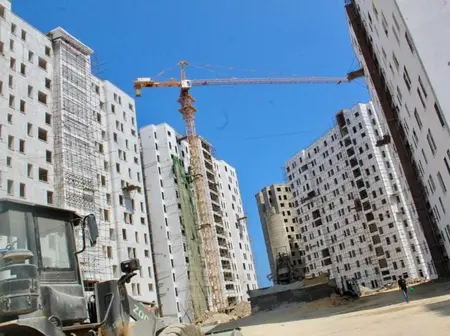
A government affordable housing project in Bofa, Kilifi County, is facing questions over its construction progress after Members of Parliament discovered that the development was only 23 per cent complete despite having consumed approximately 65 per cent of its scheduled construction period.
The National Assembly Special Funds Accounts Committee raised concerns over the slow pace of work during an inspection visit on Friday, November 27, 2026, with lawmakers questioning whether the contractor would meet the June 2027 handover deadline.
The four-block development began construction in December 2025 and is expected to deliver more than 300 housing units.
However, the progress figures presented to the committee showed that the project had completed less than a quarter of the planned work, raising concerns about the remaining construction period.
The committee, led by Mbooni MP Erastus Kivasu, was conducting inspections of Affordable Housing Programme projects following audit queries raised by the Office of the Auditor-General.
Kivasu said the visits were intended to establish whether the projects were progressing as planned and whether the quality of construction met the required standards.
“We oversight the Fund and many times the OAG raises some queries and so we must move around to inspect the kind of work going on and also its quality,” he said.
Briefing the lawmakers, Resident Engineer Valiant Komora attributed the slow progress to inadequate space at the construction site and difficulties securing reliable labour.
He told the committee that finding casual workers in the surrounding area had been a major challenge, with some workers reportedly leaving after receiving their wages and returning only when they needed more work.
“It is hard to find casual labour around here. We really struggle. The locals come work for a week, after you pay them they disappear until the wages get finished then they reappear again,” Komora said.
The explanation, however, did not satisfy some members of the committee, who questioned why the project was experiencing space constraints despite feasibility studies and site assessments having been conducted before construction began.
Kabondo Kasipul MP Eve Obara challenged the decision to construct four blocks if the available land could not comfortably accommodate the development and its supporting facilities.
“Why would you build four blocks if the space available only fits two blocks? Why not build what can be accommodated and ensure they have the right amenities,” she asked.
Obara also questioned the adequacy of the planned 78 parking spaces, considering that the development was expected to accommodate more than 300 housing units.
The concerns raised by the lawmakers extended beyond the construction delays to the planning and design of the project, particularly whether residents would have sufficient parking and other essential facilities once the homes were occupied.
Committee members expressed disappointment over the progress recorded, warning that the June 2027 completion deadline appeared increasingly difficult to achieve at the current pace.
The Bofa project inspection comes amid broader questions about the pace of implementation of President William Ruto’s Affordable Housing Programme.
The programme is anchored in the Affordable Housing Act, 2024, which established the legal framework for financing and implementing affordable housing projects and introduced the Affordable Housing Levy.
Under the law, employees and employers each contribute 1.5 per cent of an employee’s gross monthly salary towards the levy, while other income earners are also subject to a 1.5 per cent contribution under the prescribed provisions.
The programme has attracted significant public attention because of the scale of its funding and the government’s promise to expand access to decent and affordable homes.
However, figures contained in the Controller of Budget’s National Government Budget Implementation Review Report for the 2025/2026 financial year showed that the programme achieved 24.5 per cent completion against an annual target of 52 per cent for works covering 217,654 housing units.
The government spent approximately Ksh122.18 billion against a revised allocation of Ksh124 billion during the financial year, representing about 99 per cent budget absorption.
Despite the spending, only 1,836 affordable housing units were completed and handed over during the period, while another 1,380 were substantially complete but awaiting handover.
The report highlighted the difference between money spent and the actual pace of construction, with thousands of additional units still at various stages of implementation.
In another development, the Auditor-General raised questions over land documentation for affordable housing projects, with a November 2026 report indicating that 269 projects lacked land documents.
The findings prompted further parliamentary scrutiny of the programme’s administration and ownership arrangements.
Leave a Reply