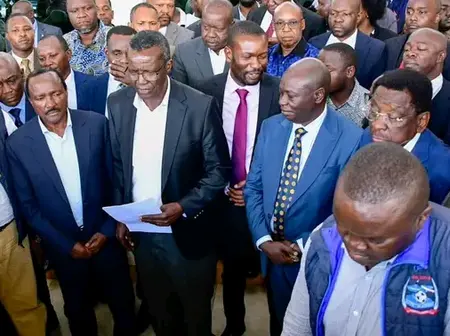
In a separate statement posted on his official X account on Thursday November 19 2026, Matiang'i emphasized that opposition leaders were seeking constructive engagement anchored in mutual respect and strict adherence to the rule of law. He noted that political stakeholders share a collective responsibility to protect the democratic will of the Kenyan people well before campaign season intensifies.
The afternoon session at the electoral agency followed an earlier strategy meeting held in Nairobi by opposition figures operating under the People's Coalition on Electoral Reforms. According to a report by People Daily on the same day, Matiang'i conferred with former Chief Justice David Maraga, Wiper leader Kalonzo Musyoka, Martha Karua, Rigathi Gachagua, Eugene Wamalwa, and Justin Muturi to harmonize their demands prior to facing the commission.
During those pre-meeting consultations, the coalition outlined four major structural changes they want implemented before Kenyans head to the ballot next year. Their proposals include a comprehensive audit and cleanup of the national voter register to remove deceased or duplicate entries, the abolition of the national presidential tallying center at the Bomas of Kenya, electronic voting for citizens living in the diaspora, and mandatory livestreaming of voting and vote counting at polling stations.
However, the consultative forum with the electoral commission quickly ran into turbulence once formal discussions began. According to a report by Eastleigh Voice on Thursday November 19 2026, several opposition leaders staged a walkout from the engagement after arguing that the commission's official agenda failed to prioritize their core electoral reform demands.
The walkout drew sharp reactions from other leaders present at the venue who urged the commission to stay focused on technical readiness. Kisii Governor Simba Arati criticized the exit as political theatrics and called on the electoral body to continue briefing stakeholders on its operational preparedness for upcoming polls.
For ordinary Kenyan voters, the push and pull between party leaders and the electoral referee carries direct consequences for national stability and trust in governance. Early consensus on how votes are cast, tallied, and transmitted helps prevent disputed outcomes and post-election tension that often disrupt daily livelihoods and economic activity.
Moving forward, the Independent Electoral and Boundaries Commission faces mounting pressure to establish a clear framework for technical dialogue that keeps both opposition and government-aligned parties at the negotiating table. How the commission responds to the reform proposals raised by Matiang'i and his coalition partners in the coming weeks will shape public confidence in the road to 2027.
Leave a Reply