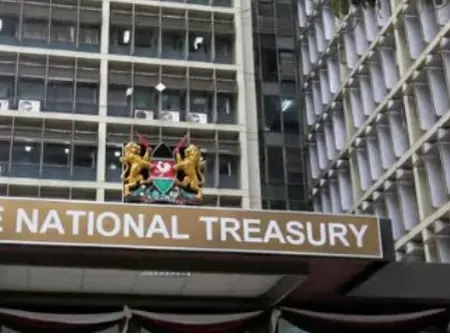
The proposed budget has attracted attention because of changes to domestic borrowing, external financing and the government's efforts to control public spending ahead of the August 2027 General Election.
According to the figures reported by The Star on November 18, 2026, Treasury reduced its proposed spending plan by approximately Sh181 billion to Sh5.236 trillion.
The adjustment signals an attempt to contain expenditure while reducing pressure on the domestic borrowing market. The government is also considering a greater role for external financing in meeting its financial obligations.
The 2027/28 financial year begins in July 2027 and runs through June 2028. Its budget is particularly significant because Kenya will hold its next General Election in August 2027, making timely budget preparation and approval an important government priority.
The proposed budget is intended to support the government's Bottom-Up Economic Transformation Agenda (BETA), which prioritises agriculture, small businesses, healthcare, affordable housing, infrastructure and the digital economy.
However, the government faces the challenge of balancing these development priorities against rising debt obligations, revenue collection targets and the cost of running public institutions.
The Treasury's October 2026 draft Budget Policy Statement had projected expenditure of Sh5.4155 trillion for 2027/28. It also estimated that the government would collect Sh4.0037 trillion in revenue, leaving a deficit of Sh1.3529 trillion, equivalent to 5.9% of the country's gross domestic product.
Under that earlier framework, the government planned to raise Sh929.1 billion through net domestic financing and Sh423.8 billion through net external financing. These figures demonstrate the scale of the financing challenge facing the Treasury.
The adjustment reported by The Star on November 18 therefore represents a change from the earlier expenditure proposal. The latest reported Sh5.236 trillion figure should not be confused with the October draft's Sh5.4155 trillion projection, as the two reflect different stages or versions of the budget process.
The government is also under pressure to manage public debt without sacrificing essential services. Treasury has repeatedly emphasised the need to improve revenue collection, control expenditure and prioritise projects that can deliver meaningful economic benefits.
Another important consideration is the amount allocated to development compared with recurrent expenditure, which covers expenses such as salaries, pensions, interest payments and the daily running of government institutions.
The budget preparation process has also been accelerated because of the August 2027 General Election. Parliament is expected to complete the key budget approval stages earlier than usual to ensure continuity in government operations during the election period.
The Parliamentary Budget Office has indicated that the 2027/28 Budget Policy Statement should be approved by mid-December 2026, while the Appropriations Bill and Finance Bill are expected to be approved by the end of March 2027.
Meanwhile, Kenyans still have an opportunity to influence how public funds are allocated and how the government plans to finance its expenditure.
On November 16, the National Assembly invited individuals, organisations and other stakeholders to submit memoranda on the 2027 Budget Policy Statement and the Medium-Term Debt Management Strategy covering the 2027/28 to 2029/30 financial years.
The deadline for submissions is Friday, November 20, 2026, at 5pm.
Members of the public can email their submissions to cna@parliament.go.ke or deliver written memoranda to the Office of the Clerk, First Floor, Main Parliament Buildings in Nairobi.
Ultimately, the proposed budget will determine how the government intends to distribute public resources, finance development projects and meet its financial obligations during a politically significant financial year.
Source
Leave a Reply