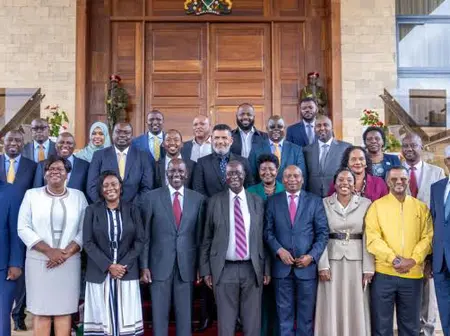
The decision followed an ODM Central Committee meeting chaired by party leader Oburu Oginga in Nairobi on November 25, 2026. National Assembly Minority Whip Junet Mohamed said the party wanted the joint team to identify policies and common interests that could provide the foundation for a possible coalition.
Importantly, the deadline does not mean that a final coalition agreement has already been signed. Instead, it gives the two political formations a timetable to establish whether their interests can support a common electoral platform.
Ruto's Government Faces a New Political Test
For President Ruto, the development could provide an opportunity to strengthen his political support ahead of 2027. However, it also introduces another challenge because ODM's participation in any electoral arrangement is likely to come with expectations about policy priorities, political representation and the distribution of responsibilities.
The government will therefore need to demonstrate that its partnership with ODM goes beyond political negotiations and can deliver measurable improvements in the lives of Kenyans.
Issues such as the cost of living, unemployment, taxation, healthcare and accountability could become important tests of whether the proposed partnership has a convincing national agenda.
ODM Could Be Negotiating From a Position of Strength
The January deadline also carries significance for ODM's internal political dynamics. By insisting on a written policy framework and formal party consultations, the party is creating an opportunity to define its interests before committing to an electoral arrangement.
This could strengthen Oburu Oginga's position in the negotiations while giving other ODM leaders an opportunity to push for policies and political arrangements that protect the party's influence.
At the same time, the development could complicate calculations within opposition circles. Any eventual ODM-UDA coalition could change existing political alliances and force rival leaders to reconsider their strategies for 2027.
What Ordinary Kenyans Stand to Gain
Beyond political positions, ordinary Kenyans will be watching whether the proposed partnership addresses the economic difficulties affecting households and businesses.
A meaningful manifesto should explain how the parties intend to create employment, improve public services, manage public finances and make essential goods more affordable.
Voters will also want clear commitments on accountability and the implementation of government promises rather than another collection of campaign statements.
The Law and the Road to 2027
The January 31 deadline is also important because a policy document alone does not automatically create a legally recognised electoral coalition.
Under Kenya's Political Parties Act, formal coalition arrangements must follow the prescribed procedures, including a written agreement and registration with the Registrar of Political Parties.
Consequently, the coming months will reveal whether ODM and UDA can translate their discussions into a formal electoral partnership that satisfies legal requirements and receives approval through their respective party structures.
Ultimately, the biggest question is whether this emerging political arrangement will produce better leadership and tangible economic benefits or primarily reshape the competition for power.
As Kenya approaches the 2027 elections, would an ODM-UDA coalition give Kenyans a stronger government, or should the two parties remain politically independent and compete separately?
Leave a Reply