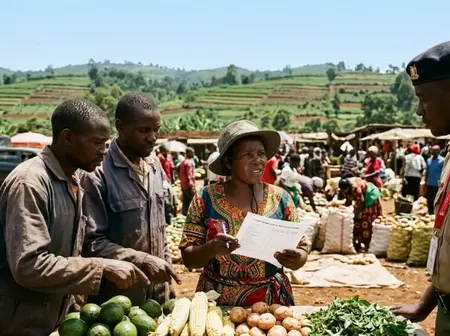
We cannot become an agricultural export powerhouse by making production expensive. It is time to rethink taxation, investment incentives and the cost of doing business.
Kenya has an opportunity to strengthen its agricultural sector, create jobs, attract foreign investment and grow exports. However, achieving these ambitions requires a business environment that makes farming, processing and exporting more competitive.
We want farmers to produce more, exporters to access international markets and investors to put money into agribusiness. Yet, along the value chain, taxes, levies, permits, handling charges and administrative costs can increase the cost of doing business and make our products less competitive.
It is therefore worth reconsidering our approach. Agriculture should be treated as a strategic economic sector that deserves meaningful tax incentives and an enabling business environment.
Consider neighbouring Tanzania. Its agricultural development offers lessons that Kenya could examine. According to Tanzania's 2024 Economic Survey, food crop production reached approximately 22.8 million tonnes, an 11.8 per cent increase from 2023. Its food self-sufficiency ratio stood at 128 per cent.
Tanzania has also positioned itself to attract agricultural investment through targeted incentives. Qualifying agricultural investors can benefit from capital expenditure allowances, preferential treatment for eligible agricultural inputs and investment facilitation, including access to suitable land through designated arrangements.
This approach recognises that agriculture is not simply about growing food. It is also about attracting capital, creating employment, developing rural economies and earning foreign exchange.
Kenya has made provisions for tax relief in agriculture, but there is room to examine how effectively these measures translate into lower operating costs for businesses.
Take VAT, for example. Agricultural exporters may benefit from zero-rating on exports and recover eligible input VAT. However, businesses must first purchase inputs, pay VAT, maintain compliance records, submit claims and wait for refunds.
This process can tie up funds that businesses would otherwise use to purchase produce from farmers, buy packaging materials, pay workers or finance subsequent shipments.
For an agricultural business operating on tight margins, cash flow is critical. It can determine whether a business expands production or struggles to finance its next order.
There is a case for reviewing whether qualifying agricultural inputs could be made tax-free at the point of purchase, rather than requiring businesses to pay VAT and seek refunds later.
There is a fundamental difference between declaring agriculture tax-exempt and making production genuinely tax-free. Refunds are not the same as exemptions. They involve paperwork, compliance costs, delays and working capital requirements. Reducing these burdens would help businesses direct more resources towards production and expansion.
The same principle could apply to agricultural levies and export-related charges. Kenya should review government-imposed fees associated with production, inspection, certification, packaging, storage and export clearance. Charges that do not provide a necessary and measurable service could be reconsidered, while those covering essential services should be rationalised to ensure that their costs remain reasonable.
The cost of exporting is another area that deserves attention if Kenya is to maintain its competitive position.
Consider the following indicative comparisons between the Kenyan and Tanzanian airport export corridors:
Airport terminal handling in Kenya is approximately $0.12–$0.18 per kilogram, compared with Tanzania's $0.03–$0.075.
Cold storage overstay in Kenya is approximately $0.10–$0.20 per kilogram per day, compared with Tanzania's $0.05 and above.
Government inspection and permits in Kenya are approximately $0.004–$0.005 per kilogram, compared with Tanzania's indicative flat consignment charges of $15–$50.
These figures are indicative and require verification against current airport tariffs, commodity categories and service providers. Nevertheless, they point to cost differences that warrant further investigation.
A few cents per kilogram may appear insignificant. However, when multiplied across hundreds of tonnes of vegetables, fruits or flowers, the difference becomes substantial.
International buyers consider price, quality and reliability when selecting suppliers. Kenya must therefore ensure that its regulatory and operational costs do not undermine the competitiveness of its agricultural exports.
There is another important consideration. Kenya and Tanzania share broadly similar tropical climates, agricultural conditions and access to many of the same regional and international markets. They grow similar crops and enjoy comparable agricultural opportunities.
Kenyan products are not inherently inferior to Tanzania's. Nor does Tanzania enjoy an exclusive tropical advantage that Kenya cannot replicate.
The difference increasingly lies in how the two countries manage investment, taxation, production costs and export logistics. When two countries produce comparable-quality products but one makes it cheaper to grow, package, store and export, the commercial advantage becomes evident.
Kenya has agricultural expertise, established export markets, experienced farmers, private-sector capacity and infrastructure to compete. Maintaining these advantages will require continued attention to taxation, investment facilitation and the overall cost of doing business.
There is also a wider economic opportunity that Kenya should consider. Agriculture is not merely about feeding the country. It is an important source of foreign exchange.
When exporters receive dollars, euros or pounds from international buyers, the money supports foreign currency inflows. It also creates demand for local labour, stimulates transport, packaging, processing and financial services, and generates income for thousands of farmers.
Kenya should therefore consider establishing an Agricultural Production and Export Investment Incentive Programme.
Investors willing to establish commercial farms, aggregation centres, packhouses, cold-storage facilities, processing plants and export infrastructure could receive preferential access to suitable government land through transparent, long-term lease arrangements.
The country could also consider a programme targeting foreign agricultural investors, under which qualifying export proceeds are channelled through the Kenyan banking system. This would improve foreign currency inflows, strengthen foreign exchange liquidity and support the country's reserves, while respecting legitimate profit repatriation rights and foreign exchange regulations.
Several practical interventions could help advance this agenda.
First, qualifying agricultural inputs should be considered for tax exemption at source. These could include seeds, fertilisers, irrigation equipment, crop protection products, packaging materials and cold-chain equipment. This would reduce the burden of upfront VAT financing.
Second, national and county governments should review agricultural levies imposed on production, movement, aggregation and exports. The review should identify duplication and charges that do not provide measurable services, with a view to eliminating or rationalising them.
Third, Kenya could introduce meaningful export incentives, including rebates, investment allowances and time-bound tax incentives for businesses that demonstrate increased export volumes, local sourcing, employment creation and foreign exchange earnings.
Fourth, the government and relevant service providers should explore ways of reducing airport and cargo costs. Competitive handling, inspection, storage and cold-chain tariffs would help agricultural exporters. Jomo Kenyatta International Airport should be positioned as an export advantage rather than an additional cost centre.
Fifth, suitable government land could be made available to commercial agribusiness investors through long-term leases. Such arrangements should target investors willing to commit capital, create jobs, develop irrigation and supply local and international markets.
Sixth, where VAT exemptions are not possible, the government should consider predictable refund timelines and automated processes. This would reduce the time businesses spend financing government operations while awaiting refunds.
Finally, incentives should support both local consumption and exports. Businesses investing in local food production, processing, storage and distribution also contribute to food security, employment and reduced dependence on imports.
These incentives should be tied to measurable performance. They should also include safeguards against land speculation, tax abuse and investors who acquire concessions without delivering production.
The argument is not that the government should abandon taxation. Rather, the economic returns from enabling agricultural businesses to produce and export more could be substantially greater than the revenue collected from taxing their inputs and operations.
Kenya has the potential to strengthen its position as a leading agricultural producer and exporter. Realising this potential will require policies that make investment, production and access to international markets more attractive.
The government and its relevant agencies have an important role to play. The Ministry of Agriculture, the National Treasury, the Kenya Revenue Authority, the Kenya Investment Authority, county governments and export facilitation agencies should examine these issues collectively.
Agricultural competitiveness cannot be achieved by the Ministry of Agriculture alone. It requires coordinated economic policy and collaboration between government and the private sector.
As Kenya seeks to attract more investment and expand its export markets, the cost of doing business must remain a central consideration. A competitive agricultural sector will require more than favourable climate conditions and productive farmers. It will also depend on a policy environment that allows businesses to grow, invest and compete effectively.
We cannot tax our way into becoming an agricultural export powerhouse. We must first make it worthwhile to produce.
Mulumi Mwangi is an entrepreneur, marketing consultant and business strategist.
Leave a Reply