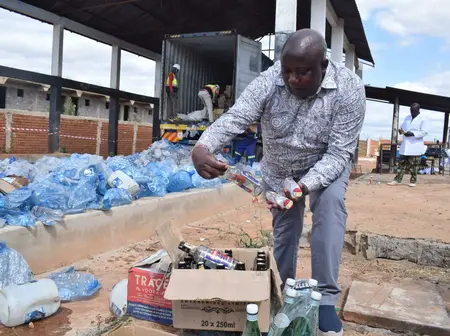
The growing circulation of these products has raised questions about the effectiveness of market surveillance, border controls and enforcement measures designed to protect consumers from dangerous merchandise.
According to the 2026 State of National Security report, enforcement agencies recorded a sharp increase in seizures of illegal products during the period under review, pointing to the scale of the challenge facing the country.
Between September 2025 and August 2026, authorities intercepted 132,156 packs of contraband cigarettes, compared with just 9,707 packs recorded in the previous reporting period. The figures represent a 1,261 per cent increase.
Cigarettes were not the only products targeted during the operations. Officials also seized 75,948 alcoholic products, 94,012 polythene items, 37,270 quantities of ethanol, 478 bags of fertiliser and 11,400 packets of milk.
The crackdown additionally recovered 2,333 counterfeit United States dollar notes, highlighting how illicit activities extend beyond ordinary consumer merchandise.
However, the report paints a complicated picture of the illegal trade, identifying enforcement weaknesses, sophisticated counterfeiting techniques and online marketplaces as channels that make it difficult to track and intercept suspicious products.
It also raises concerns about possible cooperation between corrupt public officials and illegal traders, suggesting that such relationships could undermine efforts to dismantle established distribution networks.
Interestingly, seizures of contraband sugar declined by 77 per cent during the reporting period, indicating that different categories of illicit merchandise are experiencing varying enforcement trends.
Beyond the economic consequences, counterfeit products present serious dangers to households. Fake medicines can expose patients to ineffective or harmful ingredients, while unregulated cosmetics may contain substances capable of damaging the skin. Illicit alcoholic drinks also pose potentially severe health risks.
The government has outlined measures including stronger border surveillance, coordinated security operations, prosecutions and improved product authentication to tackle the problem.
Consumers have also been encouraged to remain vigilant when purchasing goods, particularly through unfamiliar online sellers.
The latest findings underline the importance of stronger regulation and accountability in protecting Kenyans from illegal products.
Source:https://x.com/Eastleighvoice/status/2126623943595311439?a=Z5qpz3DCeNbEBRkYneg&s=20
Leave a Reply