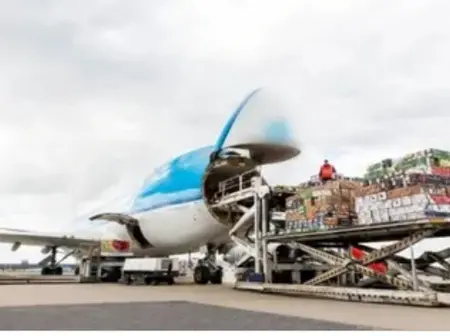
The proposed charges would replace the existing flat fee of KSh250 imposed on every Air Waybill (AWB), regardless of the weight of the shipment.
Under the new structure, businesses would pay dollar-based fees calculated according to the weight of their cargo, with different rates applying to different weight categories.
According to KAA's proposed Commercial Charges Order 2026, consignments weighing up to 500 kilogrammes would attract a minimum charge of USD8, equivalent to approximately KSh1,040.
For shipments weighing between 501 and 1,000 kilogrammes, an additional USD0.05 (approximately KSh6.50) would apply per kilogramme.
Cargo exceeding 1,000 kilogrammes would attract an additional USD0.01 (approximately KSh1.30) per kilogramme.
The proposed changes would significantly alter how cargo handling-related charges are calculated, particularly for businesses importing or exporting large quantities of goods.
For example, a consignment weighing 600 kilogrammes would attract a charge of USD13, approximately KSh1,691.
A shipment weighing 1,500 kilogrammes would cost USD38 (approximately KSh4,942), while a 5,000-kilogramme consignment would attract USD73, equivalent to about KSh9,494.
Businesses transporting even heavier goods would also face higher charges under the proposed arrangement.
A shipment weighing 10,000 kilogrammes, for instance, would attract USD123, approximately KSh15,996.
Under the existing system, businesses pay a flat KSh250 per Air Waybill, meaning the amount does not change depending on whether a shipment weighs a few kilogrammes or several tonnes.
The proposed weight-based arrangement would therefore introduce a substantial difference in the charges paid by businesses handling heavier consignments.
The changes would affect both imported and exported goods, meaning companies bringing merchandise into Kenya and those shipping locally produced products to international markets would be covered.
KAA intends to apply the proposed rates across five airports: Jomo Kenyatta International Airport (JKIA), Moi International Airport, Wilson Airport, Kisumu International Airport and Eldoret International Airport.
The proposal could have implications for businesses dealing in agricultural produce, manufactured goods and other products transported through air cargo services.
Kenyan exporters, particularly those moving large consignments of fresh produce to international markets, could also have to factor the additional charges into their transportation and operating budgets.
Meanwhile, the proposed cargo charges come amid other planned changes to airport fees.
KAA is also seeking to increase access charges for ride-hailing vehicles and parking fees at airports across the country.
However, the cargo charges are still proposals contained in the Commercial Charges Order 2026 and should not be treated as already implemented.
Source
Leave a Reply