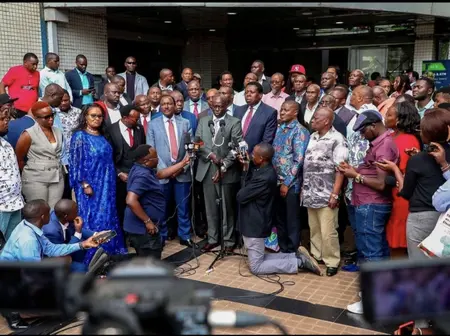
A meeting that was expected to address the future of Kenya's electoral process took an unexpected turn on Thursday, November 19, 2026, after several opposition leaders walked out of a consultative meeting with the Independent Electoral and Boundaries Commission (IEBC).
The dramatic exit brought together some of the country's most prominent political figures, including former Deputy President Rigathi Gachagua, Wiper Party leader Kalonzo Musyoka, Nairobi Senator Edwin Sifuna and former Chief Justice David Maraga.
Other leaders who left included Babu Owino, James Orengo, Justin Muturi and Cleophas Malala.
The disagreement exposed the deep divisions surrounding preparations for the August 2027 General Election, particularly over whether the electoral commission is adequately prepared to deliver a transparent and credible election.
The opposition leaders reportedly expressed dissatisfaction with the agenda presented by the commission, arguing that it failed to address fundamental electoral reforms they had been pushing for.
The atmosphere became tense during the proceedings as different political camps sought to make their submissions.
One of the visible flashpoints came when IEBC Commissioner Alutalala Mukhwana invited representatives of the ruling coalition to make their remarks.
The opposition leaders subsequently walked out, turning what was intended to be a consultative engagement into a political spectacle.
IEBC Chairperson Erastus Ethekon expressed disappointment over the decision, saying the meeting provided an important opportunity for political parties and citizens to raise concerns and seek clarification.
Before attending the IEBC meeting, opposition leaders had agreed on four major proposals they want addressed before the next General Election.
First, they want a comprehensive cleanup of the voters' register to eliminate duplicate entries, deceased voters and ineligible names while ensuring that all qualified Kenyans are registered.
Second, they are proposing changes to the presidential results-tallying arrangement at Bomas of Kenya. They want results declared at constituency tallying centres to be final, with the national centre serving mainly to receive, aggregate and announce the results.
Third, they want electronic voting explored for Kenyans living abroad to make participation in elections easier for the diaspora community.
Finally, they are demanding livestreaming of voting, counting and the announcement of results at polling stations and tallying centres to strengthen transparency.
These proposals are being presented by the opposition as important safeguards for the credibility of the next election.
With the 2027 General Election approaching, Thursday's confrontation raises an important question: Can the electoral commission build confidence among political competitors before Kenyans head to the ballot?
For many voters, the credibility of an election is not determined only on polling day. It also depends on the preparation, transparency and safeguards established long before voting begins.
The walkout may have ended the day's engagement for the opposition leaders, but the issues they raised are unlikely to disappear.
Ultimately, Kenyans will want more than political assurances. They will want an electoral process in which every eligible voter can participate and every vote is accurately counted.
As political temperatures begin rising ahead of 2027, IEBC faces the difficult task of demonstrating that it can earn the confidence of all sides.
Leave a Reply