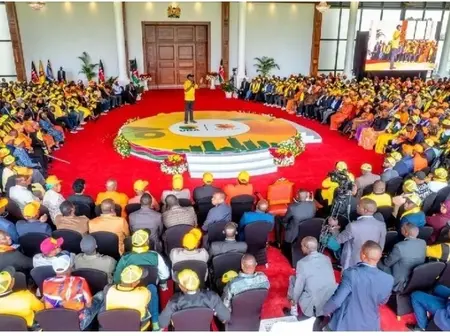
Kenya's biggest political parties, including President William Ruto's UDA, the Orange Democratic Movement (ODM) and Rigathi Gachagua's Democracy for the Citizens Party (DCP), are among 94 parties at risk of being locked out of the 2027 General Election.
The Independent Electoral and Boundaries Commission (IEBC) has revealed that only 11 out of 105 fully registered political parties passed the first review of their nomination rules. The other 94 were directed to amend their rules or risk being barred from fielding candidates in the August 10, 2027 polls.
In a statement issued on Friday, 20th November 2026, IEBC Chairperson Erastus Edung Ethekon said the commission had completed the first assessment of certified nomination rules submitted by parties by the 6th November deadline. He said each affected party had been informed of the specific areas that need correction.
The commission assessed eight areas, including the structure and mandate of party election boards, procedures for identifying and nominating aspirants, eligibility requirements, how primaries will be conducted, nomination of party lists, mechanisms to ensure legal compliance, provisions on the Electoral Code of Conduct, and internal dispute resolution.
Among the parties flagged are UDA, ODM, DCP, Azimio la Umoja One Kenya Coalition Party, KANU, Maendeleo Chap Chap, Democratic Party of Kenya, Third Way Alliance, Roots Party of Kenya, People's Liberation Party, and the Equitable Party, which is now operating as the Linda Mwananchi Movement. Also on the list is former Chief Justice David Maraga's United Green Movement.
The 11 parties that passed the first review are Wiper Patriotic Front, Jubilee Party, Safina Party, The Mwananchi Party associated with Embakasi East MP Babu Owino, Kenya Moja Movement Party, Liberal Democratic Party, Grand Dream Development Party, Democratic National Alliance Party, Chama ya Mapatano of Kenya, Vision for Development Alliance and Forward Kenya Party.
The IEBC has now given the 94 affected parties until 7th December 2026 to correct their rules and resubmit them for approval. The commission has also set other key dates in the electoral calendar, including 9th December as the deadline for public fundraising by candidates and 10th February as the deadline for public officers seeking elective seats to resign.
However, the commission has clarified that failing the first review does not automatically mean a party is excluded from the election. Ethekon said the process is meant to give parties an opportunity to align their rules with the law while maintaining the integrity of nominations and adherence to timelines.
The findings have put major parties under pressure at a time when they are already struggling with internal disputes over nominations. ODM, DCP and UDA have all faced complaints from aspirants who fear favouritism and bungled primaries.
The IEBC says nomination rules must guarantee transparent, fair and inclusive processes that allow meaningful participation by women, youth, persons with disabilities and other special interest groups.
Political parties will now be racing against time to fix their rules before the December deadline, failure to which they could be locked out of the 2027 polls.
Leave a Reply