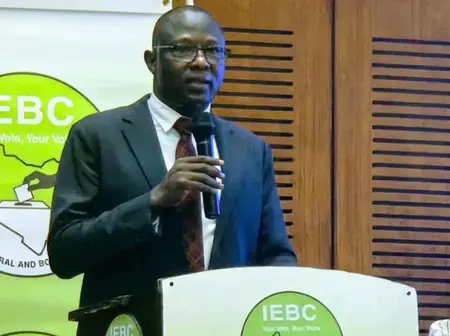
IEBC Chairperson Erastus Ethekon says providing live video coverage at approximately 50,000 polling stations would significantly increase the cost of conducting the elections, despite growing demands for greater transparency.
Speaking during a breakfast meeting with political journalists in Nairobi on Tuesday, November 24, Ethekon acknowledged that nationwide livestreaming was possible but questioned whether the commission could afford the financial and logistical requirements.
He noted that the proposal would require the IEBC to purchase thousands of cameras, install broadcasting equipment and recruit, train and deploy technical personnel to operate the system across the country.
The commission would also need sufficient time to procure the equipment and establish the necessary infrastructure before Kenyans head to the ballot in August next year.
"We need to interrogate some proposals. Already there are complaints that elections in Kenya are expensive," Ethekon said.
His remarks come amid growing debate over election transparency following Parliament's approval of amendments removing the express legal requirement for the IEBC to livestream the announcement of results at polling stations.
The proposed changes have attracted attention from political stakeholders and members of the public who consider live broadcasts an important safeguard against possible interference with election results.
For many Kenyans, livestreaming would allow citizens to independently follow the counting and announcement of results from different parts of the country without relying entirely on information released through official channels.
However, Ethekon maintained that journalists, political party agents and accredited election observers would still have access to polling stations to monitor voting, counting and the declaration of results.
He said the commission was already engaging media organisations through a joint working group to coordinate journalists' presence across the country during the elections.
"With the media centre working group, journalists across the country will be present in polling stations," he stated.
The IEBC chairperson also assured journalists that they would be allowed into constituency tallying centres, where they would witness the verification and announcement of results.
On the handling of election results, Ethekon maintained that results declared at individual polling stations would remain final, with subsequent tallying involving verification and administrative procedures.
The debate over livestreaming comes at a time when the electoral commission is also facing significant financial demands as it prepares for the 2027 General Election.
Among its key priorities are replacing the Kenya Integrated Election Management System (KIEMS) kits, conducting voter registration and financing other essential election operations.
These activities will require substantial funding, placing additional pressure on the commission as it balances demands for transparency with the need to manage public resources.
Kenya is scheduled to hold its next General Election on August 10, 2027.
The central question now is how the IEBC will guarantee transparency and public access to election information without introducing the additional costs associated with livestreaming all polling stations.
Source
Leave a Reply