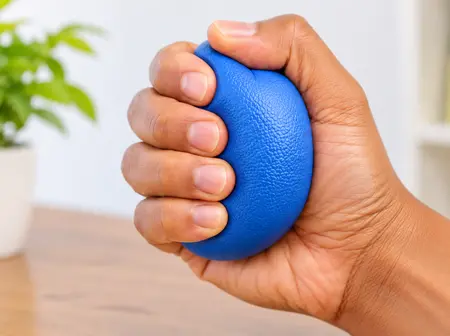
Although brisk walking and cycling are widely recognized for protecting heart health, simple handgrip exercises can also help bring down elevated blood pressure. A 2023 systematic review and meta-analysis led by Canterbury Christ Church University and published in the British Journal of Sports Medicine found that isometric exercises rank among the most effective daily routines for lowering resting blood pressure. Using a rolled kitchen towel or a soft stress ball, you can perform this two-minute isometric exercise right at home.
According to the Kenya National Guidelines for the Management of Cardiovascular Diseases, published by the Kenya Ministry of Health and the Kenya Cardiac Society, regular physical activity is a vital part of preventing and controlling hypertension. While a single two-minute session will not drop your blood pressure overnight, practicing a brief handgrip routine a few times each week helps keep your numbers within a healthy range over time.
How Handgrip Exercises Help Your Arteries
Squeezing an object with your fingers while keeping your wrist and elbow still is known as an isometric handgrip exercise. As the muscles in your forearm contract and stay tense, they gently press against the surrounding blood vessels in your arm. Once you release your grip, fresh blood flows back through those vessels, prompting the inner lining of your arteries to release nitric oxide.
Heart specialists at the American Heart Association and Memorial Health University Medical Center explain that nitric oxide signals blood vessels to relax and widen. Repeating this cycle over several weeks reduces resistance inside your arteries, helping lower both your top and bottom blood pressure readings. Clinical research indexed in the National Library of Medicine (PubMed Central) also shows that squeezing a simple foam stress ball provides heart benefits comparable to using specialized clinical gripping devices.
How to Do a 2-Minute Handgrip Routine
To protect your hands and see steady improvements, follow the four-step routine below, modeled on clinical protocols tested by the American Heart Association and the British Journal of Sports Medicine.
1. Choose an Object to Squeeze
Pick up a folded hand towel, a soft foam ball, or a new tennis ball. Squeeze the object gently with moderate effort, aiming to use around one-third of your maximum grip strength. Exercise researchers at the University of South Florida advise against squeezing as hard as you can, since excessive straining can temporarily push your blood pressure upward.
2. Squeeze for Two Minutes
Sit upright in a supportive chair with both feet flat on the floor and your elbow bent at a right angle. Maintain a gentle, continuous squeeze with one hand for two full minutes.
3. Release and Switch Hands
Open your hand completely and take a one-to-two-minute rest. Move the towel or ball to your other hand and hold a gentle squeeze for another two minutes. Repeat this cycle until you complete two squeezes per hand, giving you a total of four rounds.
4. Repeat Three Times per Week
According to findings published in the Journal of the American Heart Association, performing this short routine three times per week for four to eight weeks produces reliable reductions in resting blood pressure.
Safety Tips Before You Start
Isometric hand exercises are gentle enough for most adults, provided you follow these safety guidelines from the Kenya Ministry of Health, the World Health Organization (WHO), and the American Heart Association.
1. Breathe Steadily
Take slow, even breaths throughout every two-minute squeeze. Holding your breath while tensing your arm muscles can trigger sudden pressure spikes in your chest and blood vessels.
2. Check Your Blood Pressure Readings First
Guidance from the Kenya National Guidelines for the Management of Cardiovascular Diseases warns that anyone with severely elevated readings of 180/110 mmHg or above, or anyone experiencing chest pain, should avoid unsupervised exercise until evaluated by a clinician.
3. Continue Your Prescribed Treatment
Handgrip exercises work alongside your prescribed hypertension medication, reduced salt intake, and regular walking. As noted by the American College of Cardiology, you should never stop or change your blood pressure medication without speaking to your healthcare provider first.
Notice: The details shared above are provided for general educational awareness and should not be used as personal medical advice. Always consult your doctor or a qualified healthcare provider before starting any new physical activity, especially if you are managing high blood pressure or a heart condition.
Leave a Reply