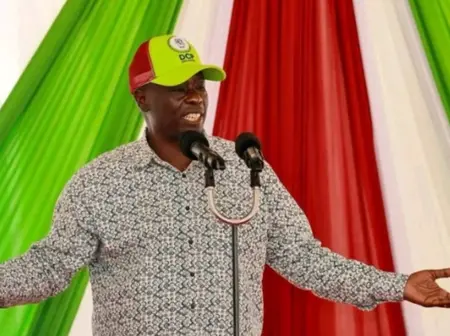
Speaking in Narok County on Saturday, November 21, 2026, Gachagua argued that the government should consider the cultural practices and economic activities of pastoralist communities before implementing housing projects in their areas.
The Democracy for the Citizens Party (DCP) leader specifically questioned whether members of the Maasai community would be comfortable abandoning their traditional homesteads to occupy apartments several floors above the ground.
He wondered how residents would continue looking after their cattle and goats if they were moved into multi-storey buildings.
“Now, if they live on the upper floors, who will look after the cows? Who will take care of the goats? Is there a Maasai who would agree to live on the 20th floor?” Gachagua posed.
He further suggested that the proposed housing model might not reflect the realities of communities whose daily lives revolve around livestock and open grazing spaces.
Gachagua also questioned why the government would assume that Maasai residents were dissatisfied with their traditional homes, arguing that even a manyatta could provide a sense of ownership and belonging.
During the same address, the former Deputy President raised concerns over reported evictions in Olkuto, accusing the government of removing members of the Maasai community from their homes without providing adequate compensation.
He claimed that affected families had been left struggling after losing their homes and questioned the fairness of the government's handling of the matter.
His remarks come amid growing political disagreements over the implementation of the affordable housing programme, with opposition leaders questioning whether the initiative adequately addresses the needs of different communities.
President William Ruto has, however, maintained that the housing programme is intended to address more than the shortage of decent homes.
Speaking during his recent engagements in the country, the Head of State explained that the initiative also creates employment and provides income-generating opportunities for thousands of Kenyans, particularly young people.
Ruto argued that construction activities create jobs for workers, allowing them to earn money, support their families and improve their living standards.
He has repeatedly defended the programme against criticism, maintaining that it offers a broader economic benefit beyond providing affordable homes.
The latest remarks by Gachagua add to the ongoing political debate surrounding the housing initiative as leaders begin positioning themselves ahead of the 2027 General Election.
https://www.facebook.com/100063646850476/posts/1757508443047367/?app=fbl
Leave a Reply