The government has confirmed that the migration of copyright royalty collection and distribution to the E-Citizen digital platform has been fully implemented, marking a significant milestone in the country's efforts to reform the creative industry.
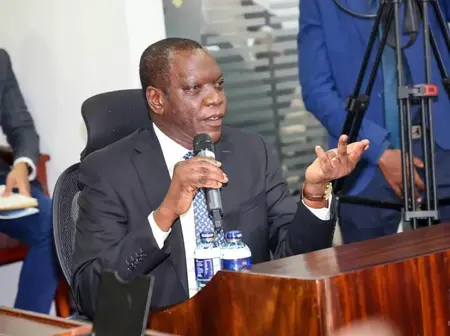
Director General of the Directorate of E-Citizen, Amb Isaac Ochieng, announced this while appearing before the Parliamentary Committee on Sports and Culture, where he outlined the progress made in implementing the presidential directive on digital royalty administration.
Ochieng told the committee that royalties collected through the platform are transferred from the National Treasury to licensed Collective Management Organisations (CMOs) twice a week, providing a more structured and predictable mechanism for remitting collections to the organisations responsible for distributing payments to copyright holders.
The parliamentary engagement, chaired by Committee Chairman Dan Wanyama, brought together representatives of the Directorate of E-Citizen, the Kenya Copyright Board (KECOBO) and the Performing and Audio-Visual Rights Society of Kenya (PAVRISK).
During the meeting, PAVRISK was represented by its Chief Executive Officer, Joseph Njagih, while KECOBO was represented by its Acting Executive Director, Mr George Nyakweba, alongside other officials from the respective institutions.
Notably, PAVRISK was identified during the engagement as the only CMO that has fully implemented the Government's directive to migrate royalty collection to the E-Citizen platform.
The development places PAVRISK at the forefront of the government's digital transformation agenda in copyright administration.
It also reinforces its position as a key institution in the protection and commercialisation of intellectual property rights in the country.
The committee sought clarification on compliance with the 70:30 royalty disbursement framework, which provides for at least 70 per cent of royalties collected to go directly to copyright owners, while the remaining 30 per cent caters for the administrative costs of the collecting organisation.
The committee was informed that under the guidance of the sector regulator, KECOBO, the royalties collected get transferred from the National Treasury to the CMOs and are held in two separate accounts: the Royalties Account (70 per cent) and the CMO Administration Account (30 per cent).
“It is the responsibility of the regulator, KECOBO, to ensure that the 70 per cent is disbursed to artists/copyright owners,” Amb Ochieng’ said.
Ochieng said upon distribution of royalties, the CMO is expected to upload the distribution logs on eCitizen to enable every artist to view total royalties collected, as well as their individual royalty earnings, thereby creating transparency and accountability.
PAVRISK's full implementation of the E-Citizen directive marks a notable development for Kenya's creative economy.
For businesses and other users of copyrighted works, the system offers a centralised digital channel through which they can obtain and pay for the requisite Unified Copyright Licences (UCL).
With the migration to E-Citizen fully implemented, businesses and establishments that commercially use copyrighted music and audio-visual content are required to obtain the requisite licences https://pavrisk.or.ke/ecitizen
Leave a Reply