As Kenya grapples with worsening traffic congestion, air pollution and rising pressure on its road network, China’s widespread adoption of bicycles and electric two-wheelers offers a glimpse of how cities can make transport more efficient while reducing reliance on private vehicles.
In Beijing, China’s capital and one of the world’s busiest urban centres, bicycles and electric bikes are an integral part of everyday life, providing millions of residents with an alternative to cars, taxis and other motorised transport.
Unlike in Kenya, where cycling is largely associated with leisure, sporting activities or movement within low-income neighbourhoods, Beijing has developed a culture in which bicycles are a practical and widely accepted means of getting to work, shopping and moving between different parts of the city.
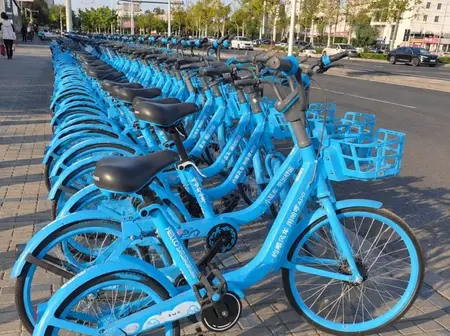
A stroll through the Chinese capital reveals dedicated cycling lanes running alongside major roads, designated parking areas and thousands of shared bicycles readily available for public use.
The system is largely supported by technology, with private companies operating bike-sharing services that allow residents and visitors to rent bicycles using their smartphones.
To access a bicycle, users simply scan a QR code attached to it, pay a small fee and ride to their destination. Short trips can cost as little as one Yuan (about Ksh20), while a full day’s rental can go for approximately 10 Yuan (about Ksh200).
Once the journey is complete, users can leave the bicycle at designated parking areas, allowing another person to pick it up and continue using it.
The bicycles are fitted with GPS technology, making it easier for operators and users to locate them through mobile applications.
The convenience of the system is complemented by infrastructure designed to accommodate cyclists. Dedicated lanes allow bicycles and electric two-wheelers to move without competing directly with cars, while clearly marked parking spaces help keep pavements and roads organised.
Security and discipline have also contributed to the popularity of the system, with residents able to use shared bicycles without the constant fear of theft or vandalism.
Li Zhang, a Beijing resident, told People Daily that cycling has become part of everyday life because of the convenience and accessibility of the bicycles.
“Travelling around the city is easy because the e-bikes and scooters are readily available and almost everyone has adopted the culture of cycling,” she said.
Although she owns a high-end electric car, Zhang said she rarely uses it for her daily commute, preferring two-wheelers for most short journeys. She only relies on her vehicle when travelling to purchase groceries.
Residents attribute the widespread availability of bicycles and electric motorbikes partly to China’s strong manufacturing base, which has made two-wheelers more accessible to the population.
For journalist Laura Otieno, who recently spent two weeks in Beijing, the most striking aspect of China’s transport system was not just the availability of bicycles but the discipline demonstrated by different categories of road users.
She was particularly impressed by the widespread use of shared bicycles and tricycles, which residents hire through QR codes, ride to their destinations and leave at designated locations for other users.
The system allows people to access affordable transport for short distances without having to own a bicycle or worry about where to store it.
“It’s a rental. So you scan, you ride it, and then you leave it at the next place, wherever you want to leave it,” she said.
Otieno observed that cycling was embraced across different age groups, including elderly residents, while motorists generally demonstrated patience towards cyclists, particularly at intersections.
She said road users largely respected traffic lights and other regulations, allowing pedestrians, cyclists and motorists to share the road with fewer confrontations.
The experience challenged the perception in Kenya that bicycles and cyclists are a source of traffic disorder, arguing that different transport modes can coexist efficiently when infrastructure and discipline are prioritised.
Beyond mobility, Otieno noted that cycling and walking appeared deeply embedded in the Chinese lifestyle, with physical activity forming part of everyday routines.
She was particularly struck by the physical activity of elderly residents, many of whom walked considerable distances and remained active without relying on walking aids.
She urged Kenya to invest in cycling infrastructure, promote bicycle use in schools and make bicycles more accessible to ordinary citizens instead of treating them primarily as sporting equipment.
Otieno also called for greater investment in physical education and extracurricular activities, saying the Competency-Based Curriculum provides an opportunity to nurture a culture of physical activity among learners.
“A country that cycles, in my opinion, is a country that stays youthful. No matter the age of whoever is in that country, everybody ends up being youthful,” she said.
Other Beijing residents who spoke to People Daily described cycling as an ordinary part of their daily routines, comparable to walking, while acknowledging its contribution to environmental conservation.
Wang, a resident of Beichen District in Beijing, said shared bicycles had made movement around the city easier and more convenient.
“We are enjoying the model of shared bikes where we just rent the bikes and are able to travel with ease from one point to another,” Wang said.
For Kenya, the lessons from Beijing come at a time when pressure is mounting to rethink how cities are designed and how people move around them.
Nairobi and other urban centres continue to grapple with traffic congestion, air pollution and road safety concerns, with pedestrians and cyclists often competing for limited road space with motor vehicles.
The country has been exploring ways of strengthening non-motorised transport, with legislation emerging as part of efforts to create safer and more accessible roads.
In August, the National Assembly passed the Kenya Roads (Amendment) Bill, 2024, sponsored by legislator Naisula Lesuuda, which seeks to strengthen provisions for dedicated infrastructure for cyclists, pedestrians and other non-motorised transport users.
The proposed changes could provide an important framework for expanding cycling and pedestrian facilities, particularly in urban areas where road space is increasingly under pressure.
However, Beijing’s experience demonstrates that legislation alone may not be sufficient.
A successful cycling system requires properly designed and connected lanes, secure parking facilities, affordable bicycles, public awareness and enforcement of traffic regulations.
Kenya could also explore partnerships with private companies to introduce shared bicycle schemes in major towns, allowing commuters to rent bicycles through mobile applications and return them at designated points.
Such a model could provide an affordable option for people travelling short distances, particularly between residential areas, workplaces, public transport terminals and commercial centres.
The integration of cycling with other forms of public transport would also be critical. Beijing’s experience shows how bicycles can complement a wider transport network that includes electric trains, buses and other forms of mobility.
China’s embrace of technology extends beyond transport, with automation increasingly becoming part of everyday experiences in hotels, shopping centres and other public spaces.
In the hospitality industry, hotels are deploying delivery robots to handle routine guest requests, including room service, food orders and other items.
The machines are designed to navigate hotel corridors independently, identify room numbers and deliver items directly to guests.
After hotel staff load an order into the robot, it can navigate the building, operate lifts and locate the designated room without requiring an employee to accompany it.
Guests are then notified when the delivery arrives, reducing the need for hotel workers to make repeated trips between reception areas, restaurants and guest rooms.
Shopping malls have also embraced automated power bank rental stations, providing visitors with an alternative when their mobile phones run out of charge.
Users can scan QR codes to rent portable chargers and return them to designated stations after use.
The service is particularly useful for travellers who depend on smartphones for digital maps, translation applications, communication and mobile payments.
Together, these innovations offer a glimpse into how China is integrating technology, infrastructure and innovation into everyday urban life.
For Kenya, the bigger lesson is that building efficient and environmentally sustainable cities requires more than expanding roads and increasing the number of vehicles.
It also means rethinking urban mobility, investing in people-friendly infrastructure and creating an environment where walking, cycling and public transport become convenient and attractive choices.
Leave a Reply