Category: Society

  • China’s cycling culture offers Kenya lessons on easing traffic congestion

    China’s cycling culture offers Kenya lessons on easing traffic congestion

    China’s cycling culture offers Kenya lessons on easing traffic congestion

    As Kenya grapples with worsening traffic congestion, air pollution and rising pressure on its road network, China’s widespread adoption of bicycles and electric two-wheelers offers a glimpse of how cities can make transport more efficient while reducing reliance on private vehicles.

    In Beijing, China’s capital and one of the world’s busiest urban centres, bicycles and electric bikes are an integral part of everyday life, providing millions of residents with an alternative to cars, taxis and other motorised transport.

    Unlike in Kenya, where cycling is largely associated with leisure, sporting activities or movement within low-income neighbourhoods, Beijing has developed a culture in which bicycles are a practical and widely accepted means of getting to work, shopping and moving between different parts of the city.

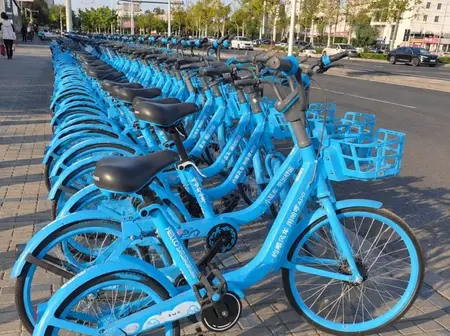
    A stroll through the Chinese capital reveals dedicated cycling lanes running alongside major roads, designated parking areas and thousands of shared bicycles readily available for public use.

    The system is largely supported by technology, with private companies operating bike-sharing services that allow residents and visitors to rent bicycles using their smartphones.

    To access a bicycle, users simply scan a QR code attached to it, pay a small fee and ride to their destination. Short trips can cost as little as one Yuan (about Ksh20), while a full day’s rental can go for approximately 10 Yuan (about Ksh200).

    Once the journey is complete, users can leave the bicycle at designated parking areas, allowing another person to pick it up and continue using it.

    The bicycles are fitted with GPS technology, making it easier for operators and users to locate them through mobile applications.

    The convenience of the system is complemented by infrastructure designed to accommodate cyclists. Dedicated lanes allow bicycles and electric two-wheelers to move without competing directly with cars, while clearly marked parking spaces help keep pavements and roads organised.

    Security and discipline have also contributed to the popularity of the system, with residents able to use shared bicycles without the constant fear of theft or vandalism.

    Li Zhang, a Beijing resident, told People Daily that cycling has become part of everyday life because of the convenience and accessibility of the bicycles.

    “Travelling around the city is easy because the e-bikes and scooters are readily available and almost everyone has adopted the culture of cycling,” she said.

    Although she owns a high-end electric car, Zhang said she rarely uses it for her daily commute, preferring two-wheelers for most short journeys. She only relies on her vehicle when travelling to purchase groceries.

    Residents attribute the widespread availability of bicycles and electric motorbikes partly to China’s strong manufacturing base, which has made two-wheelers more accessible to the population.

    For journalist Laura Otieno, who recently spent two weeks in Beijing, the most striking aspect of China’s transport system was not just the availability of bicycles but the discipline demonstrated by different categories of road users.

    She was particularly impressed by the widespread use of shared bicycles and tricycles, which residents hire through QR codes, ride to their destinations and leave at designated locations for other users.

    The system allows people to access affordable transport for short distances without having to own a bicycle or worry about where to store it.

    “It’s a rental. So you scan, you ride it, and then you leave it at the next place, wherever you want to leave it,” she said.

    Otieno observed that cycling was embraced across different age groups, including elderly residents, while motorists generally demonstrated patience towards cyclists, particularly at intersections.

    She said road users largely respected traffic lights and other regulations, allowing pedestrians, cyclists and motorists to share the road with fewer confrontations.

    The experience challenged the perception in Kenya that bicycles and cyclists are a source of traffic disorder, arguing that different transport modes can coexist efficiently when infrastructure and discipline are prioritised.

    Beyond mobility, Otieno noted that cycling and walking appeared deeply embedded in the Chinese lifestyle, with physical activity forming part of everyday routines.

    She was particularly struck by the physical activity of elderly residents, many of whom walked considerable distances and remained active without relying on walking aids.

    She urged Kenya to invest in cycling infrastructure, promote bicycle use in schools and make bicycles more accessible to ordinary citizens instead of treating them primarily as sporting equipment.

    Otieno also called for greater investment in physical education and extracurricular activities, saying the Competency-Based Curriculum provides an opportunity to nurture a culture of physical activity among learners.

    “A country that cycles, in my opinion, is a country that stays youthful. No matter the age of whoever is in that country, everybody ends up being youthful,” she said.

    Other Beijing residents who spoke to People Daily described cycling as an ordinary part of their daily routines, comparable to walking, while acknowledging its contribution to environmental conservation.

    Wang, a resident of Beichen District in Beijing, said shared bicycles had made movement around the city easier and more convenient.

    “We are enjoying the model of shared bikes where we just rent the bikes and are able to travel with ease from one point to another,” Wang said.

    For Kenya, the lessons from Beijing come at a time when pressure is mounting to rethink how cities are designed and how people move around them.

    Nairobi and other urban centres continue to grapple with traffic congestion, air pollution and road safety concerns, with pedestrians and cyclists often competing for limited road space with motor vehicles.

    The country has been exploring ways of strengthening non-motorised transport, with legislation emerging as part of efforts to create safer and more accessible roads.

    In August, the National Assembly passed the Kenya Roads (Amendment) Bill, 2024, sponsored by legislator Naisula Lesuuda, which seeks to strengthen provisions for dedicated infrastructure for cyclists, pedestrians and other non-motorised transport users.

    The proposed changes could provide an important framework for expanding cycling and pedestrian facilities, particularly in urban areas where road space is increasingly under pressure.

    However, Beijing’s experience demonstrates that legislation alone may not be sufficient.

    A successful cycling system requires properly designed and connected lanes, secure parking facilities, affordable bicycles, public awareness and enforcement of traffic regulations.

    Kenya could also explore partnerships with private companies to introduce shared bicycle schemes in major towns, allowing commuters to rent bicycles through mobile applications and return them at designated points.

    Such a model could provide an affordable option for people travelling short distances, particularly between residential areas, workplaces, public transport terminals and commercial centres.

    The integration of cycling with other forms of public transport would also be critical. Beijing’s experience shows how bicycles can complement a wider transport network that includes electric trains, buses and other forms of mobility.

    China’s embrace of technology extends beyond transport, with automation increasingly becoming part of everyday experiences in hotels, shopping centres and other public spaces.

    In the hospitality industry, hotels are deploying delivery robots to handle routine guest requests, including room service, food orders and other items.

    The machines are designed to navigate hotel corridors independently, identify room numbers and deliver items directly to guests.

    After hotel staff load an order into the robot, it can navigate the building, operate lifts and locate the designated room without requiring an employee to accompany it.

    Guests are then notified when the delivery arrives, reducing the need for hotel workers to make repeated trips between reception areas, restaurants and guest rooms.

    Shopping malls have also embraced automated power bank rental stations, providing visitors with an alternative when their mobile phones run out of charge.

    Users can scan QR codes to rent portable chargers and return them to designated stations after use.

    The service is particularly useful for travellers who depend on smartphones for digital maps, translation applications, communication and mobile payments.

    Together, these innovations offer a glimpse into how China is integrating technology, infrastructure and innovation into everyday urban life.

    For Kenya, the bigger lesson is that building efficient and environmentally sustainable cities requires more than expanding roads and increasing the number of vehicles.

    It also means rethinking urban mobility, investing in people-friendly infrastructure and creating an environment where walking, cycling and public transport become convenient and attractive choices.


  • Kenya Met Explains Why El Nino Does Not Mean Heavy Daily Rainfall Across the Country

    Kenya Met Explains Why El Nino Does Not Mean Heavy Daily Rainfall Across the Country

    Weather officials stated that El Nino is a global climate pattern caused by the warming of ocean waters in the central and eastern Pacific Ocean. While this warming alters wind movements and global weather systems, it does not automatically mean that it will rain heavily everywhere or every single day in Kenya.

    Many Kenyans have been asking where the much-anticipated rains are during the ongoing October to December short-rains season. Some regions have experienced dry spells and sunny days, leading to confusion among farmers and residents who expected non-stop storms.

    Kenya Met explained that local rainfall distribution depends on how different climate drivers interact across the Indian Ocean and the East African region. Factors such as tropical storms and regional wind currents can either bring moisture into the country or pull rain-bearing clouds away.

    Residents in counties such as Nairobi, Nakuru, Kisumu, and Mombasa have been urged to pay close attention to weekly and daily weather updates. Relying on general assumptions about El Nino can mislead farmers who are planning when to plant crops or harvest rainwater.

    The department further advised county governments and disaster management teams to keep monitoring official advisories rather than waiting for continuous storms. Even during an El Nino season, some areas may record normal rainfall while others experience brief, intense showers that cause localised flooding.

    Understanding how weather patterns work helps citizens prepare better for both dry spells and sudden downpours during the rainy season. Have the rains started in your county yet, or are you still experiencing dry weather?

  • Mexican forces arrest FBI most-wanted cartel leader El Chapo Isidro in Sinaloa

    Mexican forces arrest FBI most-wanted cartel leader El Chapo Isidro in Sinaloa

    thumbnail

    Listen to articleUS authorities accuse him of trafficking cocaine, heroin, methamphetamine and marijuana into the US, as well as involvement in kidnapping, extortion, torture and murder.Mexican security forces have arrested a cartel leader who was among the Federal Bureau of Investigation’s (FBI) most wanted fugitives in an operation supported by United States intelligence in Sinaloa.

  • Police Recruitment Will Be Corruption-Free, Interior CS Assures

    Police Recruitment Will Be Corruption-Free, Interior CS Assures

    Interior Cabinet Secretary Kipchumba Murkomen has assured Kenyans that the upcoming nationwide police recruitment exercise will be free, fair, and completely free of corruption. According to a report published by The Kenya Times on Saturday, November 21, 2026, the Cabinet Secretary pledged that only qualified candidates will be selected on merit.

    Speaking during the Amaya Youth Empowerment Initiative at Amaya Plesian Grounds in Tiaty, Baringo County, Murkomen welcomed independent monitoring across the country. "The police recruitment will be conducted properly, without corruption. We invite observers to the recruitment centres to ensure that those who emerge the best are the ones recruited," he stated, as quoted by The Kenya Times and The Star.

    To enforce transparency, Murkomen instructed the National Police Service (NPS) to publicly declare successful candidates right at the recruitment centres. According to Kenyans.co.ke, the CS emphasized that conducting the announcements openly will allow citizens and observers to verify who has qualified.

    In a separate statement shared on his official X account on Saturday, November 21, Murkomen explained that hiring additional police constables is meant to strengthen personnel capacity and boost national security. As reported by People Daily Digital, he also issued a stern warning that anyone found engaging in recruitment irregularities or bribery will face decisive action.

    The directive comes a day after the National Police Service announced that the nationwide recruitment of police constables will take place on Thursday, December 10, 2026. Qualified candidates across Kenya are expected to present themselves at designated recruitment centres for screening as the government moves to bolster security operations ahead of the 2027 General Election.

  • Two Kenyans Hit by Tragedy in Attempt to Cross Into Europe

    Two Kenyans Hit by Tragedy in Attempt to Cross Into Europe

    A Kenyan woman has frozen to death in a forest along the Belarus-Latvia border, while a male compatriot remains missing following an irregular attempt to enter Europe. According to a report published by Daily Nation on Saturday, November 21, 2026, the tragedy occurred after Latvian border guards reportedly pushed their travelling group back into the freezing wilderness.

    The deceased Nairobi woman, identified only as Habiba, succumbed to hypothermia after the group was left stranded without adequate shelter, food, or water. Her body remains in Belarus as authorities await formal permission from her family before proceeding with burial arrangements, according to reports by Daily Nation and The Kenyan Diaspora.

    Her missing companion has been identified as Abdi Ibrahim Adan, who had travelled to Russia and crossed into Belarus before joining the group heading toward Latvia. According to survivor accounts cited by The Kenyan Diaspora, Adan became critically ill after spending a night outdoors in sub-zero temperatures, suffering from vomiting and severe stomach pain.

    Survivors reported that Adan separated from the group on a Sunday morning to search for water and never returned. Fellow travellers searched roughly one kilometre toward a main road, while his relatives in Nairobi are now pleading with the Kenyan government for urgent diplomatic help, according to TUKO.co.ke.

    .ke further reported that a facilitator known as Muqalas had led the group from Minsk toward the border before Latvian guards intercepted seven ethnic Somalis—including three Kenyans—and forced them back into a fenced forest zone stretching nearly 150 kilometres. The incident has renewed warnings over the deadly risks facing African migrants using irregular Eastern European routes during winter.

  • Thunder, rain to hit Western and Rift Valley as Coast enjoys sunny weather for the next 5 days

    Thunder, rain to hit Western and Rift Valley as Coast enjoys sunny weather for the next 5 days

    thumbnail

    The Kenya Meteorological Department confirms that “light to moderate rainfall is expected in several counties” between November 22 and November 26, 2026.The latest five-day forecast presents a diverse weather pattern across the country, featuring a mix of gentle drizzles, bright sunshine and intense thunderstorms depending on the region.

  • Prepare for Changes in Weather Patterns as Met Dept Warns of Five-Day Heavy Rains Over These Areas

    Prepare for Changes in Weather Patterns as Met Dept Warns of Five-Day Heavy Rains Over These Areas

    In its latest five-day weather forecast covering Sunday, November 22, to Thursday, November 26, 2026, the weather agency indicated that rainfall would continue across different parts of the country, although the timing and intensity would vary from one region to another.

    Morning showers are expected over parts of the Coastal Strip, including Mombasa, Kwale, Kilifi, Tana River and Lamu counties. Mombasa, Kwale and Kilifi are expected to receive morning showers from Sunday to Wednesday, while similar conditions are forecast in Tana River and Lamu. Residents in these areas should prepare for intermittent rainfall during the five-day period.

    Cold and cloudy conditions with morning rains giving rise to sunny intervals are expected over the Highlands East of the Rift Valley, including Nairobi County. Other affected areas include Nyandarua, Nyeri, Kirinyaga, Murang'a, Kiambu, Laikipia, Meru, Embu, Tharaka-Nithi, Machakos, Kitui, Makueni, Kajiado and Taita Taveta counties.

    Some counties in this region will experience both morning and afternoon showers. Kiambu is expected to receive light morning rains on Sunday and Monday, followed by afternoon showers from Sunday to Tuesday. Nairobi will experience light morning rains on Sunday and night showers throughout the five-day period.

    Nyeri is expected to receive moderate afternoon showers from Sunday to Thursday, alongside morning rains on Sunday and Monday. Embu will also experience morning rains on Sunday and Monday, with afternoon showers expected on Sunday, Monday, Tuesday and Thursday.

    Tharaka-Nithi is expected to receive morning showers on Sunday and afternoon rainfall on Monday, while Kirinyaga will experience light rains on Sunday, followed by additional afternoon showers on Monday and Wednesday.

    Morning rains accompanied by afternoon showers and thunderstorms are expected over the Highlands West of the Rift Valley, the Lake Victoria Basin and the Rift Valley.

    The affected areas include Kakamega, Vihiga, Bungoma, Busia, Siaya, Kisumu, Homa Bay, Migori, Kisii, Nyamira, West Pokot, Trans Nzoia, Nandi, Elgeyo Marakwet, Baringo, Kericho and Bomet counties.

    Kakamega, Vihiga, Bungoma and Busia are expected to experience heavy rainfall throughout most of the forecast period, although sunny conditions are expected on Wednesday. Kisumu and Siaya are likely to receive afternoon showers accompanied by thunderstorms and lightning on Monday, Tuesday and Thursday.

    Homa Bay, Migori, Kisii and Nyamira are also expected to experience similar conditions, with rainfall mainly forecast on Tuesday and Thursday.

    In the Rift Valley, West Pokot, Trans Nzoia, Nandi, Elgeyo Marakwet, Baringo, Kericho and Bomet are expected to receive afternoon showers accompanied by thunderstorms throughout the five days.

    Further north, Samburu County is expected to experience heavy rainfall accompanied by thunderstorms, while Garissa, Mandera, Marsabit and Isiolo are also among the counties forecast to receive rainfall at different times.

    SOURCE

  • NTSA, police launch nationwide crackdown on rogue drivers and unroadworthy vehicles

    NTSA, police launch nationwide crackdown on rogue drivers and unroadworthy vehicles

    NTSA, police launch nationwide crackdown on rogue drivers and unroadworthy vehicles

    The National Police Service (NPS) and the National Transport and Safety Authority (NTSA) have intensified nationwide traffic crackdowns targeting unroadworthy vehicles and motorists violating traffic regulations, as authorities step up efforts to improve road safety.

    In a statement shared on its X account on Saturday, November 21, 2026, the National Police Service said joint enforcement operations had been conducted across several counties, targeting public service vehicles (PSVs), commercial trucks, boda boda riders and tuk-tuk operators.

    “The National Police Service reiterates that both public sensitisation campaigns and strict enforcement crackdowns are ongoing daily across the country,” the statement said.

    The operations included highway crackdowns at Diani in Kwale County, Maungu in Taita Taveta County and Salama in Makueni County, where officers intercepted and detained several vehicles over traffic violations.

    The agencies also conducted public awareness campaigns to educate transport operators, passengers and other road users on the importance of complying with traffic regulations.

    The joint operations seek to remove unroadworthy vehicles from Kenyan roads and address non-compliance among transport operators.

    According to the police, officers conducted inspections along the three highways while engaging motorists and members of the public on road safety.

    The crackdown comes amid continued concerns about road accidents involving different categories of road users, including public transport operators and motorcycle riders.

    However, the police did not specify the number of vehicles detained or provide a breakdown of the traffic violations recorded during the operations.

    In Mombasa County, Central Traffic Base officers joined NTSA officials, the Mvita Deputy County Commissioner, county enforcement officers and private partners at Tononoka Grounds for a road safety engagement organised by the 001 Tuk Tuk Sacco.

    The event launched Class A3 driving licence endorsement training for 50 tuk-tuk riders.

    Meanwhile, Likoni Traffic Base officers conducted safety sensitisation for boda boda riders in the Jamsa area.

    In Tana River County, the Hola Traffic Base Commander partnered with the Kenya Rural Roads Authority (KeRRA) to educate residents on protecting road infrastructure, obeying traffic signs and picking up passengers only at designated stages.

    Traffic bases in Kiambu, Sagana and Maragua also conducted sensitisation campaigns targeting boda boda operators.

    At Ngoliba in Kiambu County, officers engaged National Youth Service (NYS) students, urging them to maintain discipline, avoid boarding overloaded vehicles and report rogue drivers and conductors.

    The National Police Service said sensitisation campaigns and enforcement operations were continuing daily across the country.

    “All road users are urged to adhere strictly to traffic regulations to ensure safety on Kenyan roads,” the service stated.

    Members of the public were also encouraged to report traffic violations to the nearest police station or through emergency numbers 999 and 911. The police further provided the DCI toll-free number and WhatsApp number for reporting concerns.

    The success of the crackdown will depend not only on enforcement but also on consistent compliance by motorists, transport operators and passengers.

  • Three Salvadoran Soldiers Die During Explosives Incident in Haiti

    Three Salvadoran Soldiers Die During Explosives Incident in Haiti

    Three Salvadoran soldiers deployed to Haiti as part of an international security mission have died following an incident involving explosives, according to the country's military.

    The Salvadoran military confirmed on Friday that two soldiers were killed while handling explosives, while a third soldier later succumbed to injuries sustained during the incident.

    The soldiers were among approximately 2,000 troops from El Salvador deployed to Haiti to support efforts aimed at restoring security in the Caribbean nation, which has been struggling with widespread gang violence and instability.

    The deaths represent a setback for El Salvador's military contribution to the international security operation, which seeks to strengthen local security institutions and help restore order in areas affected by armed criminal groups.

    Haiti has experienced years of insecurity, with heavily armed gangs expanding their influence across several communities, particularly in the capital, Port-au-Prince. The violence has disrupted essential services, displaced thousands of residents and weakened government operations.

    The international deployment is part of broader efforts to support Haitian security forces in confronting armed groups and creating conditions for stability.

    El Salvador's participation reflects its commitment to supporting international security initiatives, particularly in countries facing serious challenges involving organised crime and public safety.

    However, the latest incident has highlighted the dangers faced by military personnel operating in conflict-affected environments, where handling dangerous materials and supporting security operations can expose troops to significant risks.

    The Salvadoran military had not provided further details about the circumstances surrounding the explosives incident in its initial announcement.

    The deaths are likely to raise concerns about the safety of foreign troops participating in Haiti's security operations as international partners continue efforts to address the country's worsening security crisis.

  • One Dead, Over 10 Injured as Matatu Carrying KCSE Candidates Collides With Trailer in Kakamega

    One Dead, Over 10 Injured as Matatu Carrying KCSE Candidates Collides With Trailer in Kakamega

    One person was killed, while more than 10 other passengers reportedly sustained serious injuries in the Saturday, November 21, accident near Njoroge Trading Centre in Lumakanda Ward.

    Most of those injured were reportedly students who had just completed their 2026 Kenya Certificate of Secondary Education (KCSE) examinations.

    The incident was confirmed by Lumakanda Ward Member of County Assembly (MCA) Benard Wanyonyi Mulama, who shared a statement expressing grief over the accident.

    In his message, Mulama said the crash had turned what should have been a joyful journey for the young candidates into a heartbreaking experience for the affected families.

    He extended his condolences to the family and friends of the person who died and wished those injured a quick recovery.

    The identity of the deceased had not been established in the initial reports, and it was not immediately clear whether the person who died was among the KCSE candidates.

    The candidates had completed their examinations on Friday, November 20, and were travelling home when the accident occurred.

    The exact circumstances surrounding the collision were still being investigated. However, a subsequent report by Education News Kenya indicated that the matatu struck the rear of a stationary tipper lorry, leaving the front section of the passenger vehicle extensively damaged.

    Residents and emergency responders reportedly helped rescue passengers, including some who were trapped in the wreckage. The injured were taken to nearby health facilities for treatment.

    The precise number of injured passengers, their identities and their medical conditions had not been fully disclosed.

    Traffic disruption along the highway

    The accident also disrupted movement along the Eldoret-Webuye Highway, with the Long Distance Drivers and Conductors Association of Kenya (LoDCCA) alerting motorists to a major traffic snarl-up.

    The congestion affected motorists using the busy route as emergency response activities continued.

    Mulama appealed to drivers to exercise extra caution, particularly when approaching stationary, stalled or parked vehicles along the highway.

    He warned that failure to remain alert around such vehicles could expose other road users to similar accidents.

    Accident casts shadow over KCSE completion

    The crash came as thousands of candidates began travelling home after completing their 2026 KCSE examinations on Friday.

    For many candidates, the end of the national examinations marked the beginning of a long-awaited break after months of preparation.

    However, the accident brought fresh attention to the safety of students travelling on public roads during the post-examination period.

    Education Cabinet Secretary Julius Ogamba had earlier disclosed that three candidates died during this year's examination period.

    They included Congestina Achieng of Alaru Central Mixed Secondary School in Homa Bay County and Cornelius Kiplagat Rotich of Katebe Secondary School in Uasin Gishu County, who reportedly died after falling ill.

    The latest accident has added to the painful experiences surrounding this year's examination season, with families now waiting for further information about the victims and the recovery of those injured.

    Source