Natembeya further alleged that a bodyguard was part of a network that monitored his communications officer's movements before the incident.
According to the governor, the bodyguard reportedly fired into the air when neighbours attempted to intervene, forcing them to disperse.
He disclosed that several arrests had already been made as investigations continued, with some suspects reportedly coming from Kiminini and Matunda. The bodyguard, he added, had recorded a statement with investigators.
Natembeya also claimed that the people who financed the alleged attack were known, although he did not publicly identify them in his statement.
The governor acknowledged the work undertaken by the Directorate of Criminal Investigations (DCI) but called for a professional and impartial investigation.
He directed the county Criminal Intelligence and Investigations Officer and County Police Commander to ensure the probe was completed without political interference or selective treatment of suspects.
Natembeya warned that anyone found to have participated in planning, financing or carrying out the alleged attack should be held accountable, regardless of their political connections.
He also expressed concern that some of those arrested were reportedly claiming they had protection and would escape consequences.
"Let it be clear: no one is above the law. Political connections will not shield criminals," he stated.
The governor maintained that justice must be pursued without compromise as the investigation continues.
The initiative is aimed at addressing the high cost of maintaining diplomatic facilities in foreign countries, with the government currently spending approximately Sh3 billion annually on rent for embassies, high commissions and other diplomatic properties.
Under the proposed arrangement, the government intends to work with private investors through the Public-Private Partnership (PPP) model to construct, rehabilitate and maintain diplomatic facilities in selected countries.
The first phase of the programme will cover six African countries: Egypt, Zambia, Zimbabwe, Burundi, South Sudan and the Democratic Republic of Congo, where Kenya operates diplomatic missions in Cairo, Lusaka, Harare, Bujumbura, Juba and Kinshasa.
Rock Investment Bank and its consortium partners have been engaged as transaction advisers to help structure the projects and prepare the properties for implementation under the PPP framework.
The proposed developments will include modern embassy office buildings, consular facilities, ambassadors' residences and staff housing units. Some locations will also incorporate commercial spaces that can generate additional revenue to support the maintenance of the properties.
Under the PPP arrangement, private investors are expected to finance and undertake the construction or rehabilitation works before managing the facilities over an agreed concession period. The properties will eventually be handed back to the Kenyan government in accordance with the terms of the agreements.
Foreign Affairs officials have previously raised concerns over the financial burden associated with leasing diplomatic properties, noting that rental payments consume a significant portion of the ministry's recurrent expenditure.
In March 2026, Foreign Affairs Principal Secretary Korir Sing'Oei revealed that Kenya spends more than Sh3 billion annually on renting diplomatic facilities across the world. He also observed that some government-owned properties remain underutilised despite the country continuing to pay substantial amounts for rented premises.
The government believes that shifting towards property ownership will help reduce recurring expenditure while strengthening Kenya's diplomatic presence internationally.
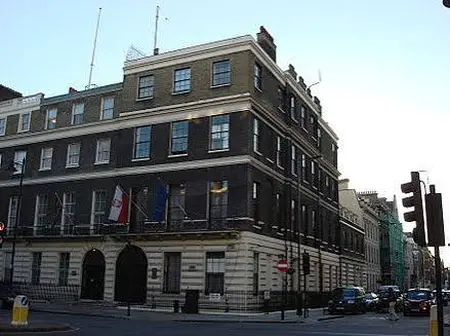
The proposed programme also comes amid ongoing efforts to renovate and acquire government-owned diplomatic properties. Recent investments have included the acquisition of Kenya's chancery in London and refurbishment projects in several other countries.
However, the process has not been without financial challenges. Reports indicate that some overseas property projects have experienced delays, while others require additional funding to reach completion.
According to figures published by the State Department for Foreign Affairs, the government had spent approximately Sh5.5 billion on overseas diplomatic property projects by June 2026, against an estimated total project cost of Sh9.34 billion.
Beyond reducing rental expenses, the new approach is expected to improve the working environment for Kenyan diplomats and strengthen the delivery of consular services to citizens living and working abroad.
For Kenyans in the diaspora, improved diplomatic facilities could also support access to essential services, including passport processing, document authentication and assistance during emergencies.
If implemented effectively, the programme could help Kenya reduce its long-term diplomatic operating costs while building a portfolio of overseas properties that remain government assets.
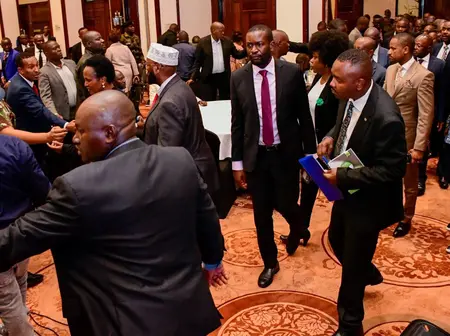
A moment of unexpected drama has unfolded in Nairobi after journalists from leading television stations pulled their microphones from the podium mid-speech, just as opposition leaders marched out of the electoral commission's consultative meeting.
According to a video shared by A.M Media, the incident has occurred at the high-level meeting between the Independent Electoral and Boundaries Commission (IEBC) and leaders of political parties.
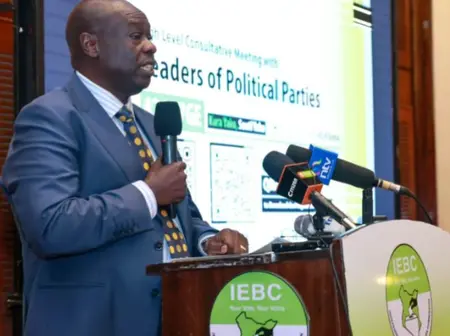
Simba Arati was addressing the gathering when representatives of Citizen TV and NTV moved in quickly and collected their microphones from the stand, leaving the speaker with only one equipment to amplify his message to the national audience.
The reason, it appears, was practical rather than hostile. With the united opposition leaving the hall, the story had shifted outside, and the crews wanted to capture the unfolding scene before the principals dispersed.
In a newsroom, that kind of split-second decision is routine, since the pictures that matter usually belong to the people walking out, not the person left behind at the lectern.
Even so, the sequence has struck many observers as awkward. Arati has been seen continuing with his remarks while the broadcasters' gear was being removed, and the contrast between a politician still speaking and a press corps already racing for the exit has made the moment memorable.
The episode has come after a tense day. Earlier, the opposition had gathered to agree on proposals for electoral reforms, and it later left the IEBC session after complaining that its concerns had not been placed on the agenda.
Reports have also pointed to an earlier standoff over seating arrangements, which suggests the atmosphere had been strained long before the walkout.
In that context, the removal of the microphones has served as a small but vivid symbol of how quickly the meeting lost its audience. Once the main players left, the cameras went with them.
Neither the broadcasters nor the commission has yet commented on the incident. For now, the footage continues to circulate, and it has added another colourful chapter to an already eventful evening in the build-up to the August 2027 General Election.
In a statement released on Thursday, November 19, the Democracy for the Citizens Party (DCP) leader accused the commission of failing to respond adequately to repeated requests for clarification on matters affecting the credibility of the upcoming elections.
Gachagua argued that the electoral process should involve ordinary Kenyans, insisting that decisions concerning the country's elections should not be made without public participation.
He faulted IEBC for what he described as a lack of commitment to addressing issues presented by opposition leaders, warning that the situation undermined democratic principles.
The former Deputy President maintained that the opposition was ready to continue engaging with the commission, but only after it demonstrated willingness to listen to the concerns being raised.
"To IEBC, once you decide to listen to the 55 million Kenyans, we shall engage accordingly," Gachagua stated.
He further cautioned the electoral agency against giving political leaders explanations without providing satisfactory answers to the questions they had raised.
Gachagua said opposition leaders would resist what he termed misleading public explanations from an institution funded through taxpayers' money.
His remarks followed a confrontation during a meeting between opposition leaders and IEBC officials in Nairobi, where several politicians left before the discussions were concluded.
The delegation was led by Wiper Patriotic Front Party leader Kalonzo Musyoka, who explained that the leaders had attended the meeting expecting meaningful discussions but were dissatisfied with the engagement.
Kalonzo raised questions about the commission's independence and readiness to oversee the August 10, 2027 General Election.
He also questioned the credibility of the voters' register and called for transparency in the counting, verification and announcement of election results.
The opposition leader said they could not associate themselves with what he described as the formalisation of a "bundled election".
Following the meeting, Gachagua listed several political figures who he said were united in demanding accountability and credible electoral preparations.
Those mentioned included Kalonzo, former Interior Cabinet Secretary Fred Matiang'i, former Attorney General Justin Muturi, Nairobi Senator Edwin Sifuna, Martha Karua, Eugene Wamalwa, Jimi Wanjigi and Cleophas Malala.
Others were Embakasi East MP Babu Owino, former Chief Justice David Maraga and Siaya Governor James Orengo.
The leaders have increasingly placed electoral reforms at the centre of their political activities as the country approaches the 2027 General Election, with particular attention on the voters' register, transparency in tallying and the handling of presidential results.
Nairobi Senator Edwin Sifuna attended the gathering alongside officials from the Linda Mwananchi Movement. He later shared photographs and an update highlighting his delegation's participation in the discussions. Those accompanying him included Secretary-General Caroli Omondi, Deputy Party Leader Faith Odhiambo and Legal Affairs Secretary Wakili Kadide.
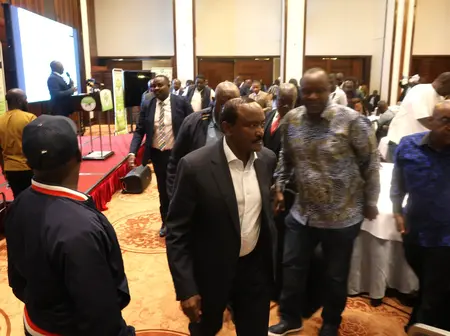
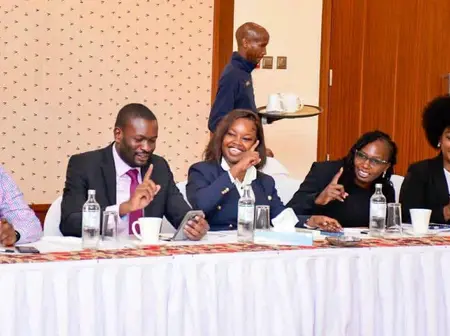
The discussions took place in a formal conference room featuring a high ceiling decorated with chandeliers. Participants were seated around white-covered tables arranged in a spacious U-shaped formation, while Kenyan flags were prominently displayed inside the venue.
The gathering forms part of ongoing preparations for a meeting with the Independent Electoral and Boundaries Commission (IEBC) scheduled for later on Thursday. Opposition parties have consistently urged the swift reconstitution of the electoral agency to enable it to oversee boundary delimitation, conduct by-elections and adequately prepare for the 2027 General Election.
Although Sifuna's social media update focused exclusively on the Linda Mwananchi Movement delegation, broader opposition unity efforts have brought together several political factions in recent weeks. Former Deputy President Rigathi Gachagua and Jubilee Party leader Fred Matiang'i have engaged in discussions aimed at fostering cooperation among opposition leaders. People's Liberation Party leader Martha Karua has also participated in the ongoing consultations.
Thursday's meeting highlights ongoing efforts by opposition leaders to coordinate their positions on electoral reforms and preparations ahead of the next polls. Meanwhile, discussions over presidential candidacies and potential power-sharing arrangements remain unresolved. For the time being, attention is focused on engaging the IEBC as preparations for the 2027 General Election gather momentum.
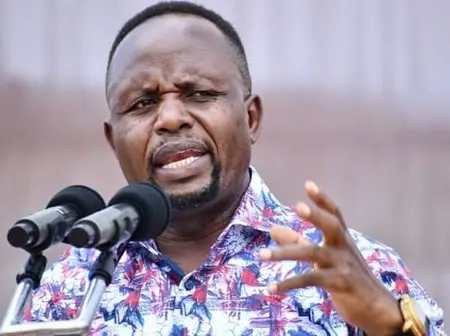
Trans Nzoia Governor George Natembeya has broken his silence on the attack on his communications officer, popularly known as Hammer Hammer. He described the incident as a calculated act of intimidation.
Natembeya said the attack was planned in Sikhendu during a tournament linked to a county politician. He added that a bodyguard formed part of the network that tracked the movements of his aide.
According to the governor, the same bodyguard fired into the air when neighbours tried to step in. The shots were meant to scatter residents who had rushed to help.
Natembeya confirmed that arrests have been made. Some of the suspects come from Kiminini and Matunda. The bodyguard has also recorded a statement and the operation is still ongoing.
The governor then made a bold claim. He said he already knows those who financed the attack and their identities are not in doubt.
He thanked the Directorate of Criminal Investigations for the work done so far. He then directed the county CCIO and CPC to finish the probe with strict professionalism and absolute impartiality.
Natembeya insisted there must be no political interference. He also warned against selective justice and any protection for people linked to the plot.
He revealed that some of the suspects have been claiming they enjoy protection and will face no consequences. He dismissed those claims and said no one is above the law.
The governor said political connections will not shield criminals. He promised that everyone involved in planning or financing the attack will be held fully accountable.
He ended by reminding the public that Kenyans are watching and justice must not be compromised.
Speaking on Thursday, November 19, 2026, in Nairobi after spearheading the abrupt exit from the stakeholders' forum hosted by Independent Electoral and Boundaries Commission (IEBC) chairperson Erastus Ethekon, Gachagua insisted the commission had ignored critical concerns ahead of the 2027 general election.
The former Deputy President walked out alongside Wiper Patriotic Front leader Kalonzo Musyoka, People's Liberation Party (PLP) leader Martha Karua, and other opposition figures after disagreeing with the commission over the meeting's agenda and preparedness.
Following the publication of Gachagua's remarks online, a section of social media users questioned his claim of speaking on behalf of all 55 million citizens.
Another group of online users mocked the assertion stating that the forum was for just a handful of politicians and had nothing to do with Kenyans Gachagua is talking about.
Critics also accused the opposition leaders of using political theatrics instead of offering concrete solutions, with some describing the walkout as a clear sign of impending defeat.
Meanwhile, other netizens argued that the politicians were pretending to defend ordinary citizens while pursuing personal interests, warning that the coalition should brace for political disappointment in next year's polls.
The opposition leaders accused the electoral commission of failing to include several issues they wanted discussed in the meeting's agenda, arguing that their concerns needed to be addressed before further engagement could take place.
Gachagua, who previously served as Kenya's Deputy President, said the delegation had attended the meeting with issues raised by members of the public but discovered that several of them had been left out of the programme.
Addressing the IEBC chairman, he requested an opportunity for the opposition to present the outstanding matters and asked the commission to schedule another meeting.
"As responsible Kenyans, we must, on behalf of the people, raise the issues that concern them. So, Mr Chairman, with due respect, we request to be allowed to proceed. And if you can give us a date now, we will be very happy," Gachagua said.
He subsequently announced that the delegation could not continue with the discussions under the existing arrangement.
"We have looked at the programme and we have many issues given to us by the people of Kenya that are not in the agenda. As it is, we're unable to participate in this meeting," he added.
Footage from the gathering showed Gachagua leaving after delivering his remarks, followed by other members of the United Opposition.
The departure was followed by a heated exchange inside the meeting room, with some participants reportedly trading insults. Police officers later intervened to calm the situation and prevent further escalation.
Gachagua maintained that the opposition had made several attempts to engage the IEBC over preparations for the August 10, 2027 General Election but had not received satisfactory responses to the matters they wanted clarified.
He also insisted that members of the public deserved an opportunity to have their concerns considered in decisions relating to the country's electoral process.
Wiper Party leader Kalonzo Musyoka also explained the delegation's decision, saying they had attended the engagement expecting constructive discussions.
However, he claimed that the commission had not demonstrated the level of preparedness and willingness to engage that the opposition had anticipated.
Kalonzo said the leaders wanted to work with an independent and impartial electoral commission while ensuring that issues raised by Kenyans were given attention.
Following the walkout, the United Opposition asked the IEBC to arrange another meeting, maintaining that its representatives remained willing to engage the commission once a suitable date was provided.
The disagreement comes as political players continue seeking clarity on preparations for the 2027 General Election, with electoral preparedness and public confidence remaining key issues ahead of the polls.
Hon Robert Alai has taken aim at Citizen TV after a scene at the IEBC meeting on Thursday drew wide attention online.
The matter began when opposition leaders staged a walkout during a meeting with IEBC officials. Among those who left the hall were Edwin Sifuna and Rigathi Gachagua.
Soon after they walked out reporters from Citizen TV and NTV were seen collecting their microphones from the IEBC podium. A video of the moment spread fast on social media and left many people talking.
Alai did not hold back in his reaction. He wrote that Citizen TV is on a mission to be the most biased station. He added that he now understood why the late President Daniel arap Moi did not like the station.
The meeting had brought together the opposition and the broad-base brigades alongside IEBC officials. It was streamed live by several media houses as it unfolded in the afternoon.
Alai's remarks have now stirred a heated debate among Kenyans. Some feel the stations were wrong to pull their equipment at that point. Others believe journalists have every right to decide how they cover an event.
The walkout itself has already raised tension ahead of the 2027 General Election. Opposition leaders say they cannot support a process that fails to show independence. Their exit has put the electoral commission under pressure.
It remains unclear whether Citizen TV or NTV will respond to the claims made by the outspoken politician. Many viewers are waiting to see if the two stations will address the matter publicly.
Political observers say the exchange shows how deeply the media is now caught up in the build-up to the polls.
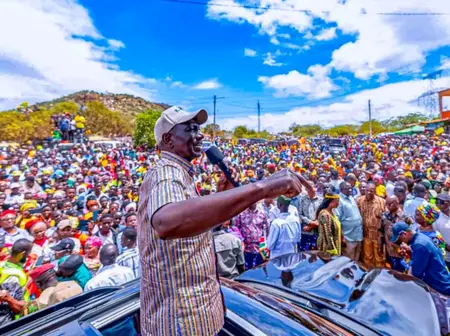
According to a video shared by Radio Generation, the Head of State has addressed a crowd during a public engagement in western region, shortly after the opposition team left the Independent Electoral and Boundaries Commission (IEBC) session in Nairobi.
Radio Generation has also reported that the united opposition walked out chanting "Wantam" at the very moment the ruling coalition was invited to table its submissions, a detail that has added a sharper edge to the whole episode.
Speaking in Kiswahili, Ruto has said he heard that opposition leaders went to cause chaos at the commission.
He has dismissed the idea that the IEBC is to blame for election outcomes, asking whether the commission is the one casting votes.
His advice has been simple: stop blaming the IEBC and first look for a candidate. The remarks have drawn cheers from the gathering and have quickly found their way onto social media.
The president's choice of words has seemed deliberate. By pointing to the lack of a candidate, he has hinted that the opposition is yet to settle on a flagbearer, and he has suggested that its energy would be better spent on that task than on quarrels with the commission.
It is a familiar political tactic, shifting attention from the system under debate to the strength of those complaining about it.
The timing has made the comments even more striking. The opposition had spent the earlier part of the day agreeing on reform proposals, including a clean voter register and live streamed polling, and had then walked out when it felt its concerns were missing from the agenda. Ruto's response has effectively treated the walkout as political theatre rather than a principled stand.
Opposition leaders have yet to answer the president directly. Their earlier position has been that confidence in the electoral process must be built through reforms, and they are likely to argue that the walkout was a protest against a flawed agenda and not an attempt to disrupt proceedings.
With the August 2027 General Election drawing nearer, both sides have now taken their arguments to the public, and neither appears ready to back down.