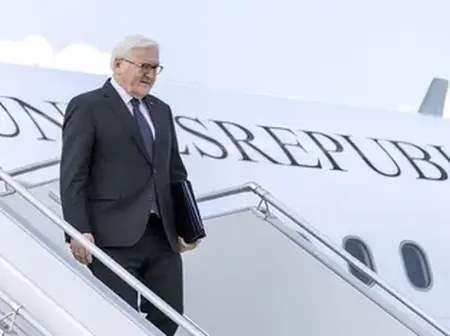
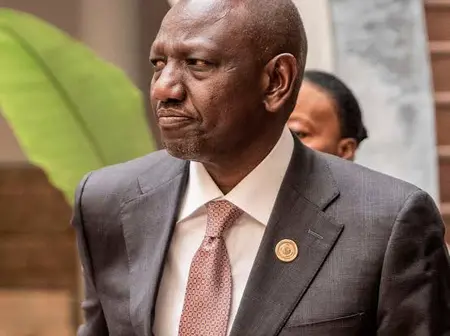
German President Frank-Walter Steinmeier is expected to visit Kenya on Wednesday, November 25, as part of a five-day tour of three African countries.
During his stay, Steinmeier is scheduled to hold bilateral talks with President William Ruto at State House, Nairobi, according to a statement published on the German president's official website.
The visit will run from November 22 to 26, with the German leader also expected to travel to Côte d’Ivoire and Ghana.
The German Presidency said the tour was aimed at strengthening existing partnerships with the three countries, with particular attention to economic cooperation and skills training.
The statement noted that Steinmeier's engagements would provide an opportunity to recognise the close ties between Germany and the African nations while exploring ways to expand areas of cooperation.
"The aim of the visit is to pay tribute to and further expand the close partnerships with the three African countries," the German Presidency stated.
In Kenya, the president is expected to begin his programme at Tatu City, where he will visit a mobile hospital operated by Zuri Health.
The facility is part of the engagements planned to showcase initiatives in the health sector and the role of private organisations in expanding access to medical services.
Steinmeier is also scheduled to tour Call Centre International Kenya (CCI Kenya), a company that provides digital services.
Another stop on his itinerary will be CareerBox, a non-profit organisation that offers training opportunities.
The visits are expected to highlight Kenya's growing role in digital services, skills development and other areas of economic cooperation.
His meeting with Ruto at State House will form part of the official engagements during the visit, giving the two leaders an opportunity to discuss relations between Nairobi and Berlin.
The tour comes as Germany continues to pursue partnerships with African countries in areas such as trade, investment and vocational training. However, the German Presidency's statement identified economic cooperation and skills development as key priorities for the trip.
Kenya’s preparations for the 2027 General Election are facing a growing security challenge after a government report revealed how political actors are exploiting organised criminal gangs to intimidate opponents, disrupt rallies and advance their interests.
The Annual Report on the State of National Security identifies 309 criminal gangs and organised groups across the country, warning that political patronage is undermining efforts by security agencies to dismantle the networks ahead of the August 2027 elections.
The report, tabled in Parliament by President William Ruto, says the groups have evolved beyond conventional street gangs into networks that can be hired to facilitate political and commercial disputes.
“Organised criminal gangs have become instruments available for hire in political and commercial disputes rather than purely predatory street formations,” the report states.
Security agencies recorded 1,316 arrests linked to organised criminal gangs between September 2025 and August 2026, compared with 602 during the previous reporting period.
Despite the increased enforcement operations, the government identifies political protection as a major obstacle, raising questions about whether authorities will pursue the financiers and organisers behind the networks or concentrate mainly on arresting their members.
The assessment identifies the period leading to the 2027 elections as the country’s principal security concern, particularly during party primaries, voter registration and electoral boundary reviews.
“The trajectory towards the 2027 general elections is the principal concern,” the report states, warning that these activities could become flashpoints for mobilised violence.
The report identifies political patronage as one of the biggest challenges facing efforts to dismantle organised criminal networks.
It warns that some politicians protect or embolden gangs, enabling them to continue their activities despite security operations.
The groups are reportedly used to intimidate political opponents, disrupt public gatherings, instigate violence and destroy property in pursuit of political interests.
The government says it will investigate and prosecute financiers and facilitators of organised criminal activities, while taking disciplinary action against public officials and security personnel found to be assisting the groups.
It also intends to enforce the Political Parties Act, Elections Act and Chapter Six of the Constitution against politicians who enable political violence.
However, the report does not provide a breakdown of politicians or other alleged financiers investigated or prosecuted during the reporting period.
This leaves a central accountability question: whether the crackdown will reach those financing and protecting the networks rather than focusing predominantly on the people carrying out attacks.
The latest security figures show that arrests linked to organised criminal gangs increased by 714, representing a rise of approximately 119 per cent.
Panga Boys accounted for 604 arrests, up from 466 in the previous reporting period. Mbogi Mawe recorded 149 arrests, followed by Chafua with 94 and Confirm with 51.
The increase reflects intensified security operations as well as the continued emergence and expansion of criminal gangs, according to the report.
However, arrests do not necessarily translate into convictions or the dismantling of criminal networks.
The government has not provided a corresponding breakdown of convictions arising from the 1,316 arrests or the number of suspected financiers and organisers prosecuted during the same period.
The threat also extends beyond election-related violence.
The report links the criminal groups to robbery, targeted killings, burglary, land fraud and extortion, particularly in the public transport and construction sectors.
It identifies unemployment and socio-economic pressures as factors making young people vulnerable to recruitment, while illicit firearms, movement of gang members between counties and digital platforms have complicated enforcement efforts.
Although 309 groups were recorded nationally, some are dormant. Nairobi has at least 11 active groups, including Gaza, Team Kazoo and Tokyo Mafia.
Other identified networks operate across the Rift Valley, Coast, Western, Nyanza and Central regions.
Counties associated with political intolerance involving goons and criminal gangs include Nairobi, Mombasa, Kisumu, Homa Bay, Migori, Kisii, Busia, Murang’a, Kiambu and Nyeri.
The government says it has established a multi-agency election security framework to contain the threat, including improved intelligence-sharing, monitoring of potential conflict hotspots and investigations into individuals mobilising gangs.
Authorities also intend to monitor digital platforms for criminal mobilisation and incitement.
Separately, the National Police Service has presented a 16-month election security roadmap covering September 2026 to December 2027. The plan contains 28 activities across six phases, including operational planning, police training, election operations and post-election review.
The security concerns revive longstanding questions about the use of organised criminal groups in Kenya’s political competition.
During the 2007–08 post-election violence, more than 1,100 people were killed, with investigations and human rights reports documenting the involvement of criminal gangs and political networks.
Ahead of the 2022 elections, the National Cohesion and Integration Commission identified 23 counties as potential electoral violence hotspots. Research by the ENACT programme also documented accounts from gang leaders in Nairobi, Mombasa and Kilifi who said politicians had paid them to provide security, disrupt rival rallies and destroy campaign materials.
Although the 2022 elections were largely peaceful, reports of hired gangs targeting political opponents persisted.
The latest assessment therefore places the responsibility on security agencies and political parties to prevent criminal networks from influencing the electoral process.
As Kenya approaches the 2027 elections, the government’s response will face a crucial test: whether it can dismantle the financial and political structures sustaining organised gangs and hold those responsible for mobilising violence accountable, regardless of their political connections.
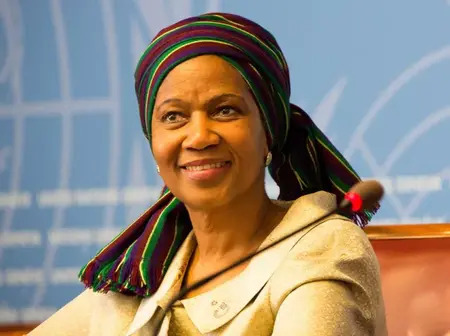
Retired President Uhuru Kenyatta has joined African leaders in mourning former South African Deputy President Phumzile Mlambo-Ngcuka, who died Friday aged 71.
In a condolence message, Uhuru conveyed his sympathies to the government and people of South Africa, as well as the family of the former deputy president describing her as a distinguished leader whose contribution to gender equality and women's empowerment will leave an enduring legacy.
“Former President Uhuru Kenyatta conveys his heartfelt condolences to the Government and people of the Republic of South Africa, and the family of former Deputy President Phumzile Mlambo-Ngcuka, following her passing,” read a statement from his office.
Uhuru remembered Mlambo-Ngcuka for her contribution to public service and her efforts to advance opportunities for women and girls, both in South Africa and internationally.
“In his message, Kenyatta remembered the former Deputy President as a distinguished leader whose service to South Africa and contribution to advancing gender equality and women's empowerment leave an enduring legacy,” the statement added.
He prayed for strength, comfort and courage for the bereaved family and the people of South Africa as they come to terms with the loss.
Mlambo-Ngcuka made history in June 2005 when she became South Africa's first female Deputy President, serving under former President Thabo Mbeki until September 2008.
Her political career began in the country's struggle against apartheid. She was among the first generation of legislators elected to South Africa's democratic Parliament in 1994, following the end of white minority rule.
She subsequently served as Deputy Minister of Trade and Industry between 1996 and 1999 before becoming Minister of Minerals and Energy, a position she held until 2005.
During her time in government, she championed economic transformation, greater participation of women in the mining sector and programmes aimed at expanding employment and skills development.
After leaving the Deputy President's office, she continued her advocacy for education and women's rights through international institutions.
In 2013, she was appointed United Nations Under-Secretary-General and Executive Director of UN Women, becoming one of the most prominent African voices in the global campaign for gender equality.
She served in the position until 2021, leading initiatives including the HeForShe campaign and the Generation Equality Forum.
She also founded the Umlambo Foundation, which supports education and leadership development, particularly in disadvantaged communities.
At the time of her death, she was Chancellor of the University of Johannesburg, a position she assumed in 2022.
South African authorities announced her death on Friday, November 20, with Acting President Paul Mashatile conveying condolences on behalf of President Cyril Ramaphosa, the government and the people of the country.
Her death has attracted tributes from across the political and international community, with leaders recognising her contribution to democracy, education and the advancement of women.
She is survived by her husband, former National Director of Public Prosecutions Bulelani Ngcuka, and their five children.
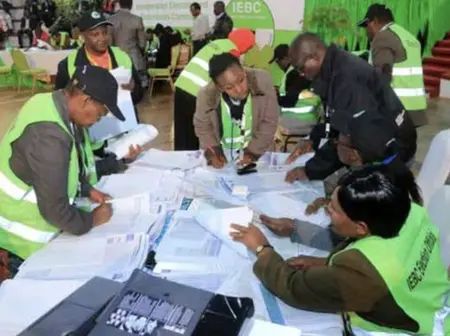
A fierce standoff between the Senate and the National Assembly is threatening to leave the IEBC preparing for the 2027 election on a law that is still unsettled. The fight is over whether livestreaming of results from polling stations will be secured in law.
The clash centres on the Elections (Amendment) (No. 2) Bill, 2024. It could be pushed into mediation under Article 113 just eight months before polling on August 10, 2027.
Senators have criticised the amendments passed by MPs. They accuse the lawmakers of being insensitive to recent court judgments. MPs deleted Clause 22 of the Senate text and say this kept the current livestreaming rule alive.
As the Bill left the Senate, that clause would have repealed Section 39 of the Elections Act and replaced it. Section 39(1G) requires the IEBC to livestream results read out at polling stations. The stream is meant for the public and is not the record used to declare a winner.
On September 22 the High Court upheld Section 39 and Regulation 83(2). On October 22 the National Assembly struck out Clause 22 and passed the Bill.
Majority Leader Kimani Ichung'wah insists that neither House has banned livestreaming. He says nothing has changed. Government officials have also dismissed claims that Parliament scrapped the duty as false.
The real dispute is narrower than a ban. Suba South MP Caroli Omondi wanted livestreamed figures to count in the final result. MPs voted that down. They also rejected a two-hour deadline for electronic transmission of presidential results.
The opposition has called livestreaming non-negotiable. If the Senate rejects the MPs' text the two Houses must mediate.
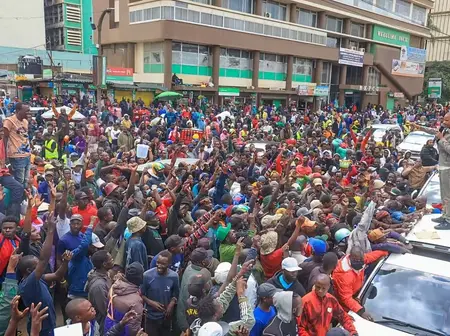
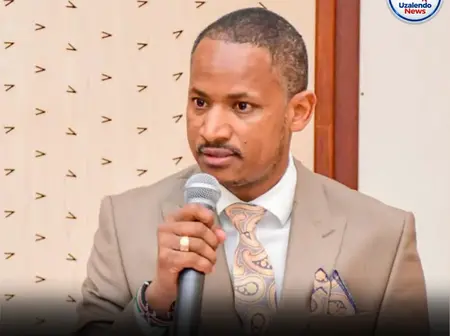
Embakasi East MP Babu Owino has sparked fresh political debate after attracting huge crowds during his recent political engagements across Nairobi, with his growing influence generating mixed reactions among residents and political observers.
The youthful legislator, who has expressed interest in succeeding Governor Johnson Sakaja, appears to be intensifying his grassroots mobilisation as he prepares for what is expected to be a highly competitive Nairobi gubernatorial contest in the 2027 General Election.
Babu has recently stepped up efforts to popularise The Mwananchi Party (TMP), a political outfit associated with his ambitions to establish a stronger political presence across the capital.
His mobilisation activities have attracted significant attention, with supporters turning out in large numbers to welcome him and listen to his political messages.
The developments have triggered conversations across social media, where Kenyans have expressed contrasting opinions about his growing political influence.
A section of Nairobi residents has praised the lawmaker's ability to mobilise ordinary citizens, arguing that the impressive attendance at his rallies demonstrates his connection with the grassroots.
His supporters believe that his youthful energy, political experience and familiarity with the challenges facing Nairobi residents could give him an advantage in the race for City Hall.
However, not everyone has been convinced by the growing crowds. Some critics have argued that political rallies should not be used as the ultimate measure of a candidate's popularity, insisting that the real test will come when voters cast their ballots.
Babu's political activities also come at a time when Nairobi's opposition politics are experiencing significant realignments, particularly following the emerging differences between him and Senator Edwin Sifuna over their respective political ambitions.
The two leaders previously shared political platforms during Linda Mwananchi mobilisation activities, but their separate political interests have introduced another dimension to the city's political landscape.
Meanwhile, Governor Sakaja's performance is expected to remain a major issue in determining the direction of the 2027 gubernatorial contest.
As political temperatures continue rising, Babu faces the challenge of converting the enthusiasm witnessed during his rallies into a strong electoral campaign.
Whether the massive crowds will translate into votes remains one of the biggest questions surrounding his growing ambition to occupy City Hall.
In a message directed at the president, Khalwale said he had already made plans for the coming political contest and predicted that Sifuna would give Ruto a difficult challenge.
“Mr President, nimekupangia. Mwaka wa 2027, utapatana na Edwin Sifuna, na tutakuonyesha kivumbi mpaka ushuke chini,” Khalwale said.
The remarks add to the growing political debate over who should carry the opposition's presidential ticket in the next election. Sifuna has emerged as a central figure in the Linda Mwananchi Movement, whose members have endorsed him as their leader and presidential candidate.
Khalwale has openly backed the senator's ambitions. He has also argued that opposition leaders should recognise Sifuna's support when they negotiate with other political formations ahead of 2027.
The comments come as opposition parties continue discussing possible cooperation, even as differences remain over the choice of presidential candidate and running mate. Recent reports have highlighted tensions between supporters of Sifuna and those backing other senior opposition leaders.
Sifuna has also featured prominently in recent opinion polling. In the Mwelekeo Insights online poll covering November 11 to 20, he received 25.1% of responses, ahead of Ruto, who had 13.4%. The firm cautioned that the voluntary online survey was not a statistically representative sample of all Kenyan voters.
Khalwale's latest remarks therefore add another voice to the contest over the opposition's direction. However, the final presidential line-up will depend on party decisions, coalition negotiations and the candidates who eventually enter the race.
With the 2027 election approaching, the question remains whether the opposition can unite behind one candidate capable of challenging Ruto and whether voters will support the proposed political change.
Embakasi East Member of Parliament Babu Owino has unveiled an ambitious six point action plan targeting garbage collection, corruption, ghost workers, job creation, street lighting, and emergency response within his first 100 days in office if elected Nairobi Governor.Speaking during a media interview outlining his vision for the capital city, Owino declared that Nairobi residents can experience visible service delivery transformation within three months of a change in leadership at City Hall.
Writing on Saturday, November 21, 2026, via his official Facebook account, Mutua stated that pursuing a Senate seat after serving as a county chief creates a direct conflict of interest.
"Dr Malombe is a good man but he would err badly to seek the office of Senator," Mutua wrote in his public statement.
While acknowledging the governor's constitutional right to contest, Mutua explained that the primary constitutional mandate of a Senator is to oversee county governments, making it improper for a former governor to audit an administration he previously led.
Beyond the oversight question, the law professor urged the senior statesman to step aside and allow younger leaders with fresh ideas to represent Kitui in the upper chamber.
"Senior officials needlessly squatting in one office after another stifle political maturity and constipate a political system," Mutua stated.
To reinforce his argument, he referenced the political experience of former Makueni Governor Kivutha Kibwana, who suffered defeat when he sought a senatorial seat after completing his gubernatorial terms.
"The humiliation that my former teacher and political icon Prof Kivutha Kibwana suffered in Makueni ought to serve as an object lesson for Dr Malombe," Mutua noted.
He advised the Kitui county boss to protect his legacy and retire at the end of his final term rather than competing for what he termed a lower political office.
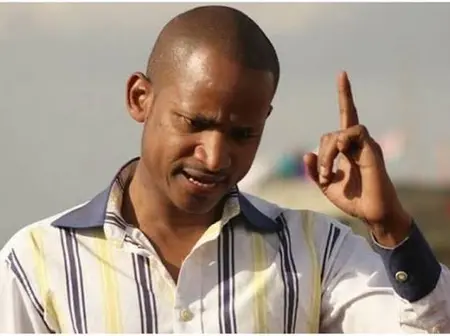
Embakasi East MP Babu Owino has outlined what he will prioritise in his first 100 days in office if Nairobi residents elect him, promising to tackle some of the problems that have long frustrated people living in the city.
Babu said he would begin by dealing with the problem of garbage, which has piled up in many parts of Nairobi and become a major concern for residents and businesses. He promised to put in place a system that keeps the streets clean and ensures waste is collected regularly.
He also pledged to track down all ghost workers in county offices, saying the practice drains public funds that should be used to deliver services to residents. His plan, he said, would be to clean up the payroll so that only genuine employees are paid.
The MP further promised to light up the streets of the city, a move aimed at improving security and allowing residents and traders to go about their business safely at night. He added that he would fight corruption, which he said has cost Nairobians dearly and left many county services in poor shape.
The promises come as politicians begin to position themselves for the 2027 General Election, with the contest for Nairobi expected to attract strong interest. Babu has not yet formally declared the specific seat he will vie for, and it was not immediately clear how he plans to fund and carry out the programmes he has outlined.
Some Kenyans have welcomed the pledges, while others say they will wait to see a detailed plan before judging him.
In his remarks directed at the former ODM Secretary-General, Kibwana emphasised that leadership requires more than popularity and political support, noting that those seeking to lead Kenyans must demonstrate maturity and good judgement.
"Edwin Sifuna, the responsibility you are seeking to undertake with Kenyans demands wisdom, humility, tact, magnanimity and, above all, God's grace," Kibwana stated.
His message comes at a time when Sifuna is increasingly attracting attention within opposition politics as discussions about the country's leadership ahead of the 2027 General Election intensify.
Sifuna has recently become associated with the Linda Mwananchi Movement, which has been gaining attention through political rallies and engagements involving several prominent leaders.
The Nairobi senator has also attracted support from politicians who believe he could play a significant role in shaping the opposition's political direction.
His growing influence has sparked conversations about whether he could eventually seek the opposition's presidential ticket or take up another major responsibility in the emerging political arrangement.
Kibwana's remarks appear to highlight the challenges that come with seeking national leadership, particularly in a political environment where competition, disagreements and shifting alliances are common.
The former governor has previously served in different public leadership positions, including as Makueni governor, giving his message added significance in discussions about political responsibility and public service.
The statement has also generated interest among Kenyans following Sifuna's recent political activities and his growing engagements with opposition leaders.
As the 2027 elections approach, Sifuna's political ambitions and the expectations surrounding his leadership will likely remain subjects of public discussion.
Kibwana's message serves as a reminder that political leadership comes with significant responsibilities that extend beyond rallies, popularity and electoral ambitions.