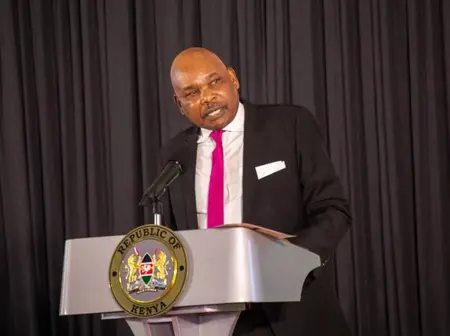
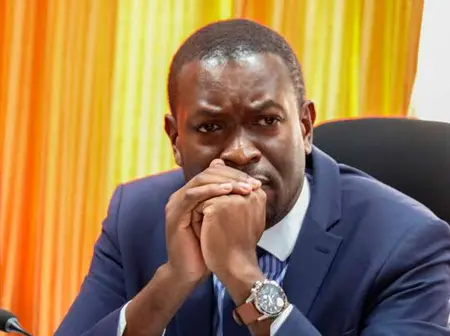
In a statement posted on X on Saturday, November 21, Mutua acknowledged Malombe’s right to seek the position but maintained that moving from the governor’s office to the Senate would raise questions about accountability and political renewal.
He argued that senators are constitutionally mandated to oversight county governments, creating a potential conflict of interest if a former governor seeks to scrutinise an administration he previously headed.
Mutua described Malombe as a respected leader who should consider leaving elective politics rather than pursuing another public office.
He also suggested that continued movement of senior politicians from one elective position to another could limit opportunities for emerging leaders and slow political development.
To reinforce his argument, Mutua referred to former Makueni Governor Kivutha Kibwana, saying he had opposed Kibwana’s attempt to seek another political position and maintained the same view regarding Malombe.
The professor’s remarks come as Malombe’s administration has faced scrutiny over financial concerns affecting Kitui’s water companies.
In January 2026, the Senate County Public Investments and Special Funds Committee directed the governor to provide a debt recovery plan and evidence that customer deposits borrowed by Kiambere Mwingi Water and Sanitation Company (KIMWASCO) and Kitui Water and Sanitation Company (KITWASCO) had been refunded.
The committee examined concerns surrounding the financial stability of the two utilities, the use of customer deposits to fund operations and projects, and delays in the implementation of the Ilimukuyu Dam project.
Mutua, however, based his objection to Malombe’s reported political plans primarily on the question of oversight and the need to create space for younger leaders.
He concluded by appealing directly to the governor to preserve his public standing by stepping aside gracefully rather than pursuing another elective position.
A surprising result by the Idealmerit Africa Opinion Poll Survey has shown that senator Khalwale is the most preferred candidate to win the gubernatorial race with 38.3% of the total opinion votes followed by DCP aspirant Cleophas Malala who has 26.5% preference.
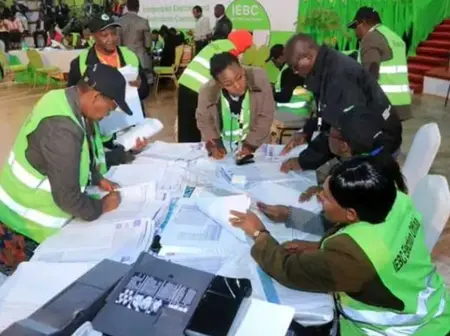
The dispute centres on the Elections (Amendment) Bill, 2024, which seeks to change provisions governing the transmission, tallying, verification and announcement of election results.
At the heart of the disagreement is whether election results announced at polling stations should be livestreamed under a mandatory legal requirement or whether the law should instead provide alternative ways for candidates, agents and observers to document the process.
The Senate and National Assembly have taken different positions on the proposed changes, creating a legislative standoff that could complicate the implementation of electoral reforms before Kenyans head to the polls on August 10, 2027.
The National Assembly rejected a Senate proposal seeking to remove a clause connected to livestreaming and documentation of election results. By deleting Clause 22 from the Senate-approved version of the Bill, MPs effectively retained the contentious livestreaming provision, triggering renewed disagreement between the two Houses.
Senators, however, have criticised the National Assembly's decision, arguing that the amendments do not adequately address previous court rulings concerning Section 39 of the Elections Act, particularly provisions relating to livestreaming election results.
The Senate Justice, Legal Affairs and Human Rights Committee, chaired by Bomet Senator Hillary Sigei, raised concerns over the changes and recommended that the Senate reject the National Assembly's proposed deletion of Clause 22.
The committee argued that the amendments failed to adequately address court decisions that had invalidated parts of the existing law. It also maintained that the proposed changes should respect agreements reached during the National Dialogue Committee (NADCO) process.
The Senate had proposed replacing the livestreaming requirement with provisions allowing candidates, their agents, election observers and other authorised persons to record and document the tallying, announcement and declaration of results at polling stations and tallying centres.
The proposed arrangement would allow election stakeholders to independently document the process, but the two Houses remain divided over how the provision should be incorporated into the law.
The disagreement also touches on the electronic transmission of presidential election results from polling stations to constituency and national tallying centres, a process that has remained central to discussions about election transparency and accountability.
The Elections (Amendment) Bill was published on May 7, 2024, and introduced in the Senate in July of the same year. Senators passed it with amendments on December 5, 2024, before forwarding it to the National Assembly for consideration.
The National Assembly subsequently passed its amendments on October 22, 2026, returning the Bill to the Senate for reconsideration.
The dispute comes with approximately eight months remaining before the August 10, 2027, General Election, placing pressure on lawmakers to resolve the disagreements in time for the IEBC to prepare for the next nationwide vote.
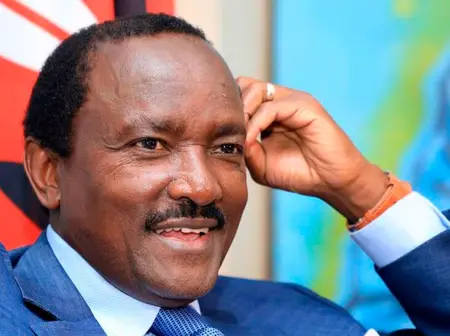
Kalonzo's decision comes just as political attention shifts to the activities of opposition leaders seeking to strengthen their political networks and mobilise support ahead of the next presidential contest.
According to reports, the former Vice President had been scheduled to visit the US around the same period as Sifuna. However, his trip has now been pushed to February 2027.
Wiper communications director David Mutua confirmed the change of dates but did not disclose the reasons behind the postponement.
Meanwhile, Sifuna arrived in the United States on Saturday, November 21, where he received a warm welcome from Kenyans living in the diaspora.
Videos shared online showed supporters gathering at Newark Liberty International Airport in New Jersey, wearing Linda Mwananchi Movement-branded T-shirts and carrying banners welcoming the senator.
Sifuna's tour is expected to run until December 7, with planned engagements across several states, including New Jersey, Pennsylvania, Maryland, Texas, Washington and California.
The meetings will include town halls, church services, business engagements and discussions with Kenyans living abroad.
The Nairobi senator has maintained that the visit will give him an opportunity to explain his political agenda and discuss the country's future with Kenyans in the diaspora.
The developments come at a time when opposition leaders are positioning themselves ahead of the 2027 elections, with several figures expressing interest in challenging President William Ruto.
Kalonzo's decision to postpone his trip and Sifuna's ongoing engagements have therefore added another interesting dimension to the unfolding political activities.
The new February date means Kenyans will have to wait longer for Kalonzo's planned diaspora engagements.
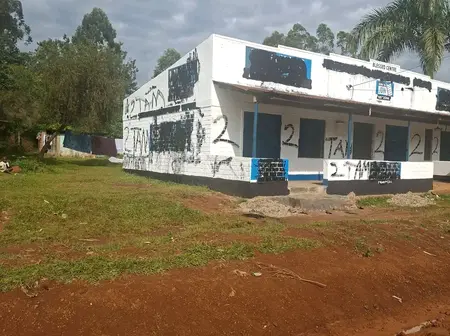
The incident involved the movement’s name and branding being covered with paint. Graffiti carrying messages linked to Ruto’s possible second term was also left on the building. Reports have described the writing as “TWO TERMS”, “TUTAM” and “2 TAM”.
Bumula Member of Parliament Jack Wanami Wamboka condemned the incident, saying it would not intimidate the movement or silence its supporters. Wamboka, who is associated with the Linda Mwananchi Movement, described the act as political intolerance.
In his message, the legislator said the office had been defaced ahead of the President’s planned tour of Matungu. He maintained that the incident would not change the group’s plans or weaken its commitment to engaging residents.
Wamboka also said leaders from the movement would travel to Matungu as a team to stand with their supporters. He said they intended to reaffirm their commitment to the movement and its grassroots activities despite what had happened.
The people responsible for defacing the building had not been identified in the reports available. It was also not clear whether any arrests had been made or whether a police investigation had begun.
Ruto’s visit to Matungu is part of his tour of Western Kenya. During the visit, he is expected to launch the Matungu-River Sio Road project and preside over the launch of construction of hostels at the Kenya Medical Training College campus in the area.
The incident comes amid growing political activity in Western Kenya as leaders and groups position themselves ahead of the 2027 General Election. Wamboka’s remarks indicate that the movement intends to continue its planned engagement with residents despite the damage to its office.
Linda Mwananchi Movement leaders in Navakholo have called for a police investigation after their party offices were attacked, with electricity cables and other property damaged in what they believe was a politically motivated act.
According to The Standard Digital, which has carried a video report by Benard Lusigi, the leaders have linked the incident to early political rivalry ahead of the 2027 elections.
The report indicates that the damage has left the premises without proper power connections, disrupting the movement's activities in the area.
The officials have urged the police to move quickly, identify those responsible and bring them to book. They have maintained that political offices, whatever their affiliation, should be safe from interference, and that such acts have no place in a democratic society.
The attackers have not been identified, and no arrests have been reported so far. The motive has also not been established, and the claim of political rivalry remains the leaders' own position.
The Linda Mwananchi leaders have condemned the defacing of theor office overnight just before President William Ruto's scheduled visit to the area.
Bumula MP Jack Wamboka and the Tawe Movement condemned that incident as political intolerance and intimidation, and promised to visit the affected office as a team.
Taken together, the case has raised concern among the movement's supporters that its offices in Kakamega County are being targeted.
The attacks have happened against the backdrop of the President's ten-day western Kenya tour, during which rival slogans have clashed in several places.
Supporters of the government side have chanted "tutam", while the opposition has answered with "wantam", and tempers have flared in a number of towns along the route.
Reactions online have been divided. Opposition sympathisers have demanded accountability and warned that such incidents could heighten tension as 2027 draws closer.
Others have urged residents to remain calm and allow the police to establish the facts before anyone is blamed.
Narok Senator Ledama Olekina has dismissed claims surrounding an incident involving the attachment of property, insisting that his personal vehicle was never up for auction.
In a statement on Saturday, Olekina claimed that the narrative doing rounds that he had threatened the auctioneers who had come for his vehicle was being peddled by his political opponents.
He said the dispute stemmed from a Labour Court case involving a former employee attached to his Senate office, which resulted in orders authorising the attachment of his personal property.
He explained that the employment dispute dated back to 2017, when a Senate staff member assigned to his office was dismissed for allegedly absconding from duty.
"In 2017, a Senate staff member assigned to my office was dismissed for absconding from duty. Years later, a Labour Court issued ex parte orders authorizing the attachment of my personal property in connection with that dispute," he said in the statement.
Olekina questioned why his personal assets or property belonging to a private company in which he is a shareholder would be targeted over an employment dispute involving a public institution.
He maintained that the Senate is a constitutional institution whose staff salaries and employment obligations are funded through the Parliamentary Service Commission rather than individual senators.
The senator further clarified that the incident involved the seizure of keys to a delivery truck belonging to a private company in which he is a shareholder, and not the auction of his personal vehicle.
"What happened next is deeply troubling. Individuals purporting to be court-appointed auctioneers trespassed onto the premises of a private company in which I am a shareholder and seized the keys to a delivery truck," he calimed.
"When confronted, they claimed they were acting to recover Sh365,000 allegedly owed to a former Narok Senate office employee, over a claim of unfair termination. No personal vehicle of mine was ever under auction."
He argued that employment liabilities involving public institutions should not automatically be transferred to individual officeholders or private businesses.
Olekina said the incident raised questions about the boundaries between institutional liability and the personal property of public officeholders.
He maintained that court processes should operate within constitutional limits and should not be used to justify interference with private property.
The senator said he would not allow what he termed the misuse of court processes to undermine the rule of law and public trust in institutions.
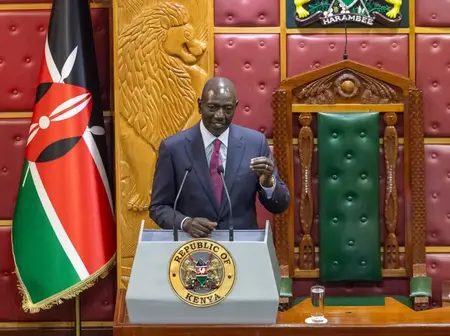
Kenya's journey from economic distress to renewed growth and the challenge of translating that recovery into prosperity for ordinary citizens took centre stage on Wednesday as President William Ruto delivered his fourth State of the Nation Address to a joint sitting of Parliament in Nairobi.
In an address lasting more than two hours, the President presented an account of his administration's performance over four years.
He outlined achievements in economic stabilisation, agriculture, healthcare, education, housing and employment while setting out an ambitious development agenda for the country's future.
With the August 2027 General Election less than nine months away, the address carried particular significance.
It offered the Head of State an opportunity to account for his administration's record, respond to persistent public concerns and explain how the country intends to sustain its economic recovery.
His central proposition was that Kenya has moved from rescuing an economy under pressure to rebuilding its productive foundations, with the ultimate objective of ensuring that prosperity reaches every household and every county under his motto, “Usawa ni Sawa.”
"Our nation is making a powerful comeback," President Ruto declared, arguing that the progress was the result of deliberate reforms and the resilience of Kenyans.
Restoring confidence in the economy
The President began by addressing the cost of living, which is one of the most pressing concerns facing households and businesses.
He recalled the economic pressures confronting the country in 2022, including a weakening currency, elevated inflation, expensive credit and concerns about the country's ability to meet its international financial obligations.
According to the President, the Kenyan shilling has stabilised at approximately KSh129 against the US dollar, having recovered from nearly KSh162.
Inflation, which reached 9.6 per cent in 2022, averaged 4.1 per cent in 2025, while foreign exchange reserves increased from US$7.37 billion to US$15.3 billion.
He also cited the repayment of the US$2 billion Eurobond in June 2024 as evidence of restored financial credibility.
Commercial bank lending rates have declined from 17.2 per cent in November 2024 to approximately 14.4 per cent in September 2026, he pointed out.
The significance of these developments, he argued, extends beyond economic statistics.
A stable currency, lower inflation and more affordable credit create an environment in which businesses can invest, farmers can produce and households can better manage their finances.
Agriculture and the household economy
President Ruto identified agriculture as one of the most direct channels through which economic reforms are reaching ordinary Kenyans.
The reduction of fertiliser prices from KSh7,500 to KSh2,000 per 50-kilogramme bag, he said, had helped lower production costs and increase agricultural output.
He cited the experience of Laban Cheptarus, a maize farmer in Rongai, Nakuru County, whose production increased from 75 bags to 125 bags on the same five-acre land following access to affordable fertiliser, provision of quality seeds and enhanced agricultural extension services.
National maize production, according to the President, increased from 44.3 million bags in 2022 to 71 million bags last year, while the average price of two kilogrammes of sifted maize flour declined from KSh230 in September 2022 to KSh152 in September 2026.
He also highlighted improved earnings in the coffee, tea and dairy sectors, alongside a KSh1.2 billion bonus package for sugarcane farmers.
These interventions, he maintained, are intended to achieve two complementary objectives: increasing farmers' incomes and making food more affordable to consumers.
Healthcare, education and housing
Beyond agriculture, the President devoted considerable attention to the social sectors, arguing that economic progress must also be measured by the ability of citizens to access essential services without suffering financial hardship.
He reported that 33.7 million Kenyans had registered with the Social Health Authority, compared with approximately eight million under the former NHIF in 2022.
He cited patients receiving cancer treatment, dialysis and kidney transplants through SHA as examples of the importance of collective health financing, particularly for families facing expensive medical procedures.
In education, he reported that the government had employed 100,000 teachers, constructed 23,000 classrooms and increased the annual education allocation from KSh521 billion in 2022/23 to KSh784 billion in the current financial year.
The affordable housing programme was another major feature of the address. More than 313,000 homes are at various stages of construction across the 47 counties, while the programme has generated over 1.1 million employment opportunities, according to the President.
He argued that housing investment should be understood not merely as a shelter initiative but also as an economic intervention creating opportunities for artisans, construction workers, manufacturers and small businesses.
Opening opportunities for young people
Recognising the challenge of youth unemployment, President Ruto highlighted the digital economy, international labour mobility and enterprise financing as important avenues for expanding employment.
He reported that 350,000 Kenyans had secured work in the digital economy, while 707,000 had obtained employment opportunities abroad.
The NYOTA programme, which provides young entrepreneurs with training, mentorship and start-up capital, was also highlighted.
More than 133,000 young people have reportedly received KSh50,000 each to establish or expand businesses.
The President maintained that the next challenge is to help these enterprises grow, access markets and create additional employment.
He also announced proposals to exempt workers earning KSh32,333 or less monthly from PAYE, remove stamp duty on land transactions valued at KSh1 million or less and eliminate the 25 per cent import duty on mobile phones.
These proposals, alongside the settlement of verified pending bills and outstanding government obligations to universities and hospitals, are intended to ease financial pressure on households and businesses, the Head of State observed.
A bigger development ambition
Looking ahead, the President outlined an ambitious infrastructure programme intended to move Kenya beyond economic stabilisation towards higher levels of productivity and industrialisation.
He proposed a National Infrastructure Fund, with KSh340 billion earmarked for an ambitious KSh5 trillion, 10-year investment programme.
Its targets include 28,000 kilometres of tarmac roads, 10,000 megawatts of electricity generation capacity, 50 mega dams and irrigation of 2.5 million acres of cropland.
The President presented these investments as essential to reducing the cost of doing business, strengthening food security, expanding manufacturing and positioning Kenya for higher levels of economic development.
He also emphasised equitable development, arguing that access to opportunity should not depend on where a Kenyan is born or the historical development status of their community.
The accountability question
While the address presented an optimistic account of Kenya's development trajectory, the President also acknowledged that the national transformation agenda remains unfinished.
His commitments on compensation for victims of protests and injured police officers, police reforms and accountability for wrongdoing spoke to the importance of public trust and constitutional freedoms.
He further called for a political culture in which leaders are judged by their ideas, development proposals and record of delivery rather than ethnic identity.
Ultimately, the significance of the 2026 State of the Nation Address will be determined by what happens beyond Parliament.
The economic indicators must translate into lower household expenses, employment opportunities, reliable public services and improved incomes.
Infrastructure targets must become completed projects, while announced reforms must deliver tangible results.
For a country preparing for another electoral contest, the President has placed his administration's record and future ambitions before the public.
The challenge now is to turn the promise of recovery into a development story experienced by every Kenyan.
As President Ruto concluded, “the task of building a prosperous, equitable and united Kenya must continue.”
The foundation, he affirmed, has been laid. The test now is delivery.
Lawrence Kinoti works at the Office of the Government Spokesperson.
Leaders allied to the United Opposition have dismissed media reports of a possible split ahead of the 2027 election.The leaders who spoke in different functions said on Sunday they are still working together to unseat President William Ruto in the coming general election.People's Party of Kenya Leader Ndindi Nyoro, while speaking in a church service in Kirinyaga, said there is no third force in the opposition as reported in sections of the media, reiterating that the opposition is united for a common course.
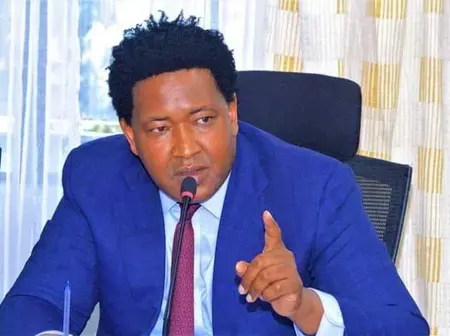
In his Swahili remarks, Khalwale addressed the President directly and said he had already planned for the next election. He warned that their team would give Ruto a difficult political contest until he steps down.
The direct statement brings together two vocal senators who have gained strong public attention across the country. Pairing a seasoned Western Kenya politician with a prominent Nairobi lawmaker signals an effort to build wider national support ahead of 2027.
Political activity across Kenya has steadily increased as leaders begin shaping alliances for the next General Election. Senior figures from different regions are testing new partnerships to appeal to younger voters and shifting regional blocs.
Western Kenya remains a major battleground in every presidential race because of its large number of registered voters. At the same time, Nairobi County often sets the national political mood through urban mobilisation and lively public debate.
The update shared by Nairobi Leo quickly drew lively reactions from Kenyans on social media. Supporters of Khalwale and Sifuna praised the bold message, saying voters want energetic leaders ready to challenge the current administration.
However, critics and allies of President Ruto dismissed the warning as early political talk. They argued that winning the presidency requires organised grassroots networks across all forty-seven counties rather than strong words at rallies.
Government-allied leaders have also maintained that development programmes in infrastructure, agriculture, and healthcare will decide the 2027 vote. In their view, citizens will judge leaders based on completed projects and economic progress in their counties.
Many ordinary residents following the political exchange urged leaders to balance early campaign talk with daily service delivery. High living costs, youth employment, and reliable public services remain the top concerns for families across the country.
Political observers note that opposition figures still face the major task of agreeing on one joint candidate before nominations begin. Without unity, divided votes could make it harder for challengers to unseat an incumbent president.
Khalwale's public backing of Sifuna adds fresh heat to the early race for State House. Do you believe Edwin Sifuna can mount a winning presidential campaign against President William Ruto in 2027?