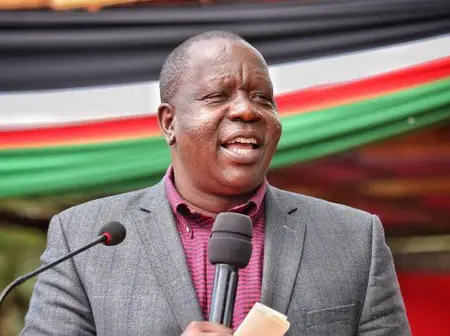
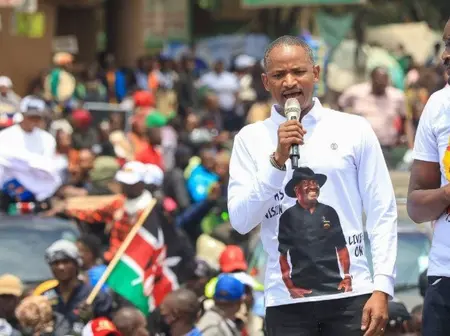
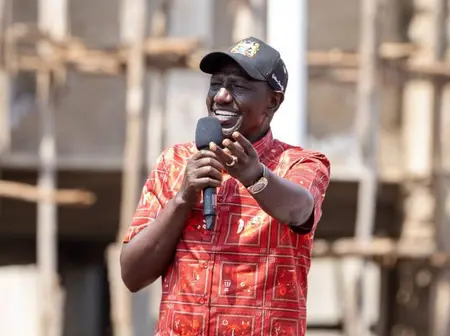
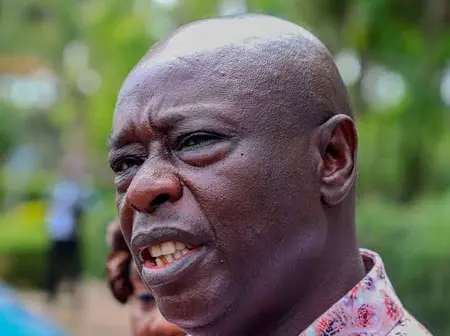
President William Ruto recorded 13.4 percent, followed closely by former Interior Cabinet Secretary Fred Matiang’i at 12.6 percent and Wiper Patriotic Front leader Kalonzo Musyoka at 12.5 percent, putting Matiang’i 0.1 percentage points ahead of Kalonzo.
The ten-day survey featured 15 named aspirants alongside an undecided option, capturing a snapshot of participant preferences ahead of the August 10, 2027 General Election.
As detailed in the Mwelekeo Insights breakdown, Kiharu MP Ndindi Nyoro and Macharia Njeru both recorded 10.1 percent, while George Wajackoyah stood at 5.5 percent.
Further down the list, former Chief Justice David Maraga garnered 3.4 percent, Busia Senator Okiyah Omtatah received 2.3 percent, People’s Liberation Party leader Martha Karua registered 1.5 percent, and former Deputy President Rigathi Gachagua posted 1.2 percent, with Reuben Kigame, Boniface Mwangi, Jimi Wanjigi, and Eliud Owalo each recording under one percent.
Across county-level tallies, Sifuna held leads in 24 counties, Macharia Njeru in 13, Ruto in five, Kalonzo in three, and Matiang’i in two.
In its methodology disclosure, Mwelekeo Insights explicitly stated that the exercise was an open online poll reflecting the views of self-selected participants rather than a statistically representative sample of Kenyans, meaning no margin of error applies.
Consequently, observers view open online results as a gauge of digital engagement and visibility rather than a predictive forecast of general election outcomes.
Taken together, the figures illustrate both Sifuna’s active online following and the narrow gap separating established opposition figures such as Matiang’i and Kalonzo as coalition discussions continue.
With multiple aspirants drawing varied shares across different regions, how opposition leaders approach alliance-building and how the ruling camp consolidates its support will shape the broader race as August 2027 draws closer.
Kibwana shared the message as a prayer and goodwill blessing just as Sifuna embarked on a multi-state diaspora tour in the United States to popularize the Linda Mwananchi Movement and mobilize support ahead of the August 10, 2027 General Election.
Rather than focusing on campaign logistics or policy blueprints, the veteran constitutional scholar centered his counsel on personal character and the moral weight of seeking the presidency.
Each of the qualities Kibwana highlighted speaks directly to the practical pressures of high-stakes national politics.
Wisdom and tact are essential for navigating delicate coalition negotiations, managing diverse regional expectations, and avoiding avoidable public missteps.
Meanwhile, humility and magnanimity allow a presidential contender to absorb criticism, reconcile with rivals after tense internal disputes, and build broad alliances rather than alienating potential partners.
Within the broader political context, Kibwana’s intervention carries symbolic weight because of his long career in constitutional reform, civil society advocacy, and two terms as Makueni governor.
Ultimately, Kibwana’s reflections underscore that building a viable presidential bid requires more than energetic rallies, diaspora networks, or bold rhetoric.
As campaigning intensifies toward August 2027, voters and political allies alike will watch how Sifuna translates charisma and momentum into steady judgment and inclusive leadership.
Whether he demonstrates those qualities under growing pressure will help define the credibility of his national ambitions.
As Kenya heads towards the August 2027 General Election, President William Ruto is increasingly banking on visible development projects and an aggressive nationwide mobilisation strategy to strengthen his re-election prospects.
From rural market centres to major urban roads, Ruto’s frequent visits to counties have become a defining feature of his presidency, with the Head of State seeking to turn infrastructure development into political capital ahead of a potentially bruising election.
His approach is built around a simple political calculation: that tangible development, economic opportunities and a visible government presence across the country could prove more persuasive to voters than the opposition’s criticism of his administration.
The tours, conducted under the Bottom-Up Economic Transformation Agenda (BETA) and the administration’s ‘Usawa ni Sawa’ philosophy, are also intended to reinforce his message that every region deserves an equal share of national development regardless of its political choices.
In November 2026 alone, the President embarked on extensive development tours across Western Kenya, following similar engagements in Ukambani and the Rift Valley.
His itinerary has covered a wide range of projects, including last-mile electricity connections, street lighting, modern markets, affordable housing, road construction and major water infrastructure.
From Nyeri to Nakuru, Mombasa to Machakos, and across North Eastern, Western and Nyanza, the administration is seeking to demonstrate that its development agenda extends beyond traditional political strongholds.
The government has also prioritised the revival of struggling sugar factories, including Mumias, Muhoroni, Sony Sugar and Nzoia, while promoting investment in coffee, tea and industrial parks as part of efforts to stimulate production and create jobs.
To Ruto’s supporters, the pace of project implementation demonstrates a government determined to deliver on its promises within a single five-year term.
They argue that the President’s frequent visits to project sites and direct engagement with local communities distinguish his administration from previous governments, which they accuse of leaving development initiatives incomplete or concentrated in a few regions.
However, the strategy is not without criticism.
While the government points to infrastructure development as evidence of progress, critics argue that the number of projects launched or commissioned should not be the only measure of successful governance.
Opposition leaders, governance advocates and economic commentators have questioned the value for money of some public investments, raised concerns about the country’s debt burden and challenged the government’s approach to the proposed disposal of state assets.
There are also lingering questions about the extent to which economic growth and infrastructure investments have translated into improved living standards for ordinary Kenyans.
For many households, the immediate concerns remain the cost of food, electricity, transport, education and access to employment.
The June 2024 anti-government protests, largely driven by young Kenyans opposed to the Finance Bill and broader economic grievances, exposed the depth of public frustration and demonstrated that development announcements alone may not be enough to secure political support.
This presents Ruto with a delicate balancing act: convincing voters that his administration is delivering long-term economic transformation while addressing the immediate financial pressures affecting households.
As Ruto builds his development narrative, the opposition is attempting to consolidate a political alternative capable of challenging him in 2027.
Former Deputy President Rigathi Gachagua, now leading the Democracy for the Citizens Party (DCP), has emerged as one of the administration’s most vocal critics.
Gachagua has embarked on an aggressive grassroots recruitment campaign, attracting political defectors to DCP while accusing the government of sidelining the Mount Kenya region.
He has also raised concerns about the credibility of the electoral process, particularly the proposed mechanisms for transmitting and tallying presidential results at the Bomas of Kenya, and threatened mass action over the issue.
However, the opposition faces a challenge that goes beyond mobilising public anger against the incumbent: building a united political formation with a credible alternative programme.
Potential presidential contenders, including Wiper leader Kalonzo Musyoka, former Interior Cabinet Secretary Fred Matiang’i and Nairobi Senator Edwin Sifuna, represent different political interests and ambitions that could complicate efforts to agree on a single candidate.
Gachagua has maintained that the question of selecting a joint presidential candidate can wait, but the absence of an agreed leadership structure and common political agenda remains a potential weakness.
The findings point to a competitive political landscape in which the opposition has potential electoral support but still faces the difficult task of translating individual popularity into a cohesive political movement.
Ultimately, the 2027 contest is likely to be shaped by the intersection of economic performance and political mobilisation.
For Ruto, infrastructure development offers an opportunity to demonstrate the practical benefits of his administration and strengthen his appeal beyond traditional political constituencies.
A completed road, an operational market, a new electricity connection or an expanded water supply project provides the government with something concrete to point to when defending its record.
But the opposition will seek to shift the conversation towards the cost of living, unemployment, taxation, public debt and accountability, arguing that development projects must be measured against their actual impact on citizens.
The challenge for Ruto will be ensuring that the projects he showcases translate into tangible economic benefits before voters head to the ballot.
For the opposition, the task will be to move beyond criticism of the government and present a convincing alternative on the economy, public spending and service delivery.
The central question heading into 2027 is therefore not simply who can mobilise the biggest crowds or attract the most political defectors, but who can convince Kenyans that they have a credible plan to improve their lives.
Ruto appears determined to make development his strongest campaign argument. Whether roads, markets, dams and housing projects will be enough to secure a second term will ultimately depend on how voters assess their impact on their everyday lives.
In a post on X, Onsarigo described Gachagua as a pragmatic politician, but his choice of words about the political situation has attracted attention.
He wrote, “Preach water. Drink wine,” suggesting that he sees a difference between political messages and the interests of those who support them.
Onsarigo went further to explain why he believes Gachagua understands his political supporters.
According to him, the former Deputy President knows the kind of politics that appeals to his support base.
“But I dont blame him; he understands his base… they vote against anything to elect anything,” Onsarigo stated.
His remarks appeared to highlight the strength of opposition politics, where voters can sometimes unite behind a candidate because of their desire to defeat an incumbent rather than their agreement on every political issue.
Gachagua announced that the preacher had settled on DCP after consultations with residents of Kasarani.
Kanyari was received into the party, with Gachagua saying he would have to compete with other aspirants during the party nominations scheduled for March 2027.
However, Onsarigo believes Kanyari could attract considerable political support if he takes a strong position against President William Ruto. “If Kanyari goes hard on WSR, very hard, his supporters will elect him,” he wrote.
This statement suggests that Onsarigo sees Kanyari's political fortunes as potentially depending on how effectively he connects with voters who oppose the current administration.
His prediction has also raised an interesting question about whether the preacher can turn his public popularity into votes at the ballot.
Onsarigo concluded his post with three words that have left readers waiting to see what happens next: “Watch this space.”
His observations have placed the spotlight on the changing political dynamics in Kasarani and the growing interest in DCP ahead of 2027.
Whether Kanyari will successfully convince voters remains to be seen, but one thing is clear: Onsarigo believes the political atmosphere surrounding Gachagua's party could give the preacher an opportunity worth watching.
US President Donald Trump sparked attention during a White House event after describing his chief of staff, Stephen Miller, as the most powerful man in the world.
Trump made the remarks while addressing those gathered at the event, where he singled out Miller and invited him to speak.
“By the way, we have the most powerful man in the world in the room right now, chief of staff Stephen Miller. Do you want to say something? Come on,” Trump said.
Miller accepted the invitation and used his remarks to praise the president, listing what he described as major achievements under Trump's leadership over the previous two years.
He spoke at length about the administration's record, portraying Trump's actions as historic and highlighting the president's influence on the country's direction.
The exchange offered a glimpse into the working relationship between the two men, with Miller publicly expressing strong support for the president in front of the gathering.
Trump also appeared to make light of the influence wielded by some of his senior officials. During the event, he jokingly compared Miller's power with that of Vice President JD Vance and Secretary of State Marco Rubio.
The president's comments placed Miller at the centre of attention, particularly given his position as one of the most influential figures within the White House administration.
As chief of staff, Miller works closely with Trump and plays a key role in coordinating the president's agenda and overseeing activities within the executive office.
His position gives him access to the president and places him in a central role in discussions surrounding policy and administration priorities.
Miller has also been associated with several of Trump's major policy positions, particularly on immigration and border enforcement. His public remarks at the event reflected his continued support for the president and his record.
Trump's description was made during a public appearance and appeared to be praise rather than a formal assessment of global political influence. The light-hearted comparison with Vance and Rubio added to the exchange, drawing attention to the close circle of officials working alongside the president.
Orange Democratic Movement (ODM) Chairperson Gladys Wanga has launched a strong attack on opposition leaders following their dramatic walkout from a consultative meeting organised by the Independent Electoral and Boundaries Commission (IEBC) on Thursday, November 19, 2026.
Speaking during a women empowerment forum in Kisumu on Friday, November 20, Wanga criticised the opposition's decision to abandon the meeting, describing the move as a political sideshow aimed at distracting Kenyans from what she termed their lack of a clear political agenda.
Wanga accused opposition leaders of concentrating too much on political confrontations instead of presenting practical ideas and solutions that could address the challenges facing ordinary Kenyans.
She maintained that the country needed leaders who could engage constructively on matters affecting citizens, particularly preparations for the 2027 General Election.
The opposition walkout was led by former Deputy President Rigathi Gachagua, Wiper Party leader Kalonzo Musyoka and Nairobi Senator Edwin Sifuna, among other prominent political figures.
The leaders argued that the IEBC had failed to include critical electoral reform issues in the meeting's agenda. They demanded discussions on the voters' register, election technology, transparency in results transmission, and safeguards to guarantee credible elections.
However, Wanga and other leaders allied to the broad-based government defended the electoral commission, accusing the opposition of creating unnecessary political tension ahead of the elections.
IEBC Chairperson Erastus Edung Ethekon also expressed disappointment over the walkout, saying the departing leaders had missed an opportunity to receive important information about the commission's preparedness for the August 2027 polls.
The commission subsequently urged political leaders to embrace dialogue and submit their electoral reform proposals through established channels.
The disagreement has intensified political exchanges between government-aligned leaders and the opposition as preparations for the 2027 General Election gather momentum.
Former Deputy President Rigathi Gachagua has received a major political boost after the entire Murang’a County Assembly reportedly joined his Democracy for Citizens Party (DCP), in a move that could strengthen his political influence in the Mt Kenya region ahead of the 2027 General Election.
The delegation was accompanied by Murang’a Governor Irungu Kang’ata, who was also among the leaders present alongside Deputy Governor Stephen Munania.
Gachagua described the development as a significant political milestone, declaring that Murang’a County was now fully green, in reference to DCP's party colours.
The former Deputy President welcomed the leaders and said their decision demonstrated confidence in a political movement they believe represents the wishes of the people they serve.
He also assured the new members that DCP nominations scheduled for March 2027 would be conducted freely and fairly, urging them to return to their respective wards and mobilise residents ahead of the party primaries.
The development comes at a crucial moment as political leaders begin positioning themselves for the highly anticipated 2027 General Election.
With Governor Kang’ata, the County Assembly Speaker and the MCAs reportedly joining the party, Gachagua could be gaining significant grassroots political support in one of the key counties in the Mt Kenya region.
Below is the list of leaders who attended the meeting and joined the DCP movement:
1. Irungu Kang’ata – Murang’a Governor.
2. Stephen Munania – Deputy Governor.
3. Johnson Mukuha – County Assembly Speaker.
4. Kibe Wasary – Leader of the Majority.
5. Moses Gachui – Deputy Speaker.
6. Stephen Muigai – Deputy Majority Whip.
7. Grace City – Kanyenyaini MCA.
8. Jeremiah Gichobe – Kariara MCA.
9. John Kibaiya – Gatanga MCA.
10. Father Alex Wanyoike – Mugumoini MCA.
11. James Kabera – Kamahuha MCA.
12. Margaret Wa Kang’ata – Wangu Ward MCA.
13. Kamau Kagori – Rwathia MCA.
14. Moses Muchiri – Muguru Ward MCA.
15. Charles Machigo – Townships MCA.
16. John Kamwaga – Mugoiri MCA.
17. Simon Wamwea – Ng’araria MCA.
18. Musa Mirara – Kangari MCA.
19. Samson Mukura – Kagunduini MCA.
20. Peter Mukara – Muruka MCA.
21. Peter Mbogo – Nominated MCA.
22. Edwin Wairagu – Gitugi MCA.
23. Elizabeth Warisper – Kimorori MCA.
24. John Kamunywa – Gaichanjiru MCA.
25. Thomas Muteti – Makuyu MCA.
26. Alex Ndunda – Ithanga MCA.
27. Boniface Mbao – Muthithi MCA.
28. Hillary Muigai – Ichagaki MCA.
29. ChefMan Isack Njoroge – Kahumbu MCA.
Gachagua maintained that his political movement was committed to inclusive leadership, insisting that nobody would be left behind in the pursuit of political change.
Addressing the two leaders directly, the lawmaker argued that their time to seek the presidency has not yet arrived and suggested that Babu Owino was already beginning to recognize the political realities ahead of the August 10, 2027 General Election.
The appeal lands at a sensitive moment, following days of public tension and accusations of broken power-sharing agreements inside the Sifuna-led Linda Mwananchi Movement.
As detailed in the coverage of his remarks, the Gem MP anchored his endorsement of a second term for President Ruto on ongoing infrastructure projects in Western Kenya and Nyanza.
He specifically pointed to the construction of the Rironi Kisumu road and the extension of the railway line to Yala and Butere as tangible development gains justifying continued cooperation with the administration.
Alongside the call for political realignment, he urged leaders across the divide to uphold decorum by focusing criticism on policies and development rather than dragging the President’s family into political exchanges.
In broader political context, the outreach reflects ongoing efforts by pro-government ODM figures to consolidate regional support and draw influential younger politicians back into the party’s fold ahead of 2027.
When prominent opposition figures experience internal friction over party control and candidacies, rival camps frequently seize the opening to pitch reconciliation and shared development agendas.
Ultimately, whether the Gem MP’s appeal gains traction will depend on how Sifuna and Babu weigh long-term party alignment against their immediate 2027 ambitions.
Returning to ODM under a pro-Ruto coalition framework would alter opposition calculations in Nairobi and Nyanza, whereas pressing ahead independently keeps them positioned as key challengers.
How both leaders respond to such overtures over the coming months will help clarify the final shape of coalitions heading into August 2027.
Murkomen rejected fresh political proposals pushing to make constituency tallying centres the final declaration points while scrapping the national tallying centre. He warned that changing the current transmission and verification system could weaken safeguards meant to protect the will of Kenyan voters.
Speaking during a public engagement alongside Baringo leaders, including Senator Vincent Chemitei and Tiaty MP William Kamket, the CS cautioned against dragging the country backwards. He argued that removing the national tallying structure would open the door for the IEBC Chairperson to sit in an office with a calculator and announce figures without transparent checks.
His comments come amid heated political exchanges over the independence and management of the Independent Electoral and Boundaries Commission. Earlier in the day, opposition leaders led by former Deputy President Rigathi Gachagua questioned the impartiality of the electoral commission and staged a walkout during a high-level consultative forum.
Murkomen accused opposition politicians of attacking the electoral body because they fear losing the upcoming 2027 elections. He urged leaders across the political divide to respect constitutional institutions instead of making statements that could lower public trust or spark tension.
Under Kenyan electoral law, presidential votes counted and verified at polling stations are final and cannot be altered at constituency or national tallying centres. The national centre only collates and verifies the official forms sent directly from polling stations across the country.
Kenyans on social media remained divided over the debate, with some backing the polling station rule for transparency while others demanded stricter oversight of electronic transmission. Do you support keeping polling station declarations final, or should constituency tallying centres have the final say?
Murkomen warned opposition leaders against making statements that could encourage unrest, insisting that political disagreements should be addressed through lawful channels rather than street demonstrations.
The CS took issue with Gachagua's remarks suggesting that Kenyans could stage massive protests if the Independent Electoral and Boundaries Commission (IEBC) failed to address concerns raised by opposition leaders.
He maintained that the government would not allow politicians to mobilise young people to cause chaos under the pretext of protecting votes.
Murkomen also dismissed the opposition's demands on how presidential election results should be handled, insisting that the electoral process must follow the law.
In a pointed response to Gachagua's position on constituency-level results, Murkomen said votes were not counted using calculators, appearing to challenge the opposition's arguments about the presidential tallying process.
He further maintained that IEBC should be allowed to carry out its constitutional responsibilities without political pressure or threats.
The remarks come amid growing disagreements between the opposition and the electoral commission over preparations for the August 2027 General Election.
Opposition leaders have demanded changes to the voter registration process, results transmission and presidential tallying arrangements.
Gachagua has warned that Kenyans could take to the streets if the commission fails to address their concerns, while insisting that citizens have a responsibility to protect their votes.
The exchange has added to the growing political tension surrounding electoral reforms and the role of IEBC ahead of the next General Election.