Vote hunt • Presidential contenders are going around trying to court the opinionated and energetic Gen Z voting bloc, observes Taabu Tele. Waxing prophetic, he says: “Until they understand this demographic came of age in austerity, graduated into a pandemic and entered adulthood shaped by technology and not ethnicity, electoral thunder and lightning awaits them in August 2027.” (taabu.tele@mail.com)
***
Shameful talk • Those who tell us they have superior brainpower will no doubt say no to the nonsense UDA Secretary-General Omar Hassan spewed regarding dead voters, says Githuku Mungai. “They have to remove Mr Omar from his position. Failure to do so will leave us to conclude that they are happy with what he said.” His contact is githukumungai@gmail.com.
***
Pulpit politics • Nothing disgusts Joseph Macharia more than watching clergy sit and listening as politicians campaign and preach division and empty rhetoric inside churches, he says. “What happened to the directive by the Catholic and Anglican churches’ leadership that politicians will only be allowed to wave to the congregation inside their churches?” His contact is machariajoseph82@gmail.com.
***
Poor planning • The milk crisis has exposed a government running on excuses, says Yabesh Onwonga. “Blaming lack of fodder due to drought is a convenient half-truth; the real problem is the crippling cost of production. As MP Gathoni Wamuchomba points out, farmers are being priced out of their own livelihoods while policymakers focus on symptoms. This is not bad luck; it is shoddy planning.”
***
Weather signs • Has anyone else noticed a surge in mosquitoes around Nairobi? asks university don XN Iraki. “Is this a predictor of rain or El Niño just as the appearance of white butterflies recently predicted that the dry season was about to end? Over to entomologists, meteorological department and traditional rainmakers for an explanation!” His contact is xniraki@gmail.com.
The Political Parties Disputes Tribunal has concluded hearing a case over control of the “Linda” political identity, with two rival groups contesting registration of names ahead of the 2027 General Election.
The decision, scheduled for September 30, will determine whether the Registrar of Political Parties acted lawfully in rejecting Nairobi Senator Edwin Sifuna’s Linda Mwananchi Movement while allowing Phenasio Thuku’s Liberty National Democratic Alliance, known as LINDA, to pursue registration.
The appeal was filed by Mr Sifuna’s allies Suba South MP Caroli Omondi, former Law Society of Kenya president Faith Odhiambo and political activist Pauline Njoroge.
They challenged the Registrar’s letter dated August 7, 2026, declining to reserve Linda Mwananchi Movement, or LMM.
Accusing the Registrar of bias, the appellants argued that the office had applied the law selectively by protecting Liberty National Democratic Alliance while rejecting Linda Mwananchi Movement despite the differences between the two names.
The appellants said they applied to reserve the name on June 4, 2026. The application was rejected on June 11 on grounds of “public interest”. They said the Registrar later agreed to reserve it after a meeting on August 4, only to reverse that position three days later.
Their lawyers Tony Moses Odera and Victor Olao said the later decision introduced LINDA as the reason for rejection, although the earlier letter had not mentioned the rival party.
The lawyers argued that the office omitted the words “registered political party” or “provisionally registered political party”, creating a misleading impression about LINDA’s status.
“The names are different. The name Linda Mwananchi Movement, abbreviated as LMM, and Liberty National Democratic Alliance, abbreviated as LNDA, do not sound the same. They are not spelled the same. Their symbols will not be the same. Their slogans will not be the same. As a result, we challenge the decision of August 7 and pray that the Tribunal allows our appeal,” said Mr Odera.
The appellants relied on lists of fully and provisionally registered parties, saying neither contained an outfit known as LINDA. They argued that “Linda Mwananchi Movement” and “Liberty National Democratic Alliance” were neither visually nor phonetically similar enough to confuse a reasonable voter.
Mr Odera said the words “Liberty”, “National”, “Democratic” and “Alliance” appeared in several existing party names. He argued that the Registrar could not fairly protect one combination of generic words while rejecting another.
“How can Liberty National Democratic Alliance be allowed to use those generic words, but when other people seek different names, they are told they cannot use them? That is a decision based on bias,” he argued.
The lawyers also challenged Liberty National Democratic Alliance’s standing, arguing that it was not fully or provisionally registered and therefore did not meet Section 16(1)(b) of the Political Parties Act. They said officials of the party abandoned the registration process last year and hence they could not be deemed to have acquired ownership of the outfit.
In addition, they said the Liberty National Democratic Alliance could not be abbreviated as LINDA but the correct abbreviation should be LNDA.
However, the Registrar’s lawyer defended the decision and said name reservations were handled on a first-come, first-served basis. She said LINDA’s application was made in 2024 and allowed by a letter dated November 15, 2024.
The Tribunal heard that the Registrar must prevent names or abbreviations likely to confuse voters or members of the public. Sections 4B and 8 of the Act, its advocate argued, applied even before a party obtained full registration.
“The Registrar need not wait until full registration to reject a confusing name,” Registrar’s advocate, Ms Mercy Kiptoo, argued, warning that parties could otherwise recruit members, open offices and build structures before being stopped.
For its part, Liberty National Democratic Alliance, said the appellants lacked locus standi because some correspondence was sent by advocates without clearly identifying the applicants. The lawyer, Mr Wilberforce Okello, said earlier applications for Linda-related names had been made in February 2026, giving his clients prior rights.
He maintained that party registration was a continuing process involving name reservation, provisional registration and full registration. He said “LINDA” was a distinctive political brand, not merely ordinary words.
The Tribunal questioned how a reservation could remain effective beyond the statutory 90-day period. Ms Kiptoo said administrative practice allowed continued engagement where an application had been submitted in time and documents were being corrected or resubmitted.
The panel chaired by Innocent Muganda also asked why the actual provisional-registration application had not been attached to the record. The Registrar’s lawyer referred to other documents forming part of the application, but acknowledged that the document was not indexed.
In reply, Mr Odera said the law provided no extension beyond 90 days. He argued that an earlier applicant who failed to act or appeal within the prescribed period could not indefinitely block later applicants.
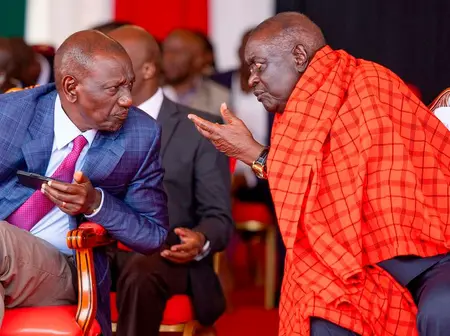
What was billed as a show of unity ahead of President William Ruto’s four-day tour of Luo Nyanza quickly became a stage for political positioning, competing loyalties and a catalogue of demands from the Orange Democratic Movement (ODM).The message from the grassroots and elected leaders appeared simple: they were ready to back the Kenya Kwanza leader for a second term in exchange for development and political consideration.
Former President Uhuru Kenyatta’s continued roles in the Jubilee Party and Azimio coalition has come under renewed scrutiny after the High Court upheld a law restricting retired Presidents from holding political party office beyond six months after leaving State House.
The court dismissed a petition challenging Section 6(1) of the Presidential Retirement Benefits Act, ruling that the provision limits formal party leadership but does not bar retired presidents from belonging to parties or participating in political activities.
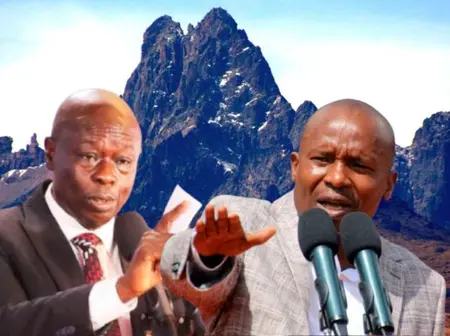
The scramble for Mt Kenya voting bloc on Sunday went a notch higher following a verbal exchange between Deputy President Kithure Kindiki and his predecessor Rigathi Gachagua, regarding the unity of the region.
While Mr Gachagua accused Prof Kindiki of a scheme to divide the mountain into East and West ahead of the August 2027 General Election, the DP fired back, saying nobody was interested in splitting the region.
Public Service Cabinet Secretary Geoffrey Ruku is championing the split, arguing that the Mt Kenya West had refused to support Prof Kindiki as he positions himself to retain the running mate position in President William Ruto’s 2027 re-election bid. The CS has been accused of speaking for his “masters”, interpreted to mean Prof Kindkiki and President Ruto.
The CS is pushing for political autonomy of the East that comprise Meru, Embu and Tharaka Nithi, claiming that he will mobilise more than three million votes from the region in support of President William Ruto’s re-election bid.
Dr Ruto is facing opposition from Nyeri, Murang’a, Kirinyaga, Nyandarua and parts of Laikipia, which are in the west of the mountain.
According to political analysts, the mountain bloc which played a key role in propelling Dr Ruto to power in 2022, if united against him, is likely to bring to reality Mr Gachagua’s campaign for Dr Ruto’s one term presidency.
The Sunday war of words between Mr Gachagua and the DP was sparked by Saturday’s incident during which one person was killed and several vehicles burnt following a confrontation between youths who were attempting to storm Prof Kindiki’s meeting at Nembule stadium in Embu County.
On Sunday, Mr Gachagua told Prof Kindiki to forget about splitting the region.
“We know, a fact that you cannot deny, that Mr William Ruto gave you a deadline of October 25, 2026, to divide the region into an imaginary Mt. Kenya East and West. How can you divide a people united by culture and a rich history for years?,” Mr Gachagua posted on his Facebook page.
He went on: “I have told you several times, and it is in the public domain, that you cannot divide the mountain; this is an exercise in futility. It is easier to cut a Mugumo tree with a razor blade than to divide the mountain. Haven’t you and your boss learnt any political lessons from the Olkalou by-election?”
Prof Kindiki fired back, and told off Mr Gachagua, insisting that nobody was interested in splitting the mountain.
“No mountain will be divided, may be in your evil dreams. Me and you found The GEMA united, it will forever remain so, and you have zero capacity to unite anything. Wachana na Mountain, it has its ways of remaining intact. Tafuta sera, let’s meet at the BALLOT,” Prof Kindiki responded, also in a Facebook post.
During his address to the more than 15,000 grassroots leaders, Prof Kindiki waded into the mountain split debate, and directed Mr Rutu to stop the campaign.
The DP emphasised the unity of the region and asked Mr Ruku and his supporters to go slow, saying the people of Mt Kenya East and West have co-existed for decades and they should not be separated.
“I urge my brother Ruku to stop the campaign he is running. The people of this region will remain united, peaceful and tolerant, despite attempts by some politicians to fan ethnic and regional animosity,” he said.
The DP said elders from both Mt Kenya East and West are engaging to sort out the emerging political differences in the region and they should be given time to pursue the matter.
In the same meeting, Embu County Assembly Speaker Murithi Thiriku had sought to clarify that those who are running the split campaign are doing so out of reluctance by some leaders from Mt Kenya West to support Prof Kindiki, despite the East having supported the West since independence, an argument that has been advanced by Mr Ruku.
According to sources around Prof Kindiki, the elders had demanded that Mr Ruku stops the split the mountain clamour, which they said was causing animosity and discomfort among the people in the region.
“The elders from both sides of the mountain said since time in memorial, the West and East are brothers and sisters with shared culture, religious beliefs, commercial interests, political choices and social orientation and that any talk of splitting the region was not only counterproductive but practically untenable,” said an on condition of anonymity.
The development came even as President Ruto’s allies stepped up efforts to woo Mt Kenya west into his fold.
While Energy Principal Secretary Mr Alex Wachira told Nation he will hold forums in Nyeri next week, elders are expected to meet in Nyeri with the intention of bridging the political divide between Mt Kenya East and West.
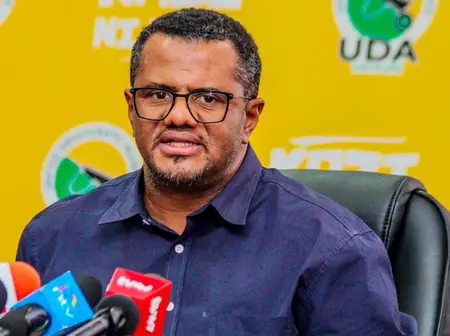
Hassan Omar is in trouble again. This time, at a political gathering in Mombasa, the UDA secretary-general suggested that even the dead could be made to vote for President William Ruto. The remarks sounded less like those of a former human-rights commissioner than of a politician intoxicated by proximity to power.
Manyatta MP Gitonga Mukunji resurfaced on Sunday evening, accusing police of laying siege to his home over Saturday’s violence at Deputy President Kithure Kindiki’s meeting in Embu.
The uniformed and police officers in civilian clothes had been at his home in Mutunduri as early as 6am, allegedly waiting to apprehend him.
“Sending such a big number of police to my home is unnecessary. There is a better way to use the police. A simple summon to any police station is enough. This is pure misuse of taxpayers’ money,” Mr Mukunji wrote on his Facebook page.
The MP said he was away from home attending a Sunday service in Mwea Ward, Mbeere South Constituency, when the officers arrived.
“Police came home but I had already left for church. I’m now in church, let them come and arrest me,” he said.
Heavily armed officers, some in plainclothes, had surrounded the MP’s rural home in Mutunduri a day after hostile youths attempted to disrupt Prof Kindiki’s meeting at Nembure Stadium in Embu County.
The officers camped at the MP’s gate for hours seeking to establish the lawmaker’s whereabouts following the violence that erupted during Saturday’s meeting.
The presence of the officers caused panic at the homestead as they remained there for several hours.
However, Eastern Regional Police Commander Stephen Chebet denied claims that police were looking for Mr Mukunji.
Asked why officers were deployed around the MP’s home, Mr Chebet said they were conducting patrols to maintain peace in the area.
“The officers were patrolling Mutunduri and the MP’s home area is not restricted,” he said.
Mr Chebet, however, said police would question the MP if investigations established that he was linked to the violence.
“If it is established that the MP is responsible for the violence, then we shall visit him,” he said.
The police boss confirmed that several suspects had been arrested in connection with the chaos at Nembure.
“I can confirm that we are holding some suspects and we are compiling the list,” he said.
The reported police presence at Mr Mukunji’s home came a day after violence disrupted Prof Kindiki’s meeting at Nembure, where one person was killed and several vehicles were torched.
The Deputy President strongly condemned the violence, saying the United Democratic Alliance (UDA) regretted the loss of life and damage caused by youths who attempted to disrupt the party meeting.
“I condemn violence and demand that law enforcement agencies take punitive measures against all those responsible for perpetuating political violence,” Prof Kindiki said.
He stressed that UDA stood for issue-based politics and a contest over which party had a better development record and policy agenda for Kenya, rather than forcing political support through “lies, violence and useless slogans.”
“Our party leadership in Embu has been tasked with verifying the exact nature of the loss and damage, and to coordinate responses to stand in solidarity with all those adversely affected in one way or another,” he said.
The violence has since escalated political tensions in Embu, with Mr Mukunji denying involvement in the disruption while accusing the government of targeting him.
Meanwhile, Prof Kindiki has asked the Kenyan electorate to accord President William Ruto a fair assessment based on his development record and not the vengeful narrative waged by his opponents in next year's General Election.
The DP, while outlining the Kenya Kwanza Administration's performance scorecard in the last four years, said President Ruto had exceeded the expectations of his critics in the designing and implementation of transformative development projects and programmes, aimed at growing grassroots economy and empowering millions of Kenyans to rise from poverty.
He also hit out at the critics of the Government, accusing them of inciting anger and hatred against the President, instead of offering alternative policies.
“When you ask them to table alternative policies and development programmes, they tell you ‘Kasongo must go’. When you ask them what plans they have to help millions of young people across the country looking for jobs, they say ‘soprano’ and other useless things. How can such people be trusted with the leadership of our country? How can such clueless people be an alternative for President Ruto who has a solid plan that envisages Kenya beyond 2030? Let us be fair to President Ruto,” he said.
According to Prof Kindiki, opponents of the Ruto administration had given the Government 6 months to collapse under the weight of public debt and economic pressure, but innovative policies and interventions had managed to save the economy from a total shutdown.
The uneasy truce between President William Ruto’s United Democratic Alliance (UDA) and Oburu Oginga-led Orange Democratic Movement (ODM) is facing a fresh test as the two parties begin confronting the most difficult question in their broad-based government arrangement — who gets to contest where in 2027.
Is a Cabinet Secretary in a critical docket losing the confidence of close allies and key State operatives? Questions are quietly emerging within government over the CS’s grip on his docket, with aides pointing to alleged missteps.
Those familiar with the internal dynamics say his Principal Secretary has come under fire, at times appearing to absorb criticism intended for the CS. The growing frustration has sparked questions about whether the CS can discharge his mandate. Some allies now privately question his continued stay in office.
A Member of Parliament has been avoiding meeting his colleagues for several weeks now. Fellow parliamentarians say the MP has been skipping coming to the House over an explosive remark he made outside the House a few weeks back.
According to the House rules, MPs cannot discuss the conduct of their colleague unless a substantive motion is introduced and in the presence of the subject-member.
Well aware of this provision, the MP has been finding excuses not to attend sessions and has even at one time travelled outside the country at the time the legislators were “baying for his blood”. It’s just a matter of time to see if the MP will account for his loose mouth.
Just who are the “vultures” in the country’s major political parties? The question has triggered a debate after an MP raised concerns over “vultures” circling a series of events lined up in coming months. The legislator, considered close to the party’s top leadership, is said to be unhappy with unnamed officials whom she accuses of conflicts of interest and using proxies to do business with the party.
Her concerns reportedly centre on contracts and supplies that, she argues, should benefit young people and vulnerable groups. She has questioned why officials would profit from “solemn” activities.
Did some party officials nearly come to blows over a vacant parliamentary commission post? The contest for the position appears to have generated considerable heat.
The scramble has also allegedly opened a window for some aides to cash in, with claims that individuals linked to senior officials have been approaching unsuspecting applicants and collecting money while promising to influence the outcome.
Whether the aides are acting on their own initiative or with the knowledge of their political masters remains unclear. As competing interests collide, one question lingers: who will ultimately secure the coveted vacant commission seat?
A political party is quietly grappling with an unusual leadership dilemma after one of its senior officials was barred from accessing office despite remaining a fully registered member.
The development has sparked murmurs within and outside the party, with officials and members questioning the move and whether it is part of a wider power struggle.
The emerging consensus among some party insiders is that unnamed “powerful forces” could be working behind the scenes to weaken the official and disrupt the party’s operations ahead of the 2027 General Election.
The episode has reportedly deepened suspicions of a campaign to sideline certain leaders, raising questions over who is pulling the strings and what interests are at play.
Is the recruitment of a senior officer of a critical agency causing division within the top leadership of the agency? Our sources within the agency have whispered to us that there is growing tension and fights between the leadership of the agency that has put to abeyance the much-anticipated shortlist.
And now, word has it that the staff of the agency have resolved not to provide the much-needed input on a burning tendering dispute so as to put to shame the agency.
For years, political fortunes across the country could be shaped around elders sitting under a tree, where community leaders negotiated consensus and rallied voters behind preferred candidates.
From the coast, Mt Kenya, Rift Valley, Nyanza and Northern Kenya where negotiated democracy reigned supreme, elders’ word was almost final.