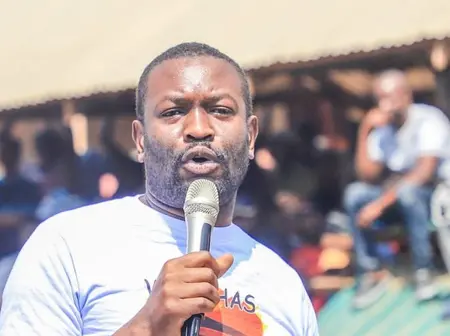
Sifuna addressed the matter on Sunday, November 22, while speaking to Kenyans living in the US during a Linda Mwananchi Movement town hall at The Palace Center in Pennsylvania.
The senator, who is touring the country to engage Kenyans in the diaspora ahead of the 2027 General Election, said his main objective was to connect with potential voters rather than seek meetings with American political leaders.
He made the remarks following suggestions by former Makueni Governor Kivutha Kibwana that Embakasi East MP Babu Owino should consider meeting Mamdani for mentorship during a possible US visit.
Responding to the discussion, Sifuna maintained that he would have an opportunity to interact with the New York mayor during next year's United Nations General Assembly.
"I have not come to meet Mamdani. I have come to meet you because you are the ones who will vote for us; you are the ones who have the votes," Sifuna said.
He also dismissed suggestions that his American tour would struggle to attract audiences, claiming that some of his Nairobi critics had anticipated poor attendance and were waiting to use it against the movement.
Kibwana later clarified that his initial remarks were specifically directed at Babu Owino and were not intended to question Sifuna's engagements in the United States.
The former governor urged Sifuna to remain focused on his political objectives, adding that he had confidence in the Nairobi senator.
Meanwhile, the Linda Mwananchi Movement's diaspora activities have attracted support from Kenyans living in America.
George Njue, a Kenyan based in North Carolina, travelled for nine hours to attend a Sifuna rally in New Jersey.
Njue challenged Kenyans abroad to contribute towards the senator's political activities, suggesting that the diaspora community could mobilise KSh100 million for his campaigns.
His proposal came as the movement established its first diaspora office in Hackettstown, New Jersey, as it continues organising ahead of the 2027 elections.
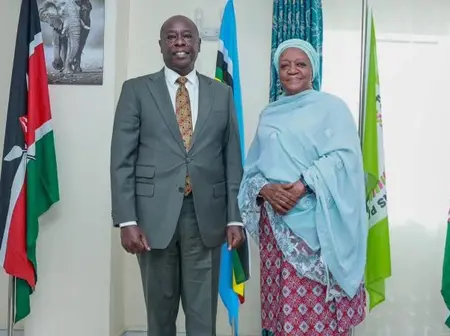
Gachagua met United Nations Nairobi Office Director-General Zainab Bangura at his Nairobi office on Monday, November 23, where they discussed the country's political environment ahead of the August 10, 2027 General Election.
During the meeting, the Democracy for the Citizens Party (DCP) leader questioned the independence of the Independent Electoral and Boundaries Commission (IEBC), arguing that the electoral body had lost the confidence of a section of Kenyans.
He warned that public distrust in the commission could create further concerns about the credibility of the next general election.
Gachagua called on the IEBC to demonstrate impartiality and consult all political players instead of favouring the interests of the government.
He also asked the United Nations to intervene by encouraging the commission to address complaints raised by different stakeholders and take steps to rebuild public confidence.
Beyond electoral matters, the former deputy president raised concerns about alleged human rights abuses, including abductions, extrajudicial killings and violence targeting young people.
He urged the international organisation to press the Kenyan government to respect human rights and ensure that citizens are protected from unlawful actions.
Gachagua further pointed to Kenya's history of election-related unrest, arguing that problems involving electoral institutions during pre-election, election and post-election periods could contribute to political instability.
He welcomed the United Nations' involvement in promoting peaceful, transparent and credible elections, saying its engagement was important as the country prepares for another electoral contest.
The meeting comes as opposition leaders continue pushing for electoral reforms ahead of the 2027 elections.
Among their proposals are an independent audit of the voter register, changes to presidential vote tallying, electronic voting for Kenyans living abroad and live broadcasting of polling and vote-counting activities.
The opposition maintains that the proposed measures would strengthen transparency and help protect the integrity of election results.
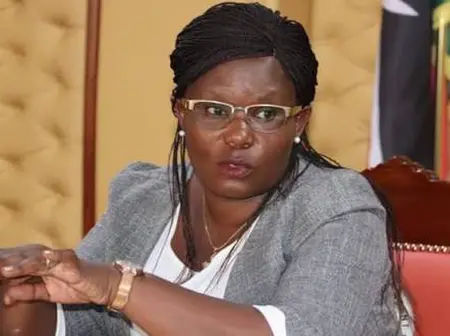
Former Meru Governor Kawira Mwangaza has claimed that a senior government official sent her a text message asking about the situation in the opposition, only for the conversation to end after she replied.
Speaking in a mix of Kiswahili and English, Mwangaza said the official, whom she described as one of the people in the government, texted her to ask how things are on her side.
She said she responded by telling him that there are no goons and no teargas in the opposition, and that the official then went silent and disappeared from the conversation.
Her remarks appear to be a dig at the government, which opposition leaders have accused of using hired goons and teargas to disrupt their rallies and events.
By describing the opposition as a calm place free of such tactics, Mwangaza was suggesting that the official was curious about the camp and may be considering a move.
Mwangaza was impeached as Meru governor and has since aligned herself with the opposition, where she has been critical of the Ruto administration.
Her claim adds to the growing talk of government figures quietly reaching out to opposition leaders as the 2027 General Election draws closer.
Mwangaza did not name the official, and the claim has not been independently confirmed. The government had not responded to her remarks at the time of publishing.
According to a report published by TUKO.co.ke, the Head of State left the country through Kisumu International Airport on Saturday, November 21, 2026, before travelling to the Republic of Congo.
What made the departure particularly interesting was the reported change in his clothing before leaving the country. The development generated curiosity among Kenyans, with questions emerging about the circumstances surrounding his sudden journey.
However, the President's trip was connected to an important diplomatic engagement in Oyo, Republic of Congo.
Ruto was expected to participate in discussions involving leaders from four African countries, including the Democratic Republic of Congo, the Republic of Congo and Togo. The meeting focused on regional cooperation, diplomatic relations and matters affecting stability in the region.
Meanwhile, Ruto's Western Kenya tour had involved visits to several counties, including Busia, Bungoma, Kakamega and Vihiga. His engagements focused on infrastructure, education, agriculture and other government development programmes.
His sudden departure therefore became a major talking point, particularly because of its timing and the reported change in his appearance before boarding the aircraft.
Although his international engagement provided an explanation for the journey, the unusual circumstances surrounding his departure continued to attract public interest.
Sifuna made the remarks while addressing Kenyans in Pennsylvania during his 17-day visit to the United States, where he is engaging supporters and promoting his presidential ambitions.
The Orange Democratic Movement (ODM) Secretary General maintained that his political positions were not open to negotiation, warning that he would not allow individuals within the opposition to dictate how he should conduct his campaign.
According to Sifuna, he was surprised to discover that some political figures expected him to adjust his beliefs and approach before agreeing to support his State House ambitions.
He insisted that his commitment to constitutionalism and the rule of law had shaped his political journey for years and would remain central to his presidential campaign.
The senator also dismissed the idea of presenting a different personality to attract political allies, arguing that voters should support leaders based on their genuine convictions rather than political convenience.
Sifuna said he wanted to establish an honest relationship with Kenyans, promising that the person seeking their votes in 2027 would remain consistent with the leader they currently know.
His remarks come amid disagreements within opposition ranks over the formation of a united political party and the selection of a presidential candidate to challenge President William Ruto.
Last week, Sifuna accused Embakasi East MP Babu Owino and Siaya Governor James Orengo of dishonesty during discussions surrounding the proposed political arrangement.
Babu had suggested that an earlier understanding would have seen him become the party leader while Sifuna was selected as its presidential candidate.
However, Trans Nzoia Governor George Natembeya dismissed claims that such an agreement existed, maintaining that the arrangement would not have been acceptable if it meant limiting Sifuna's authority.
The disagreements have exposed competing positions among opposition figures as political formations begin positioning themselves ahead of the 2027 General Election.
Nairobi Senator Edwin Sifuna has said he will not compromise his values or positions to win backing for his 2027 presidential bid, even from within the opposition.
He made the remarks during a 17-day tour of the United States, where he is seeking support for his campaign to become Kenya's sixth president.
He admitted he has never claimed to be perfect, but insisted he will not tiptoe around anyone to earn their endorsement.
The senator is campaigning on constitutionalism and the rule of law, which he described as convictions he has held since childhood and will not trade away regardless of the political cost.
He argued that voters can support a leader for who he truly is, without any need for pretence.
He also framed his campaign as one built on honesty, saying he wants a relationship with voters based on truth.
According to him, the Sifuna Kenyans see today should be the same one they meet when he returns to seek re-election.
His comments come amid a growing rift among opposition leaders, who have publicly promised to work together to remove President William Ruto from power.
Last week, Sifuna accused Embakasi East MP Babu Owino and Siaya Governor James Orengo of dishonesty, suggesting they betrayed him in efforts to form a single party ahead of the 2027 polls.
Babu has claimed that Sifuna and his allies in the Linda Mwananchi Movement (LMM) ignored an agreement under which he would lead the party while Sifuna flew the presidential flag.
Trans Nzoia Governor George Natembeya rejected that claim over the weekend, saying they would never have accepted any arrangement meant to limit Sifuna's powers.
Kiharu Member of Parliament Ndindi Nyoro has expressed confidence that his political party People's Party of Kenya will soon emerge as the largest political outfit in Kenya.
Speaking about the party's growing political ambitions, Nyoro said he was convinced that it would attract massive support across the country within a short period.
The lawmaker expressed optimism that the party's popularity would continue rising as more Kenyans identify with its political agenda and leadership. “I am very convinced that, in just a few weeks, this party will be the largest party in Kenya,” Nyoro stated.
His remarks suggest that the party is targeting significant national expansion as political realignments continue ahead of the 2027 General Election.
Nyoro's prediction comes at a time when political parties are positioning themselves to attract supporters and strengthen their influence ahead of the next electoral contest.
Remember to like, share and follow me for more of these updates.
The latest changes involve 15 appointments across different sectors, with several Cabinet Secretaries also making adjustments to the leadership of institutions under their respective ministries.
Among the notable changes, President Ruto appointed Mwanakitina Bakari and Samuel Kaunda Ogweno to serve on the NEPAD/APRM Kenya Governing Council for a period of three years.
At the same time, the Head of State revoked the appointment of Francis Habara Moroto, effectively ending his membership of the governing council.
The Treasury Cabinet Secretary, John Mbadi, also announced several changes affecting institutions under his ministry.
In one of the major appointments, Mbadi established a new five-member board for the Kenya Institute of Supplies Management.
Leonard Mayende was appointed chairperson of the board, with Sadam Ismail, Esther Wainoi Ndiga, Mathew Kipkoros Kibet and Saadia Ibrahim Farah named as members.
The Treasury CS also appointed Catherine Asemeit Omasete to serve on the Public Sector Accounting Standards Board for a period of three years.
Her appointment replaces Rispher Olick, whose previous appointment was revoked as part of the latest changes.
The appointments come as the government continues to reorganise leadership in various public institutions, with the latest Gazette notices outlining changes in board membership and other administrative positions.
The developments have attracted attention, particularly because of the number of institutions affected and the involvement of both the President and Cabinet Secretaries.
Kenyans are expected to follow the changes closely as the newly appointed officials prepare to take up their responsibilities.
The latest announcements have also generated discussion on social media, with Kenyans awaiting further details about the affected institutions and the responsibilities of the new appointees.
The commission says Kenya's existing laws and constitutional provisions have not been adequately enforced, allowing candidates flagged over integrity concerns to proceed with their political ambitions.
EACC Regional Manager for Western Kenya, Eric Ngumbi, said the commission identified 87 individuals with outstanding integrity issues during the 2017 General Election. The number rose to 241 in the 2022 election.
However, only a small number were prevented from contesting, raising questions about the effectiveness of the current enforcement system.
Speaking during a media engagement in Mombasa on November 23, Ngumbi said none of the 87 individuals flagged in 2017 was barred from contesting, while only five of the 241 identified in 2022 were blocked by the Independent Electoral and Boundaries Commission (IEBC).
The commission argues that the figures demonstrate the gap between identifying candidates with integrity concerns and taking action to stop them from seeking public office.
EACC is proposing reforms to strengthen the authority of its recommendations on the suitability of people seeking public appointments and elective positions. It also wants clear legal procedures and timelines established for the verification of candidates.
The commission says the current framework remains inadequate, particularly where candidates are under active corruption investigations or have criminal cases pending in court but are still allowed to contest elections.
It has also raised concerns about conflicting court decisions on the eligibility of candidates facing corruption investigations and criminal proceedings.
According to EACC, uncertainty over the interpretation of Articles 99(3) and 193(3) of the Constitution, including questions surrounding the exhaustion of appeals and review processes, has complicated efforts to enforce integrity requirements.
The commission wants lawmakers to address legal ambiguities surrounding disqualification, integrity standards and the threshold of proof required in ethics-related matters.
It has also called for integrity cases involving aspiring leaders to be handled promptly so that disputes over their eligibility are settled before elections, rather than dragging on after candidates have been cleared or elected.
Political parties have also come under scrutiny for failing to adequately enforce integrity requirements during nominations.
Ngumbi said some parties prioritise popularity, political influence and other considerations over constitutional standards, allowing candidates with integrity concerns to secure nomination.
The EACC is urging political parties to strengthen their internal vetting systems, conduct thorough background checks and ensure that candidates meet constitutional requirements before being nominated.
The commission also raised concerns about public officers seeking elective positions without complying with the requirement to resign at least six months before elections.
Some officers reportedly return to their government jobs after failing to secure party nominations, a practice that raises questions about compliance with the Elections Act.
EACC says enforcing integrity standards also requires greater public involvement, arguing that voter apathy and tolerance of unethical behaviour weaken accountability efforts.
The commission maintains that legislation alone cannot guarantee credible elections without cooperation from accountability institutions, political parties, civil society, the media and citizens.
It also highlighted public interest litigation and court decisions that strengthen accountability as important tools in protecting the rule of law.
According to EACC, integrity checks should cover the entire electoral cycle, from the early stages of political activity and nominations to campaigns, voting and the period after elections.
As Kenya prepares for the 2027 General Election, the commission plans to verify the integrity of aspirants and launch a nationwide integrity awareness campaign in December 2026, targeting young people among other groups.
It says it will receive and act on complaints before, during and after elections, establish complaint desks during campaigns, engage political parties and aspirants, participate in court proceedings and issue advisories on emerging integrity risks.
Among the issues it intends to monitor are voter bribery, misuse of public resources during campaigns, theft of public funds, deployment of public officers to political activities and failure by government employees to resign within the required period before seeking elective office.
Other concerns include forged academic certificates, politicians using their names to brand public projects for political gain, misinformation, manipulation of public narratives and failure to comply with wealth declaration requirements.
The commission reminded public officers of the requirement to submit initial wealth declarations within 30 days of assuming office and final declarations within 30 days of leaving office.
Ngumbi said credible elections should not be judged solely by the conduct of the electoral process or the eventual winner, but also by the integrity of the people entrusted with public authority and the confidence citizens have in state institutions.
It urged journalists to continue investigating integrity concerns and educating citizens on the importance of ethical leadership as the country approaches the 2027 elections.
The President suggested that he had been trying to understand why his political opponents were struggling to present a convincing agenda to Kenyans, but claimed he had now discovered what he considers the main reason behind their predicament.
In remarks that could spark fresh political reactions, Ruto turned the spotlight on the opposition's past performance, arguing that their time in government had not produced a track record they could confidently present to voters.
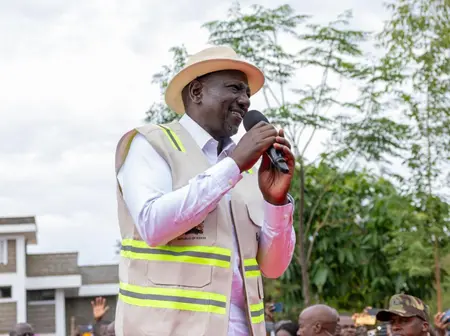
“I have been wondering why those opposition fellows have no agenda, but today I finally got the answer,” Ruto said.
He continued by making a direct accusation against his political rivals, questioning what they had accomplished during their years in government.
“I found out that those people have no track record to show for the years they spent in government,” he added.
The remarks represent a political challenge to opposition figures who have been positioning themselves as alternatives to the current administration while criticising government policies and demanding changes in the country's leadership.
Ruto's argument appears to centre on the idea that politicians seeking to convince Kenyans to support them should first demonstrate what they achieved when they previously held positions of power.
By bringing their past government experience into the debate, the President has shifted the political discussion from criticism of his administration to questions about the opposition's own record.
The statement is likely to attract strong reactions from across the political divide, with government supporters potentially agreeing that opposition leaders should explain their achievements, while critics could argue that Ruto is attempting to deflect attention from challenges facing his administration.
The opposition's response, if any, could further fuel the political exchange, particularly if its leaders decide to defend their past achievements or counter the President's accusations with criticism of the current government.