Category: Health

  • Tragedy as mum dies of cancer doctors had thought was irritable bowel syndrome

    Tragedy as mum dies of cancer doctors had thought was irritable bowel syndrome

    Debbie Tomlinson

    Debbie Tomlinson was a beloved grandmother(Image: Cover Images)

    A “bubbly, strong and fearless” mum has died after a four-year battle with bowel cancer which doctors initially mistook for irritable bowel syndrome (IBS).

    Debbie Tomlinson, 62, passed away after the disease spread to her lymph nodes, liver, bowel and knee, despite undergoing surgery and extensive treatment.

    After enduring several rounds of chemotherapy, Debbie eventually made the heartbreaking decision to stop treatment so she could spend what time she had left making memories with her family. Her loved ones said their final goodbyes at her funeral on Friday October 23, with daughter-in-law Amy Tomlinson describing the service as “joyful rather than sad”. Amy said: "We gave her the send-off she would've wanted."

    The tragedy comes as awareness for bowel cancer is being raised following the death of Olympic athlete Ciara Mageean at the age of just 34.

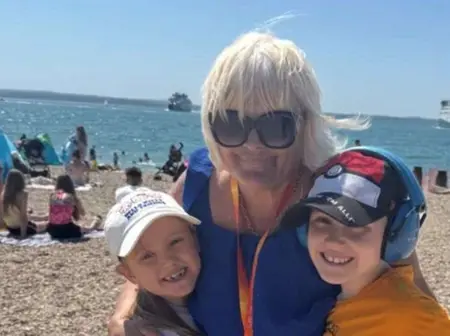
    Family members, some of whom pictured, have paid tribute to Debbie

    Family members, some of whom pictured, have paid tribute to Debbie(Image: Cover Images)

    The family, though, are now facing a £3,000 shortfall in funeral costs. Debbie's son, Rhys, contributed £1,500 towards the arrangements, but he and his wife Amy are appealing for public support to help cover the remaining amount.

    Amy said Debbie had initially visited her GP with concerns about persistent symptoms, including bloating, stomach pain and difficulty going to the toilet.

    But for more than a year, her symptoms were attributed to IBS and general stomach problems, with no further investigations, Amy claimed. She said: "All they put it down to was IBS and tummy problems."

    Debbie was eventually diagnosed with bowel cancer after a routine screening kit returned an abnormal result. The hospital contacted her and arranged further tests, which confirmed the devastating news. Despite the delay, Amy said Debbie never allowed anger to consume her.

    “The way Debbie was, she was never angry. She just lived her life. She was just like, 'It is what it is',” the grieving daughter-in-law, from Reading, Berkshire, said.

    Debbie had battled cancer for four years

    Debbie 'lived for' her grandchildren, her relatives said(Image: Cover Images)

    Following her diagnosis, Debbie underwent surgery in Reading to remove the cancer, followed by radiotherapy and chemotherapy, which she found extremely difficult.

    Although she missed her final chemotherapy session, Debbie was led to believe her treatment was over and everything was “done and dusted”, Amy, who has shared to reporters photos the family is happy the media use, explained.

    But in October 2024, a routine scan revealed the cancer had spread to her liver. Debbie was referred for specialist treatment in Basingstoke, where she underwent another operation to remove the cancer from her liver. Doctors subsequently told her there was no evidence of disease.

    However, the relief was short-lived. In January 2025, another routine scan revealed the cancer had returned to her bowel. Doctors proposed further surgery which would remove the cancer but also involve removing several vital organs.

    “It would've been a long recovery, but Deb was up for it,” Amy said.

    Between January and February, Amy accompanied her mother-in-law to appointments and scans at several hospitals as they waited for news about the proposed operation. Then, in February 2025, the family received a devastating phone call informing them the surgery could not go ahead and Debbie's cancer was terminal.

    She was offered chemotherapy, which she initially agreed to try again, but the side effects quickly became too much. Eventually, Debbie decided she would rather spend her remaining time with her family than continue treatment that was leaving her unable to enjoy life.

    Amy explained: “She decided she couldn't do it, because if she did the chemo, she had no life, but if she didn't do it, at least she had a life where she could go and do things."

    The chemotherapy left Debbie struggling to get out of bed and also caused hair loss, something which particularly upset her because of how much she loved her hair.

    Amy said: "It's quite rare to lose hair after one session. It's normally a build-up of several sessions, so that really affected Deb because she really loved her hair, and she was also so poorly.

    Despite knowing her illness was terminal, Debbie remained determined to make the most of the time she had left.

    She enjoyed days out and precious moments with her family, particularly her grandchildren, Logan and Thea, whom Amy said she “lived for”.

    Remembering the 62-year-old, Amy paid tribute to a woman whose personality and sense of humour left an unforgettable mark on those around her.

    “She had her own way of doing things, her own sense of humour and a personality that could never be replaced,” she said.

    And in a touching final tribute, Amy revealed the family could almost picture Debbie enjoying some of her favourite things wherever she is now.

    “We know that wherever she is now, she'll be having a WKD Blue, a fag and a Fab for us all – and probably wondering what on earth we're all making such a fuss about."

    To donate to the family's GoFundMe page, use this link.

  • Kenya nears end of Ebola outbreak monitoring as 52 contacts await clearance

    Kenya nears end of Ebola outbreak monitoring as 52 contacts await clearance

    thumbnail

    Kenya is preparing to conclude its Ebola monitoring exercise this week, with 52 people still under quarantine expected to be released after completing the required observation period.Health Cabinet Secretary Aden Duale said the country has not recorded any new confirmed infections since October 19.The Ministry of Health said the outbreak resulted in nine confirmed cases and two deaths, with all infections traced to a single cluster linked to a patient who had travelled from the Democratic Republic of Congo (DRC).

  • Health workers go 19 months without pay

    Health workers go 19 months without pay

    Dozens of health workers hired under a Global Fund programme have gone unpaid for 19 months, forcing some to abandon medical treatment, pull children out of school, or rely on spouses and well-wishers to survive.

    Sophie Yogo, a medical laboratory technologist at Karachuonyo County Hospital laboratory in Homa Bay County, says she is among dozens of health workers supported by the Global Fund who have gone nearly 20 months without pay.

  • BBC doctor new ‘American Covid’ specific symptom update as hospitalisations rise

    BBC doctor new ‘American Covid’ specific symptom update as hospitalisations rise

    Dr Ranj Singh gave an update to BBC Morning Live viewers

    Dr Ranj Singh gave an update to BBC Morning Live viewers(Image: BBC)

    A BBC doctor has given an update on so-called ‘American Covid’ – the prevalent XFG variant which is sweeping the UK causing an increase in hospitalisations this season – and said there are specific symptoms to watch out for. The UK Health Security Agency (UKHSA) monthly figures show in October a total of 8,518 people contracted Covid, a 40 per cent increase on September which saw 5,201 cases overall.

    A total of 1,847 Covid-19 cases were identified in hospital settings in the seven days up to 27 October, decreasing from 2,151 cases in the previous week, according to the latest UKHSA data.

    Although weekly cases have declined, the number of deaths recorded in the week to October 16 increased by 25 per cent to 69 from 55 the previous week.

    Appearing on BBC Morning Live this week Dr Ranj Singh said: “Many people will have heard of so-called American COVID. It’s being used to describe the XFG variant, which is a Omicron descendant. No evidence at the moment that it’s any more serious than other Omicron descendants. COVID, it’s it’s the SARS KV2 virus. Respiratory spread again much like other viruses.”

    He said infections were ‘mild to moderate’ for most people but warned it could be severe in particular groups, especially the vulnerable.

    The UKHSA said: “XFG – sometimes referred to in the media as the Stratus variant – remains the most common current COVID-19 variant. XFG has also been referred to as ‘American Covid’ in some media coverage.

    “The name reflects where the strain was first sequenced and detected, rather than necessarily where it originated.”

    Dr Singh reminded people of three key symptoms which could indicate people have Covid rather than other seasonal illnesses. He said: “Remember for this um the loss of smell and taste. And also the gastrointestinal symptoms are quite predominant in COVID.”

    For preventing American Covid, Dr Singh said people should consider masks: “Prevention again we’ll talk about ventilation really important, hygiene is really important. Masks in high-risk situations, especially if you’re around very very vulnerable people and again COVID vaccination is being offered to certain high-risk groups.”

    UK Health Security Agency (UKHSA) data shows that COVID-19 positive test rates rose to around 7% in September, with hospital admission rates increasing by approximately 50% over the same period. UKHSA said increases have been observed consistently across England, Scotland, Wales and Northern Ireland, as well as across Europe and the United States, ‘indicating this is not a localised trend’.

    Ensure our latest health headlines always appear at the top of your Google Search by making us a Preferred Source. Source in your Google search settings

    It added: “Current data does not indicate that these variants lead to more severe illness than other variants in circulation. UKHSA monitors a range of surveillance systems, including GP appointments, A&E attendances and hospitalisations, alongside genomic sequencing, to track how variants are behaving.

    “As increases in hospitalisations are rising in line with overall increases in COVID-19 circulation – rather than rising sharply on their own – this suggests a general increase in COVID-19 activity rather than a variant causing more severe disease.”

    In terms of explaining the increase the UKHSA said: “There are likely to be several factors behind the current rise. As we move into winter, colder and wetter weather means people spend more time indoors, which enables the spread of respiratory viruses. It has also been roughly a year since the last significant COVID-19 wave, so immunity from vaccination and previous infection may be waning in parts of the population, making people more susceptible.”

    UKHSA says if you have symptoms of a respiratory infection, such as COVID-19, and you have a high temperature or do not feel well enough to go to work or carry out normal activities, you should avoid contact with vulnerable people and stay at home if possible. For those of us who absolutely can't stay at home, the guidance remains unchanged, and will reduce the chance of passing on your infection to others:

  • Ministry of Health reports five Ebola recoveries as cases remain at nine

    Ministry of Health reports five Ebola recoveries as cases remain at nine

    thumbnail

    Listen to articleDr Amoth urged communities to welcome discharged patients and contacts without discrimination, emphasising that those who complete quarantine without developing symptoms pose no risk to others.Five Ebola patients have been discharged from hospital after recovering from the Bundibugyo virus, as Kenya steps up efforts to contain the outbreak.

  • Ministry of Health reports five Ebola recoveries as cases hold at nine

    Ministry of Health reports five Ebola recoveries as cases hold at nine

    thumbnail

    Listen to articleDr Amoth urged communities to welcome discharged patients and contacts without discrimination, emphasising that those who complete quarantine without developing symptoms pose no risk to others.Five Ebola patients have been discharged from hospital after recovering from the Bundibugyo virus, as Kenya steps up efforts to contain the outbreak.

  • Obidan Dela reveals latest update on Geoffrey Mosiria’s health

    Obidan Dela reveals latest update on Geoffrey Mosiria’s health

    thumbnail

    TikToker Obidan Dela has shared a positive update on the former Nairobi County Chief Officer Geoffrey Mosiria, who was recently admitted to hospital, revealing that he is stabilising and has started eating as he continues to recover.In a video shared on his Instagram page on Monday, November 2, 2026, Obidan said Mosiria was doing better and thanked those who had shown concern about his condition.

  • Energy drinks may pose serious heart risks for young adults, new study warns

    Energy drinks may pose serious heart risks for young adults, new study warns

    Energy drinks may pose serious heart risks for young adults, new study warns

    A new study has indicated potential health risks which may be associated with caffeinated energy drinks, including an increased risk of heart problems.

    The American Heart Association has conducted the research, which examined over 28,000 reports covering a time scale of eight years.

    These reports were sent to a database held by the Food and Drug Administration (FDA), and looked at adverse events, though the findings have not been published in a peer reviewed journal at present.

    Part of the data allowed them to compare incidences of cardiac arrest with energy drinks and supplements that contained caffeine with such as caffeine pills or powders used prior to a workout with other FDA-approved products.

    Cardiac arrest was reported approximately 11 times more frequently in the case of these products than with other products which are regulated by the FDA, NBC reports.

    In other parts of the data they also found that energy drinks and supplements appeared around 4.5 time more likely to include mention of a heart attack, as well as around four times more likely for palpitations or an abnormal heartbeat.

    Energy drinks can contain a large amount of caffeine (Getty Stock)

    A large proportion of the data, nearly half of the reports, was made up of people who were aged between 18 and 34, with the same pattern also being there for women and men.

    The study does not prove that drinking energy drinks leads to heart problems or that most people who drink them will go on to develop heart problems, and further research is still needed.

    Dr. John Higgins is a sports cardiologist at UTHealth Houston, and called the research, which he himself was not involved with, a 'warning sign' about the potential impact that energy drinks could have.

    “These are very powerful stimulants. I believe the study identifies an important and concerning cardiovascular safety signal, particularly given the reports involving younger adults and adolescents," he said.

    Meanwhile Dr. Luke Laffin, who works as a preventive cardiologist at the Cleveland Clinic in Ohio, said that the way that the FDA's reporting system works can be useful for researchers.

    The recommended safe intake for an adult is the equivalent to around four cups of coffee (Getty Stock)

    “Although not a perfect data set, FDA’s adverse event reporting system can help identify signals of harm that need to be explored with systematic safety monitoring,” he said, adding that a 'future evaluation' of the safety of energy drinks which was carried out in a 'systemic way' could be 'useful'.

    The FDA database in question in called CAERS, and anyone is able to submit data to it.

    This includes patients, carers, as well as medical professionals, all of whom can file reports about any health event, such as a cardiac arrest, which they think may be connected to a particular product such food or cosmetics.

    The FDA also warns that these reports are not the FDA saying definitively that a product causes a particular medical event.

    According to Mayo Clinic, a recommended safe daily intake for an adult is around 400 milligrams of caffeine, equivalent to around four cups of filter coffee, though this can vary from person to person.

  • Kenya flagged as high risk of Rift Valley fever disease outbreak

    Kenya flagged as high risk of Rift Valley fever disease outbreak

    Kenya is among six nations facing the highest risk of an outbreak of the Rift Valley Fever (RVF) disease, a United Nations agency has warned, putting pressure on health and veterinary authorities to prevent another spate of the highly contagious virus.

    The UN’s Food and Agriculture Organisation (FAO) and the Intergovernmental Authority on Development (IGAD) urged Kenya and other countries across Eastern Africa to strengthen preparedness and surveillance measures as heavy rainfall and flooding associated with El Niño increase the risk of RVF outbreaks.

  • How millions of people worldwide experience the same terrifying dream and what it means

    How millions of people worldwide experience the same terrifying dream and what it means

    How millions of people worldwide experience the same terrifying dream and what it means

    If you’ve ever been nodding off to sleep and suddenly felt completely awake but unable to move or speak as terror sweeps through your body and you get the unsettling feeling that there’s someone – or something – in the room with you, then you’re likely one of the millions of people who have experienced sleep paralysis.

    Unlike a normal dream, during sleep paralysis you’ll typically feel awake and aware and you may feel as though someone is in the room with you or that there’s something pushing down on you.

    And if all that isn’t scary enough, you won’t be able to move or cry out for help.

    Although episodes usually only last for up to a few minutes, it can feel a lot longer for sufferers.

    People often report the same sort of dreams during sleep paralysis (Getty stock image)

    According to Dr Baland Jalal, a neuroscientist at Harvard, as many as one in five people have experienced the same nightmares at least once, meaning there could be more than a billion sufferers across the globe.

    Interestingly, many people even recall seeing the same sort of things during sleep paralysis, with shadowy figures, such as the Hat Man, and menacing presences commonly seen or felt during the episodes.

    Others report seeing themselves, sometimes looking down over themselves.

    In an article for the Daily Mail, Dr Jalal explained that when we go to sleep we initially fall into a light sleep – known as Stages 1 and 2 – where our heart rate and temperature begin to drop. We then drop into Stage 3, known as deep sleep, before moving into rapid-eye-movement (REM) sleep, or Stage 4, where most of our dreams take place.

    During Stage 4, our bodies release chemicals that prevent us from moving so we don’t get hurt thrashing around during a dream.

    According to Dr Jalal, sleep paralysis occurs as we transition into Stage 4, as we can sometimes wake up ‘while still under the spell of REM paralysis, leaving you stuck, just like a light switch stuck between on and off’.

    The doctor said he has spent years researching the phenomenon after experiencing it himself as a child.

    Explaining why the episodes can be so terrifying, he writes that in our day-to-day lives our bodies work seamlessly with our brains to create movement. So, if you want to lift your arm, your body will respond by moving your arm, but during a bout of sleep paralysis the body stops acting how you’d expect – you want to move but your body remains still.

    “Lacking feedback from the body, your brain tries to fill in the blanks, sometimes creating bizarre sensations like floating, spinning or sinking,” he explained.

    Sufferers feel awake and alert but are unable to move (Getty stock image)

    “The brain is a pattern-seeking storyteller. When paralysis, chest pressure and choking sensations occur together – leftovers from REM sleep – it tries to make sense of them.

    “‘These can’t be random,’ it reasons, ‘something must be causing this.’ So it fills in the blanks with familiar ideas from memory: ‘A ghost is sitting on my chest, trying to strangle me.’”

    As for what causes sleep paralysis, that’s not exactly clear.

    However, the NHS notes that it has been linked with insomnia; disrupted sleeping patterns from jet lag or shift work; post traumatic stress disorder (PTSD); narcolepsy; anxiety; and a family history of sleep paralysis.

    If you are a sufferer, the NHS recommends trying to get a solid seven to nine hours sleep a day, sticking to a routine bedtime and getting regular exercise.

    It also warns against eating a big meal, drinking alcohol or smoking just before bed and suggests folks don’t sleep on their backs as this can make it more likely to happen.