Category: Food

  • Rising Charcoal Prices Highlight Challenges in Kenya’s Clean Cooking Transition

    Rising Charcoal Prices Highlight Challenges in Kenya’s Clean Cooking Transition

    The price of charcoal in Kenya has climbed to a six-year high of Sh99.52 per kilogramme as of September, adding to the financial burden facing households already grappling with the rising cost of living.

    The sharp increase has renewed concerns about the affordability and availability of wood fuel, which remains an important source of cooking energy for many low-income families, particularly in rural areas and informal urban settlements.

    For households that depend on charcoal for daily cooking, the rising prices mean spending a larger share of already stretched incomes on basic energy needs. Families may be forced to reduce consumption, switch to cheaper but potentially less efficient fuels or cut spending on other essentials such as food, education and healthcare.

    The increase also raises questions about the sustainability of Kenya's charcoal supply chain, which is closely linked to the country's forestry resources, transportation costs and regulatory environment.

    Government efforts to protect forests through restrictions on logging and charcoal production are important in addressing deforestation, environmental degradation and climate change. However, such measures must be accompanied by practical alternatives to ensure that ordinary citizens are not priced out of affordable cooking energy.

    A balance is therefore needed between environmental conservation and the economic realities of households that rely on wood fuel. Strengthening sustainable charcoal production, promoting tree planting and improving regulation of the charcoal trade could help address supply challenges without undermining conservation efforts.

    The government could also accelerate investment in alternative cooking solutions, including liquefied petroleum gas, electricity and improved cookstoves. However, affordability remains a major obstacle, as many households cannot easily meet the initial costs of switching fuels.

    Ultimately, the rising charcoal prices highlight a broader energy policy challenge. Protecting forests must go hand in hand with ensuring reliable, sustainable and affordable cooking energy. Without coordinated interventions, the burden will continue falling disproportionately on low-income households.

    Source: https://www.facebook.com/share/1A26ZXy5E1/

  • A  FOOD SAFETY CONCERN? New Study Puts Nairobi’s Chicken Market in Focus.

    A FOOD SAFETY CONCERN? New Study Puts Nairobi’s Chicken Market in Focus.

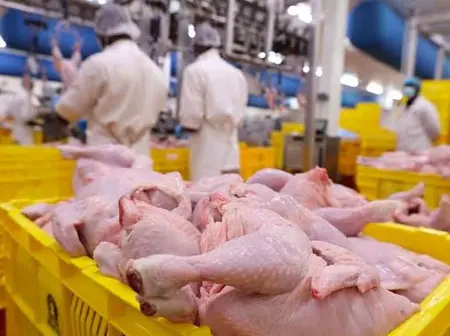
    A new study by the Kenya Veterinary Association (KVA), conducted in collaboration with the University of Nairobi, has raised serious concerns about the safety of raw chicken meat sold in Nairobi County.

    According to the findings, 94.7% of the chicken samples contained E. coli, while 39.3% tested positive for Staphylococcus aureus. Another 8.1% contained Salmonella, bacteria associated with foodborne illnesses.

    Researchers also identified poor hygiene and storage practices in several outlets. Approximately 70% lacked handwashing facilities, 92.8% used wooden chopping boards, and 54.6% stored chicken at room temperature instead of refrigerating it.

    The study further raised concerns about antibiotic resistance. Researchers found that 44.7% of E. coli isolates and 28.4% of Staphylococcus aureus isolates were resistant to three or more classes of antibiotics. This could make some infections more difficult to treat.

    https://www.facebook.com/share/p/1DTiWyoxLt/

  • 10 Common Exhaust Maintenance Mistakes to Avoid in Commercial Kitchens

    10 Common Exhaust Maintenance Mistakes to Avoid in Commercial Kitchens

    thumbnail

    When your commercial kitchen gets busy, exhaust maintenance can become easy to overlook until something goes wrong. Grease buildup may develop gradually, creating safety concerns that aren’t always obvious during daily operations. Many common exhaust maintenance mistakes in commercial kitchens stem from small oversights that go unaddressed over time.

  • Kenyan Chef In U.S. Battles Stage 4 Liver Cancer, Needs Ksh6.89 Million To Survive

    Kenyan Chef In U.S. Battles Stage 4 Liver Cancer, Needs Ksh6.89 Million To Survive

    Kabacho Mwangi, popularly known as Marck Kabacho, is a Kenyan culinary entrepreneur based in Washington State, USA. He has been diagnosed with Stage 4 hepatocellular carcinoma, an advanced form of liver cancer.

    He is seeking to raise US$53,000 (approximately KSh 6.89 million) to support his treatment and related needs.

    Mwangi is the founder and executive chef of The Shujaa Restaurant & Lounge in Lakewood, Washington, where he has built a reputation for promoting Kenyan cuisine through Afro-fusion cooking.

    With over 15 years of experience in the international hospitality industry, he has worked with establishments including Celebrity Cruises, Daily Grill and Silver Cloud Hotels.

    Through his restaurant, he has introduced Kenyans and other communities in the diaspora to familiar tastes of home, serving dishes such as pilau, ugali, samosas, goat curry and fried tilapia.

    For many Kenyans in America, The Shujaa became more than a restaurant. It became a home away from home, a place where they could taste Kenya, speak Swahili, and feel close to family thousands of kilometres away.

    Now, the chef who has spent years bringing people together through food is in need of a helping hand.

    How can Kenyans at home and abroad come together to support one of their own during such a difficult time?

    https://www.facebook.com/share/1CvHdBmVk9/

  • Nairobi Chicken Sold Outside Supermarkets Is Heavily Contaminated, Vet Study Finds

    Nairobi Chicken Sold Outside Supermarkets Is Heavily Contaminated, Vet Study Finds

    The study, run by a KVA technical working group with a University of Nairobi department, screened chicken for three pathogens. E. coli turned up in 94.7 percent of samples. Staphylococcus aureus was found in 39.3 percent and Salmonella in 8.1 percent. In 34 percent of cases, E. coli and S. aureus appeared together.

    What the researchers found behind the counter explains much of that. Wooden chopping boards were in use at 92.8 percent of the outlets, and the study linked them to more than three times the odds of S. aureus contamination. Chicken handled on shared surfaces carried more than triple the odds of E. coli. Freezer storage, by contrast, cut the odds of Salmonella by 72 percent.

    Cold storage is where many outlets fall short. Just over half, 54.6 percent, kept chicken at room temperature, and 92.4 percent received their stock unchilled. Three-quarters of the establishments had surfaces smeared with visible meat and blood residue. Seven in ten had no handwashing facility at all, while only 9.9 percent of attendants wore clean protective clothing.

    Most retailers, 79.2 percent, got their chicken from distributors or wholesalers, and 47 percent bought directly from local farms.

    The study also found drug resistance in the bacteria it isolated. Among E. coli isolates, 44.7 percent were multidrug-resistant. Resistance to cotrimoxazole stood at 65.9 percent and to ampicillin at 50.8 percent. For S. aureus, 28.4 percent of isolates were multidrug-resistant. Salmonella isolates were the exception, with 99.6 percent classified as non-multidrug-resistant.

    KVA National President Kelvin Osore said the findings highlight an urgent need to strengthen food safety standards across the poultry supply chain.

    The association wants mandatory food safety training for meat handlers, enforced cold-chain standards and routine microbial surveillance. It is asking retailers to swap wooden boards for stainless steel or food-grade plastic and to install handwashing stations with soap and clean water. County governments are being urged to develop localised food safety policies and strengthen inspection services, while consumers are encouraged to demand safe food and handle it properly at home.

    Former nominated senator Millicent Omanga has meanwhile been showcasing her commercial poultry operation, posting a video of herself collecting eggs from a laying-hen facility. She did not disclose where the farm is, how many birds it holds or how many eggs it produces daily.

  • Why electrifying Africa must start in the kitchen and port

    Why electrifying Africa must start in the kitchen and port

    thumbnail

    Cooking and eating with family and friends is central to the African psyche. Cooking is not merely a chore, it is an important pillar of identity, community and culture, and eating from a shared plate or pot speaks of unity, trust, and equality.Because the kitchen is the heartbeat of life, it is also the ultimate litmus test for climate and energy policy.

  • Kenya maps coffee flavours to chase premium markets

    Kenya maps coffee flavours to chase premium markets

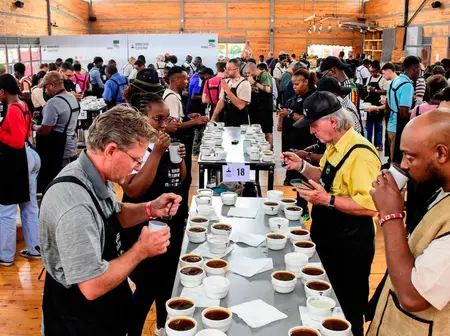
    A cup of Kenyan coffee can tell a story that goes beyond its familiar aroma and characteristic acidity. Depending on where the beans are grown and how they are processed, a sip may reveal hints of berries, honey, caramel and other distinctive flavours.

    Yet much of this diversity has remained difficult for international buyers to identify, leaving some farmers unable to secure the premiums their coffee deserves.

  • Charted: Calcium in everyday foods

    Charted: Calcium in everyday foods

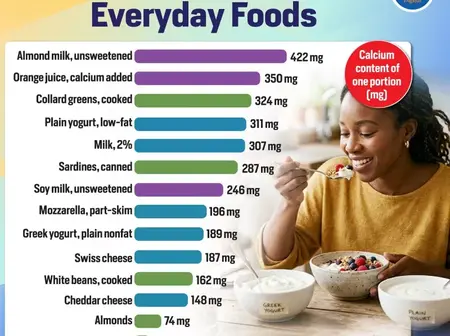
    Fortified plant-based beverages surpass traditional dairy products as the richest sources of dietary calcium per portion, according to data released by Voronoi and compiled by Star Digital.

    Unsweetened almond milk tops the list at 422 mg per serving, followed closely by calcium-added orange juice at 350 mg.

    Among non-fortified foods, cooked collard greens lead with 324 mg, outperforming low-fat plain yoghurt (311 mg) and 2% milk (307 mg).

    Canned sardines (287 mg) and unsweetened soy milk (246 mg) also offer substantial amounts, while raw broccoli provides 41 mg. The findings highlight diverse, non-dairy options for meeting daily calcium needs.

  • Italian wine grows Kenya market share as 25 producers court East African buyers

    Italian wine grows Kenya market share as 25 producers court East African buyers

    thumbnail

    Italian wine is taking a growing share of what Kenyans spend on imported wine.25 Italian wine, spirits and food producers from 10 regions came to Nairobi last week to look for new buyers and opportunities.The producers participated in Borsa Vini Kenya 2026, a two-day trade event convened at Trademark Hotel that opened on November 10.

  • Arrow Boy, Keteh light up Nakuru and Kisumu as Tusker’s festive beer tour rolls on

    Arrow Boy, Keteh light up Nakuru and Kisumu as Tusker’s festive beer tour rolls on

    thumbnail

    The festive season has officially arrived in Nakuru and Kisumu with Tusker’s beer festival tour rolling into Space Next Door in Nakuru and Black Pearl in Kisumu last weekend.Revellers in the two separate towns got a night of live music, homegrown talent and cold beer, all with free entry.