Category: Education

  • 2 hardship cases reported as 14,399 candidates sit KCSE exams in Kirinyaga

    2 hardship cases reported as 14,399 candidates sit KCSE exams in Kirinyaga

    2 hardship cases reported as 14,399 candidates sit KCSE exams in Kirinyaga

    Kirinyaga County has reported two hardship cases among the 14,399 candidates sitting the 2026 Kenya Certificate of Secondary Education (KCSE) examinations, with education officials confirming that both candidates have been facilitated to continue with their papers despite their difficult circumstances.

    The cases involve a candidate from Mukinduri Secondary School who recently gave birth and is sitting her examinations at Kerugoya Referral Hospital, and another from Kagure Secondary School in Mwea who is currently being held at Kerugoya Prison.

    Kirinyaga County Director of Education Joshua Mwangi said the two candidates had been provided with the necessary arrangements to ensure their circumstances do not prevent them from completing the national examinations.

    Speaking on Wednesday, November 11, 2026, during the distribution of examination materials at the Deputy County Commissioner’s Office in Mwea West, Mwangi said the county had not recorded any major incident since the examinations began.

    “The examinations are running smoothly. We have not had any issues. We have two cases that we can call hardship cases, but all of them are taking the examinations, and so far we can report that all is well,” he said.

    County director of education Joshua Mwangi handing over examination papers to one of the principals in Mwea east sub county. By Bancy Lole.

    Mwangi said examination materials for the day’s papers had been distributed successfully, expressing confidence that the remaining examinations would proceed without disruptions.

    He noted that the first group of candidates in the county was expected to complete its examinations on Friday, while candidates taking Physics would sit their final papers on November 20.

    The education director acknowledged that the onset of the rainy season could present logistical challenges but maintained that no weather-related disruptions had been reported in the county.

    Meanwhile, Kirinyaga County Commissioner Shufaa Mwijuma has called on examination officials and security personnel to maintain heightened vigilance as the national examinations approach their final stages.

    Speaking after overseeing the opening of examination containers in Mwea West Sub-County, Mwijuma directed centre managers, supervisors and invigilators to strictly observe examination regulations and safeguard the integrity of the exercise.

    She instructed security officers to maintain close surveillance at examination centres and avoid unnecessary movements in and out of school compounds.

    Kirinyaga County commissioner Shufaa Mwijuma checking the exam papers on before handing it over to the principals. By Bancy Lole.

    The commissioner also warned school administrators against allowing unauthorised persons into examination centres, insisting that access should be restricted to individuals with official responsibilities.

    On examination security, Mwijuma cautioned against the unauthorised transfer of examination container keys, directing that they remain under the custody of designated officials.

    She further emphasised that examination containers must remain under the protection of two armed security officers throughout the day and night to prevent possible security breaches.

    Mwijuma said Kirinyaga had not recorded any examination malpractice, crediting the cooperation between security agencies and education officials for maintaining order.

    “So far, so good. We have not had any instances of cheating in the entire Kirinyaga County. We have only had one or two cases of hardship, which we are managing,” she said.

    She assured candidates, parents and other stakeholders that the county remained prepared to oversee the successful completion of the 2026 KCSE examinations.
  • MPs hand UoN ultimatum over Sh20 billion debt

    MPs hand UoN ultimatum over Sh20 billion debt

    thumbnail

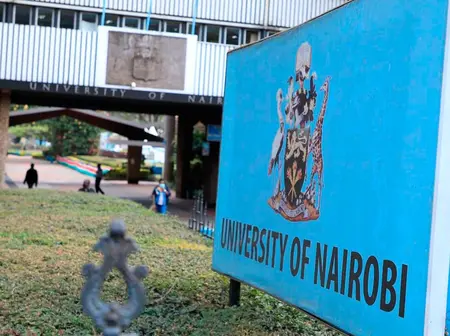
    MPs have directed the University of Nairobi to produce a rescue plan to help in the clearing out its staggering Sh20 billion debt and outline a plan that will save the institution from the brink of financial ruin.The directive follows Auditor-General Nancy Gathungu’s report that found the university technically insolvent, with MPs challenging the university management to provide verifiable figures and firm timelines for its financial recovery.

  • Ruto orders Education Ministry to review school capitation by January

    Ruto orders Education Ministry to review school capitation by January

    thumbnail

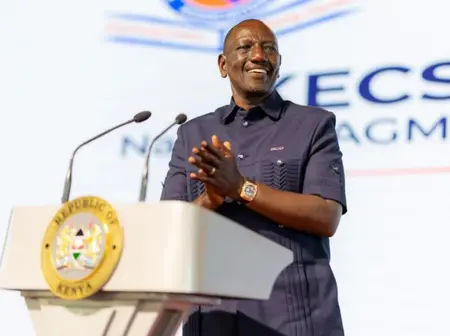
    President William Ruto has directed the Ministry of Education to work with school head teachers and propose a further review of capitation to curb inflation.Although the Government increased primary school capitation from Ksh.1,400 to Ksh.2,340 per learner, he emphasised the importance of raising the capitation to improve teaching and learning in schools.

  • Gov’t announces 30 bilateral scholarships for Kenyans in China and Mauritius

    Gov’t announces 30 bilateral scholarships for Kenyans in China and Mauritius

    thumbnail

    Kenyan students aspiring to pursue university education abroad have a fresh opportunity following the announcement of 30 government-sponsored scholarships by China and Mauritius for the 2027 academic intake.The two countries have each offered 15 scholarship places, opening the way for eligible Kenyan applicants to study from undergraduate degrees to advanced postgraduate and doctoral qualifications.

  • Germany Announces 1,200 Fully Funded Scholarships for Kenyans

    Germany Announces 1,200 Fully Funded Scholarships for Kenyans

    thumbnail

    Germany, through its development bank KfW, has partnered with the Ministry of Education and Equity Group Foundation to offer 1,200 scholarships to Kenyan youth seeking technical training in agriculture and food-related disciplines.The Wings to Fly – Promotion of Young People Through TVET Scholarships Programme 2026 targets Kenyan nationals aged 18 to 35 who want to pursue Level 5 Certificate and Level 6 Diploma programmes at 51 participating Technical and Vocational Education and Training (TVET) institutions.

  • TSC’s new comprehensive school model: What it means for JS leadership, teacher recognition and career progression

    TSC’s new comprehensive school model: What it means for JS leadership, teacher recognition and career progression

    thumbnail

    As the Teachers Service Commission (TSC) rules out independent leadership for Junior Schools, questions are emerging over professional recognition, administrative representation, promotions and the place of university-trained educators in Kenya's evolving education system.Kenya's education sector is once again confronting a defining policy question following TSC's reported decision to rule out independent leadership for Junior Schools under the proposed comprehensive school structure.

  • TSC trains 62,000 teachers in technology integration to support digital learning under CBE

    TSC trains 62,000 teachers in technology integration to support digital learning under CBE

    thumbnail

    The Teachers Service Commission (TSC) has trained 62,000 teachers in technology integration as Kenya continues implementing the Competency-Based Education (CBE) curriculum, which calls for greater use of digital tools in classroom instruction.The training is meant to equip teachers to use digital resources in teaching, so that learners develop digital literacy, critical thinking, creativity, research skills and the ability to work in an increasingly connected world.

  • Government moves to transform KIMC into Kenya School of Communication

    Government moves to transform KIMC into Kenya School of Communication

    The government is advancing plans to transform the Kenya Institute of Mass Communication (KIMC) into the Kenya School of Communication.

    The move is aimed at expanding KIMC's mandate and positioning the institution to meet the changing demands of the media and creative industries.

    Information, Communications and the Digital Economy Cabinet Secretary William Kabogo said the government was advancing the Kenya School of Communication Bill, 2025, which seeks to elevate the institution from a technical and vocational training institution into a national centre of excellence in communication.

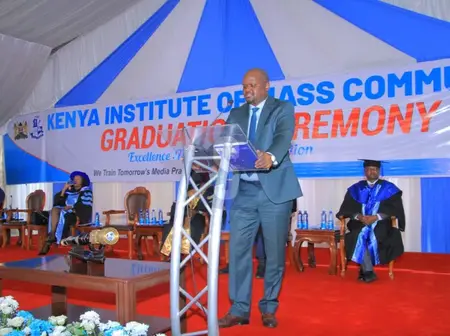
    Kabogo, whose speech was read by Secretary for Information and Broadcasting Temesi Mukani during KIMC's graduation ceremony, said the proposed changes would expand the institution's academic and professional training mandate.

    "This transition is far more than a rebranding exercise; it is a fundamental necessity aimed at future-proofing our communication sector," Kabogo said.

    Under the expanded mandate, the proposed school would be empowered to award postgraduate diplomas and specialised certifications while offering continuous professional development programmes for industry leaders, senior public sector managers and communication practitioners.

    Kabogo said the transformation was necessary to respond to increasingly sophisticated information needs and technological changes shaping the 21st-century media environment.

    He said the media landscape was being reshaped by artificial intelligence and digital platforms, requiring practitioners to continuously learn, adapt and uphold professional standards.

    "Technology can enhance communication, but it cannot replace human responsibility, ethical discernment and professional ability," he said.

    The CS also announced government plans to support the expansion of KIMC's Eldoret campus in Uasin Gishu County through investments in infrastructure, modern training facilities, production studios and information and communication technology equipment.

    He said the campus was a strategic investment in decentralising education, widening access to quality media training and promoting the equitable distribution of learning opportunities.

    "We are therefore committed to working with relevant government agencies and county leadership to mobilise resources, strengthen institutional capacity and create an enabling environment for the campus in Eldoret," Kabogo said.

    He said the government envisioned the campus becoming a centre of excellence in communication and creative arts, producing skilled professionals while creating opportunities for employment and entrepreneurship across the Rift Valley and Western Kenya regions.

    The announcement comes after KIMC Council Chairman Silas Otieno disclosed that the institution had secured the title deed for its Eldoret campus after an eight-year wait.

    Otieno said the acquisition had been concluded two weeks before the Mashujaa Day celebrations held in Eldoret on October 20, 2026, removing a major obstacle to the institution's expansion plans.

    He appealed to the government to provide a dedicated budget allocation for the construction of vertical infrastructure at the campus to enable it to become operational.

    "The acquisition of the title deed secures the institute's land rights and provides a firm foundation for future infrastructure development, expansion and training opportunities in the North Rift and Western Kenya regions," Otieno said.

    He said the council had also prioritised strategic partnerships, institutional governance and financial sustainability as part of efforts to reposition KIMC.

    Among the initiatives is a memorandum of understanding with the Teachers Service Commission to strengthen teachers' practical skills and promote the integration of media and digital technologies into classroom instruction under the Competency-Based Education system.

    The institute has also entered into an academic partnership with Kabare University to explore opportunities for further studies, joint research, faculty exchange and progression to degree-level qualifications, subject to academic and accreditation requirements.

    Otieno said the council was also implementing a new human resource instrument introduced in July 2026 to address staff stagnation and improve employees' terms of service.

    He said the institution was pursuing a transformation roadmap that would strengthen its role in government communication, research, innovation and creative entrepreneurship.

    Radio Africa Group Editorial Director Paul Ilado challenged the graduating class to take an active role in reshaping the media industry, saying traditional business models had collapsed but journalism still had a future.

    "All the business models that have traditionally run media have collapsed, and this is where we need you, the class of 2026. We need you to participate in creating a new order," Ilado said.

    He urged graduates to use their training and creativity to develop sustainable media enterprises rather than depend entirely on conventional employment opportunities.

    KIMC Director and Chief Executive Peter Wakoli said the institution had been realigning its curriculum to prepare students for the digital superhighway and creative economy.

    He said the 2026 graduating class had demonstrated its capabilities through multimedia storytelling, artificial intelligence-assisted content creation and independently operated digital platforms.

    ICT Authority Chief Executive Jessy Maruti also welcomed the graduates, saying their skills would contribute to strengthening national storytelling and communication.

    The 498 graduands completed their studies under the theme of excellence, talent, trust and innovation.

  • Pomp, colour and excitement as KIMC graduands celebrate their big day

    Pomp, colour and excitement as KIMC graduands celebrate their big day

    The Kenya Institute of Mass Communication (KIMC) held its graduation ceremony on Wednesday, bringing together graduands, families, industry leaders and other guests to celebrate the students' academic achievements.

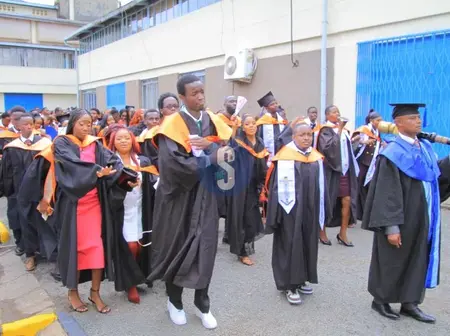
    The ceremony began with graduands making their way to the graduation square, led by the Administration Police band.

    Dressed in black graduation gowns adorned with colourful stoles, the graduands arrived in high spirits as they prepared to receive their certificates.

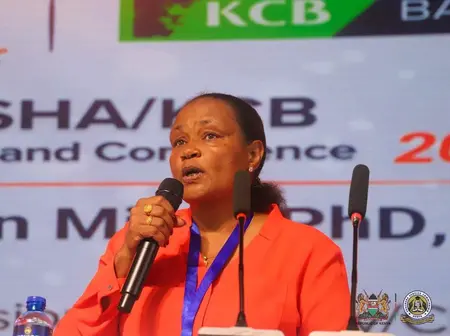
    Among the guests who attended were ICT Authority Chief Executive Officer Jessy Kiveu, Radio Africa Group Editorial Director Paul Ilado and NTV News Editor Paul Nabiswa.

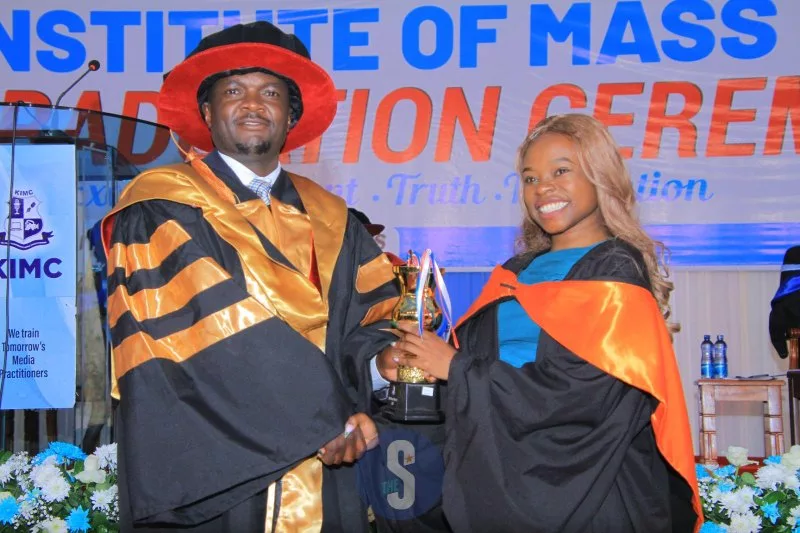
    The ceremony also recognised outstanding student achievements, with Ann Adipo receiving the award for best scriptwriter and Jonathan Mwania named the most entrepreneurial student.

    The event marked an important milestone for the graduands as they completed their studies and prepared to take the next steps in their careers.

  • Paul Ilado: Media is not dying, but traditional business models have collapsed

    Paul Ilado: Media is not dying, but traditional business models have collapsed

    ‎Radio Africa Group Editorial Director Paul Ilado has challenged journalism graduates to take an active role in reshaping the media industry, saying traditional business models have collapsed but journalism itself still has a future.

    ‎Ilado said the rapid transformation of the media landscape presented graduates with an opportunity to develop new ways of producing, distributing and commercialising content rather than depend entirely on conventional media houses for employment.

    ‎Addressing 498 graduands at the Kenya Institute of Mass Communication (KIMC) on Wednesday, Ilado said the industry needed a new generation of creative practitioners capable of building sustainable media enterprises and responding to technological changes.

    ‎"All the business models that have traditionally run media have collapsed, and this is where we need you, the class of 2026. We need you to participate in creating a new order," he said.

    He challenged the graduates to use the skills acquired during their training to develop functional and sustainable media houses, arguing that the industry's difficulties should not be mistaken for the death of journalism.

    ‎"There is a future in the media, and no one should lie to you. No media is dying. What is happening is transformation," Ilado said.

    ‎He warned that graduates who failed to participate in that transformation risked becoming frustrated as the industry continued to evolve.

    ‎"You are either part of that transformation or you are not. And if you are, you will be grateful. If you are not, you will be extremely frustrated," he said.

    ‎Ilado used the contrasting experiences of English Premier League clubs Arsenal and Manchester United to illustrate the importance of managing transitions and continuously improving.

    ‎He recalled how Arsenal underwent a major transition following the departure of long-serving manager Arsene Wenger, while Manchester United struggled to maintain its previous standards after the exit of Alex Ferguson.

    ‎He said the experiences demonstrated that organisations could lose their standing when leadership transitions were poorly managed and when they failed to invest in the right talent and ideas.

    ‎"The biggest lesson we take from these two teams is that you can be great today, but if you do not continuously improve yourself, you will one day be fighting for your life, let alone your career," he said.

    ‎He urged graduates to remain passionate about their profession, develop their talents and embrace innovation rather than assume their qualifications alone would guarantee success.

    ‎Ilado said the media industry was undergoing changes that required journalists to think beyond conventional employment arrangements.

    ‎He noted that technology had lowered the barriers to establishing media platforms, with individuals now able to create and distribute content using relatively accessible digital tools.

    ‎"Today, just with an email, you can open a media house," he said, urging the graduates to participate in shaping the future of the profession.

    ‎KIMC Director and Chief Executive Peter Wakoli said the institution had been realigning its curriculum to prepare students for the changing demands of the media industry and the country's digital economy.

    ‎He said the institute was conscious of its responsibility to contribute to the digital superhighway and creative economy agenda by producing practitioners equipped for both present and future challenges.

    ‎Wakoli described the 2026 graduating class as distinctive, noting that some students had already developed award-winning creative productions before their official graduation.

    ‎"Many of these graduates seated here are already airborne, undertaking multimedia storytelling, utilising artificial intelligence in content creation and, more importantly, navigating the complexities of digital and social media journalism by running self-initiated content dissemination platforms," he said.

    ‎He added that the graduates had been trained to respond to emerging challenges in content creation and manipulation.

    ‎The institute, he said, had also drawn on industry practitioners to mentor students and expose them to the realities of professional media work.

    ‎ICT Authority Chief Executive Jessy Maruti welcomed the graduates into the industry, saying their skills would be important in strengthening how stories about the country are told.

    ‎"I'm looking forward for these graduates to join us so that they can tell the story the way it's supposed to be told," Maruti said.

    ‎The graduation, attended by industry stakeholders and other guests, was held under the theme of excellence, talent, trust and innovation.