Category: Education

  • Kenya Makes Fresh Global English Ranking Move as Britain and Canada Fall Behind

    Kenya Makes Fresh Global English Ranking Move as Britain and Canada Fall Behind

    The latest EF English Proficiency Index places Kenya 19th globally. Britain and Canada are absent from the comparison, but there is an important explanation.

    The index excludes countries where English is a primary native language. This means Kenya's position cannot be presented as a direct victory over either country.

    The September 2026 ranking reported by The Star gives Kenya 584 points. Its position remains 19th among the countries and regions assessed.

    The result places Kenya among countries recognised for strong English proficiency. It also renews interest in how language skills influence education and employment opportunities.

    For Kenyan graduates, English remains an important tool when applying for international scholarships, professional opportunities and remote jobs. Employers often expect applicants to communicate clearly across different working environments.

    The ranking therefore carries significance beyond national pride. It draws attention to the role schools, colleges and families play in developing communication skills.

    Kenya's education system has long used English as a language of instruction. Kiswahili and other local languages also remain important in everyday communication and cultural identity.

    However, a strong national position does not mean every Kenyan speaks English confidently. Access to quality teaching, learning materials and regular practice varies between communities.

    Supporters of the result may see it as recognition of Kenya's educational foundation. They may also point to the country's ability to compete in international academic and professional settings.

    Others may question how much a proficiency ranking reveals about ordinary citizens. Such assessments measure participating test-takers rather than every person in a country.

    The distinction matters because impressive national statistics do not automatically describe individual experiences. A high ranking cannot replace practical improvements in classrooms and workplace training.

    The EF index is based on English test performance, rather than a direct examination of every country's education system. Its findings should therefore be understood within that methodology.

    For young Kenyans preparing for university, employment or international opportunities, communication skills remain valuable. Reading, writing, listening and speaking all contribute to effective communication.

    Kenya's latest position has now reopened a wider conversation about language, opportunity and educational standards. Should the country focus on celebrating its international ranking or improving English learning opportunities for everyone?


  • Beyond the Classroom: Crawford International Students Jet Off to the US

    Beyond the Classroom: Crawford International Students Jet Off to the US

    According to the school's announcement, the students are expected to participate in activities that will allow them to learn, explore, compete and interact with people from different backgrounds.

    The institution also expressed optimism that the trip would help learners develop friendships while gaining exposure to international experiences.

    "Students have departed for the United States of America!" the school announced, wishing the travelling learners safe journeys as they embarked on the experience.

    The school further indicated that the experience was intended to help students embrace the qualities of global citizenship while developing perspectives that extend beyond their immediate learning environment.

    However, the school had not publicly disclosed the exact destination within the United States, the number of students participating or the specific activities scheduled during the visit in the announcement available on Thursday.

    It was also not immediately clear how long the learners would remain in the country or whether the trip involved a particular international competition or academic programme.

    Crawford International School is located in Tatu City, Nairobi, and offers junior, middle and senior school education.

    According to information published on its official website, the institution emphasises academic development alongside sports, cultural activities, collaboration and practical life skills.

    The school is part of the ADvTECH Group, an education company operating across several African countries.

    Source: TUKO.co.ke report

  • Kaguchia warns university loans could leave poor families in debt for decades

    Kaguchia warns university loans could leave poor families in debt for decades

    thumbnail

    Mukurwe-ini MP John Kaguchia has cautioned that Kenya's reliance on student loans to finance higher education could deepen economic inequality, warning that graduates from low-income households may spend up to 25 years repaying their education debts.Kaguchia said the growing cost of education, coupled with limited financial support for disadvantaged families, could leave young people struggling financially long after completing their studies.

  • Crawford International School Students Fly to US for a Life-Changing Global Experience

    Crawford International School Students Fly to US for a Life-Changing Global Experience

    The learners have arrived in the US, marking the start of an overseas trip that will give them an opportunity to compete, learn, explore and interact with students from different cultural and educational backgrounds.

    During the trip, the students are expected to engage with their international peers, exchange ideas and experience new environments. The exposure will allow them to appreciate different perspectives while developing confidence, teamwork and cross-cultural communication skills.

    The experience also offers the learners an opportunity to put their knowledge and abilities into practice outside their familiar school environment.

    The trip marks an important international milestone for the Crawford International School learners, giving them an opportunity to represent their school while gaining experiences that could influence their academic and personal development.

    source

  • President Ruto promises recruitment of 20,000 more teachers in December

    President Ruto promises recruitment of 20,000 more teachers in December

    thumbnail

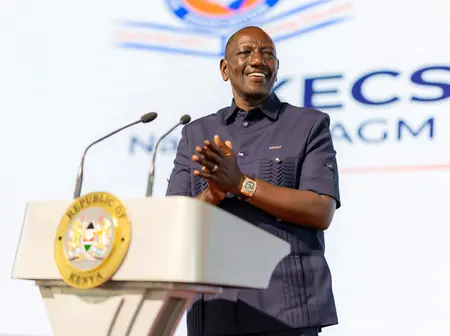
    President William Ruto has pledged to recruit an additional 20,000 teachers in December as his administration moves to address staffing gaps and improve the quality of education across the country.Speaking during the Kenya Comprehensive Schools Heads Association (KECSHA) Annual General Meeting and Conference at the Sheikh Zayed Children Welfare Centre in Nyali, Mombasa, Ruto said the planned recruitment would build on the 100,000 teachers already hired by his administration.

  • Ruto Reveals Major January Fees Directive for Students Unable to Pay

    Ruto Reveals Major January Fees Directive for Students Unable to Pay

    President William Ruto has announced major changes to higher education financing, promising that university, Kenya Medical Training College (KMTC) and Technical and Vocational Education and Training (TVET) students will not be sent home because their parents cannot afford school fees from January 2027.

    The announcement was made on Sunday, November 8, during an interdenominational church service at Nyamaiya Stadium in Nyamira County.

    Ruto said his administration was working on a new education funding framework to address challenges affecting students and families under the existing system.

    The President explained that the government had consulted Education Cabinet Secretary Julius Ogamba and Higher Education Loans Board (HELB) Chief Executive Geoffrey Monari to develop the proposed changes.

    He said the government was preparing new legislation to support the funding arrangements and intended to complete the process before Parliament proceeded on its December recess.

    Under the proposed changes, students attending universities, KMTCs and TVET institutions should be allowed to continue with their education even when their parents are unable to pay the required fees.

    Ruto maintained that financial circumstances should not prevent deserving students from pursuing higher education.

    The announcement comes amid concerns about the cost of university education and challenges surrounding the student-centred funding model introduced in 2023.

    The current system provides financial assistance through government scholarships and HELB loans, with the level of support determined by students' assessed financial needs.

    However, the funding model has faced criticism from students and parents over concerns about categorisation, affordability and the amount of financial assistance awarded.

    Ruto's proposed changes are expected to address some of these concerns by strengthening the legal framework governing higher education financing.

    Parliament will play an important role in determining how the proposed arrangements are implemented. The new legislation must be completed and approved before the government can fully implement the promised changes.

    The President's announcement is particularly important for families preparing for the January 2027 academic calendar, as students joining or returning to universities and colleges await clarity on their financial obligations.

    However, the government has not announced that all university and college education will become free. The commitment is specifically aimed at preventing students from being sent home because their parents cannot afford the required fees.

    The proposed legislation and implementation guidelines will determine how institutions handle outstanding fees and student funding under the new arrangement.

    Ruto's announcement has therefore shifted attention to the Ministry of Education and Parliament, which are expected to play central roles in delivering the promised reforms.

    For thousands of students, the biggest expectation is that financial difficulties will no longer interrupt their studies when the new academic period begins in January.

    Source

  • Kenya Ranks 19th Worldwide in English Proficiency, Third in Africa

    Kenya Ranks 19th Worldwide in English Proficiency, Third in Africa

    Image result for Kenya Ranks 19th Worldwide in English Proficiency, Third in Africa

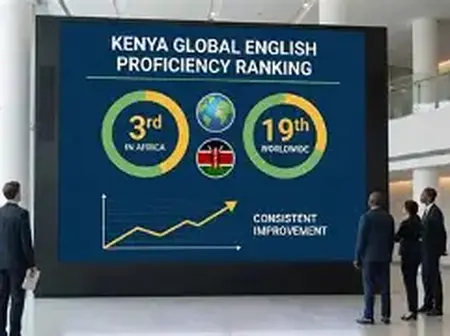
    According to the latest figures published by the EF English Proficiency Index (EF EPI), Kenya ranked 19th globally, scoring 584 points in a ranking that assessed English skills across 113 countries and regions.

    The results place Kenya among the leading countries in the world in English proficiency and make it one of Africa's strongest performers. The Netherlands topped the ranking with 647 points, followed by Singapore with 631 points. Austria came third with 616 points, while Denmark and Norway also featured among the highest-ranking countries.

    South Africa emerged as Africa's highest-ranked country, taking ninth position globally with 605 points. Kenya followed in 19th place, demonstrating its continued competitiveness in English language skills.

    The ranking also placed Kenya ahead of several countries that have traditionally been associated with strong English language education. However, it is important to note that the assessment excluded major native English-speaking countries, including the United Kingdom, Canada, the United States, Australia and New Zealand. It would therefore be inaccurate to interpret the results as a direct comparison showing that Kenya has higher English proficiency than those countries.

    The EF English Proficiency Index measures the English skills of adults using results from standardised online tests. Its findings provide an indication of how well people in different countries can use English in areas such as reading, listening, speaking and writing.

    Kenya's performance reflects the important role English plays in the country's education system, professional environment and public institutions. English is one of Kenya's official languages and is widely used in schools, universities, government offices, businesses and the media.

    The language also plays a significant role in communication across different communities, particularly in workplaces and institutions where people come from diverse linguistic backgrounds.

    For students and professionals, proficiency in English remains an important advantage when pursuing higher education, applying for employment and accessing opportunities beyond national borders. It is also essential in sectors such as journalism, technology, tourism, business and international relations.

    The findings also provide an opportunity for the country to continue investing in quality education, reading culture and communication skills, particularly among young people.

    As Kenya strengthens its participation in international trade, education and technology, strong English communication skills will remain an important tool for connecting its workforce with opportunities across the world.

  • Ruto’s Sharp Remarks on Teachers Spark Tension as He Responds to Claims of Mistreatment

    Ruto’s Sharp Remarks on Teachers Spark Tension as He Responds to Claims of Mistreatment

    President William Ruto has criticised some teachers, questioning their understanding of his administration's policies and their claims that the government is mistreating them.

    Speaking about the concerns raised by teachers, Ruto expressed frustration with those who accuse his government of subjecting them to unfair treatment. He questioned why some teachers believe they are being mistreated despite the government's efforts to address issues affecting the education sector.

    The President said some teachers do not seem to understand the government's position, adding that he finds it difficult to understand why they continue to accuse him of oppressing them. His remarks appeared to target teachers who have been vocal about their concerns and have raised questions about the government's handling of their affairs.

    Teachers in Kenya have, over time, raised various concerns about their working conditions, salaries, promotions and other issues affecting their profession. These matters have remained important topics in discussions between teachers' representatives and the government.

    Ruto's comments are likely to attract further reactions from teachers and their unions, especially those who feel that their concerns have not been adequately addressed. The relationship between the government and teachers remains important, considering the key role educators play in shaping the country's education system.

    Teachers are responsible for educating millions of learners across the country, making their welfare and working conditions important issues for the government and other education stakeholders.

    The President's remarks have once again brought attention to the ongoing discussions surrounding teachers' welfare and the government's approach to addressing their concerns. However, further details about the specific issues that prompted his comments would be necessary to provide a complete picture of the disagreement.

    The exchange highlights the importance of continued engagement between the government and teachers to address concerns and find common ground.

  • Ruto Outlines Major Education Reforms, Reveals Plans to Hire 20,000 More Teachers

    Ruto Outlines Major Education Reforms, Reveals Plans to Hire 20,000 More Teachers

    President William Ruto has outlined his administration's ongoing investment in Kenya's education sector, highlighting plans to recruit more teachers, construct classrooms and improve school funding.

    Speaking on Thursday, November 12, 2026, during the Kenya Comprehensive Schools Heads Association Annual General Meeting and Conference at Sheikh Zayed Children Welfare Centre in Nyali, Mombasa, the Head of State said the government was committed to preparing learners for the demands of the modern world.

    Ruto said his administration was building an education system that equips children with knowledge, skills and competencies to think creatively, solve problems and translate ideas into practical solutions.

    He explained that the government had increased school funding and ensured timely disbursement of funds to support the smooth running of learning institutions.

    The President also highlighted the integration of primary and junior schools under a single comprehensive school management structure, saying the move was intended to strengthen financing and improve learning outcomes.

    On teacher recruitment, Ruto revealed that the government had already hired 100,000 teachers and would recruit an additional 20,000 next month.

    He further disclosed that his administration had overseen the construction of 23,000 classrooms across the country as part of efforts to improve the learning environment and address infrastructure challenges facing schools.

    The Head of State also pointed to investments in teacher promotions, career progression and welfare, noting that teachers remained central to the success of the country's education reforms.

    According to Ruto, the government wants to ensure that every teacher has the necessary support and resources to deliver quality education.

    He maintained that every child should have an opportunity to succeed regardless of their background, adding that the broader objective was to develop highly trained and competent human capital.

    His remarks come amid continued government efforts to implement education reforms under the Competency-Based Education framework, which places emphasis on practical skills, creativity and problem-solving.

    The President reiterated that investing in teachers, school infrastructure and adequate funding was essential to achieving the country's long-term education goals.

    https://www.facebook.com/share/1E4oF5Uu36/

  • Kenya Outperforms UK and Canada in Latest Global English Proficiency Rankings

    Kenya Outperforms UK and Canada in Latest Global English Proficiency Rankings

    History of Kenya | Founded, Colonized, Independence, Events, People, Dates, Maps, & Facts | Britannica

    According to the 2025 EF English Proficiency Index (EF EPI), published by global education company EF Education First, Kenya ranked 19th out of 123 countries and regions, scoring 593 points. The country was placed in the high-proficiency category.

    However, an important clarification is necessary: the ranking does not establish that Kenya scored higher than the UK or Canada. The EF index focuses on countries where English is not the primary native language and excludes countries such as the UK and Canada from the comparison.

    The 2025 edition assessed more than 2.2 million adults across 123 countries and regions. Participants completed the EF Standard English Test, which evaluates reading, listening, speaking and writing abilities.

    Kenya's overall score of 593 placed it ahead of several other countries, including Greece, Hungary, the Czech Republic, Malaysia and Nigeria.

    In Africa, Kenya ranked third, behind South Africa and Zimbabwe, which jointly occupied 13th position globally. Zambia followed Kenya at 27th, while Nigeria ranked 29th.

    The report also highlighted differences in performance across individual language skills. Kenya recorded 609 points in reading, 590 in listening, 567 in writing and 555 in speaking, making reading its strongest assessed skill.

    EF Education First explained that its findings are based on online test participants and are not necessarily representative of the entire population of each country. The organisation also noted that participation is self-selected, meaning the results should be interpreted with methodological limitations in mind.

    The findings highlight Kenya's strong position in international English proficiency assessments, particularly within Africa.https://www.facebook.com/share/p/1FyqbSCecf/