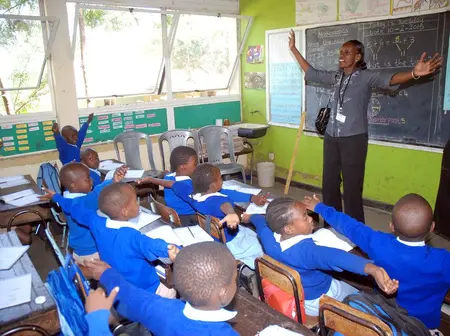
Ruto confirmed that the Salaries and Remuneration Commission has approved revised career progression guidelines negotiated with the Teachers Service Commission and unions. To power this ambitious move, the government will inject an additional Sh4 billion specifically to facilitate teachers’ career advancement.
Teachers and school heads welcomed the news as long-overdue recognition of their critical role, though some online reactions expressed caution about timely implementation. The pledge marks a bold step toward addressing stagnation and boosting morale in public schools nationwide.
Education remains one of the most important foundations for personal growth and national development. However, academic performance is not always a complete reflection of someone's intelligence, potential or ability to succeed in life.
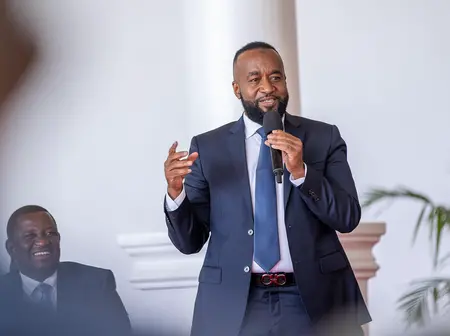
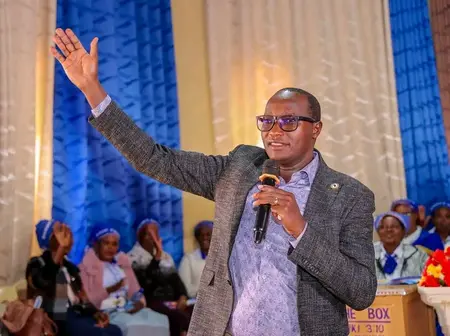
"I left Form 4 as a D student. If I had grown up during President Ruto's time, I would have been an A student," Joho stated.
His remarks present an interesting perspective on the relationship between education, opportunities and the changing learning environment in Kenya.
Joho's Academic Journey
Joho's statement brings attention to his experience as a student and the academic challenges he encountered before completing secondary education.
Leaving Form Four with a D grade is not something many people would openly discuss, especially when occupying a senior position in government.
However, his willingness to talk about his academic background sends a message that poor academic performance does not necessarily determine someone's future.
Many Kenyans have different experiences with the education system. Some perform exceptionally well in national examinations, while others struggle academically but eventually discover their strengths in business, leadership and other professional fields.
Why He Mentioned President Ruto
The interesting part of Joho's statement is his suggestion that he would have performed better academically had he grown up during President William Ruto's administration.
His comment could spark discussions about educational opportunities, government policies and the learning environment available to today's students.
Kenya's education system has experienced several changes over the years, including curriculum reforms, increased access to learning institutions and discussions about improving the quality of education.
However, academic success also depends on personal commitment, family support, teaching standards, available resources and the circumstances surrounding individual learners.
Joho's remarks also raise an important question about how society measures success.
Although academic qualifications remain valuable, they are not the only pathway to achieving personal and professional success.
His journey demonstrates why students who struggle in school should not automatically lose confidence in their abilities.
Ultimately, his statement has opened an interesting conversation about education, opportunity and the difference between academic performance and achievement in life.
What do you think about Hassan Joho's remarks? Would he really have been an A student under President Ruto's administration?
Share your thoughts and opinions in the comments section.
School heads across the country have received encouraging news following an announcement by the Teachers Service Commission (TSC) regarding the future of their leadership positions under the proposed comprehensive school structure.
The Commission has informed serving school heads that they will retain their leadership positions under the new administrative arrangement, which brings Early Childhood Development Education (ECDE), primary school and Junior School under one administration.
The announcement addresses concerns among headteachers and other school administrators who have been uncertain about their professional future following the proposed restructuring of basic education management.
One of the major questions surrounding the introduction of comprehensive schools has been whether existing school heads would lose their positions or face changes in their responsibilities.
However, TSC has clarified that serving school heads will retain their leadership positions under the new structure.
The development is expected to ease anxiety among administrators who feared that the integration of different education levels could affect their employment and leadership responsibilities.
Under the proposed arrangement, ECDE, primary and Junior School sections will be brought together under one administrative structure.
The model seeks to improve coordination, supervision and management of learning institutions by creating a unified system covering the different levels of basic education.
School heads will therefore have an important role in coordinating activities and ensuring effective management across the sections.
The inclusion of ECDE in the comprehensive school structure is particularly important for early childhood teachers.
Currently, county governments are responsible for pre-primary education under the Constitution, including the employment and management of ECDE teachers.
The proposed arrangement raises questions about how county governments and the national government will coordinate the management of ECDE within comprehensive schools.
Issues surrounding teacher employment, salaries, professional management and reporting structures will require further clarification.
For ECDE teachers, the development will be closely watched because of its possible implications for their recognition and integration into the wider basic education system.
As education reforms continue, school heads and teachers will be looking forward to further guidance from TSC and the Ministry of Education.
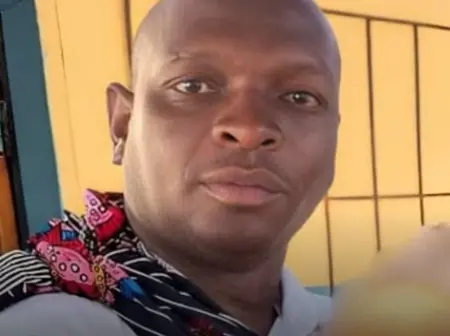
A teacher serving as an exam invigilator in Samburu County has drawn praise across the country after photographs showed him holding a candidate’s baby outside the classroom so she could sit her KCSE papers in peace.
The picture that spread online shows him standing just outside the classroom with the baby held against him and a small shawl in his hand, calmly watching over the child as the exam went on inside.
Many viewers said it showed that service often reaches well beyond a job description. His duty was to oversee the exam, yet he chose to look after the candidate’s wellbeing too.
Sam Didane, who shared the photo on Facebook, described it as a beautiful act of kindness, compassion and humanity. Lolkireri Moses Paul wrote in Swahili that service to humanity is service to God and that the deed would not go unrewarded.
Leokei Stephen noted that a teacher’s work does not end in the classroom and should extend to guiding roles. Lameck Wandera also praised him, saying a parent is a parent whether or not they gave birth to you, and wished him a long life.
The response shows how deeply the gesture resonated, especially in a region where many candidates face real personal hardship just to reach exam day.
For this young mother, having someone willing to hold her child may have made the difference between sitting the paper and missing it.
The legislator cautioned that although borrowing may provide an opportunity for students who cannot afford the cost of education, the repayment obligations could eventually make it difficult for them to improve their financial circumstances.
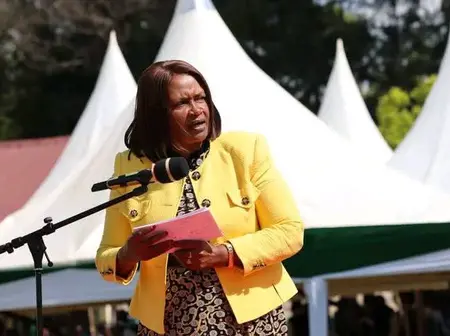
Speaking on Thursday, November 12, 2026, Kaguchia questioned the long-term impact of relying on loans to finance education, particularly for students from households that are already struggling financially.
He explained that students who depend on borrowed money to progress through the education system could spend between 15 and 25 years clearing their debts, depending on the amount required to finance their studies.
According to the MP, such a lengthy repayment period could deny young graduates the financial freedom they need to establish themselves after leaving school.
Rather than using their earnings to start businesses, invest in property or support their families, some graduates could find themselves dedicating a significant portion of their income to servicing education debts.
Kaguchia warned that the situation could have wider consequences for economic equality, especially if students from wealthy backgrounds continue accessing education without facing similar financial pressures.
“But for those who really can’t afford and must go through the school system. They will be loaned and they will pay through the nose and they will pay for the next 25 years, the next 20 years, the next 15 years, depending on the cost you are taking,” he said.
The Mukurwe-ini legislator further argued that prolonged indebtedness could make it harder for graduates from disadvantaged families to move forward economically.
He expressed concern that instead of helping poor households escape poverty, the cost of financing education through loans could leave them facing additional financial difficulties for years.
“And that will then mean you will remain indebted, hard capped, and completely constrained from progress. And that will make poor people poorer and rich people richer. And then it will continue to increase the gap between the poor and the rich in this country,” Kaguchia added.
His remarks have drawn attention to the affordability of education and the long-term financial consequences of borrowing to pursue academic opportunities.
The concerns also raise questions about how students from low-income households can access education without carrying heavy financial obligations into their working lives.
No final decision has been reached. The committee is reviewing submissions as part of broader education reform bills. The debate has ignited fierce public argument: will the feared cane return to tame restless classrooms, or will Kenya stick to its rights-based approach?
Thousands of university graduates hoping to secure employment through the Teachers Service Commission (TSC) in the 2026/2027 recruitment exercise could face disappointment following new clarification on academic qualifications for secondary and junior school teaching positions.
According to TSC's Post-Primary Teacher Recruitment Guidelines contained in Circular No. 15/2026, dated August 13, 2026, graduates whose undergraduate training is in subjects not currently offered in the secondary school curriculum are not eligible for recruitment.
The restriction applies even to graduates who have acquired additional professional qualifications, including a Post Graduate Diploma in Education (PGDE).
Some of the affected degree programmes include:
Other specialised degree programmes that do not correspond to subjects currently offered in secondary schools may also fall under the restriction.
A PGDE equips university graduates with professional teaching skills and classroom management techniques. However, TSC maintains that additional teacher training does not automatically overcome the subject eligibility requirement.
For instance, a graduate with a degree in Forestry cannot automatically qualify for a secondary school teaching position simply by obtaining a PGDE.
The guidelines recognise certain degree combinations. Graduates in Economics, Commerce and Accounting can qualify for Business Studies positions, while Social Education and Ethics graduates can qualify for CRE/IRE positions, subject to other requirements.
Graduate applicants must generally have a KCSE mean grade of C+, at least C+ in their two teaching subjects, relevant university course units, teaching methodology training and at least three months of teaching practice.
The clarification means applicants must carefully check their degree programmes before submitting applications.
As the Ministry of Education grapples with a massive learner registration gap, a data specialist identifies human errors, poor coordination, inadequate resources and inconsistencies between school and examination records as possible explanations for the missing entries.The reported disappearance of approximately two million learners from the Kenya Education Management Information System (KEMIS) has raised serious questions about the accuracy of school enrolment records, the effectiveness of digital registration and the capacity of institutions to manage learner information.
The controversial practice of caning students could return to Kenyan schools following renewed calls by lawmakers to review the laws prohibiting corporal punishment.
The National Assembly Committee on Education has indicated that it is considering proposals seeking to remove legal provisions outlawing physical punishment as concerns grow over student indiscipline, school unrest and attacks on teachers.
Committee chairman and Tinderet MP Julius Melly confirmed that proposals seeking changes to the existing law had been presented to the committee. He also acknowledged the role played by the Kenya Union of Post Primary Education Teachers (KUPPET) in pushing for the proposed review.
Speaking during an engagement with education stakeholders, Melly questioned why teachers face legal consequences for physically disciplining learners while students accused of assaulting teachers appear to face less decisive action.
He argued that some learners have become increasingly difficult to manage, leaving teachers struggling to maintain order because of restrictions imposed by existing laws.
The debate comes amid growing reports of violence in learning institutions, including attacks on teachers, destruction of school property and incidents of unrest involving students.
Kenya abolished corporal punishment in schools in 2001 before the prohibition was reinforced under the Basic Education Act of 2013. The law prohibits physical and psychological punishment of learners.
However, the proposed changes have reopened a nationwide debate about whether bringing back the cane would help restore discipline or expose learners to physical and psychological abuse.
The latest development has attracted attention from parents, teachers and education stakeholders, with opinions divided over the best way to address misconduct in schools.
As Parliament continues reviewing education reforms, the committee's position could determine whether the country revisits one of its most controversial education policies.
The question now remains whether bringing back the cane is the solution to Kenya's growing school discipline challenges.
Thousands of teachers who took part in the September 2026 promotion interviews are awaiting their results as the Teachers Service Commission (TSC) begins releasing them. The commission expects to complete the communication exercise by Friday, November 20, 2026.The announcement marks a critical stage in one of the largest teacher promotion exercises in recent years, offering successful candidates an opportunity to advance their careers, assume greater responsibilities and improve their earnings.