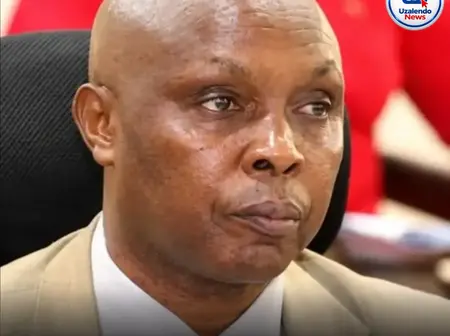
Cheptumo Ayabei, the newly appointed Secretary and Chief Executive Officer of the Teachers Service Commission, is a seasoned finance professional who has spent nearly three decades rising through the ranks at the teachers' employer.TSC Chairperson Jamleck Muturi announced Ayabei's appointment on Monday evening following a competitive recruitment exercise that attracted 124 applicants, ending a 17-month leadership vacuum since Nancy Macharia retired in June 2025.
Category: Education
-

Ogamba Disputes Claims Teacher Was Attacked Over KCSE Cheating Refusal
Education Cabinet Secretary Julius Ogamba has disputed claims that a Kenya National Examinations Council (KNEC) supervisor in Kwale County was assaulted for refusing to help facilitate cheating in the ongoing KCSE examinations.
CS Ogamba said the supervisor was attacked at night while returning from personal business and not on school grounds. He spoke on Monday, November 16, while overseeing the distribution of KCSE examination papers in Mombasa.
“The teacher was coming from his personal business around 10 pm when he was attacked. It had nothing to do with KCSE examinations,” Ogamba said.
The Ministry of Education has launched an investigation into the assault and the supervisor’s claims about examination malpractice.
“For now, our team has begun investigations into the matter to determine why he made such remarks linking the attack to the examinations. We do not know why he decided to use that as an excuse because we are told he was attacked late. But investigations will take place, and once we know what occurred, we will respond appropriately,” Ogamba said.
The supervisor, who was overseeing exams at Vingurugani Secondary School, alleged that he was offered a Ksh50,000 bribe to facilitate cheating. He said the offer was made on Monday the previous week and that he was assaulted after refusing it.
He reportedly suffered severe cuts to his head and a fractured hand and was recovering at home.
The supervisor also claimed that he had confiscated unauthorized examination papers allegedly brought into the examination room by a teacher and secured them as evidence. He said the materials were later stolen from his locker.
He further alleged that a quality assurance official summoned him to the Kinango education offices and pressured him to cooperate with other teachers.
The Ministry has rejected the allegations and said it will provide further information after its investigation is complete.
Ogamba said the national examination exercise had proceeded smoothly since beginning in mid-October, with few reported cases of irregularities as the 2026 exams entered their final week.
-

Fake degree, real salary: EACC wants Sh40.3m back from former KeRRA boss
What you need to know:The Ethics and Anti-Corruption Commission (EACC) has moved to court seeking to recover Sh40.3 million from a former deputy director of the Kenya Rural Roads Authority (KeRRA) accused of securing employment using a forged university degree.The anti-graft agency says Margaret Wanja Muthui fraudulently obtained a job at the roads agency using a fake Bachelor of Science degree in Computer Science purportedly issued by Jomo Kenyatta University of Agriculture and Technology (JKUAT).
-

Why online gender violence is thriving in Kenyan universities
What you need to know:While digital technology is largely a blessing in enhancing communication and transforming how business is done, it is also a big curse in other contexts. The importance of this subject is validated, for example, by the convening of the 3rd National Conference on Technology-Facilitated Gender-Based Violence (TFGBV), to be hosted by Pwani University from December 1 to 3 with the aim of strengthening Kenya’s response to the problem.
-

Cane ban improved student behaviour, say researchers
For years, the argument for bringing back the cane in Kenyan schools has rested on a familiar concern: that children have become increasingly unruly because teachers can no longer use physical punishment to enforce discipline.
But a new study is challenging that assumption, suggesting outlawing corporal punishment may have helped reduce, rather than fuel, aggressive behaviour among children.
The findings came at a time when some lawmakers are pushing for a review of the ban, arguing growing cases of indiscipline and attacks on teachers point to the need for tougher disciplinary measures in schools.
However, researchers who tracked children’s behaviour over nine years found aggression among Kenyan children declined after the country outlawed corporal punishment in 2001.
The study, which followed 1,086 families in seven countries, found aggressive behaviour among Kenyan children had been rising before the ban but began declining afterwards.
In Kenya, the researchers followed 100 families, comparing children’s behaviour before and after the prohibition of corporal punishment. The other countries included Colombia, Italy, Jordan, the Philippines, Thailand and the United States.
The findings challenge the argument that physical punishment is necessary to keep children in check, suggesting removing the cane does not automatically leave them without boundaries or make them more aggressive.
“The present findings … demonstrate that a national legal ban on corporal punishment is related not only to a decrease in children's experience of corporal punishment but also to a decrease in child aggression,” the researchers said.
Published on November 11 in the 'Child Abuse & Neglect journal, the study is titled Child aggression before and after a national ban on corporal punishment: A longitudinal, cross-national study'.
Among its authors is Paul Oburu, an associate professor in the department of educational psychology at Maseno University. Other researchers are affiliated with foreign universities, including Duke University and the University of Massachusetts Amherst in the United States.
To establish how children’s behaviour changed over time, the researchers asked children to complete the Youth Self Report Form of the Child Behaviour Checklist.
The questionnaire required them to assess how true different statements about their behaviour had been during the preceding six months.
These included vandalism, bullying, threatening to hurt others and physical aggression.
A higher score indicated more behaviour problems associated with aggression.
The results showed aggressive behaviour among Kenyan children increased by an average of 1.22 points annually between the ages of eight and 11, the period before the ban.
However, between the ages of 12 and 16, after the ban, aggression scores declined by an average of 0.59 points annually.
The researchers also examined whether the legal prohibition was accompanied by changes in how children were treated at home.
Mothers were asked whether they or another adult in the household had physically punished the child during the previous month.
The forms of punishment considered included shaking, spanking or slapping, hitting with an object such as a belt or stick, and striking the face, head or ears.
The study found children’s exposure to corporal punishment at home also declined after the ban.
The researchers said the results should offer reassurance to those who fear children will become more aggressive when physical punishment is removed.
“The findings should provide reassurance to skeptics who are concerned that child aggression might increase if it goes unchecked by corporal punishment,” the authors said.
They highlighted Kenya’s experience because the country did not accompany the legal prohibition with the kind of public awareness or education campaigns implemented in some other countries.
“The decrease in child aggression associated with the legal ban is especially notable because unlike in some countries that launched public awareness or education campaigns in conjunction with legal bans of corporal punishment, Kenya did not,” the report states.
The findings have implications for policymakers considering a return to corporal punishment as a response to indiscipline in schools.
“Results from the present study suggest that outlawing corporal punishment does not only serve the human rights goal of protecting children from violence by decreasing use of corporal punishment," the report says.
"Outlawing corporal punishment is also related to a decrease in child aggression, providing additional motivation for policymakers considering legal bans.”
The debate has gained fresh attention following calls by some MPs to review the prohibition amid concerns over student indiscipline and attacks on teachers.
National Assembly Education Committee chairman Julius Melly recently said a proposal to review the ban had been presented, questioning why teachers faced punishment for administering corporal punishment while students who assaulted teachers appeared to escape similar scrutiny.
“Why are we punishing the teacher for corporal punishment and everyone is quiet about the student?” he asked.
But education stakeholders have cautioned against returning to a practice they say was previously open to abuse.
Moses Wekono, chairman of the Unified APBET Schools Association-Kenya, said some teachers had exceeded reasonable disciplinary limits when corporal punishment was allowed.
“Reverting to corporal punishment might again complicate everything because of the Bill of Rights in the Constitution. Some teachers were overdoing corporal punishment because they were not very fair in administering it,” Wekono said.
Kenya outlawed corporal punishment in schools in 2001, with the prohibition subsequently reinforced through the Basic Education Act of 2013, the Children Act and constitutional protections.
The legal framework requires schools to uphold children’s dignity and protect them from physical and other forms of violence. Violations can attract a fine of up to Sh100,000 or imprisonment for up to six months.
Kenya is also a signatory to the United Nations Convention on the Rights of the Child, which obligates governments to protect children from all forms of violence, including mental violence.
The proposed Basic Education Bill, 2026, also retains protections for learners. Clause 19 protects them from corporal punishment, torture and cruel treatment.
The emerging debate, therefore, is not simply about whether teachers should be allowed to cane students again. It is also about how schools can enforce discipline while protecting children from violence.
For policymakers seeking to reverse the ban, the new research presents evidence they will have to contend with: in Kenya, the period following the prohibition was associated with a decline in aggressive behaviour among children, rather than the increase critics feared.
-

KRA clerk in court over fake university degree, Ksh.8.5M fraud
A Kenya Revenue Authority (KRA) employee has been charged of forging a university degree certificate and fraudulently acquiring public funds amounting to Ksh8.5 million.According to the Office of Director of Public prosecution (ODPP), Betty Akinyi Odongo forged a certificate from Maseno University, purporting it to be a genuine Bachelor of Arts in Counselling Psychology certificate awarded to her upon graduation.
-

TSC Names Cheptumo Ayabei New CEO After Competitive Recruitment
The Teachers Service Commission (TSC) has appointed Cheptumo Ayabei as its new Secretary and Chief Executive Officer, ending a prolonged search for a substantive head of the institution responsible for managing Kenya's teaching workforce.
The commission announced the appointment on Monday, November 16, 2026, through a statement signed by TSC Chairman Dr Jamleck Muturi John.
According to the announcement, Ayabei secured the position following a competitive recruitment exercise conducted in accordance with the Constitution of Kenya and the Teachers Service Commission Act, 2012.
His appointment comes after the commission operated under acting leadership following the retirement of former CEO Dr Nancy Macharia in June 2025.
The new CEO will take charge of an institution whose decisions affect thousands of teachers across the country, including recruitment, deployment, promotions, discipline and professional development.
The recruitment exercise attracted considerable interest, with 124 applicants expressing interest in the advertised position.
TSC shortlisted five candidates for interviews after reviewing the applications.
The shortlisted candidates included Ayabei, acting CEO Dr Evaleen Jesang Mitei, Robert Odette, Lawrence Ngai Kaburu and Farah Abdi Saman.
The interviews took place at the commission's headquarters in Upper Hill, Nairobi.
Ayabei's selection followed a fresh recruitment process initiated after the High Court nullified an earlier exercise over procedural irregularities.
In its September 17, 2026 ruling, the court identified concerns relating to the application period and the failure to disclose the proposed remuneration for the position.
TSC subsequently re-advertised the vacancy on September 29, allowing the commission to restart the recruitment process.
Ayabei is an experienced TSC administrator who has spent more than two decades working within the commission.
He joined the institution in 1999 as a Finance Officer after previously serving at the Ministry of Education.
He later rose through the ranks and became TSC Director of Finance in 2009, a position he held before his appointment as Secretary and CEO.
His academic qualifications include a Bachelor of Education degree from Kenyatta University and a Master's degree in Finance and Banking from the University of Stirling in the United Kingdom.
He is also a Certified Public Accountant and a member of the Institute of Certified Public Accountants of Kenya.
His experience in financial management is expected to form part of the background he brings to the commission's top administrative position.
The appointment comes at a time when teachers are following several issues affecting their professional lives and working conditions.
One of the key areas requiring attention is the implementation of career progression guidelines and the management of promotion opportunities across different teaching cadres.
Teacher recruitment and staffing shortages also remain important matters, particularly as schools continue adjusting to the Competency-Based Education system.
The new CEO will also oversee administrative matters involving teacher transfers, payroll services, professional standards and disciplinary procedures.
Engagement with teachers' unions, including the Kenya National Union of Teachers (KNUT) and the Kenya Union of Post Primary Education Teachers (KUPPET), will remain important in addressing employment-related concerns.
Ayabei's leadership will therefore involve working with commissioners, education stakeholders and government institutions to implement policies affecting the teaching profession.
In its announcement, the commission stated that Ayabei would provide strategic and administrative leadership while overseeing the implementation of its policies, programmes and strategic priorities.
TSC also expressed expectations that his leadership would advance teacher professionalism, strengthen institutional governance and improve service delivery.
Chairman Dr Jamleck Muturi John congratulated Ayabei on his appointment and expressed the commission's readiness to work with him in advancing its constitutional mandate.
The appointment marks a new chapter in TSC's administration, with teachers and education stakeholders expected to follow how the new leadership handles the commission's responsibilities.
As Ayabei prepares to take up the position, attention will turn to the decisions he makes on teacher management, career development and the delivery of services across the country.
What are your expectations of Cheptumo Ayabei as the new TSC CEO? Do you believe his appointment will bring improvements to teacher promotions, recruitment and working conditions? Share your thoughts in the comments.
-
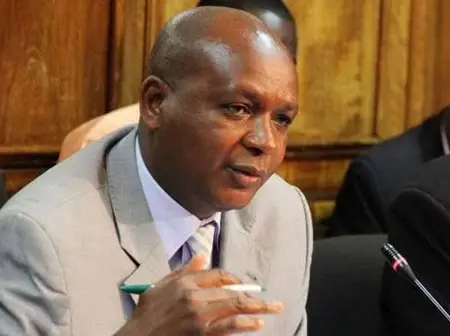
New Dawn for Kenyan Teachers: TSC Names Long-Serving Insider Cheptumo Ayabei as CEO
The announcement brings an end to a prolonged leadership transition following the retirement of former CEO Dr. Nancy Macharia, who stepped down in June 2025 after completing a decade at the helm.
Ayabei emerged victorious from a competitive recruitment process that drew 124 applicants from across the country. The search to fill the influential position experienced legal hurdles and had to be re-advertised, leaving Eveleen Mitei to steer the commission in an acting capacity during the interim period.
A trained teacher of Mathematics and Economics from Kenyatta University, Ayabei is no stranger to the inner workings of the commission.
Having risen through the ranks at the Upper Hill headquarters to lead the finance docket, insiders regard him as a steady, seasoned administrator with deep institutional knowledge.
In his new five-year renewable term, Ayabei faces the immediate task of providing strategic leadership while navigating ongoing concerns within the education sector.
His docket places him directly in charge of overseeing teacher welfare, advancing professional standards, strengthening institutional governance, and streamlining service delivery nationwide.
With thousands of teachers closely watching how the commission handles promotions, collective bargaining agreements, and the integration of intern teachers, Ayabei's financial background could prove pivotal in balancing budget constraints with union demands.
Stakeholders across the education sector are now waiting to see what policy shifts and administrative reforms the new boss will prioritize in his first hundred days.
https://web.facebook.com/NTVKenya/posts/pfbid0JcSWMcDZRnMKf3Dke2HUyNRuXKsBUywYXGrr1kM5NzkwyMdJt9VLtzCcwuyf1aA1l
-

What awaits Cheptumo Ayabei as he takes the helm at TSC?
The appointment of Cheptumo Ayabei as secretary and chief executive officer of the Teachers Service Commission (TSC) marks a new chapter for Kenya’s education sector. His elevation to the helm of one of the country’s most influential public institutions comes with high expectations and difficult decisions that will test his leadership.
-

Kevin Manyara: How Former Kapsabet Boys High School Head Boy Became Vice President At Morgan Stanley
From the verdant plains of Eldoret, Uasin Gishu County, Kevin Manyara is currently serving as Vice President at Morgan Stanley Alternative Investment Partners.Manyara, who is a Chartered Financial Analyst (CFA), has spent almost 10 years at Morgan Stanley, one of the world’s largest financial services and investment banking institutions.