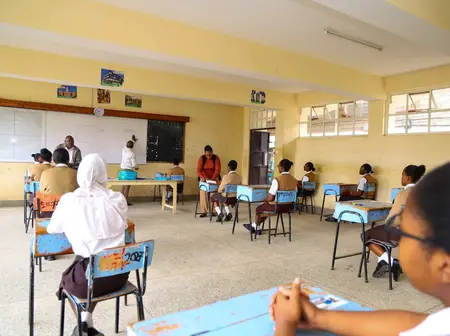
With three days left before the 2026 Kenya Certificate of Secondary Education (KCSE) examinations end, candidates across the country are entering the final stretch of the national testing calendar.On Tuesday, November 17, 2026, the Kenya National Examinations Council (KNEC) timetable covers applied and commercial subjects in two sessions.
Category: Education
-

EACC Seeks Sh40.3 Million Recovery from Former KeRRA Official Over Alleged Fake Degree
The Ethics and Anti-Corruption Commission (EACC) has filed a court case seeking to recover Sh40.3 million from former Kenya Rural Roads Authority (KeRRA) deputy director Margaret Wanja Muthui over allegations of obtaining public employment through forged academic credentials.
The commission claims that Muthui secured her position at the state agency using a fake Bachelor of Science degree in Computer Science allegedly issued by Jomo Kenyatta University of Agriculture and Technology (JKUAT).
According to EACC, the former official presented the purported academic certificate during the recruitment process to demonstrate that she possessed the qualifications required for the position. However, investigations reportedly established that the degree was not genuine, raising questions about the legality of her appointment.
The anti-graft agency argues that Muthui benefited financially from the alleged deception by receiving salaries and other employment-related payments amounting to Sh40.3 million.
Through the court proceedings, EACC wants the money recovered, maintaining that public funds should not be used to compensate individuals who allegedly secured employment through fraudulent means.
The case comes amid increased scrutiny of academic qualifications among public servants, with government agencies facing pressure to ensure that recruitment processes are transparent and based on verifiable credentials.
The commission has consistently warned that the use of forged certificates to obtain government positions undermines integrity in public service and denies qualified candidates opportunities to serve.
The latest legal action also highlights the importance of verifying academic documents before appointing individuals to senior positions in state institutions.
EACC is seeking the court's intervention to recover the disputed amount and ensure accountability for the alleged misconduct.
The court will determine the matter based on the evidence presented by the commission and the response from the former KeRRA official. Until a determination is made, the allegations against Muthui remain claims that have yet to be proven.
Source: https://www.facebook.com/share/1JjyB4kpxX/
-

Ogamba Dismisses Claims Linking Attack on KCSE Supervisor to Examination Cheating
Education Cabinet Secretary Julius Ogamba has clarified that the attack on a Kenya Certificate of Secondary Education (KCSE) examination supervisor was not related to examination cheating, dismissing speculation surrounding the circumstances of the incident.
Speaking about the matter, Ogamba said there was no established connection between the assault and any suspected examination irregularities. He urged Kenyans to refrain from making premature conclusions as authorities work to establish the facts surrounding the incident.
The clarification comes amid heightened attention on examination security as thousands of candidates across the country continue sitting their KCSE examinations. The government has repeatedly emphasized the need to maintain discipline, fairness and transparency throughout the examination period.
Ogamba maintained that isolated security incidents should not automatically be interpreted as cases involving examination malpractice. He noted that linking the attack to cheating without sufficient evidence could mislead the public and create unnecessary anxiety among education stakeholders.
The CS further stressed the importance of protecting teachers, supervisors and invigilators who play a critical role in ensuring that national examinations are conducted smoothly. He called for cooperation between school administrators, local authorities and security agencies to guarantee a safe examination environment.
The incident has drawn attention to the challenges faced by examination officials while carrying out their duties, particularly in areas where tensions may arise during the examination period.
Security agencies are expected to establish the circumstances that led to the attack and take appropriate action against those responsible.
Meanwhile, the Ministry of Education has urged candidates to remain calm and concentrate on completing their examinations without being distracted by unrelated developments.
The government has reiterated its determination to protect the credibility of the KCSE examinations and ensure that all candidates are assessed fairly. Ogamba's remarks seek to separate the reported assault from allegations of examination malpractice as investigations into the incident continue.
Source: https://www.facebook.com/share/1CjH3LProc/
-

Software Engineer Builds School in Hometown Using Savings From Janitor Job in US
A woman has inspired many people after turning her childhood dream into reality by building a school in her hometown. Her story is a powerful example of determination, hard work and the importance of giving back to the community.
The woman, who works as a software engineer, reportedly started the project to give children in her hometown better learning opportunities. She wanted the younger generation to enjoy educational privileges that she did not have while growing up.
Her journey towards achieving the dream was not easy. Before becoming a software engineer, she worked as a janitor in the United States. Despite the challenges of her job, she remained focused on her dream and continued saving money.
Instead of giving up, she used her savings from the cleaning job to finance the construction of the school. Her decision showed that she was willing to make sacrifices to create a better future for children in her community.
The project is also a reminder that people can make a difference regardless of where they start in life. Through her efforts, she has demonstrated that even small savings can contribute to achieving something meaningful when combined with determination and proper planning.
Her story has also highlighted the importance of education and community development. By investing in a school, she has helped create an opportunity for young learners to access education closer to home.
Many people may see building a school as a huge responsibility, but her journey shows that great achievements can begin with a simple dream.
Her actions serve as an encouragement to people who hope to support their communities but feel that they have limited resources.
Ultimately, her story carries an important message: nothing is too small when it comes to making a positive difference in the lives of others.
source:https://www.facebook.com/share/p/1Dvuf66RZf/
-
Countdown to Friday Finish: National Examinations Enter Crucial Final Four Days Across All Centres
Entering the final week of the national assessment, Form Four candidates across the country are being tested in Business Studies during the morning session before returning to examination rooms in the afternoon for Agriculture.
According to the daily schedule published by KNEC on its official communication platforms on Tuesday morning, the first session commenced at 8:00 am with Business Studies Paper 1 (565/1), running for two hours until 10:00 am for standard and large-print candidates.
Following the morning test, examinees are granted a three-and-a-half-hour midday recess between 10:30 am and 2:00 pm to rest and prepare before the second session begins at 2:00 pm with Agriculture Paper 1 (443/1), which concludes at 4:00 pm.
To uphold inclusivity and equal access during the national exercise, candidates utilizing Braille versions of the examinations have been allotted an additional 30 minutes per paper, extending their Business Studies session to 10:30 am and their Agriculture sitting to 4:30 pm.
Tuesday’s dual sitting marks a critical milestone for the historic cohort of 1,048,355 candidates registered for the 2026 KCSE cycle—the first time national candidature has surpassed the one-million mark.
Having opened the main written theory phase on November 2, the examinations are now in their final four days, with Geography Paper 2 and Physics Paper 2 scheduled for Wednesday, Agriculture Paper 2 and Business Studies Paper 2 set for Thursday, and the entire examination period concluding on Friday, November 20, with Physics Practical.
What are your thoughts about this article? Share your reactions in the comment section and don't forget to share and follow for more updates.
https://peopledaily.digital/news/kcse-2026-double-test-for-candidates-as-knec-releases-tuesday-timetable
-
What Ayabei’s New Role Entails in Managing Kenya’s Public Teaching Workforce
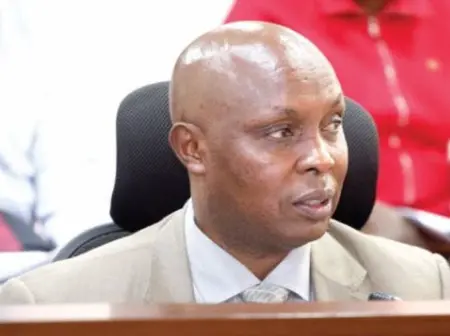
Announced on Monday, November 16, 2026, by TSC Chairperson Dr. Jamleck Muturi John, Ayabei’s appointment followed a competitive, court-ordered re-advertisement of the position that attracted 124 applicants and culminated in final interviews for five shortlisted candidates, including acting CEO Dr. Evaleen Mitei.
Stepping into the five-year renewable role previously held by Dr. Nancy Macharia until her retirement in June 2025, Ayabei—who holds a Bachelor of Education degree from Kenyatta University, a Master of Science in Finance and Banking from the University of Stirling, and Certified Public Accountant credentials—brings 36 years of public sector experience, having served at the Ministry of Education before rising through TSC’s ranks since 1999 to become Director of Finance in 2009.
Taking charge of the Commission’s secretariat in Upper Hill, Nairobi, places Ayabei at the center of strategic, administrative, and operational decision-making for more than 400,000 public school teachers nationwide.
Under the Constitution of Kenya and the Teachers Service Commission Act, his core mandate entails executing Commission policies, overseeing teacher registration, recruitment, deployment, payroll administration, and professional discipline, while serving as the primary accounting officer responsible for managing one of the largest allocations in the national budget.
Crucially, the Commission has tasked him with advancing teacher professionalism, modernizing service delivery, and steering institutional alignment with Kenya’s ongoing competency-based education reforms.
What are your thoughts about this article? Share your reactions in the comment section and don't forget to share and follow for more updates.
https://peopledaily.digital/news/cheptumo-ayabei-takes-over-as-tsc-ceo-what-his-job-entails-and-what-lies-ahead
-
Degree vs Diploma: Why This Kenyan Student Chose KMTC Over KU
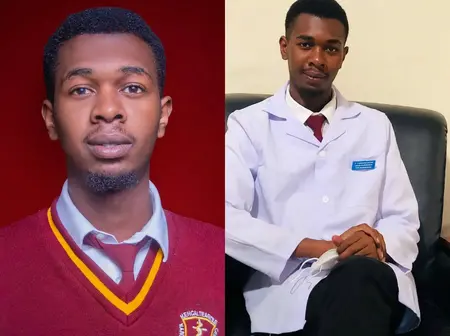
Samuel Karanja Ngugi has received recognition from the Kenya Medical Training College (KMTC) after completing a Diploma in Clinical Medicine and Surgery, following an unexpected change in his academic plans.
Ngugi's educational journey took a different direction when he decided to leave Kenyatta University, where he had been pursuing Economics and Finance, and join KMTC Machakos Campus.
The decision saw him move away from a university degree programme and pursue training in the medical field, an area that required him to acquire an entirely different set of skills.
His experience has now attracted the attention of KMTC, which congratulated him through a post on its official social media account.
In the message, the college highlighted his journey and shared his reflections on the time he spent undertaking the medical course.
Ngugi explained that his training lasted three years, during which he had to deal with demanding academic work and practical responsibilities.
He revealed that the experience involved long nights of studying, challenging examinations and clinical rotations that required commitment and determination.
Although the programme presented several difficulties, he managed to complete his studies.
Looking back, Ngugi expressed satisfaction with the decision he made, describing his time at the institution as the most rewarding period of his education.
His story presents an interesting example of someone who reconsidered an academic decision and pursued a different professional direction.
Leaving a university programme to begin another course is not always an easy choice, particularly when it means adjusting to a new learning environment and starting a different chapter.
For Ngugi, however, the change eventually led him to complete training in clinical medicine and surgery.
KMTC's recognition of his achievement has also drawn attention to the different paths students take while pursuing their educational ambitions.
His experience highlights the fact that choosing a career is not necessarily a one time decision. Sometimes, people discover a different direction that better matches their interests and ambitions as they progress through life.
https://www.tuko.co.ke/people/646992-kmtc-celebrates-student-quit-economics-degree-ku-pursue-diploma-clinical-surgery/?utm_source=facebook&utm_medium=social&utm_campaign=tuko&utm_content=pp&fbclid=IwZXh0bgNhZW0CMTEAcGRvZgNzcnRjBmFwcF9pZA8yNzUyNTQ2OTI1OTgyNzkAAR8hb17HMaKLW3mHnrB9BasLcoKNosPlUH0l2RDc0x4ITmBJrurtKNgIt2XT8g_aem_JRDTR4tDE2TKC36Y9L-o-w
-

US Court Blocks Tough New Visa Restrictions on Foreign Students and Journalists
A United States federal judge has struck down a controversial Trump administration policy that sought to impose stricter limits on how long foreign students, academics and journalists could remain in the country, delivering a major victory to universities, education organisations and media unions.
District Judge F. Dennis Saylor IV issued the ruling on November 16, describing the policy as arbitrary, an abuse of discretion and inconsistent with the law. The decision followed a legal challenge filed by a coalition of organisations representing universities, educators, students and journalists against the Department of Homeland Security (DHS).
The regulation, introduced in July 2026, proposed limiting international students and academic exchange visitors to a maximum stay of four years. Those wishing to remain longer would have been required to apply for extensions.
Foreign journalists holding I visas would have faced an even shorter limit of 240 days, approximately eight months. Journalists from China would have been restricted to 90-day stays, with the possibility of applying for extensions.
Previously, international students were generally permitted to remain in the United States for the duration of their academic programmes, while foreign journalists could stay for up to five years.
In his ruling, Saylor warned that the restrictions could disrupt higher education and prevent international students from completing lengthy academic programmes, particularly doctoral degrees. He also highlighted the potential difficulties for students pursuing joint degrees or changing their fields of study.
The judge argued that the government's policy undermined Congress's intention to encourage educational opportunities for international students in the United States.
The lawsuit was supported by higher education associations and labour unions, including organisations representing journalists.
The ruling comes amid President Donald Trump's broader immigration crackdown, which has introduced tighter restrictions across several visa categories.
The United States hosted more than 1.1 million international students during the 2023-2024 academic year, highlighting the importance of foreign students to its education sector.
The decision represents a significant setback for the administration's efforts to tighten immigration controls.
Source: https://www.facebook.com/share/18a3PcZjBf/
-

Dubai Introduces New Ban Affecting Thousands of Foreign Teachers
Thousands of foreign teachers working in Dubai are preparing for significant changes after authorities introduced new rules that could affect how they interact with students. The announcement has attracted attention among educators, particularly those who have relied on personal phones and social media to communicate with learners.
But what exactly has changed, and why has Dubai decided to introduce the new restrictions?
The new rules were announced by the Knowledge and Human Development Authority (KHDA) on November 13, 2026, as part of a wider effort to strengthen student protection in private educational institutions.
Under the new policy, teachers and other education workers are prohibited from using personal mobile phones, private WhatsApp accounts and personal social media profiles to communicate with students.
Instead, all communication between teachers and learners must take place through officially approved school devices and platforms.
The restrictions affect staff working in private schools, nurseries, universities and vocational training institutions across Dubai.
This means that foreign teachers from countries such as Kenya, India, the Philippines, South Africa, the United Kingdom and other nations will also be expected to follow the new requirements.
However, the announcement does not mean teachers are banned from using social media in their personal lives. The restrictions specifically target private communication between education staff and students.
The framework also introduces additional professional conduct requirements. Teachers must maintain appropriate boundaries with learners, avoid unauthorised gifts and follow strict guidelines when taking or sharing photographs involving students.
Furthermore, schools must ensure that one-to-one meetings between teachers and students happen under proper supervision, with appropriate safety arrangements in place.
The new measures are intended to protect learners from potential abuse, online grooming, cyberbullying and other forms of inappropriate conduct.
KHDA has given educational institutions a phased implementation period of up to 12 months to update their policies, train employees and establish the required systems.
Schools will also be expected to appoint safeguarding officers responsible for monitoring compliance and handling concerns.
The changes are expected to affect thousands of education workers, including foreign teachers who have built careers in Dubai.
For now, educators are being encouraged to familiarise themselves with their institutions' updated policies as the emirate strengthens its approach to student protection.
source:https://www.facebook.com/share/p/1ErLcuPX7s/
-
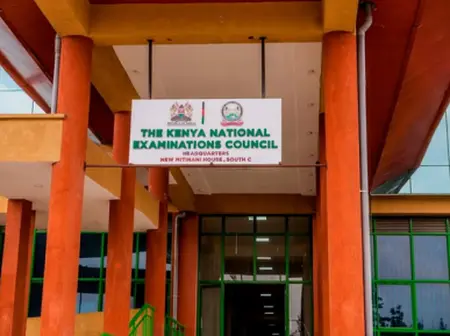
KCSE 2026: Double test for candidates as KNEC releases Tuesday timetable
Candidates sitting the 2026 Kenya Certificate of Secondary Education (KCSE) face two papers on Tuesday, November 17, 2026. The candidates will do Business Studies in the morning and Agriculture in the afternoon, according to the timetable the Kenya National Examinations Council (KNEC) has released this morning.
Business Studies (565/1) runs from 8.00 am to 10.00 am. Candidates then get a break of three and a half hours, from 10.30 am to 2.00 pm, before Agriculture (443/1) begins at 2.00 pm and ends at 4.00 pm.
Both papers are two hours long for standard and large-print candidates. Candidates using braille get an extra 30 minutes for each paper. Business Studies Braille runs from 8.00 am to 10.30 am, and Agriculture Braille from 2.00 pm to 4.30 pm.
KNEC shared the timetable on its social media pages and wished candidates well, as it has done at the start of each exam day.
Today’s papers fall in the closing stretch of an exam season that KNEC says is the largest it has handled. The council is administering national assessments and examinations to 3,634,846 candidates between October 19 and November 20, 2026, with 342,005 contracted professionals deployed to oversee them.
KCSE itself has 1,048,355 candidates, making 2026 the first year the number of KCSE candidates has crossed the one-million mark.
The season started with rehearsals on October 16. Papers with low candidature ran from October 19 to 30, and papers involving large numbers of candidates are being administered from November 2 to 20. The main written papers began on Monday, November 2, with English Paper 1 in the morning and Chemistry Paper 1 in the afternoon. Under the timetable, morning papers start at 8:00 am, while second-session papers start at 2:00 pm with no additional time.
KNEC has put heavy security and logistics measures in place. For KCSE alone, it deployed 10,765 centre managers, 12,274 supervisors, 57,432 invigilators and 21,388 security officers. The council also separated morning and afternoon KCSE papers in specially marked cartons to reduce the risk of mix-ups and unauthorised access.
KNEC has also reminded candidates and schools that irregularities can lead to cancellation of results and criminal penalties under the KNEC Act No. 29 of 2012.
The season has not been free of tension. Ahead of the rehearsals, a dispute between the teachers’ union KUPPET and KNEC was still unresolved, and the union had urged its members not to take part in exams conducted by KNEC. The exams have since gone ahead according to the published timetable.
The exam ends on Friday, November 20, when the timetable lists Physics Practical (232/3), allocated two hours and 30 minutes, for the morning session. Marking and results processing will then follow.
Candidates are advised to arrive at their centres early, carry the required identification and approved materials, and follow all instructions from supervisors and invigilators.