Category: Economy&Finance

  • Tough Times As Ruto’s Government Increases Prices Of Electricity By Shs 4.56 Effective November

    Tough Times As Ruto’s Government Increases Prices Of Electricity By Shs 4.56 Effective November

    Kenyan households and businesses will pay higher electricity bills in November after the Energy and Petroleum Regulatory Authority (EPRA) introduced additional charges amounting to approximately Ksh4.56 per unit of electricity consumed.

    In a Gazette Notice dated November 20, EPRA announced three adjustments affecting electricity consumers during the November billing cycle.

    The charges comprise a Fuel Energy Cost Charge of Ksh3.54 per kilowatt-hour, a Foreign Exchange Fluctuation Adjustment of Ksh1.0031 and a Water Resource Management Authority (WRMA) levy of Ksh0.013606 per unit. Combined, the adjustments translate to Ksh4.5567 per kilowatt-hour.

    EPRA explained that the fuel charge covers expenses incurred in generating electricity using thermal power plants, particularly those relying on diesel. The foreign exchange adjustment accounts for currency-related gains and losses affecting electricity sector players, including Kenya Power, KenGen and independent power producers.

    The regulator also reported that electricity sector players recorded foreign exchange gains of approximately Ksh1.16 billion in October.

    Meanwhile, the WRMA levy applies to electricity purchased from qualifying hydropower stations with generation capacity of at least one megawatt.

    The latest increase comes amid growing public complaints over expensive electricity, following similar adjustments of Ksh4.10 in October, Ksh4.16 in September and Ksh4.70 in August.

    Link

    https://www.facebook.com/share/p/19nfBb3sKv/
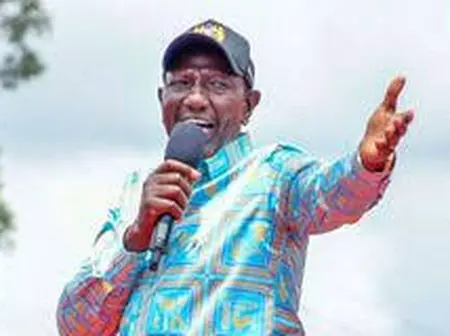
  • Ruto Praises Rai Group for Reviving Nzoia Sugar, Announces Sh195 Million Farmers’ Bonus

    Ruto Praises Rai Group for Reviving Nzoia Sugar, Announces Sh195 Million Farmers’ Bonus

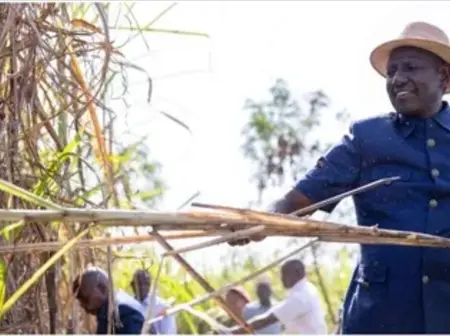
    Speaking on Monday, November 23, at the factory in Kanduyi, Bungoma County, the President described the company's recovery as a major milestone after years of operational challenges.

    Ruto said the factory was almost collapsing three years ago but had since undergone significant improvements under the management of Rai Group.

    He credited the investor with introducing efficiency in factory operations, improving sugar production and ensuring farmers receive payments for their cane deliveries within a week.

    During the visit, the President issued bonus cheques worth Sh195 million to farmers supplying sugarcane to Nzoia Sugar Company.

    The payment forms part of a Sh1.2 billion bonus package targeting farmers supplying public sugar factories across the country.

    Nzoia Sugar Managing Director Tejveer Rai revealed that the company had paid farmers Sh1.6 billion this year, while investing Sh5.7 billion in modernising the factory.

    He also disclosed that the company had remitted Sh688 million in taxes and Sh639 million in lease and concession fees.

    Ruto maintained that Nzoia Sugar Company remains the property of the people of Bungoma despite the leasing arrangement with the private investor.

    He further promised to double the bonus payments to Nzoia sugarcane farmers in 2027, urging them to increase production to support the industry's recovery.

    The President said the government would continue implementing reforms aimed at strengthening local sugar production and reducing reliance on imported sugar.

    Source

  • How Kenyans Can Convert Safaricom Airtime into M-Pesa Cash in 2026

    How Kenyans Can Convert Safaricom Airtime into M-Pesa Cash in 2026

    According to a report published by K24 Digital, one of the platforms offering the service is DBS Kenya, which allows customers to initiate conversion requests through its website.

    The service could benefit Kenyans who receive airtime as gifts, win it through competitions, receive it from employers or accidentally purchase more than they need. However, customers should understand that Safaricom does not provide a direct service for converting airtime into M-Pesa cash.

    Instead, independent platforms handle the exchange and pay customers after verifying the airtime transfer.

    To begin the process, customers need a mobile phone, an internet connection and eligible Safaricom airtime.

    First, visit the DBS Kenya website at https://dbskenya.com/ using a mobile browser. Select the Safaricom Airtime to M-Pesa conversion option and choose the appropriate airtime category.

    Next, enter the amount of airtime you want to exchange. The platform displays an estimated payment based on its advertised conversion rate.

    According to the DBS Kenya website, the advertised Safaricom airtime payout is 70 per cent. This means KSh1,000 worth of airtime would generate approximately KSh700, while KSh5,000 would generate KSh3,500.

    The actual amount should be confirmed on the platform before proceeding because conversion rates can change.

    After entering the amount, provide the Safaricom number holding the airtime and the required M-Pesa details, including the registered name. Check the information carefully before submitting the request.

    Once submitted, the website generates transaction instructions, including a USSD procedure for transferring the airtime.

    Customers should follow the instructions generated for their specific transaction rather than relying on codes shared through unofficial channels. After completing the transfer, return to the website and confirm that the airtime has been sent.

    DBS Kenya says it verifies the transaction before processing the agreed M-Pesa payment. Processing times may vary depending on transaction volumes and operating hours.

    There are also important precautions to consider.

    Customers should only exchange airtime they legally own or have permission to transfer. They should never share their M-Pesa PIN, passwords or other confidential banking details with a conversion service.

    It is also advisable to retain the Safaricom confirmation message and check the platform's current rates and terms before sending any airtime.

    Ultimately, converting airtime into cash comes at a cost, since customers receive less than the original airtime value. Would you exchange KSh1,000 airtime for KSh700, or would you rather keep the airtime?

  • Good News for Sugarcane Farmers as Ruto Announces Double Bonuses in 2027

    Good News for Sugarcane Farmers as Ruto Announces Double Bonuses in 2027

    The announcement is expected to attract attention among farmers, particularly in Western Kenya, where sugarcane farming remains an important source of income for many households.

    Speaking during a recent engagement, Ruto said his administration was committed to improving the livelihoods of sugarcane farmers through interventions aimed at strengthening the sugar industry.

    The President's announcement comes at a time when farmers have continued raising concerns about delayed payments, production costs and the returns they receive from selling their cane to sugar factories.

    For many farmers, bonuses provide an additional financial boost, helping them meet household expenses, pay school fees and invest in agricultural activities.

    Ruto's latest promise could therefore offer renewed optimism to farmers who have been calling for better compensation and improved management of the country's sugar sector.

    The government has previously outlined plans to revive struggling sugar factories, improve cane production and address challenges affecting the industry.

    The proposed double bonuses would also be significant for farmers in counties such as Kakamega, Bungoma, Busia, Vihiga and parts of Nyanza, where sugarcane farming supports thousands of families.

    The announcement has attracted interest on social media, with Kenyans discussing the President's latest message and what it could mean for farmers ahead of the 2027 General Election.

    However, farmers will be keen to understand how the proposed bonuses will be implemented, including the payment arrangements and the institutions expected to oversee the programme.

    If fulfilled, the promise could provide a major financial boost to sugarcane farmers while strengthening the government's efforts to restore confidence in the sugar industry.

    For now, farmers will be watching closely for further details from the government on the proposed payments.

  • Ruto to Flag Off Kenya’s First Crude Oil Exports From Turkana on December 2

    Ruto to Flag Off Kenya’s First Crude Oil Exports From Turkana on December 2

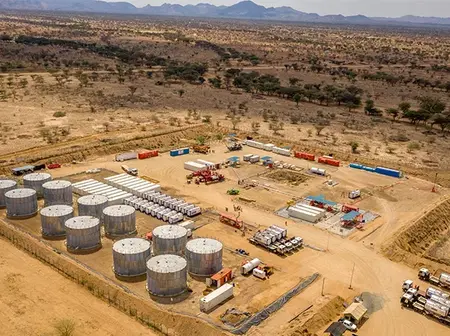
    President William Ruto will lead the flag-off of Kenya's first crude oil exports on December 2. The oil comes from the South Lokichar Basin in Turkana County.

    Petroleum Principal Secretary Harsama Kello confirmed the date on Monday. He spoke to the National Assembly Energy Committee.

    Kello said all arrangements for the first export are now complete. A multi-agency team is finalising plans for production and transport.

    "We intend to have the flag-off scheduled on December 2," he told MPs. The date marks a major step in Kenya's oil journey.

    Trucks will carry the crude from Turkana to Mombasa. Officials will prepare the oil there for export.

    Kenya does not yet have a pipeline to move the oil. Kello told the committee that road transport is the only option for now.

    The flag-off ends years of exploration, appraisal and planning. Kenya has waited a long time to turn its Turkana discovery into income.

    The South Lokichar Basin sits at the heart of the country's oil plans. The government wants to turn the find into a real economic asset.

    Using trucks shows the infrastructure gaps facing the project. No dedicated pipeline links the oilfields to the coast.

    The government has worked out a plan to move the crude to Mombasa. The oil will be stored there before shipment to world markets.

    Kello appeared before the committee to discuss the 2027 Budget Policy Statement. MPs used the session to question how ready the project is.

    Committee members urged the State Department for Petroleum to settle all pending issues. They want the local community's concerns solved before the ceremony.

    The MPs said the government should not rush the historic event. They argued that residents of the oil region must not be left behind.

    The debate shows a delicate balance for the government. Leaders want exports to begin, yet local people expect real benefits.

    Turkana residents have long asked for a fair share of oil earnings. They want jobs, better roads and compensation for land used in oil work.

    The government says the project will grow the economy and create jobs. It also expects Kenya to gain a stronger place in regional energy.

    The December 2 event will show that Kenya is ready to export crude oil. Questions still remain over long-term transport and community demands.

    Preparations are now nearing completion across the agencies involved. The government is working to ensure the first shipment leaves on schedule.

    Source.

  • Exports cross Sh1trn mark for the first time

    Exports cross Sh1trn mark for the first time

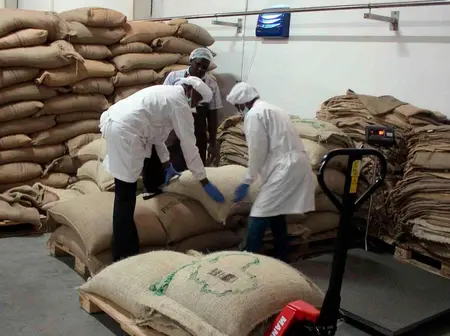
    Kenya's earnings from exports have crossed the Sh1 trillion mark for the first time in a January-to-September period, driven by stronger agricultural shipments and a sharp recovery in demand from the United States.

    Total exports rose 19.8 percent to Sh1.008 trillion in the nine months to September from Sh841.84 billion in the corresponding period last year, according provisional trade data published by the Kenya National Bureau of Statistics (KNBS).

  • Exports earnings cross historic Sh1 trillion mark

    Exports earnings cross historic Sh1 trillion mark

    Kenya's earnings from exports have crossed the Sh1 trillion mark for the first time in a January-to-September period, driven by stronger agricultural shipments and a sharp recovery in demand from the United States.

    Total exports rose 19.8 percent to Sh1.008 trillion in the nine months to September from Sh841.84 billion in the corresponding period last year, according provisional trade data published by the Kenya National Bureau of Statistics (KNBS).

  • Is Kenya’s tax regime pushing businesses out of digital payments?

    Is Kenya’s tax regime pushing businesses out of digital payments?

    When Absa Bank Kenya won its long-running tax dispute at the Supreme Court in December 2025, the decision did more than settle a disagreement over card payment fees. It highlighted the importance of precise tax legislation in an economy increasingly dependent on digital transactions.

    The court held that payments made by acquiring banks to international card companies were not royalties, while interchange fees paid to card-issuing banks were not management or professional fees under the Income Tax Act as it then stood. Neither category attracted the disputed withholding tax.

  • Ruto Claims 2024 Finance Bill Passed Without Harming Kenya, Recalls Gen Z Protests

    Ruto Claims 2024 Finance Bill Passed Without Harming Kenya, Recalls Gen Z Protests

    President William Ruto has revisited the controversial 2024 Finance Bill, defending his administration's handling of the legislation while addressing residents during a rally in Bungoma on Monday, November 23, 2026.

    The president accused unnamed political competitors of misleading young Kenyans during the protests that erupted over the proposed tax measures, arguing that misinformation had influenced how the youth responded to the bill.

    Speaking to the crowd, Ruto maintained that the legislation had eventually been passed without causing harm to the country, despite the deadly demonstrations that accompanied its introduction.

    “You have manipulated the young people of Kenya for far too long. You manipulated them in 2024 using fake news, using misinformation about a finance bill that was eventually passed, and there was no harm to our nation,” he said.

    Ruto further alleged that the spread of false information had negatively affected the lives and prospects of some young people, saying it had destroyed the future of many citizens.

    He challenged the youth to concentrate on opportunities that could improve their lives rather than allowing politicians to influence them through misleading information.

    “Get your education, get an internship, get a job, and get a business. That is what the young people of Kenya deserve,” the president stated.

    His comments come more than two years after the Finance Bill sparked nationwide demonstrations led largely by young people. On June 25, 2024, protesters took to the streets to oppose the proposed tax increases while also raising concerns about government accountability.

    The demonstrations turned deadly, with 62 protesters reported killed and many others injured during confrontations, some involving security forces.

    The unrest reached Parliament in Nairobi, where demonstrators stormed the National Assembly precincts. Ruto subsequently withdrew the Finance Bill and made changes to his Cabinet following the widespread public reaction.

    The president's latest remarks therefore bring renewed attention to the government's response to one of the most significant periods of public demonstrations during his administration.

    He ended his Bungoma address by again warning political rivals against using misinformation and disinformation to influence young Kenyans, insisting that the country's youth should be allowed to pursue education, employment and business opportunities.

    Source

  • Why Ruto’s KSh 21 Billion Kakamega Road Launch Just Sparked a Fierce Debate Online

    Why Ruto’s KSh 21 Billion Kakamega Road Launch Just Sparked a Fierce Debate Online

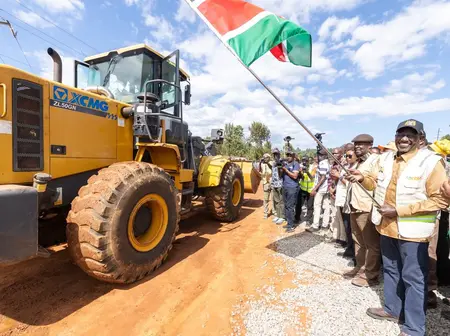
    During his Western Kenya development tour between November 19 and November 23, 2026, the Head of State broke ground on several key corridors, including the 11-kilometre Matungu–River Sio–Nasianda Road, the Matunda Junction–River Nzoia Road in Likuyani, the Turbo–Sikhendu Road in Lugari, and the Shamakokho–Kaimosi–Malinya Road in Ikolomani.

    While government officials and local leaders celebrated the launches as long-overdue investments to open up rural markets and boost trade, the announcements immediately drew sharp scrutiny online over three main issues.

    First, social media users questioned the status of previously launched roads across Western Kenya that remain stalled or incomplete.

    Shortly after President Ruto posted updates on X regarding the KSh21 billion Kakamega road programme, online commentators began listing older road corridors—such as Misikhu–Brigadier, Navakholo–Dorofu, Kimilili–Kapsokwony, Mayanja–Sirisia, and Bokoli–Kimilili—demanding to know why contractors had abandoned those sites before new groundbreaking ceremonies were held.

    Second, critics online pointed out apparent inconsistencies in the KSh21 billion figure cited by the President during his speeches and social media posts across the region.

    Followers noted that the exact same KSh21 billion price tag had been announced by the government for Kakamega’s broader multi-sector package (covering affordable housing, markets, and hostels), as well as for road construction programmes in neighboring Bungoma and Busia counties, prompting skepticism about whether the numbers reflect fresh budgetary allocations or recycled political figures.

    Third, the massive rollout in Kakamega triggered regional equity debates—commonly referred to online under the "Usawa ni Sawa" slogan—regarding how national infrastructure funds are distributed across Western Kenya.

    Residents and commentators from neighboring Trans Nzoia County questioned why Kakamega and Bungoma received multi-billion-shilling road and housing launches while Governor George Natembeya’s turf appeared largely sidelined from the tour's flagship announcements.

    Defenders of the administration, however, pushed back against the online criticism, arguing that phased road tarmacking takes time and that linking agricultural zones like Likuyani, Matungu, and Lugari to major highways is critical for lowering transport costs for sugarcane and maize farmers.

    With the 2027 General Election drawing closer, the heated online reaction shows that Kenyans are increasingly tracking past project completion rates alongside new multi-billion-shilling launch pledges.

    SOURCE