
Kenyans in the diaspora are being offered a structured path to acquire land and invest in property back home.A partnership between NCBA and real estate developer Optiven combines land acquisition, mortgage financing and property development solutions.It targets the hurdles Kenyans abroad face when investing locally: financing, trust, property verification and managing investments remotely.
Category: Economy&Finance
-

Quickmart investors gain Sh5.6bn on first day of trading
Shareholders of retail chain Quickmart gained Sh5.6 billion in paper wealth on the first day of trading after listing at the Nairobi Securities Exchange (NSE) on Thursday, with the stock up 19 percent on its initial public offering (IPO) price.
The company made its trading debut at a price of Sh10 per share on Thursday morning, before settling lower to close trading at an average price of Sh8.90 a unit on 9.7 million shares traded. This resulted in a traded value of Sh86.2 million.
-

Williamson Tea swings to Sh291m profit
Williamson Tea Kenya Plc has swung back to profitability for the six months period ending September 2026, as its affiliate Kapchorua Tea also marked a rise in income for the same half-year period.
The related tea firms have attributed the better performance to improved operational efficiency with Williamson posting a net profit of Sh291.6 million in the review period to reverse a net loss of Sh10 million a year earlier.
-

High Court Tightens Rules on Online Alcohol Sales in Nairobi, Orders Mandatory Age Verification
The Milimani High Court has imposed strict conditions on the online sale and delivery of alcoholic drinks in Nairobi, requiring digital platforms to introduce mandatory age-verification systems and comply with licensing regulations.The interim orders, issued on November 9, 2026, restrict the listing, ordering, sale, supply and delivery of alcoholic beverages through e-commerce applications, websites and other digital platforms unless operators meet the legal requirements set by the court.
-

Kenya Pipeline Company(KPC) Issues Notice on Forthcoming 46th AGM
Kenya Pipeline Company (KPC) will hold its 46th Annual General Meeting virtually on 2nd December 2026 at 9:00 am, with Ownership, Board Changes and Dividends in focus. Under consideration during this meeting are several significant matters touching on ownership structure, board composition, corporate governance and shareholder returns.
-
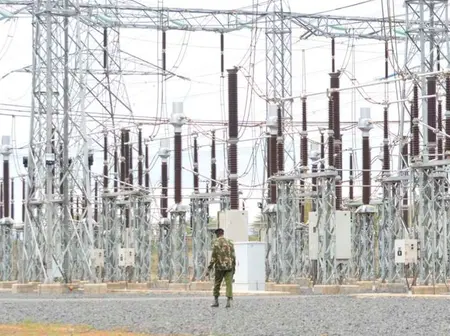
Ketraco to pay Ecobank Sh549m as Spanish firm claim blocked
Ecobank Kenya has won a court order directing the Kenya Electricity Transmission Company (Ketraco) to pay it Sh549 million from proceeds of a Sh10 billion arbitral award involving a Spanish company against the State agency.
The High Court in Milimani Nairobi ruled that the bank’s claim takes priority over competing claims by Spanish contractor Instalaciones Inabensa SA and COX T&L SL, which says it acquired rights to the award.
-

Axle-Load Compliance Hits 99% in Eastern Kenya as Danka Africa Steps Up Enforcement and Sensitisation
Compliance with axle-load regulations in Kenya's eastern weighbridge cluster has risen to nearly 99 per cent, with enforcement agencies attributing the improvement to continuous engagement with transporters and intensified monitoring.Danka Africa Kenya Limited Assistant Operations Manager Jackson Kimuyu says regular sensitisation programmes and collaboration with transporters have played a critical role in improving adherence to legal loading requirements.
-
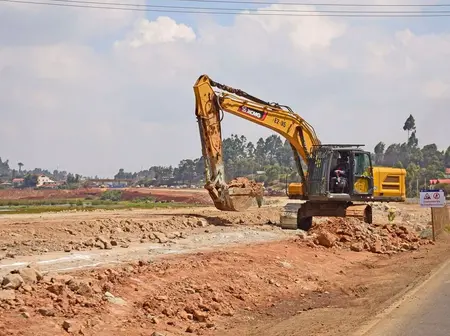
Private investors line up Sh96bn for State projects
Private investors are expected to pour Sh96 billion into public infrastructure projects in sectors such as electricity transmission and water in the current financial year ending June 2027 in the wake of mounting debt repayments, which have shrunk the room for the government to finance development.
Treasury Cabinet Secretary John Mbadi says the amount targeted is a 74.5 percent increase from the Sh55 billion mobilised through public-private partnerships (PPPs) last financial year ended June 2025.
-
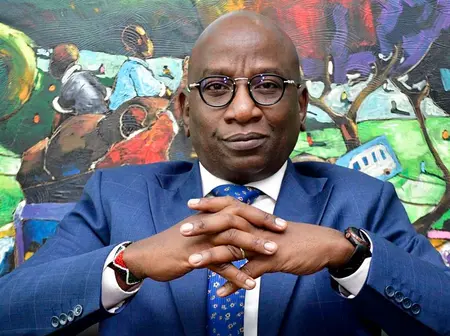
The art of navigating: Michael Mutiga’s journey across different worlds
Bankers, it would seem, tread with padded paws. Moving without disturbing the air too much. Michael Mutiga talks like that. Measured. Each word set down gently, like a glass on a table in someone else’s house. Or how you close the door to the room of a sleeping baby.
He has been CEO of Stanbic Bank Kenya for a few months, long enough to feel the weight of it, not long enough to know everyone who knows him.
-

IMF challenges Kenya’s crypto rules over foreign stablecoin reserves and licensing costs
Kenya’s cryptocurrency licensing framework could face adjustments to how international stablecoin issuers maintain their backing assets and how much capital digital asset businesses must commit to operating locally. The International Monetary Fund (IMF) wants the country to reconsider requirements that currently compel stablecoin issuers to hold part of their reserves within Kenya, arguing that the rules could discourage foreign providers from establishing locally licensed operations.
The Fund is proposing that issuers of foreign-denominated stablecoins be allowed to keep their reserves in their home jurisdictions or with foreign custodians, subject to strict conditions governing fund transfers and regulatory oversight. It also wants Kenya to adopt capital requirements that reflect the size and complexity of individual cryptocurrency businesses rather than applying fixed thresholds across different operators.
The recommendations come as Kenya implements its Virtual Asset Service Providers (VASP) Act and accompanying regulations, which establish licensing and supervisory requirements for cryptocurrency exchanges, stablecoin issuers and other digital asset intermediaries.
They also follow concerns from local industry participants about the financial commitments required to obtain licences under the new framework.
The IMF’s recommendations address two areas of Kenya’s regulatory framework that could influence the composition of its domestic cryptocurrency industry: reserve custody and minimum capital.
Under the VASP Regulations published in July 2026, cryptocurrency exchanges operating in Kenya must maintain minimum paid-up capital of Sh100 million, equivalent to approximately $770,000. Stablecoin issuers face a higher minimum requirement of Sh300 million.
The capital thresholds have attracted attention from local industry participants, particularly smaller businesses that may struggle to meet the financial conditions for licensing.
TechTrendsKE’s August 2026 reporting documented concerns among crypto founders about the cost of remaining in the Kenyan market under the new requirements. Some businesses were considering alternative jurisdictions, including South Africa and Mauritius, as they assessed the financial implications of compliance.
The IMF is now recommending a more differentiated approach.
It wants regulators to consider the scale and complexity of a company’s operations when determining the capital it must maintain. An exchange offering a limited range of services, for example, may not present the same risks as a larger intermediary performing several functions across the digital asset market.
The Fund argues that larger and more complex operators could introduce greater financial risks and should therefore face stronger prudential oversight.
“Ensure there is a proportionate approach to regulating crypto entities in Kenya in line with the scale and complexity of their activities. Currently, capital requirements are static,” the IMF says in its recommendations.
The proposal does not amount to a blanket reduction in capital requirements. Instead, it would give regulators room to differentiate between businesses according to their activities and the risks they introduce into the financial system.
The reserve requirements present a separate challenge for international stablecoin providers.
Kenya’s framework requires both foreign and locally denominated stablecoin issuers to maintain a portion of their backing assets within the country. The arrangement is intended to give regulators greater visibility over the assets supporting digital currencies and provide a degree of protection for local users.
The IMF argues that applying the same localisation approach to foreign-denominated stablecoins could create problems for international issuers.
Under its proposal, providers of dollar-pegged tokens such as Tether’s USDT and Circle’s USDC could maintain their reserves in their home jurisdictions or through foreign custodians rather than being compelled to hold part of those assets in Kenyan banks.
The Fund says foreign currency held in Kenyan banking institutions could be exposed to risks that may be lower in the issuers’ home jurisdictions.
It also warns that the localisation requirement could influence where international providers choose to establish their businesses.
Global issuers that consider the conditions too restrictive could decide against creating Kenyan subsidiaries. They could instead continue serving customers through international cryptocurrency exchanges, leaving those transactions outside the direct supervisory reach of Kenyan authorities.
The IMF therefore wants Kenya to consider separating reserve custody from the domestic regulation of stablecoin activity.
Its recommendation is to allow foreign-denominated stablecoins to maintain reserves abroad while limiting how these digital currencies can be used within the local financial system, particularly by regulated financial institutions.
The Fund also proposes allowing reserves to be held with foreign custodians under strict conditions governing transfers and regulatory oversight.
This would give international issuers greater flexibility over the location of their backing assets without removing the need for Kenyan authorities to supervise their domestic activities.
The debate over reserve localisation comes against a market in which foreign-denominated stablecoins have an important role.
USDT and USDC are pegged to the US dollar, allowing users to hold and transfer digital assets whose value is designed to track the dollar rather than fluctuate like Bitcoin.
Their use extends beyond cryptocurrency trading. Dollar-backed tokens can facilitate cross-border transfers, payments and access to dollar-denominated digital assets.
Previous IMF commentary covered by TechTrendsKE in August 2026 highlighted concerns that dollar-backed stablecoins could deepen dollarisation in emerging markets.
The Fund has warned that their liquidity, international acceptance and network effects could encourage greater use of foreign-currency digital assets, potentially affecting domestic monetary systems.
Kenya’s regulatory approach has consequently sought to balance the benefits of digital asset activity with safeguards against financial and monetary risks.
The IMF’s latest recommendation does not call for unrestricted access to foreign stablecoins. Its suggested restrictions on their use by regulated financial institutions indicate that the Fund still sees a role for domestic controls even where reserve assets are held overseas.
The arrangement would instead give regulators a different means of supervising foreign-issued tokens, focusing on how they enter and circulate within the domestic financial system.
The Fund also says greater public awareness of the protections available under Kenya’s VASP framework could encourage users to transact through locally licensed issuers. Such arrangements would give customers a direct claim against the issuer, providing a legal relationship that may be less clear when dealing with offshore platforms.
The regulatory debate is taking place as cryptocurrency activity in Kenya continues to expand.
Kenyans transferred Sh740 billion ($5.7 billion) worth of cryptocurrency in the year to June 2026, according to Chainalysis. The figure represents a 38% increase from Sh505 billion ($3.89 billion) recorded in the preceding comparison period.
The growth elevated Kenya above Ethiopia to become Africa’s third-largest cryptocurrency economy, behind South Africa and Nigeria.
Chainalysis’ figures cover the broader cryptocurrency market rather than stablecoins alone. However, TechTrendsKE’s November 2026 reporting on the composition of Kenyan crypto activity found that Bitcoin accounted for only 2% of transactions, highlighting the importance of other digital assets, including stablecoins.
The expanding market gives regulators a larger ecosystem to supervise, spanning local exchanges, international platforms, payment providers and businesses facilitating digital asset transfers.
The IMF has also raised concerns about transaction monitoring in its separate recommendations on Kenya’s VASP framework. Its November 10 proposals addressed implementation of the Financial Action Task Force’s Travel Rule, which requires relevant information about transaction originators and beneficiaries to accompany qualifying virtual asset transfers between service providers.
Together, the recommendations cover several parts of the regulatory system, from the location of stablecoin reserves and the financial capacity of licensed businesses to information-sharing between cryptocurrency platforms.
For Kenya, the decisions will influence how international issuers participate in the domestic market, how smaller exchanges meet licensing conditions and how regulators maintain oversight as cryptocurrency activity expands.