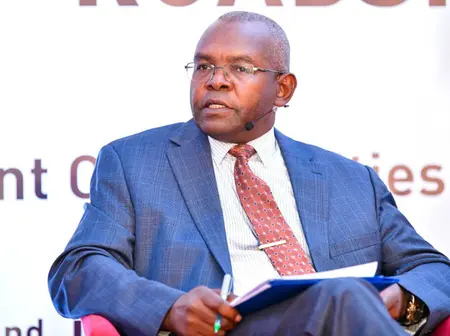
National Assembly Majority Leader Kimani Ichung’wah and UDA Secretary-General Hassan Omar welcomed Karauri at the party’s headquarters. In a statement released on Monday, November 9, 2026, Karauri explained that UDA offers the ideal political vehicle to deliver effective governance for Nairobi residents.
“Today, I take a new political step by joining the United Democratic Alliance (UDA) as I pursue my ambition to serve Nairobi as Governor in 2027,” Karauri wrote. “I looked at all the options and chose where I believe I can deliver for Nairobi.”
Karauri highlighted the broad-based government’s “Usawa ni sawa” policy framework, pointing out that it guarantees every ward receives attention, every voice counts, and every citizen matters. Expressing confidence in his ability to unite Nairobi’s diverse population under a single vision, the lawmaker also directly criticized incumbent Governor Johnson Sakaja’s performance.
“I have served the people of Kasarani as an Independent MP, and I remain grateful for their trust,” Karauri stated. “Nairobi has not worked. We want a better Nairobi!”
Addressing the gathering, Ichung’wah revealed that President William Ruto specifically requested him to welcome the Kasarani legislator to the ruling party, forecasting a UDA victory in the capital come 2027.
“The President called me in the morning and told me that I should come and welcome Karauri to the UDA party,” Ichung’wah said. “In 2022, Nairobi was UDA, and that will be the case in 2027.”
Karauri’s political shift follows days after Governor Sakaja exited UDA to join the Orange Democratic Movement (ODM), a key partner in the broad-based coalition. Sakaja cited ODM’s historical strength across Nairobi alongside the legacy of the late Raila Odinga as factors in his decision.
The battle for the UDA ticket and the wider 2027 Nairobi gubernatorial race continues to intensify, with several prominent politicians declaring their candidacies, including Embakasi East MP Babu Owino, Embakasi North MP James Gakuya, and Public Service Cabinet Secretary Geoffrey Ruku.
Under the newly introduced Online Safety Bill 2026, sponsored by Embakasi West MP Mark Mwenje, tech companies must institute strict safeguards to protect users under the age of 18 from illegal online material. The legislation also equips the Communications Authority of Kenya (CA) with robust enforcement powers to track compliance and penalize non-compliant platforms.
A cornerstone of the proposed law is its focus on parental oversight and age verification. The legislation mandates that children under 18 secure explicit parental approval before creating accounts or accessing social media services. Furthermore, parents retain the legal right to revoke this approval at any point, forcing platforms to cut off the child’s access within a designated timeframe.
“A parent or a person who exercises parental responsibility shall be responsible for giving or withholding consent to the access to, or use of, a regulated service by a child, having regard to the age, maturity and best interests of the child,” the Bill states.
To enforce these boundaries, tech platforms must deploy robust age-verification or age-estimation systems. Providers must also verify that the person granting permission actually holds legal parental authority over the minor.
If the Communications Authority of Kenya suspects a platform of ignoring these statutory duties, it can issue a formal compliance notice outlining specific violations and remediation timelines.
“A compliance notice shall specify the provision of this Act alleged to have been breached, the facts constituting the breach, the measures required to remedy the breach, and the period within which the measures shall be implemented,” the Bill reads in part.
Failure to uphold this basic duty of care carries heavy financial and legal consequences. Platforms that violate the rules face fines reaching up to Ksh. 500 million, or 10 percent of their global annual turnover, whichever sum is higher.
The legislation goes even further by holding corporate leadership directly accountable for systemic failures.
“Where an offence under this section is committed with the consent or connivance of, or is attributable to any gross negligence on the part of, a senior executive officer of the provider, that officer commits an offence and is liable on conviction to a fine not exceeding ten million shillings or to imprisonment for a term not exceeding five years, or to both,” the Bill states.
The scope of the Bill explicitly targets illegal content and online threats covered under Kenya’s Computer Misuse and Cybercrimes Act, the Prevention of Terrorism Act, and severe offenses involving child sexual abuse material (CSAM).
As Parliament reviews the proposal, tech providers targeting Kenyan users will need to re-evaluate their onboarding workflows, content moderation systems, and user data protections to meet these proposed standards.
Speaking at a thanksgiving service and fundraiser at Bushiangala Church of God in Ikolomani constituency, Kakamega County, Murkomen said the Luhya community would have a stronger chance of producing a president in 2032.
“The President is our neighbour just next door; there’s no need to divide votes, and you can’t win. Support the President for the next five years; you and I will make arrangements in the coming years,” he said.
Murkomen acknowledged Sifuna’s growing popularity but said he remained a long way from the presidency. He warned that Sifuna’s push to unseat Ruto in 2027 could cost the wider Mulembe community an opportunity to lead the country.
“You people of Kakamega, every time you build your leader, when they’re about to capture the presidency, you are deceived and told, ‘Let’s go this way to destroy’,” he said.
Murkomen said the Luhya community had supported Ruto for years and was nearing a point when it could be next in line to produce the country’s leader. He warned that turning away from the president now could weaken those prospects.
“You have built him (Ruto); he has worked, and he’s about to finish, but you’re being told to cut ties with him and start afresh with someone else who’s far back on the queue.”
He also dismissed opposition politics as offering little advantage to leaders seeking power, arguing that young politicians who position themselves against the incumbent could undermine their chances of succeeding him after his second term.
“Huyu Rais mwenye ako hapa tumalizane na yeye, asonge aondoe jam, sisi sasa tupangane hapa tukitafuta uongozi kusonga mbele.”
Kariuki said she found the decision painful, particularly because she had already resigned from Cabinet to focus on the gubernatorial race. She resigned as Water CS on February 9, 2022, to pursue the Nyandarua governorship.
In an interview with a vernacular radio station on Monday, she described the tense talks that led her to withdraw from the Jubilee Party nominations. Kimemia, she said, was the government’s preferred candidate.
The two camps could not agree on who should carry the Jubilee ticket, and the nominations stalled. State House emissaries then stepped in to encourage negotiations.
“When Jubilee nominations became difficult, we had to resort to negotiations,” Kariuki said.
As the campaign entered its final stretch, Uhuru sent emissaries to persuade her to negotiate with Kimemia, she said.
“Politics are not conducted that way. The party [Jubilee] came and appeared to interfere. I told the president that given that the sitting governor [Kimemia] was State’s candidate, we may not be able to reach an agreement because I had my own interests. I also knew why I had resigned from the Cabinet,” she said.
Kariuki said Uhuru later called her directly and asked her to return to Nairobi to help former Prime Minister Raila Odinga and his running mate, Martha Karua, build support in Nyandarua ahead of the 2022 General Election. She said he promised to find her a position in an Odinga administration if the Azimio presidential candidate won.
“Lastly, the President, in his own wisdom, called me. He told me that he would like me to retreat to Nairobi to go and support the late Raila and Karua on how they will penetrate to Nyandarua. He told me that they would find a place for me in Raila’s government,” she recalled.
Kariuki said she did not make her decision immediately. Uhuru sent several emissaries to persuade her to leave the race, and she consulted her family.
“After a lot of agony, several emissaries were sent to me. [Uhuru] was not directly telling me to step aside for the sake of someone. I consulted with my family,” she said.
“They asked me, ‘Can you compete with the President? Someone who gave you a job, yet you had not bribed him….’”
She said she asked Uhuru for three days to consider the request before announcing her withdrawal from the Nyandarua race. Kariuki maintained that she stepped aside out of respect for her former boss, not because she had agreed to give up her ambitions for Kimemia.
“To Nyandarua residents, I did not step down for someone. I stepped down because of the respect I had for Uhuru, who was my boss,” she said.
Kariuki said the experience left her disappointed and conflicted. She questioned why Uhuru had allowed her to resign from Cabinet if he intended to ask her to abandon the gubernatorial contest.
“I was in a state of mixed feelings. Temporarily I got very disappointed, because he [Uhuru] couldn’t have allowed me to resign from the Cabinet,” she said.
Kariuki has since joined the Democracy for the Citizens Party (DCP) and is among the politicians seeking its ticket to challenge incumbent Governor Kiarie Badilisha in the 2027 General Election. Badilisha is also seeking re-election through DCP, setting up a potentially competitive contest for the party’s nomination.
KeNHA Director General Luka Kimeli said on Monday, November 9, that the closure would allow contractors to build a bridge, including assembling and hoisting its superstructure. The closure will run from Sunday, November 15, to Sunday, December 20, 2026.
“KeNHA informs the public of a temporary traffic disruption due to the closure of the Thika-bound service lanes at Kihunguro along the Thika Superhighway from Sunday, November 15, 2026, to Sunday, December 20, 2026,” the Authority announced.
During the works, motorists travelling from Nairobi towards Thika will need to use alternative routes. KeNHA said drivers could divert via Shell Petrol Station and rejoin the superhighway or use the road behind the station to reconnect with the highway.
“The Nairobi-Thika traffic will be directed to use the diversion via Shell Petrol Station back to the highway or behind Shell Petrol Station to rejoin Thika Superhighway as an alternative route during this period,” the authority stated.
KeNHA urged motorists to slow down near the construction site, follow the temporary traffic plan, and cooperate with police officers and traffic marshals, who will direct vehicles through the affected area.
The Kihunguro project is part of wider maintenance and improvement works along the Nairobi-Thika route aimed at improving road safety and traffic flow. Planned upgrades include bus bays at Roysambu and Githurai, where public service vehicles can pick up and drop off passengers.
According to the Directorate of Criminal Investigations (DCI), the seized narcotics, valued at approximately Ksh3.6 billion, belong to a separate trafficking syndicate from the Ksh8.2 billion shipment intercepted aboard a vessel in the Indian Ocean last year. Intelligence operations traced that earlier haul back to Iran.
Director of Criminal Investigations Mohamed Amin noted that distinct packaging styles between the two seizures confirmed they originated from different networks. The earlier operation yielded 1,036 kilogrammes of methamphetamine aboard the vessel MV Mashaallah, which authorities later destroyed at the Bamburi Cement Factory.
The Kwale operation kicked off on November 7 following coordinated intelligence sharing between Kenyan and Tanzanian security teams. Detectives tracked leads to Shirazi village, where they apprehended Basleman Saleh Khamis, whom the DCI identified as a high-profile drug trafficker wanted in both nations, alongside 37-year-old Ugandan national Nakabugo Zuraicah.
Interrogations led officers to a second location in Ganja la Simba village within Kinondo, where investigators uncovered the bulk consignment. Police arrested a third suspect at the site: 54-year-old Tanzanian national Hamad Seif Said.
During the raid, officers impounded key assets tied to the trafficking operation:
A white Ford station wagon (Registration KDY 626Z)
A white Ford pick-up (Registration KDZ 201A)
A red TVS motorcycle (Registration KMGT 230A)
All three suspects remain in police custody while detectives piece together the full scale of the regional network and track down the financiers funding the shipments.
Amin praised the seamless intelligence sharing between Kenyan and Tanzanian security services for enabling swift cross-border tracking.
Moving forward, the DCI is collaborating with the Asset Recovery Agency (ARA) to identify, freeze, and seize assets acquired through drug proceeds, including cash reserves, motor vehicles, residential properties, land parcels, and commercial enterprises.
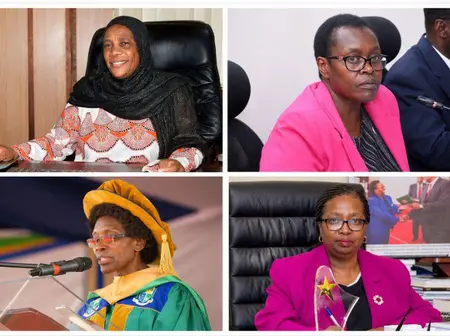
Kenya has about 36 chartered public universities, many of which have historically been led by men.However, this trend has been changing since 2006, when Prof. Olive Mugenda became the first woman to head a Kenyan public university when she took charge of Kenyatta University.In this article, WoK looks at seven women who are serving as vice chancellors of Kenyan public universities
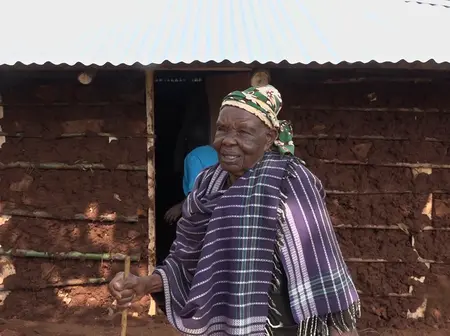
Nyamira, Kenya: For Sabina Kerubo, caring for her 72-year-old mother-in-law, Hellen Nyaboke, has become a full-time job. It demands patience, constant watchfulness and a great deal of sacrifice.Kerubo lives in Nyamira. She never imagined that a woman she had known and lived alongside for so long would one day struggle to even just recognise her, other relatives and friends or tell vegetables from weeds.
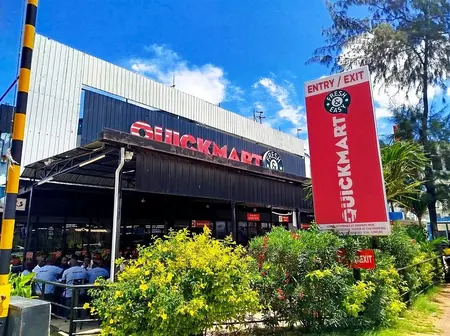
Five founding shareholders of Quickmart sought to acquire an additional 118.6 million shares worth Sh889.9 million in the supermarket chain’s initial public offering (IPO), but received no allocation after demand exceeded the number of shares available to investors.
The applications were among the insider bids frozen after Quickmart received applications for approximately 2.45 billion shares against the two billion shares offered at Sh7.50 each. The IPO was therefore oversubscribed by about 22.5%, forcing the retailer to adjust allocations across several investor categories.
“Given the offer was oversubscribed, no offer shares have been allocated to the founder shareholders who applied for the offer,” Quickmart said in its IPO results notice. The five applications show that a section of the retailer’s original owners wanted to increase their exposure to the business as it prepared to join the Nairobi Securities Exchange (NSE).
Quickmart’s founders are Duncan Kinuthia, Gladys Kinuthia, Elijah Okello, Moses Nditika, Joram Njoga, Zipporah Kinuthia and William Kinuthia. They established the business through the combination of Tumaini Supermarket and Quickmart in 2019, creating the supermarket chain that has since expanded its national footprint.
The attempted purchases came as Quickmart’s existing shareholders offered half of their combined ownership through the IPO, creating an opportunity for new investors to acquire shares in the retailer while the original owners retained a substantial interest.
Before the listing, the founders held their interests through Sokoni Retail Kenya Limited, alongside private equity investor Adenia Partners and Quickmart chief executive Peter Kang’iri. Adenia held an effective 48.6% interest in the supermarket chain, while Kang’iri owned 5.4%.
The founders’ applications present an interesting contrast with Adenia’s decision to sell part of its investment. The private equity firm was using the IPO to realise capital gains from its investment, while some of the original business owners were seeking to commit more money to the retailer at the offer price.
The applications also come against the backdrop of Quickmart’s expansion from four supermarkets to a network of 72 stores across 16 counties. The retailer reported revenue of Sh50.43 billion and statutory net profit of Sh1.51 billion for the year ended December 2025, according to its IPO disclosures.
Quickmart’s revenue grew at a compound annual growth rate of 18.4% between 2021 and 2025, while its adjusted profit after tax stood at Sh1.7 billion in 2025. The IPO valued the retailer at approximately Sh30 billion, equivalent to about 19.9 times its reported statutory net profit.
The company’s expansion plans include opening between 10 and 15 additional stores annually, with management targeting a network of more than 100 outlets. Quickmart has also been developing its digital distribution channels, including a partnership with Bolt Food that made more than 12,000 products available through the platform across over 60 stores.
The IPO will see Quickmart’s original shareholders receive gross proceeds of approximately Sh15 billion from the sale of two billion shares at Sh7.50 each. They will retain a combined two billion shares, representing 50% of the retailer following the transaction, with the remaining ownership distributed among investors who participated in the offer.
The partial sale gives Adenia an opportunity to realise part of its investment while maintaining exposure to the supermarket chain through its remaining interest. The transaction also marks an important stage in Quickmart’s transition from a privately held, private equity-backed retailer to a company with a broader public-market shareholder base.
The original shareholders’ relationship with Quickmart has also extended beyond equity ownership. The retailer’s earlier disclosures showed that several founder-linked businesses provided consultancy, property and management-related services, with payments to three related entities totalling Sh638.1 million in 2025.
Quickmart subsequently ended several founder-linked service agreements in July 2026, while continuing to lease some supermarket premises from related parties. The arrangements formed part of the company’s disclosures ahead of the NSE listing and provide additional context to the changing relationship between the retailer and its original owners.
Quickmart’s chief executive, Peter Kang’iri, also applied for additional shares as part of the IPO, seeking to increase his ownership in the retailer.
The company said Kenyan and East African retail investors submitted aggregate applications for 69.4 million shares valued at Sh520.6 million from direct employees, including the group chief executive. These applicants received all the shares they requested, allowing employees participating in the offer to secure additional ownership in the business.
Kang’iri held a 5.4% stake in Quickmart before the IPO. His participation places the retailer’s management alongside the founders in seeking additional exposure to the company as it prepares to trade publicly.
The employee allocations also demonstrate the participation of people directly connected to Quickmart’s operations in the share sale, complementing demand from individual, institutional and foreign investors.
The oversubscription also affected allocations to international institutional investors, with the International Finance Corporation (IFC) and UK-backed investment programme Mobilist receiving fewer shares than they had applied for.
Mobilist, which participated as a cornerstone investor with a guaranteed allocation, agreed to reduce its subscription by approximately $5 million (Sh649.4 million) to allow more shares to be allocated to Kenyan and East African institutional investors and foreign investors.
The programme had applied for 259.8 million shares but received 173.3 million shares worth approximately Sh1.29 billion, giving it a 4.33% stake in Quickmart after the IPO.
The IFC had sought 266.6 million shares but was allocated 258 million shares at a cost of approximately Sh1.9 billion, representing a 6.45% interest in the retailer.
Investment firm 337 Frontier and RWC Asset Management, meanwhile, received their full targeted allocations. Quickmart sold 259.7 million shares, representing 6.49% of the company, to 337 Frontier for approximately Sh1.9 billion, while RWC acquired 173.1 million shares worth Sh1.29 billion for a 4.32% stake.
The allocations reflect the different arrangements made with institutional investors participating in the IPO, including Mobilist’s decision to accommodate additional demand from other investor categories.
Quickmart’s listing will introduce a major supermarket operator to the NSE’s commercial services segment, adding a profitable retailer with an established dividend policy to a section of the market where several listed companies have struggled to generate consistent returns for shareholders.
The company reported a net profit of Sh1.5 billion in 2025 and intends to distribute 80% of its net profits as dividends going forward. The proposed payout ratio would translate to approximately Sh1.2 billion based on its 2025 statutory earnings.
Quickmart has also reported a customer base supported by its Q-Points loyalty programme, which had attracted 2.5 million members by the first half of 2026. The retailer averaged approximately five million customer transactions monthly and recorded revenue of Sh27.3 billion during the six months to June 2026.
Its NSE debut will take place on November 12, giving investors an opportunity to trade shares in a supermarket business whose expansion, profitability and dividend policy will now be assessed through the public markets.
The National Treasury and the Central Bank of Kenya (CBK) are negotiating over Kenya’s Sh10 billion bank capital requirements following a disagreement over the deadline for commercial lenders to meet the higher threshold. Treasury Cabinet Secretary John Mbadi confirmed ongoing discussions with CBK Governor Kamau Thugge, with both institutions seeking consensus on how banks should transition to the new capital rules.
The discussions follow Mbadi’s proposal to extend the final compliance deadline from December 2029 to December 2032 and remove the annual capital-raising milestones. However, the CBK has maintained that commercial banks must continue working towards the existing requirements, including the Sh5 billion minimum core capital target due by December 2026.
Mbadi said the Treasury was committed to resolving the disagreement through discussions with the banking regulator, adding that the eventual position would be guided by what best serves the economy.
“We are in conversations with the governor of the central bank. This is a simple matter; we will sit with CBK, agree and communicate,” Mbadi told the Business Daily. He said the two institutions were considering the implications of the requirements for the wider economy and did not regard the disagreement as a major issue of concern.
The disagreement emerged after Mbadi proposed changes to the banking capital requirements during his June 2026 Budget Statement. The Treasury wanted banks to have until December 2032 to reach the Sh10 billion minimum core capital threshold, removing the annual milestones introduced through the Business Laws (Amendment) Act 2024.
Under the existing framework, banks were required to raise their minimum core capital from Sh1 billion to Sh3 billion by December 2025, followed by Sh5 billion by December 2026. The subsequent milestones require lenders to reach Sh6 billion by December 2027, Sh8 billion by December 2028 and Sh10 billion by December 2029.
Mbadi’s proposal was intended to give banks more time to raise capital while continuing to support lending to households and businesses. The Treasury’s position was that a longer transition would allow financial institutions to pursue commercially sustainable capital-raising strategies without diverting too much funding away from private-sector credit.
The proposal, however, was not accompanied by the necessary legislative amendment to change the existing capital requirements. This prompted the CBK to direct commercial banks to continue complying with the original timetable, leaving the industry facing conflicting positions from the Treasury and its banking regulator.
Banking industry sources told the Business Daily that the Treasury had not consulted the CBK before announcing the proposed extension. The move followed lobbying from smaller lenders that were struggling to meet the higher capital requirements.
The immediate compliance deadline is December 2026, when commercial banks are required to have minimum core capital of Sh5 billion. CBK Governor Kamau Thugge told the National Assembly Finance and National Planning Committee in October that institutions below the threshold had been asked to explain how they intended to meet the requirement.
“We want them to come to us and tell us how they are going to meet the target for 2026, which is Sh5 billion,” Thugge told the committee. He said one or two banks might struggle to meet the requirement, but the regulator wanted to hear their plans for reaching the target.
The CBK also said banks below the Sh5 billion threshold had yet to respond to its query on their capital-raising measures. The regulator has warned that institutions which fail to meet the requirements could face downgrading, although it had not taken enforcement action against the affected banks at the time of the report.
The pressure follows the first phase of the capital transition, which required banks to raise minimum core capital to Sh3 billion by December 2025. The requirement was introduced through the Business Laws (Amendment) Act 2024, which raised the previous Sh1 billion floor as part of efforts to strengthen the banking sector.
As at the end of June 2026, 14 commercial banks had core capital below the Sh5 billion threshold required for December 2026. The institutions included Middle East Bank, M-Oriental Bank, Bank of Africa, Premier Bank, Guardian Bank, DIB Bank and Habib Bank AG Zurich.
Seven banks were also reported to have fallen short of the earlier Sh3 billion requirement for December 2025. They included Credit Bank, UBA Bank, Development Bank of Kenya, African Banking Corporation, Access Bank and Consolidated Bank of Kenya.
Meeting the higher thresholds will require affected lenders to mobilise additional shareholder funds, retain more earnings or pursue other capital-raising strategies. Banks that struggle to raise sufficient funds could also consider strategic investors or consolidation as they seek to maintain their position in the market.
The requirements have raised concerns about the future of smaller locally owned lenders, particularly those serving specialised customer segments and communities that may not be adequately served by larger institutions. The possibility of consolidation has therefore become part of the wider debate over how Kenya should strengthen its banking sector while maintaining competition.
The National Assembly Finance and National Planning Committee has cautioned against implementing the requirements in a manner that could weaken domestic banking institutions or reduce access to financial services.
The Treasury’s push for a longer transition is partly driven by concerns that banks could restrict lending while setting aside more resources to meet the higher capital requirements. Commercial banks told Mbadi that institutions below the required thresholds were likely to preserve funds for capital accumulation, potentially reducing the money available for loans to households and businesses.
A slowdown in private-sector lending would complicate government efforts to expand credit to businesses and support economic growth, particularly among micro, small and medium enterprises (MSMEs). The Treasury has argued that giving banks more time would allow them to maintain lending activities while pursuing capital-raising strategies suited to their financial positions.
Kenya Bankers Association (KBA) Chief Executive Officer Raimond Molenje previously supported a longer compliance period, arguing that it would help banks continue financing customers rather than concentrating their resources on meeting the regulatory thresholds.
“Allowing a longer timeframe facilitates banks to serve customers better and uninterrupted, deploying more capital into lending to the private sector,” Molenje said.
The debate also comes as the government expects commercial banks to expand financing for businesses, particularly smaller enterprises that depend on bank credit to manage working capital, purchase inventory and finance expansion. A longer transition could ease immediate capital pressures, while stronger capital positions are intended to improve banks’ ability to withstand financial shocks and sustain lending over time.
The National Assembly Finance and National Planning Committee has called for a balanced approach to implementing the new capital requirements, warning that the rules could affect financial stability, competition and financial inclusion.
Committee chairperson Kuria Kimani told MPs that although consolidation could strengthen individual financial institutions, policymakers needed to protect competition and local ownership. He also cautioned against weakening the participation of domestic banks serving communities and market segments that larger lenders might not adequately reach.
“While consolidation may strengthen individual institutions, it is important to safeguard competition, local ownership and the continued participation of domestic banking institutions, particularly those serving communities and market segments that may not be adequately served by larger banks,” Kimani said.
He added that implementation should account for financial stability, competition, financial inclusion and the sustainability of locally owned banks.
The Treasury and CBK discussions will determine how the two institutions approach the competing priorities of stronger bank capitalisation and continued access to credit. For commercial lenders below the Sh5 billion threshold, the December 2026 milestone remains the immediate focus as they work to meet the requirements set out in the existing banking capital framework.