
In this storyFor many years, Kenya has produced some of Africa’s highest-qualified medical professionals.While many of the country’s sons and daughters have built successful careers at home, others have gone on to leave a lasting mark in some of the world’s best hospitals.
Author: lincor
-

How Kenyan Businesses Make Up To Ksh 15 Million Supplying Campaign Vehicles, Merchandise, And Branding To Politicians
As Kenya’s election campaign season gathers momentum ahead of the August 2027 general elections, some entrepreneurs are minting millions, as they have in previous election years.For some businesses, one campaign contract can rake in more revenue than the business would have made from several months of normal operations.
-

Babu Owino Appoints Former Makueni Governor Kivutha Kibwana as Mwananchi Party Patron
Owino announced the appointment on Friday, November 6, 2026, through a statement in which he praised Kibwana's contribution to public service, human rights advocacy and governance.
The legislator described Kibwana as a distinguished Professor of Law with a longstanding commitment to defending human rights and promoting good leadership.
He also highlighted the former governor's record during his tenure at the helm of Makueni County, where he said Kibwana had demonstrated transformative leadership and delivered a remarkable legacy.
According to Owino, Kibwana was recognised among Kenya's best-performing governors during his time in office.
"The Mwananchi Party is honoured and privileged to have him as our PATRON," the Embakasi East MP stated while welcoming him into the political outfit.
Kibwana previously served as Makueni Governor, where he oversaw the county's development programmes and administration. Before and during his political career, he also established himself as a prominent figure in legal scholarship, constitutional affairs and human rights advocacy.
His appointment gives The Mwananchi Party an additional leadership figure with experience in academia, constitutional law and county government.
However, Owino did not disclose the specific duties Kibwana will undertake in his new position. The announcement also did not indicate whether the former governor would participate directly in the party's political activities or focus primarily on providing strategic guidance.
The development comes as The Mwananchi Party continues to build its leadership structure and establish its presence in Kenya's political landscape ahead of the 2027 General Election.
Kibwana's entry into the party's leadership marks another development in its efforts to bring together individuals with experience in public administration and national affairs.
https://peopledaily.digital/inside-politics/babu-owino-names-kivutha-kibwana-as-the-mwananchi-party-patron
-
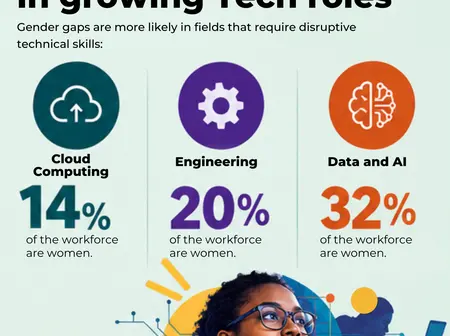
Digital Skills Programmes Are Opening Doors for Young Women, But Barriers Persist
Nairobi, Kenya: When 23-year-old Lucky Kitonyi joined the African Girls Can Code Initiative (AGCCI) in 2025, she was interested in technology but unsure about which path to pursue. She had explored cybersecurity, data analytics, blockchain and artificial intelligence (AI), but had not settled on a career.
-

OPINION: Kenya’s 2027 Elections Will Test Its Commitment to Digital and Media Rights
Nairobi, Kenya: As Kenya approaches its August 2027 general elections, there are growing concerns about how the country’s digital and media laws and practices could affect citizens’ ability to meaningfully participate in the electoral process.Over the last few years, Kenya has passed or amended several laws, such as the Kenya Information and Communications Act (KICA) and the Computer Misuse and Cybercrimes Act (CMCA), which directly impact citizens’ online participation in civic and democratic processes.
-
Paratus takes its African connectivity expansion into Lesotho with Starlink-powered enterprise internet
Paratus Group has expanded its African operations into Lesotho, introducing high-speed internet services targeting businesses and organizations seeking reliable connectivity across Lesotho.
Through its new venture, Paratus Lesotho, the telecommunications group will provide enterprise internet services, combining Starlink satellite connectivity with its existing network solutions. The operation will also offer local customer service and technical support to businesses across the Kingdom of Lesotho.
The expansion is expected to address connectivity challenges in a country where mountainous terrain makes the deployment of conventional telecommunications infrastructure difficult, particularly in remote areas outside major urban centres.
As an authorized Starlink reseller, Paratus Lesotho will provide enterprise internet services powered by low Earth orbit (LEO) satellite technology. The technology delivers high-speed, low-latency connectivity to locations where fibre and other terrestrial networks are limited or unavailable.
The new operation will be supervised by Makali Lepholisa, Managing Director of Paratus Lesotho, a joint venture between Real Image Lesotho and Paratus Group.
Lepholisa brings more than 20 years of executive leadership experience spanning customs modernisation, trade facilitation, business strategy and stakeholder engagement. Her previous work includes contributing to trade facilitation and National Single Window programmes in several African countries, alongside regional initiatives involving the Southern African Development Community (SADC), the World Bank and the United Nations Development Programme (UNDP).
“Backed by the Paratus Group’s expertise and track record in other countries, I am very excited about the opportunities for Paratus Lesotho to support the country’s social and economic development through reliable and innovative technology solutions.” Said Lepholisa.
The company will also draw on Paratus Group’s wider technical expertise and network capabilities to support organisations operating in areas where access to dependable internet infrastructure remains a challenge.
Ultimately, the entry into Lesotho adds another market to Paratus Group’s growing African footprint as the company expands its telecommunications services and satellite connectivity offerings across the continent.
-

6 Kenyan Engineers Behind Major Infrastructure Projects Across Africa
In this storyKenyan engineers are making their mark on major infrastructure projects across Africa.They have been involved in constructing roads, airports, electricity grids, among other facilities.In this article, WoK features six engineers whose work has taken them beyond Kenya’s borders.
-
Foreign applications approach three times their allocation
The foreign investor response comes as Kenya’s capital markets record a larger pool of investors and stronger trading activity. The Capital Markets Authority reported that the NSE investor base reached 2.36 million by September 2026, after adding 333,043 investors between January and September.
The exchange’s market capitalisation also rose to KSh4.12 trillion in September, from KSh2.94 trillion at the end of 2025. Equity turnover reached KSh395 billion in the first nine months of 2026, compared with KSh145 billion for the whole of 2025, although a KSh204.3 billion Safaricom block trade accounted for a substantial portion of this year’s activity.
Foreign investment figures provide another layer of context. TechTrendsKE reported that US investors’ Kenyan portfolio holdings increased by 45% in 2025 to KSh258 billion, from KSh178 billion in 2024. Their equity holdings nearly doubled to KSh27 billion, from KSh14 billion, while long-term debt securities accounted for the bulk of the portfolio.
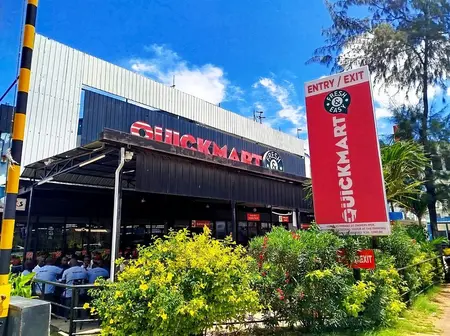
Quickmart’s foreign subscription figures therefore stand out as a direct measure of demand for a Kenyan consumer-facing business entering the public market. The offer has also attracted domestic retail investors, adding to the participation recorded across the local exchange.
The IPO comprises two billion existing shares being sold by Sokoni Retail Kenya Ltd, representing 50% of Quickmart’s issued share capital. At KSh7.50 per share, the offer values the supermarket chain at approximately KSh30 billion.
Because the shares are being sold by an existing shareholder, the proceeds from the offer go to the selling shareholder rather than directly to Quickmart for its expansion plans. Sokoni Retail Kenya’s ownership structure includes private equity firm Adenia Partners, which holds a 50.79% stake, alongside interests associated with the Kinuthia family, Tumaini’s founders and Peter Kang’iri.
Adenia’s stake in Sokoni means the IPO provides an exit route for part of its investment in the retailer. The private equity firm was central to the consolidation of Quickmart and Tumaini Supermarkets, which helped build the business into one of Kenya’s largest supermarket chains.
The offer gives public market investors exposure to a retailer with an established national footprint and a substantial position in Kenya’s organised grocery market. Quickmart ranks behind Naivas by store count and turnover, with an estimated 15% share of the supermarket market, according to figures cited in the IPO documentation.
Quickmart reported revenue of KSh50.43 billion for the 2025 financial year, alongside adjusted profit after tax of approximately KSh1.7 billion and statutory net profit of about KSh1.51 billion. Its revenue grew at a compound annual growth rate of 18.4% between 2021 and 2025, reflecting the expansion of its store network and customer base.
The KSh30 billion valuation represents approximately 19.9 times the retailer’s FY2025 statutory net profit, or 17.6 times its adjusted profit. These valuation measures give investors a basis for assessing the offer against the company’s earnings and its position in the supermarket sector.
Quickmart has expanded from four stores to 72 outlets across 16 counties. The company has also outlined plans to add between 10 and 15 stores annually, extending its reach as it competes with Naivas, Carrefour and other retailers for customers in Kenya’s grocery market.
Its customer activity extends beyond physical supermarket visits. Quickmart’s partnership with Bolt Food made more than 12,000 products available through the delivery platform across over 60 stores, covering groceries, household goods, beverages and wellness products. The retailer also operates its Q-Points loyalty programme, which had attracted 2.5 million members by the first half of 2026.
The business reported revenue of KSh27.3 billion in the first half of 2026 and averaged approximately five million customer transactions a month during the period. Those figures provide a more recent view of its operating scale as investors prepare for the company’s market debut.
Quickmart’s listing adds a major consumer retail business to the NSE at a time when the exchange has recorded several significant corporate market developments. Kenya Pipeline Company completed its IPO in March 2026, while Family Bank joined the exchange through a listing by introduction in June.
The supermarket’s public listing will give investors another way to gain exposure to Kenya’s consumer economy through listed shares. Its performance will also offer the market a public company against which to assess the financial prospects of large-scale supermarket retailing.
Quickmart’s dividend policy targets an annual payout of at least 80% of profit after tax, with distributions planned on a semiannual basis. The company expects the first dividend relating to the second half of 2026 to be paid in the first half of 2027, subject to financial performance, capital requirements and board approval.
The IPO’s 122.7% subscription rate gives the retailer a strong demand profile going into its November 12 NSE listing. With foreign applications approaching three times their allocation and retail investors also exceeding their reserved portion, the offer has drawn interest across the investor groups participating in the sale.
-
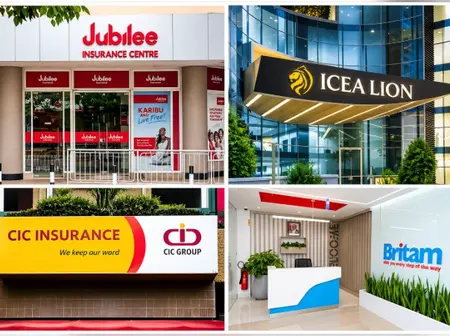
Kenya’s Richest Insurance Firms In 2026 And The Business Leaders Behind Them
Kenya has about 59 licensed insurance companies.According to the Insurance Regulatory Authority (IRA), Kenya’s insurance industry collected KSh 466.58 billion in premiums in 2025.This was a 16.5% increase from KSh 400.59 billion in 2024.In this article, WoK has compiled a list of Kenya’s richest insurance firms and their leaders.
-
NCBA shareholders take an 8.37% stake in Nedbank as the South African bank assumes control of the Kenyan lender
Nedbank’s acquisition of a controlling interest in NCBA has given former shareholders of the Kenyan lender an equity position in one of South Africa’s largest banking groups, while handing the acquirer control of a regional financial services business with established digital lending operations.
Eligible NCBA investors received 43,631,052 newly issued Nedbank shares, representing approximately 8.37 percent of the enlarged South African bank. The transaction also delivered KSh23.2 billion in cash payments, completing a settlement structured around a combination of equity and cash consideration.
The ownership change leaves Nedbank with 66 percent of NCBA, while the remaining 34 percent continues to trade on the Nairobi Securities Exchange. For Nedbank, the acquisition provides an operating platform across East and West Africa, including a digital banking business that has become a significant contributor to NCBA’s earnings.
NCBA’s value to the South African group extends beyond its Kenyan operations. The lender operates in six African markets, has a substantial corporate banking business and has developed digital lending products with reach through mobile money and other distribution channels.
NCBA’s 2025 financial results provide a measure of the business Nedbank has taken control of. The lender reported KSh23.4 billion in profit after tax, operating income of KSh73.3 billion, total assets of KSh716 billion and customer deposits of KSh532 billion. Its digital lending business generated KSh8.9 billion in profit during the year, demonstrating the contribution of technology-led credit to the group’s earnings.
The bank disbursed KSh1.4 trillion in digital loans during 2025, according to its results coverage, with lending volumes increasing 33 percent. Its Fuliza partnership with Safaricom is a major part of that business, giving NCBA exposure to customers who access short-term credit through mobile money. The bank also operates ConnectPlus, a corporate banking platform offering payments, liquidity management, collections and trade finance services.
These capabilities help explain why Nedbank’s interest in NCBA has centred on more than its physical banking network. The Kenyan lender has developed technology, customer distribution and lending systems that could support the South African group’s operations across other markets. Nedbank chief executive Jason Quinn has previously pointed to the opportunity to connect banking platforms across Southern and East Africa to support trade, investment and economic growth.
NCBA’s regional operations also contribute to its earnings. Its businesses outside Kenya generated KSh3.6 billion in profit before tax in 2025, while the Kenyan banking subsidiary contributed KSh22.9 billion. The group operates in Kenya, Uganda, Tanzania, Rwanda, Ivory Coast and Ghana, giving Nedbank an established presence across several markets without having to build a comparable network from the ground up.
NCBA had already outlined its own expansion priorities through its 2026–2030 Ubuntu strategy, which covers strengthening core banking, digital transformation, regional growth, wealth management, SME banking and insurance. The acquisition places those ambitions under a parent group with a larger balance sheet and an established Southern African footprint.
The acquisition also reflects Nedbank’s approach to investments in other banking groups. Before pursuing NCBA, the South African lender held an approximately 22 percent stake in Ecobank Transnational. Quinn previously explained that the minority position limited Nedbank’s ability to influence the bank’s strategy and its capacity to extract dividends.
Nedbank subsequently moved away from that investment, with the experience informing its preference for controlling interests in businesses where it intends to deploy capital and influence strategic decisions. The NCBA transaction gives it a 66 percent stake and the authority that comes with majority ownership.
The acquisition was valued at approximately KSh116.3 billion in the regulatory approval coverage, equivalent to around 1.4 times NCBA’s book value. That valuation placed a premium on the Kenyan lender’s existing business, including its earnings, regional presence and digital banking capabilities.
Nedbank has said it intends to use its larger balance sheet to help NCBA grow its corporate banking business and finance larger transactions. The opportunity is particularly relevant to companies operating across African markets, where trade finance, payments and cross-border banking services can require access to funding and infrastructure beyond what a single local institution can provide.
NCBA’s digital lending operation is a major source of income, but the growth of that business also needs to be considered alongside the cost of managing credit risk. The lender’s 2025 results showed that credit-loss provisions rose 46.3 percent to KSh8 billion, while operating expenses increased 17 percent to KSh37.5 billion.
The increase in provisions is relevant to the value Nedbank expects to extract from the acquisition. Digital credit can generate substantial transaction volumes and income, but the quality of the loan book and the cost of defaults influence how much of that income ultimately reaches the bottom line. NCBA’s lending partnerships and technology infrastructure therefore represent both an earnings opportunity and an area requiring continued risk management.
Capital requirements will also shape the returns available to the new parent company. In September 2026, TechTrendsKE reported on proposed CBK capital rules linking dividend distributions to banks’ Common Equity Tier 1 capital ratios. The proposals included a requirement for banks below a specified capital threshold to retain all earnings, a consideration for any shareholder seeking to maximise distributions from a banking subsidiary.
Nedbank’s control gives it influence over NCBA’s capital allocation and dividend policy, but those decisions remain subject to applicable regulatory requirements. The ability to direct earnings towards expansion, strengthen capital or distribute dividends will therefore depend on the bank’s financial position and the rules governing its operations.
The transaction’s consideration was structured with 80 percent paid in Nedbank shares and 20 percent in cash. Under the conversion terms, eligible investors received 4.02994 Nedbank shares for every 100 NCBA shares, while the cash option was priced at up to KSh105 per NCBA share.
Nedbank shares were valued at 250 rand, equivalent to KSh1,928.50 at the exchange rate used for the transaction. The new issuance increased Nedbank’s total shares in issue to 520,903,680. At a market price of 300 rand on Thursday, the newly issued shares had an indicative value of approximately 13.09 billion rand.
The cash component amounted to KSh23.2 billion. Investors who received Nedbank shares can retain them to participate in the South African bank’s dividends and share-price performance or sell their holdings. Families linked to former Kenyan presidents Jomo Kenyatta and Philip Ndegwa were among the NCBA owners allotted Nedbank shares.
The issuance has also changed the proportional holdings of Nedbank’s existing shareholders. As at January 30, 2026, the Public Investment Corporation held 14.8 percent of the bank, Allan Gray held 9.5 percent and BlackRock held 5.4 percent. The additional shares have diluted the percentage represented by those existing holdings in Nedbank’s enlarged share capital.
The final allocation followed a takeover process in which shareholder participation exceeded the 66 percent stake Nedbank sought. By August, valid acceptances had reached approximately 79.9 percent of NCBA’s issued shares, after which excess acceptances were scaled back to meet the acquisition target. Earlier in the process, 15 major shareholders had provided irrevocable undertakings representing 77.54 percent of NCBA.
Nedbank’s acquisition changes control of NCBA without removing the Kenyan lender from the local market. NCBA remains listed on the NSE, with public investors retaining a 34 percent interest, while its brand, Nairobi headquarters, local management, branches, products and digital channels remain in place.
The governance arrangements outlined during the acquisition process provide for Nedbank to nominate at least two representatives to NCBA’s board, while NCBA shareholders were expected to receive representation on Nedbank’s board. The structure gives the new parent influence over the subsidiary while preserving a channel for the Kenyan shareholder base to participate in the wider group’s governance.
Employment was another issue addressed during the acquisition process. Nedbank gave assurances that existing NCBA employees would retain their jobs and contractual and statutory rights under the offer arrangements. NCBA had 3,712 employees at the end of December 2024, according to the February 2026 TechTrendsKE coverage of the proposed transaction.
NCBA chief executive John Gachora previously described the acquisition as an expansion of the bank’s capabilities, saying: “The name is the same, the people are the same, but the ambition and capabilities are tremendously magnified.”
For Nedbank, the transaction provides a controlling interest in a profitable regional bank with established digital and corporate banking operations. For former NCBA shareholders, the settlement has converted part of their investment into an interest in the South African parent, while public investors continue to hold shares in the Kenyan subsidiary.