Ecobank Kenya has committed KES 1 million to Thamuru Primary School in a move to upgrade the school’s learning facilities that is set to benefit over 300 learners.
The investment has facilitated the refurbishment of the school’s computer laboratory and the installation of 25 desktop computers. To improve the overall learning environment, the bank also provided textbooks and stationery to the school.
The initiative was launched as part of the Ecobank Day 2026 edition, held under the theme “ Building Tomorrow’s Skills Today,” which prioritizes equipping young people with digital skills in the technology–driven economy.
“Education remains one of the most powerful tools for creating opportunities and transforming communities. We believe that investing in education today is an investment in the future of our communities. Through the Ecobank Foundation, we are transforming lives across Africa through initiatives focused on health, education and financial empowerment,” said Ecobank Kenya Managing Director Rebecca Mbithi.
The investment is aimed at bridging the gap of unequal access to digital learning resources among learners from underserved communities.
According to UNICEF and the International Telecommunication Union ( ITU), approximately 1.3 billion children aged 3-17 globally lack access to the internet at their homes, highlighting the scale of the digital divide.
“Over the last eight years, Ecobank Day has provided an opportunity for us to make a lasting difference in the communities we serve. Through our support for Thamuru Primary School, we hope to contribute to an environment where learners can access the resources they need to expand their knowledge, develop digital skills and build a strong foundation for their future,” she added.
The 2026 initiative was held ahead of World Children’s Day on November 20, reinforcing the significance of improving children’s access to education, technology and opportunities to develop future–ready skills.
The bank has also rolled out other education–focused initiatives through its partnership with Heritage of Faith and Hope Children’s Centre in Mlolongo, which the bank adopted in 2023 as part of Ecobank Group’s three–year Transforming Africa Through Education campaign.
The programme has benefited 137 students from the expansion of the computer laboratory, full secondary school scholarships for seven students, mentorship and digital literacy programmes, as well as the provision of learning materials and essential resources.
Additionally, in 2025 the bank contributed towards the construction and equipping of a science laboratory at the centre’s school, extending its support beyond learning to science education.
KCB Bank Tanzania has partnered with PayPal to integrate international payment services into its mobile banking application, giving customers a direct way to receive money from overseas, make eligible global payments and transfer PayPal balances into their local bank accounts.
The integration makes KCB Bank Tanzania the first bank in the country to incorporate PayPal services into its mobile app, targeting individuals and businesses increasingly engaging in cross-border digital transactions.
Through the KCB Mobile App, customers will be able to create or link existing PayPal accounts, receive payments from international clients, make eligible online payments and withdraw their PayPal balances directly into their KCB accounts in Tanzanian shillings.
The development is anticipated to be a boon for freelancers, entrepreneurs, small and medium-sized enterprises (SMEs), content creators and tourism operators who depend on international clients and customers for their businesses.
As more Tanzanians benefit from the opportunities offered by the global digital economy, access to reliable cross-border payment services has become increasingly important. The integration seeks to simplify how individuals and businesses manage international earnings without having to navigate separate banking and payment platforms.
Speaking during the launch, Josina Njambi, Head of Digital Financial Services at KCB Bank Tanzania, said the partnership would make it easier for customers to participate in international commerce and access financial services beyond their local markets.
“Our partnership with PayPal is an important milestone in our ambition to connect Tanzanians more seamlessly to the global digital economy. Today, customers are no longer limited by geography. They can work with clients in other countries, run businesses online, sell to international markets and access services from across the world. Our role as a bank is to make those financial connections simpler, safer and more accessible. This partnership complements our ‘Ina-Make Cents’ campaign, which challenges us to look at some of our everyday financial habits and ask whether there is a smarter way to do things. With PayPal now integrated into the KCB Mobile App, we are making that smarter way more accessible.”
The partnership also builds on KCB Bank Tanzania’s wider digital banking strategy, which includes its recently introduced ‘Ina-Make Cents’ campaign. The initiative employs humor and relatable financial scenarios to motivate customers to reevaluate their money management habits and get the most out of their digital banking services.
The bank plans to integrate international transactions into the daily banking activities of its customers, and strengthen its presence in the changing digital financial services market in Tanzania, by integrating PayPal functionality into its current mobile app.
KCB Bank Tanzania says it will continue to invest in digital innovation to deliver secure, convenient and customer-centric banking services to support individuals and businesses as they engage with opportunities in local and international markets.
ChangesKRA has announced changes to the annual income tax filing deadline, with taxpayers required to submit their returns by April 30 instead of the previous June 30 deadline.The Kenya Revenue Authority (KRA) has announced changes to the annual income tax filing deadline, with taxpayers required to submit their returns by April 30 instead of the previous June 30 deadline.
Kenya will close its embassy in Bern, Switzerland, at the end of this month as part of a government plan to reorganise the country’s diplomatic missions abroad.In a notice dated November 9, 2026, the embassy said it would close permanently following instructions from the Government of Kenya, with its consular section ceasing operations on November 30.
Mumias East MP Peter Salasya has responded to musician Bahati’s claims that he is wealthier than the legislator and can afford to pay some Members of Parliament, appearing to agree with the singer while throwing his support behind his reported political ambitions.Bahati made the remarks during an interview with Obinna TV in which he expressed confidence that his financial standing surpassed that of Salasya.
SuspensionPresident William Ruto’s Cabinet could face suspension following a fresh application filed at the High Court by a coalition of civil society organisations.President William Ruto’s Cabinet could face suspension following a fresh application filed at the High Court by a coalition of civil society organisations seeking enforcement of a court order directing the Head of State to reconstitute the Cabinet within 120 days.
The Kenya Union of Post-Primary Education Teachers (KUPPET), Kitui Branch, has hired four buses and 15 Nissan matatus to facilitate the transportation of more than 400 Kenya Junior School Education Assessment (KJSEA) examiners from all the 19 sub-counties of Kitui County to various examination marking centres.
Africa must invest in its own data centres and computing capacity or risk being locked out of the artificial intelligence economy, a pan-African ICT industry body has warned.
The Technology Information Confederation Africa (TICON Africa) said last week’s sell-off in US AI and data centre stocks showed the risks of the continent relying on infrastructure in other economies.
AI-related shares fell sharply after the US midterm elections, on investor concerns that the Democrats’ gains in Congress could lead to tighter rules on data centre development.
Swiss bank UBS has estimated that about 30 percent of expected 2028 US data centre capacity additions could be at risk from political uncertainty and grid bottlenecks.
“Africa’s ability to participate meaningfully in the global AI economy will depend not only on its ability to develop AI applications, but also on access to the infrastructure needed to train, run and deploy them,” said David Gowu, President of TICON Africa.
Mr Gowu warned that without enough local data centres and cloud infrastructure, Africa risks becoming mainly a consumer of AI built and hosted elsewhere.
That would leave African businesses paying foreign providers for services on infrastructure over which the continent has little control.
Africa accounts for about 0.6 percent of global data centre capacity, despite being home to around a fifth of the world’s population, according to the Africa Data Centres Association.
A 2025 report by consultancy Access Partnership estimates that by 2030, sub-Saharan Africa will face a 98 percent gap between demand for AI computing and available data centre capacity.
Data control
Mr Gowu said where data is stored and processed is becoming more important as AI systems handle more information about businesses, governments, financial transactions and citizens.
“This requires investment in local technological capacity and stronger data governance frameworks,” he said.
He added that data centres attract investment, create skilled jobs and boost demand for energy and connectivity.
Greater access to computing power could also lower costs for local start-ups, universities and researchers that struggle to afford processing resources, he said.
“Developing local capacity is therefore not simply about data sovereignty, but about ensuring the continent can participate in, and capture economic value from, the AI economy,” Mr Gowu said.
“Africa cannot expect to capture the full economic benefits of AI if it does not invest in the foundations that make AI possible.”
A customer reaches the counter, confirms what they want to buy and prepares to pay. Some prefer using a debit or credit card, others choose M-PESA, while LOOP users have another option. For merchants serving customers with different payment preferences, having a straightforward way to accept these transactions can make the checkout process easier to manage.
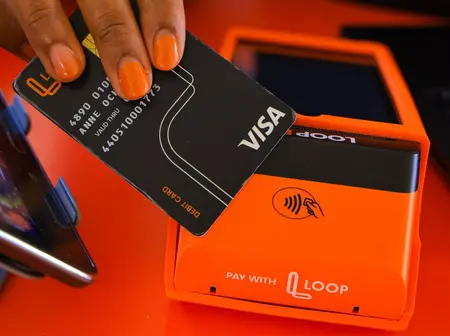
The LOOP Biz PDQ extends the payment capabilities available to merchants using LOOP Biz. It supports Visa and Mastercard transactions through chip insertion and contactless payments, M-PESA Till and Paybill payments, as well as M-PESA STK push. Customers can also pay through LOOP STK push at no charge. The device brings these options together at the counter, giving merchants more flexibility when receiving payments.
The LOOP Biz PDQ accepts card payments through chip insertion and contactless NFC technology. Customers with supported cards can insert their cards into the terminal or tap to complete a transaction. Merchants can also receive payments through M-PESA Till and Paybill, or initiate an STK push request for the customer to approve on their phone.
LOOP users have a separate payment option through LOOP STK push, which allows them to authorise a payment through the LOOP application. LOOP-to-LOOP payments are free.
Bringing these payment routes together gives businesses one device for customers who prefer different cashless payment methods. A retailer may serve someone paying by card, followed by a customer using M-PESA, while another customer may choose to pay through LOOP. The merchant can handle these transactions through the same terminal.
The PDQ is linked to the merchant’s LOOP Till, which is required to operate the device. Merchants can have funds settled into a bank account of their choice through the LOOP Till, giving them flexibility over where they receive their payments.
One of the useful features of the PDQ is STK push, which allows a merchant to initiate a payment request from the terminal while the customer approves it on their phone. The cashier enters the amount due and sends the payment request. The customer receives an STK prompt and authorises the transaction using their PIN.
Because the payment request carries the amount entered by the cashier, customers do not have to manually key in the payment amount or merchant Till number. This reduces the possibility of errors associated with entering payment details at checkout, although the cashier still needs to ensure the requested amount is correct.
The same approach applies to LOOP STK push. The merchant initiates the request through the PDQ, and the customer approves it using the LOOP application. This gives customers another way to complete a transaction without having to enter payment details manually.
Accepting a payment is one part of running a business. Merchants also need to identify transactions, reconcile sales and keep records that can be retrieved when questions arise. The LOOP Biz PDQ supports this through transaction histories and downloadable reports.
Merchants can generate X reports for interim transaction checks and Z reports for end-of-day reconciliation. Staff can retrieve previous transactions and reprint receipts when customers need another copy or the business needs to review a sale. The terminal also supports administrator-controlled access for authorised users, helping businesses manage which employees can use the device.
The PDQ has a battery life of up to 48 hours on a full charge. The company has also outlined plans to enable eTIMS invoicing on the devices, allowing merchants to issue tax invoices through the terminal. The PDQ requires an internet connection through Wi-Fi or mobile data to process transactions.
Payment records become more useful when merchants can connect them to other parts of their operations. LOOP Biz also offers inventory management for limited liability companies and partnerships, with features covering stock tracking, low-stock alerts, business insights, supplier payments and staff roles.
When inventory management is active, a sale processed through the PDQ automatically updates the corresponding stock level. This helps merchants keep inventory records aligned with what has been sold and identify items that need replenishment.
The inventory tool also uses AI to track stock, forecast demand and recommend restocking, according to LOOP’s October launch announcement. It can flag slow-moving products, giving merchants another way to monitor stock and make purchasing decisions.
The inventory management feature is available through the LOOP Biz web platform, with a mobile app rollout planned for 2027. Its staff roles and permissions support the management of business tasks, complementing the administrator-controlled user access available on the PDQ.
LOOP Biz is available through the LOOP application and web platform. The PDQ subscription costs KSh1,200 per month, while inventory management costs KSh1,990 per month before tax. LOOP also offers a one-off payment option for the PDQ device.
These additions allow merchants to extend the capabilities of their existing LOOP Biz accounts. Businesses can use the payment terminal to accept different forms of cashless payment, while eligible merchants can add inventory management to support stock tracking and related tasks.
LOOP also provides merchants with access to LOOP Discover, a storefront within its consumer application. Businesses can list products on the platform and reach an audience of more than 500,000 users, according to the company’s launch announcement.
LOOP Biz is part of LOOP, NCBA Group’s digital platform for consumers and businesses. Its merchant offering brings payment acceptance together with tools intended to support everyday business operations. For merchants, the PDQ provides a single point for card, M-PESA and LOOP payments, while the wider LOOP Biz platform offers additional capabilities for managing transactions, stock and customer reach.
Samsung is preparing a Galaxy AI subscription that would give users access to advanced artificial intelligence features, larger usage allowances and additional services, while keeping core Galaxy AI tools available free of charge.
The proposed plans point to a paid model built around optional upgrades rather than a subscription requirement for every Galaxy owner. Samsung has said its core Galaxy AI features will remain free, while certain advanced capabilities and new services could be offered as paid options in the future.
The planned offering includes AI-powered video generation, automated actions across apps and a credit system that gives subscribers higher allowances for selected tasks. It would add a paid layer to the Galaxy AI experience, which Samsung has expanded across its smartphone range since introducing the platform with the Galaxy S24 series.
The development comes as Samsung moves beyond individual editing and translation tools towards AI features that can interpret context, generate content and assist with tasks across a device.
Samsung’s proposed subscription structure includes three tiers called Starter, Plus and Pro. The plans would provide different credit allocations, with Starter offering 10,000 credits, Plus providing 20,000 and Pro giving subscribers 50,000 credits.
Users would be able to use these credits for AI functions after exhausting their free allowances. The system would also allow customers to purchase additional credits for individual features or buy one-time credit packs separately from a subscription. Those packs would remain valid for three years from the date of purchase.
The proposed plans introduce several capabilities beyond the existing Galaxy AI tools. Gen Video would turn static photographs into short video clips, giving users another way to create content directly from their Galaxy devices. The feature follows a similar concept to AI video generation available through Google’s Gemini services.
Bixby Action would allow users to create commands, triggers and routines that automate everyday tasks. It is designed to carry out actions across apps and system functions, extending Bixby’s role beyond responding to voice commands.
Galaxy Claw is another reported addition, designed to automate routine daily tasks using Galaxy AI. Bixby Action is positioned among the higher-tier offerings, while Galaxy Claw forms part of the broader premium experience.
Daily Briefing would also feature in the Plus tier. It is separate from Now Brief, Samsung’s existing feature for presenting personalised information and updates to users. The subscription offering would also provide expanded usage limits for selected AI functions.
The reported credit allocations form part of a wider system that would determine how frequently users can access certain AI services. Starter, Plus and Pro would offer progressively larger credit balances, giving subscribers different levels of access depending on their chosen plan.
The proposed structure also includes separate daily allowances for selected tasks. Under the free allocation, users would receive up to 10 translations, five text summaries and two image generations per day. An Essential allowance would raise those limits to 100 translations, 50 summaries and 20 image generations, while the Premium allowance would provide unlimited daily usage for these three functions.
These daily limits sit alongside the credit allocations associated with the three subscription tiers. Users would be able to view their remaining credits and expiry dates, while additional credit packs would provide another way to access AI services after the allocated allowance runs out.
The structure gives Samsung room to charge for heavier use of its AI tools while retaining a free route to the existing experience. It also introduces a distinction between access to an AI feature and the number of times a user can use it within a given period.
An earlier version of the proposed subscription structure used the names Standard and Max. The Max option was associated with a fourfold increase in usage allowances, alongside features such as Gen Video, Bixby Action and Daily Briefing.
Pricing strings associated with that structure showed $4.99 per month or $47.99 annually. These figures were presented as placeholder values, rather than confirmed retail prices.
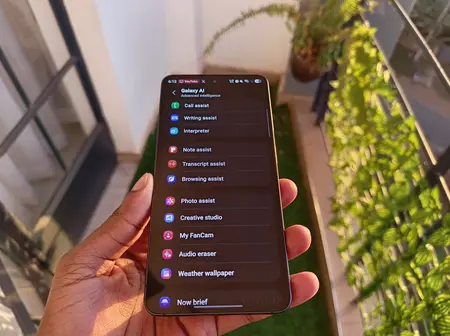
Samsung’s existing Galaxy AI capabilities are expected to remain available without a subscription. These include Browsing Assist, Creative Studio, Memory, Now Brief and Photo Studio, alongside other existing tools.
The distinction matters because Galaxy AI has become part of the experience Samsung promotes across its smartphone portfolio. Features such as Photo Assist, writing assistance, translation and summarisation have given Galaxy users practical ways to apply AI to everyday tasks without relying entirely on separate applications.
Samsung has also addressed the question of charging for its AI services. In a statement to Tech Advisor, the company said: “Samsung’s core Galaxy AI features will remain free of charge.” It added that certain advanced capabilities or new services could be offered as paid options or separate services in the future.
That position leaves room for a subscription offering built around new capabilities and higher usage limits. Existing tools could continue to serve users who rely on Galaxy AI for occasional tasks, while customers who generate more content or use advanced functions more frequently could pay for additional access.
The distinction also matters when considering how Galaxy AI works across different devices. Samsung’s AI experience combines on-device processing with cloud-based services, depending on the feature. Its partnership with Google Cloud helped bring Gemini Pro and Imagen 2 through Vertex AI to the Galaxy S24 series, while Gemini Nano supported on-device processing.
Samsung’s position on free Galaxy AI access has been part of the conversation since the Galaxy S24 launch in January 2024. At the time, Samsung’s product information indicated that some cloud-based Galaxy AI features could become paid services after the initial free-access period.
Galaxy Unpacked January 2024 launch raised the possibility that cloud-based AI capabilities could eventually sit behind a subscription. The discussion came as Samsung introduced Galaxy AI as a major part of the Galaxy S24 experience, combining its own software with Google’s generative AI models.
The Galaxy S24 FE launch in Kenya in October 2024 provided another indication of the initial free-access arrangement. Samsung’s stated position at the time was that some Galaxy AI features would remain free until the end of 2025.
Since then, Samsung has expanded the AI experience across its product range. The Galaxy S25 series brought deeper integration through One UI 7, while the Galaxy S26 series added more contextual assistance and agent-like functions. Features such as Now Nudge and Gemini-powered actions have extended the role of AI beyond individual commands and editing tools.
Samsung has also brought selected AI capabilities to devices outside its flagship S series, although feature availability varies across models. That broader distribution has helped make Galaxy AI a central part of the company’s smartphone software strategy.
A subscription model would add another layer to that strategy, allowing Samsung to retain core AI functions as part of the Galaxy experience while charging for additional services and higher usage allowances. For users, the practical distinction would be whether the free allocation covers their regular needs or whether advanced tools and more frequent use justify paying for an upgrade.