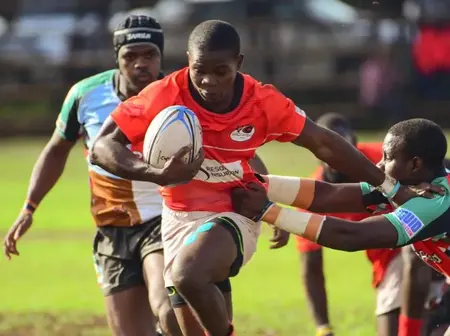
Former Kenya Cup champions Impala RFC have bolstered their technical bench with the appointment of Michael Kimemia and Steve Juma ahead of the 2026/27 season, which kicks off on Saturday.
Kimemia joins the Ngong Road-based outfit as skills coach, while Juma, a former Impala player, takes up the role of forwards coach.
Speaking on Wednesday, head coach Malik Ndemi said they expect the additions to strengthen the two key areas as they seek to avoid relegation dogfight.
“Kimemia is one of the most accomplished coaches when it comes to skills and will help improve our basic core skills. Juma, a former Impala prop, knows the club well and will help nurture the young players, especially in the set-piece,” said Ndemi.
The 10-time Kenya Cup champions endured a difficult campaign last season, winning just three of their 11 matches to finish 10th with 16 points, narrowly avoiding relegation.
Reflecting on their struggles, Ndemi identified defensive organisation as one of the team’s biggest shortcomings and has been a major area of focus during pre-season.
“Having lost eight matches last season, one of our biggest challenges was our defensive structure. We conceded too many tries and points, so we have focused on improving that during our pre-season,” he said.
Impala tested their readiness for the new campaign at the Impala Floodlit tournament but endured a disappointing outing, losing 24-11 to Nondies in the quarter-finals before suffering a 31-0 defeat to Blak Blad in the classification match.
Despite the setbacks, Ndemi remains optimistic about the squad’s prospects, revealing that several new players have been integrated to freshen up the squad. He, however, acknowledged that the transition will take time.
Among the new faces are Lenrick Obiero, Cedric Oronje, Stephen Opicho, Benjamin Opar, Javan Olando and Victor Were.
With survival and rebuilding at the forefront of their ambitions, Ndemi said the immediate objective is to retain their Kenya Cup status while improving on last season’s performance.
“Our target this season is to maintain our core status for next season. Of utmost importance is to remain competitive and finish higher than we did last season,” he added.
Impala begin their campaign with a Ngong Road derby against Nondies before taking on university side Strathmore Leos and then facing a stern test against Menengai Oilers.
The challenges will extend beyond the Kenya Cup, with Impala set to face defending champions KCB in the Enterprise Cup pre-quarter-finals on December 12.
A 67-year-old woman died after she was allegedly attacked with an axe by her son following a domestic dispute over stolen building materials in Gatundu South, Kiambu County.The victim, identified as Margaret Wanjiru Kibunga, was allegedly hacked on the head by her son at Gitwe area on November 17.
Gor Mahia cannot afford another stumble when they face Posta Rangers at Nyayo National Stadium on Sunday, with pressure mounting on Charles Akonnor to steer his side back to a winning trail.
With KCB threatening to pull away at the summit, the record champions face a demanding afternoon against the Mailmen, knowing dropped points could leave their title ambitions gasping for breath.
K'Ogalo occupy second place with 13 points from six matches, just one behind the leaders, who have played a game more. Posta, meanwhile, sit 14th with seven points from seven outings and are equally desperate to revive their faltering campaign.
Akonnor's charges have lost some of their early-season sparkle, with a 2-1 defeat to KCB followed by a 1-1 draw against Nairobi United, leaving them searching for a response.
History, however, offers the visitors encouragement. They are unbeaten in their last eight meetings with Posta, having scored 14 goals and conceded just twice in their last six league encounters. But the Ghanaian tactician knows past results offer no guarantee of success.
"So far, it has been OK, but it is not done yet. The journey is too long, and we cannot afford to lose concentration because of a few disappointing results. There is still a lot of football ahead, and what matters now is how we respond. We must keep improving, remain hungry and approach every match with the determination to win," Akonnor said.
His mission is to breathe life back into Gor's attacking game and tighten a defence that has developed an unwelcome habit of springing leaks at crucial moments.
"We want to control matches through possession, move the ball quickly and put opponents under pressure. But we must also be alert when we lose possession. We have conceded goals through mistakes that we can avoid, and against Posta, we must be sharper in our defending and clinical in front of goal," he added.
Akonnor is expected to retain his 4-3-3 formation, with Alpha Onyango and Jackson Dwang providing the midfield drive. Shariff Musa and David Okoth are likely to operate on the flanks, supplying Denis Omedi in attack.
Captain Sylvester Owino returns from Harambee Stars duty to strengthen the backline, although Ebenezer Adu-Kwaw remains sidelined for three months following surgery.
Across the touchline, Zedekiah 'Zico' Otieno will be eager to make life uncomfortable for his former employers, whom he left in July 2025. The veteran coach needs a positive result to lift his side from the lower reaches of the standings.
The Mailmen are expected to adopt a 4-2-3-1 formation, with Robert Karisa Ponda and Lewis Shivachi leading the attacking threat. Vincent Wasambo and Charles Odete will marshal the defence, while Mark Shaban's availability remains subject to an eligibility question involving his parent club.
Otieno has challenged his charges to stare down Gor's formidable pedigree, trust their own ability and approach the contest with the courage to upset the established order.
"We know the quality Gor Mahia possess, but we must believe in ourselves and stick to our game plan. The most important thing is for the players to remain focused, work for one another and take their opportunities. We want to give our supporters something to celebrate," he said.
Posta head into the fixture seeking redemption after their 2-1 loss to Kenya Police, with their coach demanding greater consistency.
"We cannot keep relying on isolated victories. We need to build momentum by putting together positive results. Every match presents an opportunity to collect points, and we must approach these assignments with commitment and determination," he said.
He also knows that winning the midfield battle will be crucial against opponents capable of punishing the slightest lapse.
"Against a team of Gor Mahia's quality, every duel matters. We must compete for second balls, close down spaces and deny them time to dictate the game. If we lose concentration, they have players capable of punishing us," Otieno warned.
Foreign investors and contractors undertaking projects in Kenya could soon be required to use local banks, insurance companies, transport providers and other professional services as government moves to retain more business earnings within the economy.
Under the new Local Content Bill, 2025 passed by Parliament and awaiting the President's assent, the proposed law seeks to compel foreign companies operating in the country to give priority to Kenyan suppliers, manufacturers and service providers, limiting the amount of money flowing abroad through procurement and service contracts.
Under the framework, foreign contractors could be required to insure their vehicles with Kenyan insurance companies, procure legal and financial services locally and engage domestic transport fir instead of relying entirely on foreign providers.
Thika Town MP, Alice Ng’ang’a, who sponored the bill said it was developed to address an economic imbalance in which multinational companies operate in Kenya, but channel a significant share of their business earnings and procurement spending outside the country.
She said the legislation initially proposed that at least 80 per cent of employees in companies operating in Kenya be Kenyan citizens, while 60 per cent of goods and services be sourced locally.
It also proposed that all agricultural produce used by companies be procured locally, although the legislators acknowledged that some products are unavailable in sufficient quantities or are not produced in Kenya.
“Do they insure their vehicles with the insurance companies that are Kenyan? Do they procure their legal services from local companies? Do they procure their financial services from local companies, their transport services from local companies? Those are the things we are going to look into,” said Ng’ang’a.
She argued that allowing foreign companies to undertake major projects while sourcing most of their supporting services and supplies from outside the country denies local businesses opportunities to participate in the economy.
The Bill seeks to increase domestic economic participation by ensuring that international investors contribute to the growth of local enterprises beyond employing Kenyan workers and paying taxes.
Ng’ang’a said some of the proposed requirements, particularly those involving financial services, could be implemented immediately because local institutions already have the capacity to serve foreign companies.
Other requirements, especially those involving agricultural and manufactured products, could be introduced gradually, with a possible one-year transition period to allow businesses to adjust existing supply arrangements.
The proposed legislation has also attracted the attention of local manufacturers, who see an opportunity to expand their market access through increased procurement by multinational companies.
Through the Kenya Association of Manufacturers, local industries have called for sector-specific localisation targets rather than a blanket requirement for 60 per cent local sourcing.
"We are advocating for a local content framework that genuinely strengthens Kenyan manufacturing by creating opportunities for local enterprises while recognising the different capabilities and supply-chain realities across industries," KAM chief executive, Tobias Alando, told the Star.
They have also argued that different industries have varying production capacities and supply-chain requirements, warning that rigid procurement requirements could disrupt operations where specialised raw materials are unavailable locally.
Manufacturers want exemptions for imported inputs that cannot be sourced locally in the required quantities, quality or specifications.
They have further called for tax incentives, affordable financing, infrastructure investment and technology transfer programmes to help domestic fir build the capacity needed to supply large companies.
The industry argues that local content requirements should be accompanied by deliberate investment in domestic production capacity to ensure Kenyan businesses can meet international quality, pricing and reliability standards.
Small and medium-sized enterprises could also benefit from increased opportunities to supply goods and services to large foreign companies, particularly in manufacturing, logistics, agriculture, construction and distribution.
The proposed framework is expected to strengthen linkages between local manufacturers, farmers and multinational companies, potentially creating new markets for locally produced agricultural inputs and industrial materials.
However, manufacturers have cautioned that the law must protect Kenya's export competitiveness and remain consistent with regional and international trade commitments.
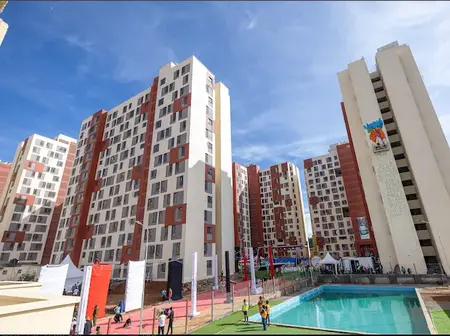
Whenever I reflect on Kenya’s housing question, my mind travels back to 1997–1998, when devastating El Niño rains swept across East Africa. Among the families affected was ours in Mathare 4A Valley, Nairobi, where I grew up and spent my childhood and early youth.
One evening, my two older brothers and I were having dinner, sharing a plate of boiled maize and beans, popularly known as nyoyo in Dholuo or githeri in Kikuyu. Suddenly, water began trickling beneath the door of our mud-walled, iron-sheet-roofed house. Within minutes, the trickle became a torrent. Our shoes were soaked, and the door could no longer open.
In our youthful innocence, we decided to finish our dinner before dealing with the water. We raised our feet and climbed onto the table, determined to complete our meal. But the water kept rising, threatening even our makeshift refuge.
Then a neighbour shouted instructions: we needed to make an opening through our mud wall to allow the water to flow into the neighbouring house. We acted immediately. Other neighbours did the same, creating passages through which the floodwaters could drain towards the river.
Our homes had temporarily become a communal drainage system. Our walls, which ordinarily separated us, became pathways to collective survival.
Today, Kenya's weather conversations have taken a different turn. We have heard predictions of El Niño rains that have not materialised as expected. Yet, whether the rains come in excess or fail altogether, the vulnerability of families living in inadequate housing remains.
My childhood experience reminds me that housing is about much more than bricks, mortar and roofing materials. It is about dignity, safety, security, culture, community and the right to belong.
It is also why public participation must occupy a central place in Kenya’s affordable housing conversation.
The question is not simply how many houses we build.
Kenya’s housing challenge has deep historical roots. During colonial rule, urban planning systematically excluded much of the African population. Nairobi’s 1948 master plan largely reflected the interests of privileged communities, leaving African settlements marginalised.
These inequalities did not disappear at independence. They evolved into the informal settlements and inadequate housing conditions that continue to characterise many Kenyan towns and cities.
Successive governments have attempted to address this challenge. The Kibaki administration initiated the Kenya Slum Upgrading Programme in 2004, in partnership with UN-Habitat. Kenya Vision 2030 subsequently placed housing within its social pillar.
The Uhuru Kenyatta administration elevated affordable housing under the Big Four Agenda, targeting 500,000 units. The current administration, under President William Ruto's Bottom-Up Economic Transformation Agenda, has taken the programme into an ambitious implementation phase.
These initiatives deserve recognition for keeping housing on the national development agenda. The current programme has demonstrated a determination to move beyond policy declarations towards actual construction, while creating opportunities for employment and economic activity.
However, the central question remains: Are we building houses that the people who need them can actually afford, access and regard as home?
Who defines an affordable house?
Public participation provides an important lens through which to examine this question.
First, who defines what constitutes a house? For a family in an informal settlement, a home may be a modest structure within an established community, close to work, schools and social support networks.
For a rural household, it may be a homestead accommodating extended family, livestock and agricultural activities. A modern apartment may satisfy technical construction standards but fail to accommodate the social and economic realities of its intended occupants.
Second, who determines affordability? A house may fall within government pricing categories but remain beyond the reach of a casual labourer, single parent, person living with a disability or family without regular income.
Affordability must consider not only the purchase price but also deposits, repayments, service charges, transport and access to essential services.
Third, what happens to community and belonging when people are relocated? Neighbours provide childcare, informal employment, security and emotional support. Housing programmes should not destroy these social networks in the name of modernisation.
Finally, what happens to those who cannot qualify under conventional eligibility criteria? Street families, homeless persons and other vulnerable groups risk being excluded from programmes ostensibly designed to realise the right to housing. Their absence from formal consultations does not make their housing needs disappear.
Participation is a constitutional obligation
Article 43(1)(b) of the Constitution of Kenya 2010 guarantees every person the right to accessible and adequate housing and reasonable standards of sanitation. Article 10 identifies participation of the people as a national value and principle of governance, while Article 1 locates sovereign power in the people.
Public participation is therefore not an administrative formality or public relations exercise. It is a constitutional expectation.
For affordable housing, participation should begin before architectural designs are finalised or financing models adopted. It should inform policy formulation, identification of beneficiaries, site selection, financing, construction, allocation and evaluation.
People should not simply be invited to endorse decisions already made. They must have a genuine opportunity to influence them. A public meeting, newspaper notice or collection of signatures does not automatically amount to meaningful participation.
Bringing people into the decision-making room
American scholar Sherry Arnstein, through her Ladder of Citizen Participation, distinguishes tokenistic consultation from genuine citizen power. Participation becomes meaningful when people can influence decisions affecting their lives.
Gayatri Chakravorty Spivak, in her influential essay Can the Subaltern Speak?, challenges the exclusion of marginalised populations from dominant systems of representation. Her insights are particularly relevant to street families and other vulnerable groups whose needs are discussed without their voices being heard.
Architects N J Habraken and John F C Turner similarly offer valuable lessons on people's capacity to shape their own housing solutions. Governments and professionals should facilitate and support communities rather than assume that they alone know what people need.
Affordable housing must therefore be understood not simply as a construction project but as a people-centred development process.
Beyond the politics of housing
Kenya needs affordable housing. The housing deficit is real, and the economic opportunities associated with construction should not be dismissed. Equally, the debate should not be reduced to political support or opposition to the current administration.
The more important question is whether the programme can progressively realise the constitutional right to housing for all Kenyans, including those whose economic and social circumstances exclude them from conventional financing and allocation models.
Perhaps the greatest lesson from my childhood experience in Mathare is that communities possess knowledge, resilience and the capacity to solve problems collectively. During the El Niño floods, no government blueprint instructed our neighbours to open passages through their walls. They understood their circumstances, recognised their shared vulnerability and acted together.
That spirit of collective problem-solving should inform our national housing agenda
Ultimately, success should not be measured only by the number of units constructed or the money invested. It should also be measured by whether ordinary Kenyans can access decent homes without sacrificing their livelihoods, dignity, culture and sense of belonging.
The question is simple: Are we building houses for people, or expecting people to fit into houses designed without them?
The right to housing must not end at the construction site. It must begin with the people.
Sustainable Development PhD scholar at the Institute for Social Transformation, Tangaza University
The 2025 World Masters Athletics Indoor shot put champion Peter Mwangi is set to lead Kenya’s athletics veterans as the two-day national trials for the 2027 World Masters Athletics Indoor Championships get underway today.
The 2027 global showpiece is scheduled to return to Gainesville, Florida, USA, on March 18. Athletics Kenya confirmed that the trials are open to all eligible athletes aged 35 and above, urging prospective participants to take advantage of the selection event as preparations for the global assignment gather momentum.
"The 2027 World Masters Indoor Championships are set to be held on 18th March 2027 in Florida, USA. In preparation for the global event, AK Masters will conduct national trials to select a team to represent the country at the championships."
"All eligible athletes are encouraged to take note of the requirements and make the necessary preparations ahead of the trials," the federation said in a statement.
Mwangi will be hoping to stamp his authority at the trials and secure a return to the global indoor showpiece, where he will be seeking to defend his world title.
At the 2025 edition, also staged in Gainesville, Mwangi reigned supreme in the M40 shot put category, unleashing an impressive 14.79m heave to clinch the world title and underline his dominance in the discipline.
The experienced thrower has already made his intentions clear, setting his sights on navigating the trials and earning another opportunity to fly the Kenyan flag on the global stage. "I have to ensure I qualify so that I can get a shot to go back and defend my title," Mwangi said. He heads to the trials with an extra spring in his step following a string of top performances throughout the year.
On June 19, he secured second place at the national championships after a 15.95m throw, which saw him finish behind George Malala, who clinched the national title with a 16.58m throw. Mwangi then secured silver in the men's M40 shot put at the World Masters Athletics Championships in Daegu, South Korea in August.
Making his debut at the global outdoor showpiece, Mwangi heaved 15.79m to finish behind Yevgeniy Labutov of Kazakhstan (15.85m). At next year's Indoor championship, Kenya will also be keen to build on its impressive medal haul from 2025, where the country returned home with eight medals, comprising four gold and four silver.
The gold medals came through Mwangi in the M40 shot put, Francis Bowen in the M50 3,000m, Eric Shikuku in the M50 3,000m race walk and Millicent Ndoro in the M35 200m. The upcoming indoor campaign comes after another impressive international outing by Kenya's masters athletes in Daegu.
Kenya finished 12th overall after amassing an impressive 27 medals, comprising 15 gold, seven silver and five bronze, to emerge as the highest-ranked African nation at the championships.
South Africa were the continent's second-best representatives, finishing 23rd with 25 medals, while the United States topped the overall medal standings with a commanding haul of 226 medals. Australia were second with 172, while host Japan placed third with 158.
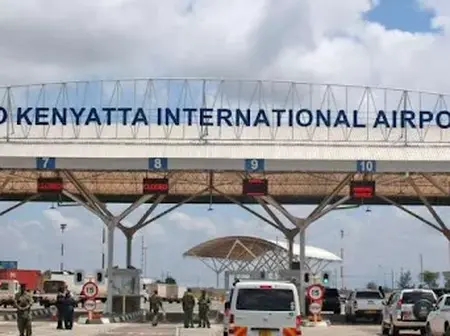
Families dropping off relatives to the airport and taxi operators could pay more to park under a proposed commercial fees review by the Kenya Airports Authority.
The draft Commercial Charges Order, 2026, proposes a new tariff for parking at the JKIA parking silo, with rates higher than the existing charges for ordinary vehicles.
It also provides for higher rental rates at the hangar buildings, airside commercial spaces, retail spaces, parking garage, terminals and commercial zones.
KAA further wants an automatic five per cent increase every year on rent and other applicable commercial charges once the order takes effect.
Under the proposed rates, a saloon, minivan or pick-up would pay Sh150 for up to 30 minutes at the parking silo, compared with the existing Sh100 rate.
Parking for between 30 minutes and one hour would cost Sh200, up from Sh150.
A stay of one to two hours would attract Sh400, against the existing Sh300, while two to four hours would cost Sh500, compared with Sh400.
The proposed silo charge rises to Sh750 for four to six hours, Sh1,000 for six to eight hours and Sh1,500 for eight to 12 hours.
For stays of 12 to 24 hours, the proposed charge is Sh2,250, compared with Sh1,800 under the existing saloon, minivan and pick-up tariff.
Each additional 24 hours would cost Sh2,500, against the current Sh2,000.
In the reviewed rates, the parking silo tariff would attract a further 10 or 20 per cent adjustment during high occupancy.
The proposals also extend to other airports, including Moi International Airport in Mombasa, Kisumu and Eldoret, where different parking rates will apply.
At Moi International Airport, a saloon, minivan or pick-up would pay Sh150 for up to one hour, Sh300 for one to two hours and Sh400 for two to four hours.
The charge rises to Sh800 for four to eight hours, Sh1,200 for eight to 12 hours and Sh1,800 for 12 to 24 hours.
Trucks and buses would pay Sh300 for the first hour and Sh2,400 for a stay of between 12 and 24 hours.
At Kisumu airport, the proposed tariff for saloon vehicles is Sh100 for the first 30 minutes, Sh200 for one to two hours and Sh300 for two to four hours.
Pick-ups and SUVs would attract higher charges, including Sh1,800 for 12 to 24 hours.
At Eldoret airport, saloon vehicles would pay Sh100 for up to 30 minutes, Sh200 for one to two hours and Sh250 for two to four hours.
The proposed tariffs also provide for additional daily charges for vehicles staying beyond 24 hours at these airports.
Taxi operators face higher costs with the six-month seasonal parking sticker for yellow taxi operators at JKIA set to rise from Sh10,440 to Sh15,000 for saloons and SUVs.
For pick-ups, vans, Nissan vehicles, minibuses and canters, the proposed charge rises from Sh10,440 to Sh20,000. The rate for trucks, buses and limousines increases from Sh13,920 to Sh25,000.
Tour operators and shuttle service providers who are airport residents would also pay more for six-month seasonal stickers.
The proposed rate for saloons and SUVs rises from Sh12,060 to Sh15,000, while pick-ups and vans move from Sh12,060 to Sh20,000.
For trucks, buses and limousines, the proposed charge rises from Sh16,082 to Sh25,000.
Commuter buses would pay Sh35,000, up from Sh28,944, while an authorised shuttle carrying up to 25 passengers would pay Sh40,000, against the current Sh25,056.
An access fee will apply for ride-hailing and cab vehicles for every completed airport trip. At JKIA, the proposed fee is between Sh150 and Sh250 per trip.
The schedule lists Sh150 for Moi International Airport, Sh100 for Wilson Airport, Eldoret and Kisumu airports, and Sh25 for the lowest airport category.
The per-trip charge would recur with each completed journey. Whether and how the fee would be passed on to passengers is not addressed in the draft.
Separately, the proposed annual airport taxi permit for vehicles at JKIA is listed at between Sh120,000 and Sh260,000. The schedule gives a range of Sh60,000 to Sh100,000 for some other airport categories.
The authority says the last review of rental rates and charges was undertaken in the 2015-16 financial year and that it engaged the Ministry of Lands in October 2023 to review rates for key airports.
At JKIA, the draft raises the rent for hangar buildings from Sh720 to Sh2,160 per square metre, while airside commercial space away from aprons rises from Sh360 to Sh2,460.
Retail space in the parking garage would rise from Sh1,762 to Sh2,400, while the rate for Terminal 2 doubles from Sh1,200 to Sh2,400.
Service charges of between five and 25 per cent will apply for a combination of utilities and services provided by KAA and tenants.
It also sets out new charges for telecommunications infrastructure, temporary promotional sites and the storage of unserviceable or abandoned aircraft.
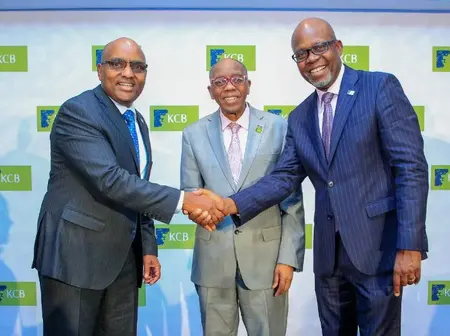
KCB Group's net profit rose 24 per cent to Sh58.6 billion in the nine months to September 2026, driven by stronger regional operations, more digital transactions, and improved asset quality.
This is despite declining interest rates that continue to reshape the banking industry's earnings environment.
Earnings per share rose 24.3 per cent to Sh17.80, underscoring improved shareholder returns.
Total income grew 12.3 per cent to Sh167.8 billion, up from Sh149.4 billion a year earlier, supported by increased lending activity and higher transaction volumes.
This outpaced the 6.1 per cent growth in operating costs, helping improve the cost-to-income ratio to 43.7 per cent from 46.2 per cent.
The results point to the benefits of the group's investments in technology, distribution and regional expansion, which have helped it generate more income without a corresponding increase in operating expenses.
A significant driver was non-funded income, which rose 21.8 per cent to Sh54.9 billion, accounting for nearly a third of total income.
Funded income, largely generated from lending, increased by a slower 8.2 per cent to Sh112.9 billion.
The growth in transaction-based earnings reflects the group's push to diversify revenue sources amid declining interest rates, which have put pressure on traditional lending margins.
KCB's mobile lending business recorded a 26 per cent increase in disbursements to Sh492 billion in the third quarter, equivalent to about Sh1.8 billion daily.
Foreign exchange income also increased 65.1 per cent, supported by higher transaction volumes, particularly through Trust Merchant Bank (TMB) in the Democratic Republic of Congo.
The group has also expanded services on its unified mobile banking application, incorporating money market funds, Pesalink and bill payment solutions to generate additional transaction income.
The strategy comes at a time when banks are experiencing narrowing lending margins.
Latest data by the Central Bank of Kenya (CBK) show the spread between average lending and deposit rates narrowed to 7.46 percentage points in July, its lowest level in 10 months, putting pressure on lenders that depend heavily on interest income.
KCB's regional subsidiaries continued to provide an important growth engine, contributing 33.4 per cent of group net profit.
Profit after tax from businesses outside Kenya increased by 24.3 per cent to Sh19.6 billion, supported by improved performance in Burundi, South Sudan, Uganda and the Democratic Republic of Congo.
The group's total assets expanded 15.4 per cent to Sh2.4 trillion, supported by a 15 per cent increase in customer deposits to Sh1.8 trillion and an 11 per cent rise in gross loans to Sh1.4 trillion.
Its Kenyan banking business remained the largest contributor, with profit after tax increasing 20.7 per cent to Sh40.8 billion and its balance sheet expanding 13 per cent to Sh1.6 trillion.
In September, KCB increased its stake in TMB from 85 per cent to 98 per cent, strengthening its position in the Democratic Republic of Congo, one of the region's major banking markets.
The increased ownership gives the group a greater share of earnings from the subsidiary while reinforcing its regional diversification strategy.
The lender also recorded an improvement in asset quality, with gross non-performing loans falling 17.1 per cent to Sh184.1 billion from Sh222.1 billion a year earlier.
Consequently, the non-performing loan ratio declined to 13.3 per cent from 17.8 per cent, while loan loss provisions fell 9.1 per cent to Sh16.6 billion.
The cost of risk, which measures credit losses relative to the loan book, improved to 1.7 per cent from 2.1 per cent.
According to the banking regulator, industry-wide gross non-performing loans stood at Sh688.2 billion in June 2026, down from Sh728.5 billion a year earlier, as lower borrowing costs eased repayment pressure on some customers.
Commenting on the results, KCB Group chief executive Paul Russo attributed the performance to investments in technology, customer experience and regional capabilities.
The group's operating costs increased by 6.1 per cent, slower than income growth, while return on equity stood at 22.1 per cent and return on assets improved to 3.5 per cent.
Its capital position also remained strong, with core capital to risk-weighted assets at 18 per cent against a statutory minimum of 10.5 per cent. Total capital adequacy stood at 21.1 per cent, above the 14.5 per cent regulatory threshold.
The group also disbursed Sh20.8 billion in green loans during the third quarter and screened projects worth Sh451 billion under its environmental and social due diligence framework in the nine months.
Chairman Joseph Kinyua said strong capital buffers would provide room to absorb economic shocks while supporting future expansion.
KEA is the latest confirmed seriesAs of mid-November 2026, the latest standard vehicle registration number plate series in Kenya is KEA.Previous series was KD, which has been exhausted.New plate Kenya: KEA.Example: KEA 000A.Issuing authority: National Transport and Safety Authority (NTSA).
The development has attracted attention in Kenya, particularly because the case involves several members of the same family and allegations of an attempt to conceal evidence following the elderly woman's death.
According to reports by Citizen Digital on Wednesday, November 18, 2026, Regina appeared before the Kibera Law Courts alongside her brother, Alton James Macharia, who is also facing accusations of being an accessory after the fact to murder.
The two pleaded not guilty to the charges brought against them.
Senior Principal Magistrate Irene Kahuyia granted each of them a bond of Sh400,000 or an alternative cash bail of Sh200,000, with a surety.
However, the allegations presented in court have added another complicated dimension to the investigation.
According to the prosecution, Regina allegedly instructed her daughter, Thandie Malaika Wanjiku Gitao, to change clothes that were reportedly soaked in blood following the incident.
Her brother, Alton, is separately accused of cleaning bloodstains at the scene in an alleged attempt to conceal evidence and help Thandie evade arrest.
These allegations form the basis of the accessory-after-the-fact charges against the two family members. Both have denied the accusations.
The case originates from the death of Dorita, whose body was discovered at her residence in Loresho Ridge Estate, Nairobi, on October 30, 2026.
Investigators reported that the 86-year-old woman had suffered multiple stab injuries, with a postmortem examination establishing severe blood loss as the cause of death.
Meanwhile, Regina's daughter, Thandie, is facing a separate murder charge over her grandmother's death.
She has also pleaded not guilty.
The court proceedings involving Thandie have taken a different direction, with the judge ordering a mental health assessment to establish her fitness in the ongoing criminal proceedings.
The court also declined an application seeking permission for her to attend her grandmother's burial.
With Regina and her brother now out on bail, attention is shifting towards the next stages of the criminal proceedings and the evidence that investigators and prosecutors will present.
Their release does not mean the case has ended or that the allegations have been established. They remain accused persons and are presumed innocent until proven guilty.