Whenever I reflect on Kenya’s housing question, my mind travels back to 1997–1998, when devastating El Niño rains swept across East Africa. Among the families affected was ours in Mathare 4A Valley, Nairobi, where I grew up and spent my childhood and early youth.
One evening, my two older brothers and I were having dinner, sharing a plate of boiled maize and beans, popularly known as nyoyo in Dholuo or githeri in Kikuyu. Suddenly, water began trickling beneath the door of our mud-walled, iron-sheet-roofed house. Within minutes, the trickle became a torrent. Our shoes were soaked, and the door could no longer open.
In our youthful innocence, we decided to finish our dinner before dealing with the water. We raised our feet and climbed onto the table, determined to complete our meal. But the water kept rising, threatening even our makeshift refuge.
Then a neighbour shouted instructions: we needed to make an opening through our mud wall to allow the water to flow into the neighbouring house. We acted immediately. Other neighbours did the same, creating passages through which the floodwaters could drain towards the river.
Our homes had temporarily become a communal drainage system. Our walls, which ordinarily separated us, became pathways to collective survival.
Today, Kenya's weather conversations have taken a different turn. We have heard predictions of El Niño rains that have not materialised as expected. Yet, whether the rains come in excess or fail altogether, the vulnerability of families living in inadequate housing remains.
My childhood experience reminds me that housing is about much more than bricks, mortar and roofing materials. It is about dignity, safety, security, culture, community and the right to belong.
It is also why public participation must occupy a central place in Kenya’s affordable housing conversation.
The question is not simply how many houses we build.
Kenya’s housing challenge has deep historical roots. During colonial rule, urban planning systematically excluded much of the African population. Nairobi’s 1948 master plan largely reflected the interests of privileged communities, leaving African settlements marginalised.
These inequalities did not disappear at independence. They evolved into the informal settlements and inadequate housing conditions that continue to characterise many Kenyan towns and cities.
Successive governments have attempted to address this challenge. The Kibaki administration initiated the Kenya Slum Upgrading Programme in 2004, in partnership with UN-Habitat. Kenya Vision 2030 subsequently placed housing within its social pillar.
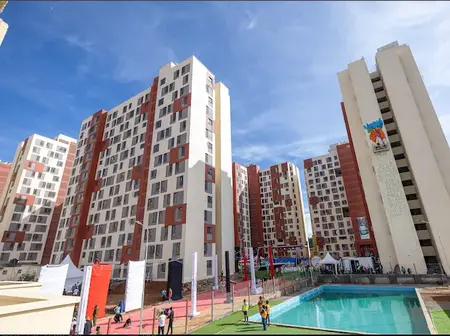
The Uhuru Kenyatta administration elevated affordable housing under the Big Four Agenda, targeting 500,000 units. The current administration, under President William Ruto's Bottom-Up Economic Transformation Agenda, has taken the programme into an ambitious implementation phase.
These initiatives deserve recognition for keeping housing on the national development agenda. The current programme has demonstrated a determination to move beyond policy declarations towards actual construction, while creating opportunities for employment and economic activity.
However, the central question remains: Are we building houses that the people who need them can actually afford, access and regard as home?
Who defines an affordable house?
Public participation provides an important lens through which to examine this question.
First, who defines what constitutes a house? For a family in an informal settlement, a home may be a modest structure within an established community, close to work, schools and social support networks.
For a rural household, it may be a homestead accommodating extended family, livestock and agricultural activities. A modern apartment may satisfy technical construction standards but fail to accommodate the social and economic realities of its intended occupants.
Second, who determines affordability? A house may fall within government pricing categories but remain beyond the reach of a casual labourer, single parent, person living with a disability or family without regular income.
Affordability must consider not only the purchase price but also deposits, repayments, service charges, transport and access to essential services.
Third, what happens to community and belonging when people are relocated? Neighbours provide childcare, informal employment, security and emotional support. Housing programmes should not destroy these social networks in the name of modernisation.
Finally, what happens to those who cannot qualify under conventional eligibility criteria? Street families, homeless persons and other vulnerable groups risk being excluded from programmes ostensibly designed to realise the right to housing. Their absence from formal consultations does not make their housing needs disappear.
Participation is a constitutional obligation
Article 43(1)(b) of the Constitution of Kenya 2010 guarantees every person the right to accessible and adequate housing and reasonable standards of sanitation. Article 10 identifies participation of the people as a national value and principle of governance, while Article 1 locates sovereign power in the people.
Public participation is therefore not an administrative formality or public relations exercise. It is a constitutional expectation.
For affordable housing, participation should begin before architectural designs are finalised or financing models adopted. It should inform policy formulation, identification of beneficiaries, site selection, financing, construction, allocation and evaluation.
People should not simply be invited to endorse decisions already made. They must have a genuine opportunity to influence them. A public meeting, newspaper notice or collection of signatures does not automatically amount to meaningful participation.
Bringing people into the decision-making room
American scholar Sherry Arnstein, through her Ladder of Citizen Participation, distinguishes tokenistic consultation from genuine citizen power. Participation becomes meaningful when people can influence decisions affecting their lives.
Gayatri Chakravorty Spivak, in her influential essay Can the Subaltern Speak?, challenges the exclusion of marginalised populations from dominant systems of representation. Her insights are particularly relevant to street families and other vulnerable groups whose needs are discussed without their voices being heard.
Architects N J Habraken and John F C Turner similarly offer valuable lessons on people's capacity to shape their own housing solutions. Governments and professionals should facilitate and support communities rather than assume that they alone know what people need.
Affordable housing must therefore be understood not simply as a construction project but as a people-centred development process.
Beyond the politics of housing
Kenya needs affordable housing. The housing deficit is real, and the economic opportunities associated with construction should not be dismissed. Equally, the debate should not be reduced to political support or opposition to the current administration.
The more important question is whether the programme can progressively realise the constitutional right to housing for all Kenyans, including those whose economic and social circumstances exclude them from conventional financing and allocation models.
Perhaps the greatest lesson from my childhood experience in Mathare is that communities possess knowledge, resilience and the capacity to solve problems collectively. During the El Niño floods, no government blueprint instructed our neighbours to open passages through their walls. They understood their circumstances, recognised their shared vulnerability and acted together.
That spirit of collective problem-solving should inform our national housing agenda
Ultimately, success should not be measured only by the number of units constructed or the money invested. It should also be measured by whether ordinary Kenyans can access decent homes without sacrificing their livelihoods, dignity, culture and sense of belonging.
The question is simple: Are we building houses for people, or expecting people to fit into houses designed without them?
The right to housing must not end at the construction site. It must begin with the people.
Sustainable Development PhD scholar at the Institute for Social Transformation, Tangaza University
Leave a Reply