
Queen Silvia of Sweden was born Silvia Renate Sommerlath on 23 December 1943 in Heidelberg, Germany.She is the only daughter of Walther Sommerlath, a German businessman, and Alice Soares de Toledo, who was Brazilian.The family lived in Heidelberg until 1947, when they moved to São Paulo, Brazil, where Silvia spent much of her childhood.
Author: lincor
-

Real Madrid reach verbal agreement to sign Manchester United wonderkid JJ Gabriel
Real Madrid are on the final stages to sign Manchester United youngster JJ Gabriel after reaching a verbal understanding with the 16-year-old over a possible switch to the Spanish giants.Gabriel, regarded as one of the most promising young talents in European football, could leave Old Trafford during the January transfer window, with Madrid keen to secure his services.
-
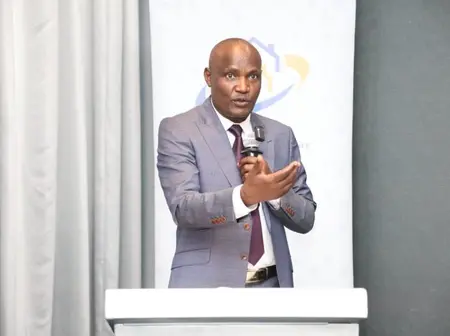
Mbadi: Kenya’s e-procurement system awards 4,470 contracts worth Ksh18.3B
Kenya’s electronic government procurement system has facilitated the award of 4,470 government contracts valued at approximately Ksh18.3 billion since its launch in April 2025, Treasury Cabinet Secretary John Mbadi has announced.
Mbadi said the digital platform had also registered 45,000 suppliers, onboarded 1,546 procuring entities and processed more than 30,000 requisitions, highlighting its growing role in the management of public procurement.
Speaking on Wednesday, November 4, 2026, during a breakfast meeting convened by the Institute of Public Finance (IPF), the CS said the government was using the Electronic Government Procurement (e-GP) system to strengthen transparency, accountability and efficiency in the awarding of public contracts.
Since its launch on April 7, 2025, the platform has been at the centre of government efforts to digitise procurement processes and improve oversight of public spending.
“The system has facilitated the award of 4,470 contracts valued at approximately Ksh18.3 billion,” Mbadi said, outlining the progress made since its introduction.
The platform has also been integrated with several government systems, including the Integrated Financial Management Information System (IFMIS), Business Registration Service (BRS), National Construction Authority (NCA), Access to Government Procurement Opportunities (AGPO) and i-Tax.
These integrations are intended to improve coordination between government institutions and make procurement processes more transparent and accountable.
However, Mbadi cautioned that registering public institutions on the platform would not, on its own, guarantee the success of the procurement reforms.
“The success of e-GP will depend not only on onboarding procuring entities but also on sustained system utilisation, compliance and building the capacity of public institutions and suppliers,” he said.
The CS also identified the participation of small businesses as a key consideration in the next phase of the digital procurement programme.
He said particular attention was needed to ensure that micro, small and medium-sized enterprises (MSMEs), as well as businesses owned by young people, women and persons with disabilities, could effectively access government procurement opportunities.
The inclusion of these groups is expected to widen participation in public tenders and expand opportunities for businesses seeking government contracts.
Mbadi said the government was preparing to extend the platform to procuring entities that had not yet been onboarded while introducing additional features to strengthen the procurement process.
The next phase will include electronic complaints and appeals mechanisms, alongside contract management modules designed to improve the handling of procurement disputes and monitoring of awarded contracts.
Development partners are also expected to support the government through technical integration and change management as implementation expands.
The Treasury is advancing e-GP as a fundamental public procurement reform aimed at strengthening oversight, minimising irregularities and enhancing competition.
The government also expects the platform to help secure greater value for money in the use of public resources.
With 4,470 contracts already awarded through the system, attention is now shifting towards expanding institutional participation, improving compliance and ensuring that more businesses can compete for government tenders through the digital platform.
-

Meta, TikTok, X to face mandatory illegal online activity reports in Kenya
Social media firms, including Meta, TikTok and X, will be required to file reports on illegal activities on their platforms with the Kenyan government, as part of proposed changes aimed at holding tech giants accountable under domestic laws.
A new proposal by the ICT ministry seeks to introduce a requirement for content-sharing apps and other online platforms operating in the country to report activities such as sexual exploitation, cyberbullying and impersonation to the Communications Authority of Kenya (CA).
-
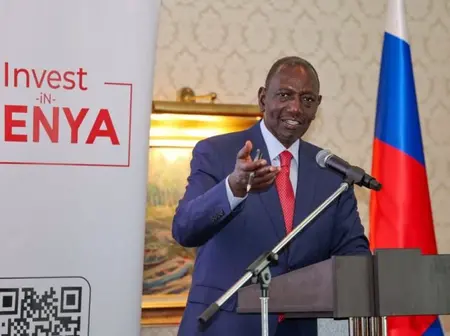
Ruto backs Ndii’s argument on housing workers and milk shortage
President William Ruto has backed his economic adviser David Ndii’s explanation that increased milk consumption by newly employed workers, including those on affordable housing projects, is contributing to shortages in supermarkets.
Ruto said Kenya’s milk production had increased significantly, but the growing number of people earning an income had also raised demand for the commodity.
Speaking on Wednesday, November 4, 2026, the president cited an increase in annual milk production from about 4.6 billion litres to approximately 5.5 billion litres in the previous year.
He also pointed to Kenya National Bureau of Statistics figures showing a 36 per cent increase in milk processing capacity.
Addressing concerns over why consumers were experiencing milk shortages despite higher production, Ruto referred to an explanation made by Ndii a day earlier.
“There are too many people now who can afford some tea and some milk because we have close to another two million people who are not working. Now they are working. 1.1 million of them are in the affordable housing space,” Ruto said.
He added that changing employment levels were also influencing consumption patterns in other sectors, including coffee and tea.
The president’s remarks came amid growing public debate over milk availability, with consumers questioning why supermarkets were experiencing stock-outs despite increased national production.
Ruto said the additional workers entering employment had increased the number of people able to afford basic household commodities.
He argued that the growth in employment, particularly through affordable housing construction, had changed consumption patterns.
The president said the same trend could be witnessed in other sectors as more Kenyans gained purchasing power.
Ndii had raised the issue on Tuesday during the 2026 NCBA Economic Forum in Nairobi, where he questioned claims that declining production was responsible for milk shortages.
Citing Kenya National Bureau of Statistics data, he pointed to an increase in milk production to approximately 5.6 billion litres and a 34 per cent rise in milk intake by processors.
“If there is no reduction in supply, and there is actually a very sharp increase in both production and the intake by processors, what can explain the stock-outs on the shelves?” Ndii posed.
He linked the increased demand to affordable housing construction sites, where contractors provide milk to workers as part of their daily provisions.
On Wednesday, Ndii shared a post on social media quoting a statement about how new ideas are eventually accepted after initially facing opposition.
“All truth passes through three stages. First, it is ridiculed. Second, it is violently opposed. Third, it is accepted as being self-evident,” he wrote.
However, the increase in annual production has coincided with a decline in formal milk deliveries to processors in recent months.
Data shows deliveries fell from 88.89 million litres in May to 75 million litres in August 2026, representing a decline of about 16 per cent.
The Kenya Dairy Board has attributed the drop mainly to drought conditions and pressure on animal feed, while other concerns have emerged over milk collection, processing and distribution.
Consumers have also faced higher prices, with fresh packaged milk recording a six per cent increase and ultra-high-temperature milk rising by eight per cent in September.
The developments have renewed debate over the factors affecting milk availability, including production levels, changing consumption patterns and the challenges facing the dairy supply chain.
-
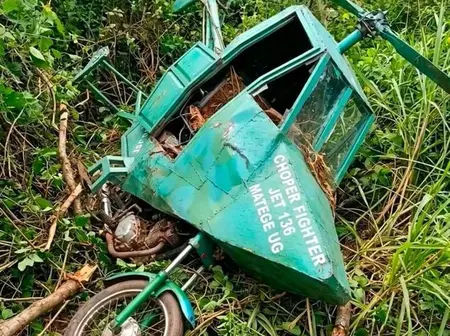
Ugandan innovator’s homemade plane crashes during test flight
A Ugandan innovator has suffered a setback after an aircraft he reportedly built locally crashed during a test flight in Kasambira, raising questions about the challenges facing homegrown aviation inventions.
The aircraft, reportedly built by an innovator identified as Matege, is said to have crashed while undergoing a test flight.
The incident has attracted attention, with the crash highlighting the risks involved in experimenting with homemade aircraft and the difficulties innovators face in turning their ideas into working machines.
However, details surrounding the incident remain unclear, including the exact cause of the crash, whether Matege sustained injuries and the extent of damage to the aircraft.
The crash comes amid a history of Ugandan inventors attempting to develop locally assembled aircraft. In 2018, Joseph Nkaheza, another Ugandan innovator, made headlines after his homemade helicopter crashed during a test flight in Mbarara, leaving him with head injuries.
Uganda has an Aircraft Accident and Incident Investigation Unit mandated to investigate aviation accidents and identify safety failures to prevent similar incidents.
Authorities have not been independently confirmed as having issued a statement on the Kasambira incident.
-

Bien celebrates 10 million views for ‘I’ll Be Okay’ with heartfelt fan tribute
Kenyan singer Bien-Aimé Baraza has celebrated a major milestone after his song I’ll Be Okay surpassed 10 million views, taking a moment to appreciate fans who have supported the release.In a post shared on Instagram on Wednesday, November 4, 2026, the musician expressed gratitude to listeners after the song reached the milestone.
-

I am lonely: Kenyan woman regrets leaving 10-year marriage after following TikTok advice
A Kenyan woman has opened up about the loneliness she has experienced after leaving her husband following advice she received from social media users, admitting that she misses the everyday moments they once shared.The woman, who spent more than a decade with her husband, described how difficult it has been adjusting to life alone, particularly the absence of the small gestures of affection that had become part of her daily routine.
-

From start-up to IPO: Four crucial lessons from Quickmart and Anthropic
“Nowadays people know the price of everything and the value of nothing.” –Oscar Wilde
What can a profitable Kenyan supermarket chain and loss making artificial intelligence [AI] company valued at $2 trillion teach us about business? Do two companies, worlds apart – one with a closed initial public offering [IPO] and the other about to launch – reveal a fundamental truth about how companies create, capture and sustain value. How did a start-up with seven founders, most in their late 30s, and oldest being 43, become so respected?
-
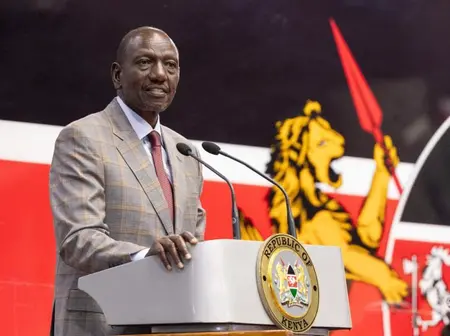
Ruto: In the next 18 months, we will have a brand-new airport
President William Ruto has announced that Kenya expects to have a brand-new airport within the next 18 months, saying construction is already underway following the reorganisation of the project after controversy surrounding the proposed involvement of India’s Adani Group.
Speaking during the Kenya Private Sector Alliance (KEPSA) Presidential Roundtable at the Kenyatta International Convention Centre (KICC) in Nairobi on Wednesday, November 4, 2026, Ruto maintained that the airport project was progressing despite criticism and delays that have surrounded the government’s infrastructure ambitions.
“In the next 18 months, we will have a brand-new airport,” the President declared, insisting that the project had moved beyond the planning stage and was now under construction.
Ruto acknowledged that the project had encountered challenges following public controversy over the proposed Adani partnership, but said the government had reorganised its approach and proceeded with construction.
“Remember, there was a small challenge with noise around Adani and others, but we’ve since reorganised, and now the airport is under construction,” he told business leaders.
The President’s remarks signal renewed confidence in the government’s efforts to upgrade Kenya’s aviation infrastructure, particularly at Jomo Kenyatta International Airport (JKIA), the country’s principal international aviation gateway.
Ruto Responds to Criticism Over Airport Construction Timeline
Ruto also addressed criticism over the timelines he had previously given for the delivery of the airport, arguing that public debate had shifted as the project progressed.
He said critics had initially questioned whether the project was achievable before accusing him of overpromising and later claiming that no construction was taking place.
The President, however, said the criticism had since changed, with attention now shifting to whether the project would be completed within the initially communicated timeline.
“Some people said that it was not possible to be done. Then they changed and said this gentleman overpromised, and then they said nothing was happening. Now the debate has changed, saying, ‘Oh, it’s happening,’ but it was supposed to be last month, but it has delayed by a month or two months,” Ruto said.
He dismissed the criticism as part of the normal public debate surrounding major infrastructure projects, arguing that a delay of one or two months was manageable.
“It’s not that it has not happened. It’s just that it has not happened, or it is one month late. That we can deal with,” he added.
His remarks suggest the government is seeking to maintain confidence in the airport’s delivery schedule even as questions persist over the implementation timeline.
President Says JKIA Needs a Major Upgrade
The President defended the need for a new airport by pointing to the experience of international travellers arriving in Nairobi through Jomo Kenyatta International Airport.
According to Ruto, the condition of the existing facility does not reflect Kenya’s ambitions as a regional business, tourism and aviation hub.
“We will finish the airport because we don’t have an airport. You all agree. Those of you who travel, when you arrive at Jomo Kenyatta, you arrive to a tarmac, and the place isn’t very good,” he said.
He argued that the planned development would transform the country’s main aviation gateway and improve the experience of passengers arriving in Kenya.
“We will change that in the next 18 months. We will have a brand-new airport,” Ruto reiterated.
JKIA is a critical gateway for international travel, cargo transportation and regional connectivity, making its expansion and modernisation an important issue for Kenya’s economic competitiveness.
Airport Project Under Scrutiny
The airport announcement comes against the backdrop of controversy surrounding the proposed airport expansion arrangement involving Adani Group, which generated significant public debate and opposition.
The government subsequently moved to reorganise its approach to the project following the controversy.
Ruto’s latest remarks provide an indication of the administration’s intended delivery timeline, although questions remain over the project’s precise scope, financing arrangements, implementation milestones and the facilities expected to be ready within the 18-month period.
The President did not provide further technical details during the roundtable but insisted that construction was already underway.
If delivered within the stated timeframe, the project would mark a significant development in Kenya’s aviation infrastructure and strengthen Nairobi’s position as a regional transport and business hub.
For now, Ruto has put an 18-month timeline on the table, setting a fresh benchmark against which Kenyans, investors and the aviation industry will measure the government’s performance.