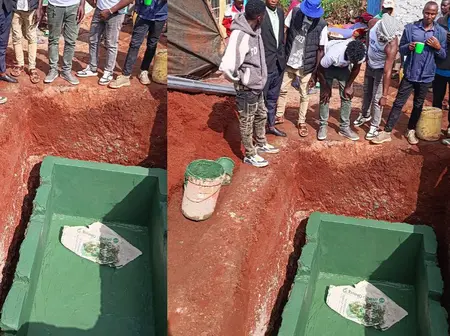
Gusii singer and digital content creator Vickytam Embande has shared a glimpse of the custom-built grave where late entertainer MC Ogwatoni will be laid to rest, revealing a striking green concrete finish on its interior as preparations for the burial continued.Vickytam shared photographs in a Facebook post on Wednesday, November 4, 2026, showing how the grave was dug deep into the ground before its interior was lined with concrete.
Author: lincor
-
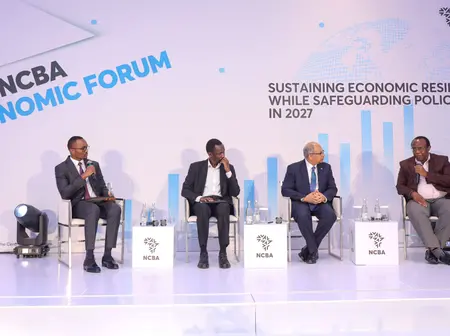
Kenya’s business costs have a regulatory problem that David Ndii wants addressed
Kenya’s cost of doing business is back in focus after David Ndii proposed a dedicated function to oversee regulatory requirements and the charges imposed on businesses. Speaking at the NCBA Economic Forum 2026, Ndii argued for a more coordinated approach to monitoring regulations, with attention to the fees, licences and administrative obligations that affect companies.
The proposal addresses a concern raised during the forum about the accumulation of charges across government agencies. Businesses must navigate different regulatory requirements while managing the financial and administrative costs associated with operating in Kenya.
Ndii’s proposal centres on giving regulatory oversight a clearly defined institutional responsibility. A dedicated function would monitor the rules affecting businesses and examine how new requirements add to existing compliance obligations.
The issue is particularly relevant to smaller enterprises, which often have fewer resources to manage multiple licences, inspections and administrative processes. Companies operating across different sectors can also face requirements from several agencies, adding to the complexity of compliance.
Dr Bimal Kantaria raised concerns about the number of fees and levies affecting exporters. He referred to 47 charges and five additional levies, arguing that regulatory costs contribute to the difficulties facing Kenyan businesses competing in international markets.
His comments also connected regulatory costs with logistical challenges affecting horticultural exports. Charges imposed at different stages of production, transportation and export can add to the cost of getting Kenyan goods to overseas buyers.
For businesses operating on tight margins, these expenses affect pricing and competitiveness. Smaller exporters and producers must also account for the administrative time involved in meeting different requirements.
The debate highlighted the relationship between regulation and the ability of businesses to invest and expand. Predictable rules allow companies to plan their operations, while multiple and fragmented requirements can complicate investment decisions.
Gossip’s closing remarks at the forum also emphasised lower business costs, accountability and economic diversification as priorities for Kenya’s private sector.
A dedicated regulatory oversight function would place greater attention on the cumulative cost of government requirements. The broader policy question concerns how Kenya can maintain effective regulation while ensuring that businesses are not burdened by unnecessary administrative expenses.
For SMEs, exporters and larger companies, the cost of compliance forms part of the wider operating environment. Ndii’s proposal puts responsibility for examining that burden at the centre of the business policy discussion.
-

Maresca urges Manchester City players to ease scoring burden on Haaland
Manchester City manager Enzo Maresca has challenged his other attacking players to contribute more goals instead of depending heavily on Erling Haaland to deliver in front of goal.The Norwegian striker has enjoyed an outstanding spell since arriving at the Etihad Stadium in the summer of 2022, registering 175 goals in 209 appearances for the Premier League champions.
-
Travelling with SGR this festive season: 7 mandatory safety rules Kenya Railways considers
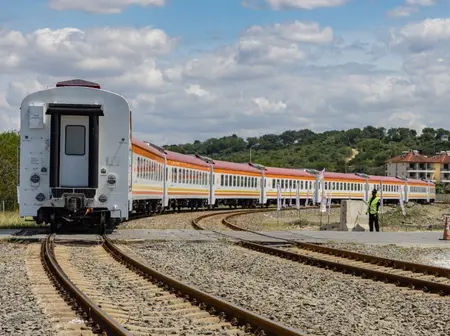
As thousands of Kenyans prepare to travel to different destinations during the festive season, passengers using the Standard Gauge Railway (SGR) have been encouraged to remain vigilant and take personal security precautions throughout their journeys.With increased movement of people during the holidays, travellers may become vulnerable to theft, particularly when carrying luggage, valuables and personal belongings in busy public spaces.
-

The million-shilling sound business turning cars into election megaphones
A politician’s campaign vehicle is rarely just a means of transport. With speakers mounted on its roof, cables running through its interior and sound equipment fitted into its boot, an ordinary car can be transformed into a mobile public address system capable of addressing thousands of people.
The conversion, however, comes at a price. Depending on the vehicle and the equipment installed, turning a Subaru or Toyota Probox into a campaign sound system can cost hundreds of thousands of shillings, while more elaborate installations on high-end SUVs can run into millions.
-
World Bank: Kenya could have saved Ksh117B on SGR by matching Tanzania’s construction costs
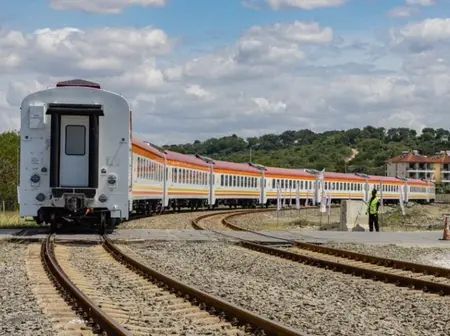
Kenya could have saved up to Ksh117 billion during the initial construction of the Mombasa–Nairobi Standard Gauge Railway (SGR) if it had matched Tanzania’s construction cost per kilometre, according to the World Bank.
The estimate, equivalent to US$900 million, appears in the lender’s November 2026 Kenya Economic Update, which examines how governance weaknesses affect public spending, economic growth and job creation.
“With the same cost metric as the Tanzanian line, Kenya could have saved up to US$900 million in initial construction costs,” the report states.
The World Bank estimates that at least 30 per cent of the potential savings is attributable to governance challenges, including non-competitive contracting, land speculation and fraud involving land titles, valuations and compensation payments.
The findings raise questions about value for money in major infrastructure projects as Kenya faces substantial public debt and repayment obligations.
The World Bank puts Kenya’s Mombasa–Nairobi SGR construction cost at US$7.6 million per kilometre, compared with US$5.7 million for Tanzania’s Dar es Salaam–Dodoma railway and US$5.3 million for the Djibouti–Addis Ababa line.
Using the report’s approximate Kenyan shilling equivalents, the costs were: Kenya SGR: Ksh988 million per kilometre, Tanzania railway: Ksh741 million per kilometre and Djibouti–Addis Ababa railway: Ksh689 million per kilometre.
Kenya’s railway therefore costs approximately Ksh247 million more per kilometre than Tanzania’s and Ksh299 million more than the Djibouti–Addis Ababa line, placing it about 33 per cent above Tanzania’s benchmark.
Applying Tanzania’s cost metric to Kenya’s railway produces the estimated US$900 million, or approximately Ksh116 billion to Ksh117 billion, in potential initial construction savings.
The figure is a hypothetical comparison, not a confirmed amount of recoverable public money or proof that the entire cost difference was stolen.
The report identifies governance weaknesses as a significant contributor to the potential savings.
“Of this amount, at least 30 percent is considered attributable to governance challenges,” the World Bank says.
The concerns include direct contracting instead of competitive tendering, land speculation, and fraud involving land titling, valuation and compensation payments.
The lender warns that limited competition can weaken scrutiny of contract prices and create opportunities for inflated costs.
“Once contracts are awarded to connected companies, this also raises the likelihood of further collusion and cost markups during project execution,” the report states.
The World Bank does not say that 30 per cent of the entire SGR budget has been proven stolen. Its estimate refers to at least 30 per cent of the potential savings.
The comparison is notable because Kenya’s SGR is diesel-powered, while the Tanzania and Djibouti–Addis Ababa lines are electrified. Electrification requires additional infrastructure, although the World Bank cautions that the projects differ in specifications, construction periods, terrain and other physical conditions.
All three railways are single-track lines. The Djibouti–Addis Ababa railway was built between 2011 and 2016 and has an elevation gain of approximately 2,300 metres. Kenya’s Mombasa–Nairobi line was constructed between 2014 and 2017, with an elevation gain of about 1,600 metres.
Tanzania’s Dar es Salaam–Dodoma line was built between 2017 and 2024, with an elevation gain of approximately 1,060 metres.
The Ethiopian line therefore faced more mountainous terrain and a greater elevation gain than Kenya’s railway.
The World Bank acknowledges that land acquisition costs were significantly higher in Kenya but says they do not fully explain the cost difference. Tanzania’s railway was also built later and to a higher specification, including electrification.
The comparison does not establish that every additional shilling spent on Kenya’s SGR resulted from corruption. It identifies governance weaknesses as an explanation for part of the potential savings.
SGR flagged in corruption risk assessment
The findings echo Transparency International Kenya’s June 2026 Corruption Risk Assessment of Infrastructure Projects in Kenya, which examined vulnerabilities in major public investments, including the SGR.
The World Bank references the assessment, noting that the railway was highlighted as particularly vulnerable to corruption risks. The assessment considered procurement transparency, public participation, oversight and access to project information.
The concerns are especially significant for infrastructure financed through public borrowing, where construction costs affect taxpayers through debt repayments and other fiscal commitments.
The SGR comparison forms part of a broader warning about corruption and collusion across Kenya’s economy.
The World Bank estimates that governance weaknesses linked to corruption and collusion increase Kenya’s annual fiscal deficit by approximately two percentage points of gross domestic product through higher public expenditure and lower revenue collection.
The resulting deficits increase borrowing requirements and add to the country’s debt pressures. The lender also identifies governance concerns in sectors such as electricity and logistics, where weak oversight and non-competitive contracts can raise costs for businesses and consumers.
The report argues that corruption can undermine investment and productivity while reducing resources available for essential public services.
The lender recommends stronger competition and transparency in public procurement, alongside more effective oversight of public investment.
Its proposals include fully implementing electronic government procurement, improving access to contract information, publishing comprehensive public-project data and increasing transparency around beneficial ownership to reveal who ultimately owns companies receiving government contracts.
Other recommendations include strengthening oversight institutions, following up on Auditor-General recommendations and applying procurement rules effectively to public-private partnerships and other contracting arrangements.
For taxpayers, the estimated Ksh116 billion to Ksh117 billion represents the potential cost of failing to achieve comparable construction costs, not a confirmed amount that can be recovered.
The World Bank’s central finding is that governance challenges account for at least 30 per cent of those potential savings. It does not establish that the entire difference was caused by corruption or that the full amount was stolen.
-
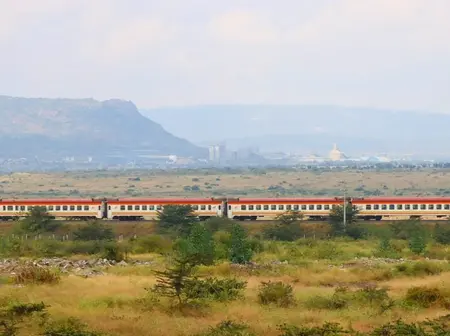
Kenya Railways warns passengers against Madaraka Express ticket scams
Kenya Railways has cautioned passengers against fraudulent Madaraka Express ticket booking platforms as Kenyans prepare for increased travel during the festive season.
In a public notice issued on Wednesday, November 4, 2026, the corporation urged travellers to remain alert and use only its authorised channels when purchasing Standard Gauge Railway (SGR) tickets.
The warning, headlined, lists three official booking options and cautions passengers against using unauthorised platforms.
Passengers can book tickets online through the official Kenya Railways website at https://metickets.krc.co.ke, dial *639# on their mobile phones or visit any Madaraka Express Passenger Service station.
“Visit any of our Madaraka Express Passenger Service stations For more information, please contact: Phone: 0709 907 000, 0709 907 555,”Kenya Railway post read in part.
The corporation urged travellers to verify booking platforms before making payments to avoid falling victim to fraudulent ticket sellers.
According to the advisory, passengers seeking to travel on the Madaraka Express should make reservations exclusively through the three recognised channels.
Those booking online should use the official ticketing portal, while passengers without internet access can use the USSD service by dialling *639#.
Travellers can also purchase tickets physically at any Madaraka Express Passenger Service station.
Kenya Railways provided additional contacts for passengers seeking clarification or assistance with their bookings.
The corporation listed 0709 907 000 and 0709 907 555 as its official telephone contacts. Passengers can also reach it through info@krc.co.ke or visit www.krc.co.ke.
Its official social media accounts operate under the name Kenya Railways on X and Facebook.
The warning comes ahead of the Christmas and New Year holidays, when many Kenyans travel to different parts of the country to spend time with family and friends.
The Nairobi-Mombasa route is among the key travel corridors served by the Madaraka Express, which offers passenger services between the two cities.
With demand for holiday travel expected to increase, the advisory reminds passengers to confirm that they are using legitimate booking channels before completing transactions.
The corporation’s notice provides a direct way for travellers to distinguish its authorised ticketing services from other platforms claiming to offer Madaraka Express reservations.
Passengers seeking assistance with bookings can contact Kenya Railways through its published telephone numbers or email address.
On October 31, 2026, the corporation completed its first vehicle transportation service, moving 24 vehicles from Mombasa to the Nairobi Inland Container Depot.
The corporation plans to increase the service to approximately 700 vehicles monthly, targeting car dealers, importers and individual motorists.
Kenya Railways Managing Director Philip Mainga said the service would provide another revenue stream while helping reduce pressure on roads.
The development adds vehicle transportation to the range of services offered through the SGR infrastructure.
Meanwhile, passengers planning to use the Madaraka Express have been advised to make bookings through the official portal, USSD code or passenger service stations to avoid ticketing fraud.
-
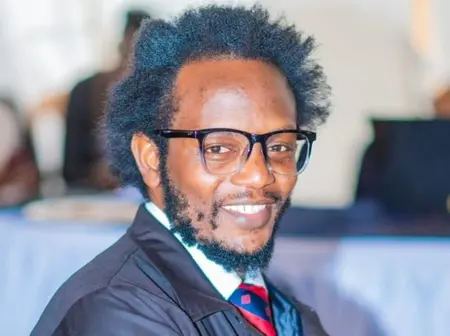
Professor Hamo delivers blunt lesson on poverty and pride
Comedian and media personality Professor Hamo has delivered a blunt message about combining financial struggles with arrogance, urging people who are struggling to put their pride aside and accept help when they need it.Hamo warned that pride can worsen poverty when people reject opportunities or assistance to avoid appearing vulnerable.
-

Manchester United issue Carlos Baleba hamstring injury update in Roma comeback
Manchester United midfielder Carlos Baleba has suffered a hamstring injury, head coach Michael Carrick has confirmed following the club’s dramatic 3-2 Champions League victory over Roma on Tuesday, November 3, 2026.The Cameroon international was forced off during the encounter at Old Trafford after experiencing discomfort while making an attacking run shortly after the restart.
-
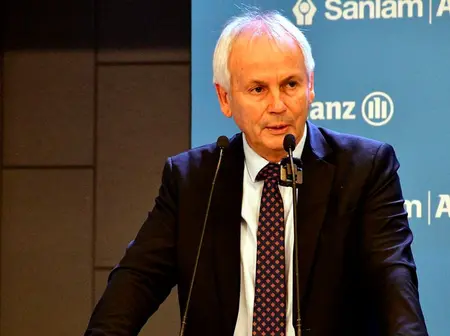
Sanlam Allianz top owner to sell 4.8pc stake on IRA rules
Sanlam Allianz Holdings Kenya’s top shareholder faces a compulsory stake sale to East African investors after the allotment of previously deferred rights issue shares pushed its ownership beyond the allowed limit.
The insurer’s parent, Sanlam Allianz Africa Proprietary Limited (SAZ), will be required to sell at least 30.95 million shares, equivalent to 4.81 percent of the new share capital, by September 28, 2027, to comply with local ownership requirements under the Insurance Act.