
The National Assembly’s Departmental Committee on Finance and National Planning has outlined a legislative agenda aimed at strengthening Kenya’s capital markets and unlocking alternative sources of long-term financing for economic development.Speaking during the NIFC Horizon 2026 conference, themed Financing Kenya’s Next Economic Chapter, Molo MP and Committee Chairperson Kimani Francis Kuria said Kenya must move beyond traditional bank lending and government budget allocations to mobilise long-term capital for development.
Author: lincor
-

Slavia Prague vs Arsenal: Team news, predicted line-ups and match preview
Arsenal will be looking to maintain their unbeaten start to the 2026-27 UEFA Champions League campaign when they travel to the Czech Republic to face Slavia Prague on Wednesday, November 4, 2026.The two sides meet at the Fortuna Arena, with the hosts desperate for their first victory in the competition after collecting just one point from their opening three matches.
-
Alcohol factories risk closure in nationwide government crackdown
Alcohol manufacturing factories found operating outside the law risk closure and withdrawal of their licences as the government steps up a nationwide crackdown on illicit and adulterated alcoholic products.
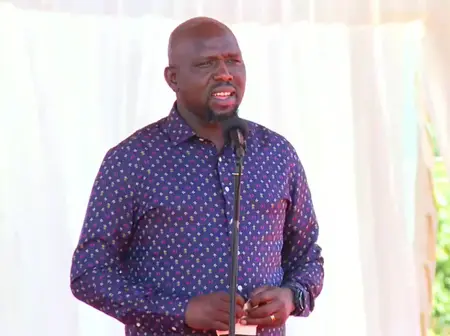
Interior Cabinet Secretary Kipchumba Murkomen issued the warning on Wednesday, November 4, 2026, while addressing the National Assembly, saying the government would take action against manufacturers who fail to comply with the law.
“Factories found operating outside the law will face appropriate enforcement action, including closure and withdrawal of licences, while those responsible will be held to account,” Murkomen stated.
He described illicit alcohol, drugs and substance abuse as a serious threat to public health, community safety and the future of young people.
Murkomen said the government had intensified operations over the past year to dismantle networks involved in the manufacture, distribution and sale of illicit alcoholic products.
The operations, coordinated by County Commissioners, have brought together County Security and Intelligence Committees and other multi-agency teams to target businesses involved in the trade.
The enforcement exercises have resulted in the seizure of large quantities of adulterated alcohol, illegal ethanol and other harmful substances.
Several suspects have also been arrested and taken through the criminal justice process, while non-compliant businesses, including bars, have been shut down.
The government says the operations are intended to disrupt the supply chains that keep harmful alcoholic products in circulation.
The latest crackdown will focus on alcohol manufacturing premises across the country, with authorities conducting fresh inspections to establish whether factories meet existing legal and regulatory requirements.
Murkomen said the re-inspection exercise was already underway, warning that manufacturers found violating the law would face enforcement action.
The inspections are expected to establish whether production facilities comply with the standards governing alcohol manufacturing and licensing.
The government is also targeting the circulation of products that pose health risks to consumers, particularly in areas where illicit brews have remained a public health and security concern.
Under the new push, factory operators found operating outside the law risk losing their licences in addition to having their premises closed.
Murkomen presented the alcohol enforcement campaign as part of the government’s wider security agenda, which also includes preparations for the 2027 General Election.
He called for continued coordination among national and county security agencies to address threats posed by illicit alcohol, drug trafficking and substance abuse.
The Interior Ministry’s approach places responsibility on county security teams to sustain enforcement operations, monitor compliance and ensure those involved in illegal production face the law.
The nationwide inspections will therefore extend the crackdown beyond bars and retail outlets to the manufacturing facilities supplying alcoholic products to the market.
-
Kenya sets December 2026 deadline for drug manufacturers to adopt digital tracking system
Pharmaceutical manufacturers in Kenya have been given until December 31, 2026, to comply with global standards that will introduce stricter tracking of medicines and help combat counterfeit and substandard medical products in the country.
The deadline was announced by Principal Secretary for Medical Services Dr Ouma Oluga during the Health Products and Technologies Stakeholder Meeting in Nairobi, where he represented Health Cabinet Secretary Aden Duale.
Oluga said manufacturers must align their operations with GS1 global standards as the government moves to strengthen the safety, accountability and transparency of the pharmaceutical supply chain.
The standards will support the implementation of a digital Track and Trace system designed to monitor health products from the point of manufacture to the final consumer.
The initiative is expected to make it easier for regulators to establish the origin, movement and distribution of medicines, particularly when concerns arise over the quality or safety of particular products.
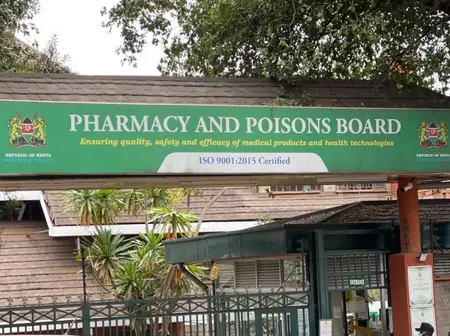
The Pharmacy and Poisons Board (PPB) said strengthening medicine traceability was critical in protecting the public from falsified and substandard medicines.
“Strengthening medicine traceability is essential to protecting Kenyans from falsified and substandard medicines and ensuring access to safe, effective and quality-assured health products,” the board said.
The board was represented at the stakeholder meeting by its Director of Pharmacy Practice, Dr Wilfred Ochieng. Under the proposed system, pharmaceutical products will have improved digital identification and tracking, allowing authorities to follow their movement through different stages of the supply chain.
This is expected to address challenges associated with tracing medicines when counterfeit, compromised or unsafe products enter the market.
The digital Track and Trace system is also expected to strengthen the government’s ability to respond to medicine safety concerns.
Through improved visibility, regulators will be better placed to identify affected batches and facilitate timely recalls of products found to be unsafe.
The system will also strengthen accountability among manufacturers, distributors, suppliers and other players involved in the movement of pharmaceutical products.
This could reduce gaps in the supply chain that make it difficult to establish where particular medicines originated and how they reached patients.
Beyond medicine safety, the government expects the adoption of GS1 standards to improve procurement processes and support the growth of local pharmaceutical manufacturing.
The digital system is expected to provide better information on the availability and movement of health products, helping institutions make more informed procurement decisions.
Improved traceability could also strengthen confidence in locally manufactured pharmaceutical products by making it easier to verify their movement and authenticity.
Manufacturers now have until December 31, 2026, to comply with the global standards as Kenya moves towards a more transparent and digitally monitored pharmaceutical supply chain.
The implementation will be an important step in strengthening medicine regulation and ensuring patients receive products that meet the required safety and quality standards.
-

Ruto reveals number of university students interning on his farms
President William Ruto has revealed that he offers internship opportunities to between 10 and 15 university students on his farms, where they receive stipends as they gain practical work experience.
Speaking on Wednesday, November 4, 2026, the President said he regularly interacts with the young people, noting that many arrive with academic knowledge but are eager to understand how what they have learnt in college applies in the workplace.
“I’m a farmer, you know. I provide internships for between 10 and 15 young people from universities to intern in my farm. We pay them a stipend and they are very interesting,” Ruto said.
He said the students were keen to gain practical exposure to farming activities and understand how different operations are carried out beyond what they learn in lecture rooms.
The President used his experience to encourage other employers to open their workplaces to university graduates seeking practical training.
Ruto called on business leaders and companies with the capacity to take in young people to provide internship opportunities in factories, manufacturing plants, industries and trading businesses.
He said such placements would allow graduates to spend between six months and one year gaining experience in actual working environments.
“Those of us who can provide internship opportunities for young people to engage with a real opportunity in a factory, in an industry, in a manufacturing space, in a trading space, that would add a lot of value,” he said.
According to the President, the arrangement would also benefit employers by allowing them to identify and prepare potential employees while helping young people acquire skills required in their respective industries.
He said exposing interns to daily business operations would give them an opportunity to learn directly from experienced workers and understand the demands of different professions.
The President’s remarks come as thousands of young Kenyans graduate from universities and colleges each year amid competition for limited formal employment opportunities.
Estimates indicate that about one million young people enter the labour market annually, while formal job creation remains insufficient to absorb the growing number of job seekers.
Informal employment accounts for approximately 83.8 per cent of Kenya’s workforce, according to figures cited in recent World Bank analysis.
Many graduates consequently face challenges securing employment, with some employers requiring previous work experience even for entry-level positions.
Ruto’s call for greater private-sector involvement comes as the government considers expanding internship opportunities for young graduates.
The planned opportunities are expected to target university, Technical and Vocational Education and Training (TVET) and college graduates, with monthly stipends and incentives intended to encourage private-sector participation.
The programme is part of wider efforts to give young people workplace exposure and improve their chances of securing employment.
-

Boychild waombewe: Biker Ericko Safaris captures sad moment young man collapses and dies in CBD
Biker Ericko Safaris has shared a video he recorded while riding through Nairobi CBD, capturing the distressing aftermath of a young man who reportedly lost consciousness, collapsed and died in broad daylight while being rushed to hospital on a boda boda.In the video shared on Facebook on Wednesday, November 4, 2026, Ericko is seen emerging from a backstreet before arriving at the scene, where several Kenyans have already gathered, with a police vehicle also stationed nearby.
-

Kennedy Rapudo Pens Sweet Birthday Tribute to Amber Ray, Calls Her His Biggest Blessing
Kenyan businessman Kennedy Rapudo has showered socialite Amber Ray with love on her birthday, describing her as his favourite human, biggest blessing and the woman he will always go crazy for.
Rapudo shared the heartfelt message on Instagram, celebrating his partner while wishing her a new chapter filled with happiness, good health, financial success and countless blessings.
“It’s my QUEEN’S DAY! My favourite human, my biggest blessing, and the only woman I’ll forever go crazy for!” he wrote.
The businessman went on to pray for answered prayers and greater success in Amber’s life, expressing his hope that she would enjoy more happiness and prosperity in the coming year.
“I pray this new chapter brings you nothing but BIG WINS, answered prayers, unlimited blessings, good health, and happiness that never runs dry,” Rapudo added.
He concluded the birthday tribute by expressing his desire to create more memories and enjoy many more years together.
“MORE LIFE, MORE MONEY, MORE BLESSINGS, MORE MEMORIES, AND MOST IMPORTANTLY, MORE US!”
The couple’s relationship dates back to 2020, when they first crossed paths at DNM Park in Mountain View during the Covid-19 pandemic.
Rapudo previously revealed that he was attracted to Amber when they met but did not pursue her because he was involved in another relationship.
He later attempted to reconnect with the socialite, only to discover that she was also seeing someone at the time.
-

Prince Carl Philip, Duke of Värmland Siblings: Get to Know Prince Daniel and Crown Princess Victoria
Prince Carl Philip of Sweden, Duke of Värmland, was born Carl Philip Edmund Bertil on 13 May 1979 at the Royal Palace in Stockholm.He is the only son and second of the three children of King Carl XVI Gustaf and Queen Silvia.At birth he was Crown Prince and first in line to the throne, but a change in the Act of Succession that took effect on 1 January 1980 introduced absolute primogeniture, placing his elder sister Victoria ahead of him.
-

Prince Daniel, Duke of Västergötland Siblings: All About Anna Westling Söderström
Prince Daniel, Duke of Västergötland, was born Olof Daniel Westling on 15 September 1973 at Örebro Regional Hospital in Örebro, Sweden.He is the son of Olle Westling, a former social services director, and Ewa Westling, who worked for the postal service.He grew up primarily in Ockelbo in Gävleborg County after the family moved there in his early years.
-
Mogo, ZTE offer Kenyans smartphones from KES100 deposit
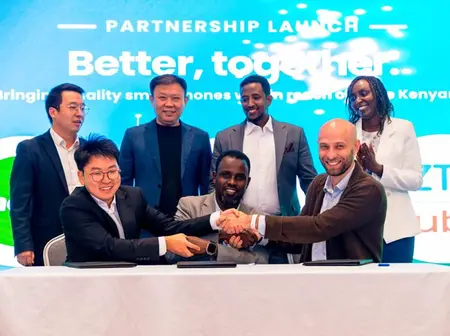
Device financier Mogo has partnered with ZTE Corporation and its Kenyan distributor, RSC, to let Kenyan customers buy ZTE smartphones with a deposit of as little as KES100 (less than US$1).
Under the deal, customers can buy devices including the ZTE Blade V80 Max and pay off the balance in daily instalments over up to 12 months.
According to Mogo, the application process takes less than 20 minutes, subject to verification and approval. Applicants must present their national ID and a six-month M-Pesa statement at participating retail outlets, and they manage repayments through the Mogo app.
The partnership targets one of the main barriers to smartphone adoption in Kenya. A GSMA study found that 85% of respondents without smartphones cited cost as the main reason.
Smartphone use is nonetheless growing. According to the Communications Authority of Kenya, smartphone connections reached 52.3 million in June 2026, compared with 27.4 million feature phone connections. Smartphone connections grew by 4.2% between March and June, while feature phone connections fell by 3.9%.
Pat Sharleen, commercial manager for device financing at Mogo Kenya, said the partnership aims to make quality smartphones more accessible to everyday earners, entrepreneurs and underserved consumers through flexible payment options.
Omar Abdi, CEO of RSC, said combining ZTE’s devices with Mogo’s financing would help customers overcome the upfront cost of a smartphone and take a fuller part in the digital economy.
Growing device finance market
Mogo entered Kenya’s smartphone financing market a year ago. It says it has since helped more than 400,000 customers buy devices through instalment plans.
The model is increasingly relevant to small businesses and informal traders, who rely on smartphones to market products, communicate with customers, take orders and process digital payments.
Kenya’s device financing market is competitive. Mogo joins players including M-KOPA and Safaricom’s Lipa Mdogo Mdogo in offering pay-as-you-go smartphone plans.
Go to TECHTRENDSKE.co.ke for more tech and business news from the African continent and across the world.
Follow us on WhatsApp, Telegram, Twitter, and Facebook, or subscribe to our weekly newsletter to ensure you don’t miss out on any future updates. Send tips to editorial@techtrendsmedia.co.ke