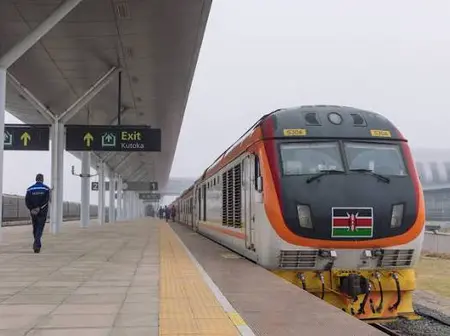
Kenya could have saved approximately KSh116 billion during the construction of the Standard Gauge Railway (SGR) between Mombasa and Nairobi if the project had been completed at a cost comparable to a similar railway in Tanzania, according to a new World Bank report.
The findings are contained in the World Bank's Kenya Economic Update released on Wednesday, November 4, 2026, which examined infrastructure spending and governance challenges affecting public projects in the country.
According to the report, constructing Kenya's Mombasa–Nairobi SGR cost approximately KSh988 million per kilometre, equivalent to US$7.6 million.
The figure was considerably higher than the cost recorded for Tanzania's Dar es Salaam–Dodoma railway, which stood at approximately KSh741 million per kilometre, or US$5.7 million.
The Djibouti–Addis Ababa railway was even cheaper, with construction costs estimated at KSh689 million per kilometre, equivalent to US$5.3 million.
The World Bank estimated that Kenya could have saved up to US$900 million, approximately KSh116 billion, had its railway been constructed using the same cost metric as the Tanzanian project.
The lender attributed part of the difference to governance problems, including the preference for direct contracting instead of competitive tendering, land speculation and alleged fraud involving land ownership documents, property valuations and compensation payments.
"With the same cost metric as the Tanzanian line, Kenya could have saved up to US$900 million in initial construction costs. Of this amount, at least 30 percent is considered attributable to governance challenges," the report stated.
The report also cited a 2026 Transparency International Kenya assessment, which identified the SGR project as particularly vulnerable to corruption risks.
Kenya's railway construction financing also featured in the findings. According to the National Treasury's draft 2027 Budget Policy Statement released in October, the government borrowed approximately KSh648 billion from China to finance the SGR construction from Mombasa towards Naivasha.
Beyond the railway project, the World Bank raised concerns about public procurement practices, particularly the awarding of government contracts to companies linked to public officials.
It warned that direct procurement and insufficient transparency in some public-private partnership projects could encourage collusion and increase the cost of government projects.
The lender also called for greater disclosure of beneficial ownership information to establish the individuals behind companies receiving public contracts.
The report further highlighted bribery affecting informal workers, including boda boda riders, who reportedly lose between five and 20 per cent of their daily earnings through payments demanded by traffic police and other enforcement officers.
It cited estimates showing that traffic police bribes across the country amount to approximately KSh88 billion annually.
To address the problem, the World Bank recommended implementing reforms to decriminalise minor traffic offences and introducing instant fines to reduce opportunities for bribery.
The lender also urged national and county governments to agree on measures that would protect informal workers from harassment by frontline enforcement officers.
https://www.facebook.com/100040319114203/posts/2041939270493357/?app=fbl
Leave a Reply