Kenya is seeking to turn growing competition between the US and China for critical minerals into an economic opportunity, opening its strategic deposits to investors from both powers.
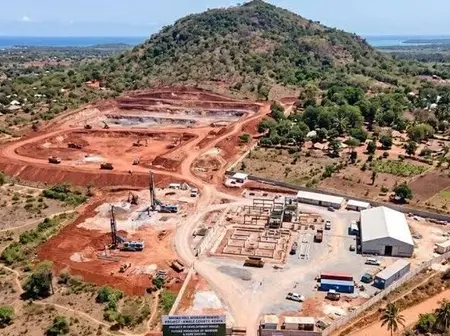
In a communication by Minerals CS Hassan Joho on Thursday, Kenya granted the award of Mrima Hills in Kwale county to an American-led consortium, Frontier Minerals, while Chinese companies Fangda Special Steel Technology and Sinohydro Corporation jointly won tenders for chromite deposits in Samburu and copper in Tharaka Nithi.
While insisting the country's resources must support domestic industrialisation, Joho said the government remains steadfast in ensuring that mineral wealth is developed sustainably, transparently and equitably.
But the award of three mineral development tenders offers a glimpse into President William Ruto's attempts to balance the interests of the two global powers without committing Kenya to either side in their intensifying competition for control of critical mineral supply chains.
The American-led consortium Frontier Minerals is expected to develop the highly coveted Mrima Hill niobium and rare earth deposits, while Chinese companies Fangda Special Steel Technology and Sinohydro Corporation will explore chromite deposits in Samburu and copper in Tharaka Nithi.
The announcement places American and Chinese investors at the centre of Kenya's emerging critical minerals industry, at a time when Washington is seeking to reduce its dependence on China for minerals used in defence, electronics, aerospace and clean energy technologies.
It also reflects Nairobi's preference for maintaining economic partnerships with competing global powers rather than allowing geopolitical rivalry to dictate its investment choices.
President William Ruto has previously ruled out choosing between Washington and Beijing, saying Kenya would pursue multiple partnerships based on its national interests.
"There are opportunities for everybody," he told Reuters in June, arguing that African countries should pursue partnerships that deliver investment, industrial development and shared economic returns.
Joho has similarly defended Kenya's independence in selecting investors.
"I don't think it is in the place of anybody to tell us how and who to work with. Our decisions are purely informed by the interests of this country," he told Reuters in October.
The Mrima Hill project is significant to Washington because of its rare earth elements and niobium deposits, which are considered important to advanced manufacturing and strategic industries.
The American consortium comprises Frontier Minerals LLC, Bunker Hill Mining Corp, ReElement Technologies and American Resources Corporation.
Its selection comes amid US efforts to establish alternative sources of critical minerals and reduce China's dominance of processing and refining, particularly for rare earth elements.
Washington has already expressed interest in supporting Kenya to establish domestic mineral processing capacity.
In September, US Assistant Secretary of State for African Affairs Frank Garcia said they were ready to work with Kenya as it becomes a regional leader in the space.
"We are ready to help you build a mining sector that is transparent and attracts legitimate businesses, respects communities and helps secure global supply chains," Garcia said.
On the other hand, the two projects secured by Fangda and Sinohydro provide an opportunity to deepen China’s participation in Kenya’s mining sector, building on China's established position in mineral processing, industrial technology and infrastructure development.
The awards also follow Kenya's efforts to attract Chinese investment, with Joho pitching the country's deposits of coltan, copper, lithium, niobium and rare earth elements to investors at the China Mining Conference in September.
Johho’s statement also confirmed Nairobi is seeking to ensure investment in the sector translates into domestic processing, technology transfer, employment and government revenues, rather than another cycle of extracting raw materials for overseas industries.
President William Ruto made that ambition clear during the G7 summit in June, saying: "We have agreed that the minerals will be processed in Kenya."
He further warned against relationships built around exporting unprocessed resources. "These natural resources can no longer be exported and processed elsewhere. They have to be processed in-country and in-continent. We have to create value out of them."
Joho's latest statement reiterates the government's insistence on in-country mineral processing, local employment and environmental protection.
At Mrima Hill, the proposed mining activities have raised concerns over land rights, livelihoods and the protection of culturally significant sites, including the sacred Kaya forest.
Two rival bidders have also indicated plans to challenge the Mrima Hill award over alleged procurement irregularities, claims disputed by the government and the successful consortium.
The Lali Hills manganese project in Tana River and Kiritiri coltan project in Embu failed to attract responsive qualifying bids and will be addressed separately, Joho said.
Leave a Reply