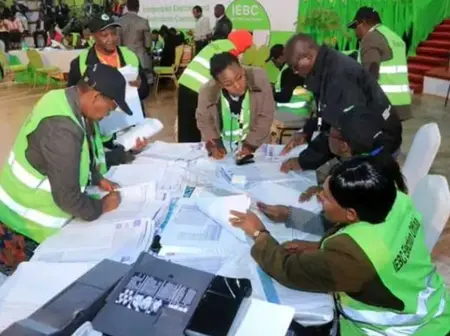
The dispute centres on the Elections (Amendment) Bill, 2024, which seeks to change provisions governing the transmission, tallying, verification and announcement of election results.
At the heart of the disagreement is whether election results announced at polling stations should be livestreamed under a mandatory legal requirement or whether the law should instead provide alternative ways for candidates, agents and observers to document the process.
The Senate and National Assembly have taken different positions on the proposed changes, creating a legislative standoff that could complicate the implementation of electoral reforms before Kenyans head to the polls on August 10, 2027.
The National Assembly rejected a Senate proposal seeking to remove a clause connected to livestreaming and documentation of election results. By deleting Clause 22 from the Senate-approved version of the Bill, MPs effectively retained the contentious livestreaming provision, triggering renewed disagreement between the two Houses.
Senators, however, have criticised the National Assembly's decision, arguing that the amendments do not adequately address previous court rulings concerning Section 39 of the Elections Act, particularly provisions relating to livestreaming election results.
The Senate Justice, Legal Affairs and Human Rights Committee, chaired by Bomet Senator Hillary Sigei, raised concerns over the changes and recommended that the Senate reject the National Assembly's proposed deletion of Clause 22.
The committee argued that the amendments failed to adequately address court decisions that had invalidated parts of the existing law. It also maintained that the proposed changes should respect agreements reached during the National Dialogue Committee (NADCO) process.
The Senate had proposed replacing the livestreaming requirement with provisions allowing candidates, their agents, election observers and other authorised persons to record and document the tallying, announcement and declaration of results at polling stations and tallying centres.
The proposed arrangement would allow election stakeholders to independently document the process, but the two Houses remain divided over how the provision should be incorporated into the law.
The disagreement also touches on the electronic transmission of presidential election results from polling stations to constituency and national tallying centres, a process that has remained central to discussions about election transparency and accountability.
The Elections (Amendment) Bill was published on May 7, 2024, and introduced in the Senate in July of the same year. Senators passed it with amendments on December 5, 2024, before forwarding it to the National Assembly for consideration.
The National Assembly subsequently passed its amendments on October 22, 2026, returning the Bill to the Senate for reconsideration.
The dispute comes with approximately eight months remaining before the August 10, 2027, General Election, placing pressure on lawmakers to resolve the disagreements in time for the IEBC to prepare for the next nationwide vote.
Source
Leave a Reply