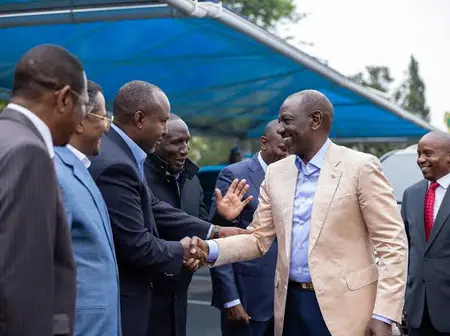
Momanyi-Hiltsley, who represents District 38A in the Minnesota House of Representatives, met with Nyoro and members of his team to explore areas of shared interest between Kenya and the United States.
According to details shared following the meeting, the talks centered on strengthening partnerships in education, healthcare, and economic development, alongside exchanging legislative insights and governance practices between the two countries.
Her visit to Nairobi has featured a series of high-profile engagements with Kenyan leaders and institutions, including leading a delegation from Minnesota to explore healthcare workforce partnerships and recruitment opportunities for Kenyan nurses.
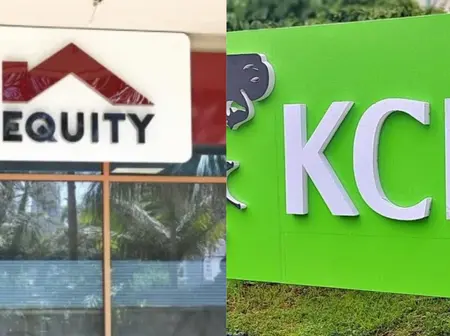
Kenya could get a banking giant with assets of approximately Ksh4.55 trillion if a merger proposal involving Equity Group Holdings and KCB Group becomes reality.
However, the idea raises questions about competition, customer costs and whether combining two profitable lenders is necessarily in the country’s economic interest.
The proposal was floated by Kiharu MP Ndindi Nyoro on November 19, 2026, as he assessed the performance of Kenya’s listed banking institutions and called for greater regional expansion.
“Merging the two to create Equity KCB Group should not be far-fetched. It remains a viable idea,” Nyoro said.
His proposal comes as both institutions report substantial earnings. Equity recorded Ksh71.5 billion in profit after tax for the nine months to September 2026, compared with KCB’s Ksh58.6 billion.
Their combined assets stood at approximately Ksh4.55 trillion, comprising Ksh2.15 trillion for Equity and Ksh2.4 trillion for KCB.
These figures suggest considerable financial strength. But they also raise a fundamental question: would Kenya benefit more from one powerful banking institution or two independent lenders competing for customers?
A combined Equity-KCB would have greater capacity to finance infrastructure, businesses and large corporate projects. Integrating digital platforms, branches and agency networks could also reduce duplicated operating costs.
However, those efficiencies would not automatically translate into cheaper loans or lower transaction fees.
Equity and KCB currently compete across retail banking, corporate lending, mortgages, payments and digital financial services. Combining their operations could reduce the alternatives available to borrowers and savers.
For customers, the concern is whether a larger institution would have less incentive to compete aggressively on lending rates, deposit returns and service charges.
The question is particularly important for small businesses, which depend on affordable credit to finance operations and expansion.
A merger could strengthen lending capacity, but without effective competition, there is no guarantee that customers would benefit from the institution’s increased financial muscle.
The proposed transaction would face scrutiny from Kenya’s competition and banking regulators.
The Competition Authority of Kenya (CAK) assesses mergers based on their effects on competition and public interest. Its assessment considers issues including market concentration, employment and the ability of small businesses to compete.
The Central Bank of Kenya would also exercise its sector-specific supervisory responsibilities, while the Capital Markets Authority could have a role because both institutions are publicly listed.
Kenya’s merger framework requires relevant regulatory authorisations before qualifying transactions can be implemented.
The question would therefore extend beyond whether the combined bank could compete internationally. Regulators would also have to examine whether its domestic market power could disadvantage consumers.
A merger would introduce difficult questions over ownership and corporate control.
Equity reported higher nine-month profits, while KCB had the larger asset base. Determining how much of the combined institution each bank’s shareholders would own would require detailed valuations rather than a simple comparison of earnings.
Leadership could become another sensitive issue, given Equity’s James Mwangi and KCB’s Paul Russo head the respective institutions.
Employees could also face restructuring as overlapping departments, management functions and branches are consolidated. Any resulting job losses or reduced access to physical banking services could undermine the public benefits of the transaction.
Nyoro argues that combining the lenders would strengthen their ability to pursue acquisitions in West and Southern Africa.
“Going forward, the financial giants must spread to West and Southern Africa and hunt for more money to bring back home,” he said.
He cited the contribution of international subsidiaries to the banks’ earnings, with 42 per cent of Equity’s profits and 33.4 per cent of KCB’s profits coming from operations outside Kenya, according to figures in his assessment.
However, international expansion brings currency, political and regulatory risks. A larger institution would also remain exposed to Kenya’s public debt, which Nyoro identified as a major threat to the banking sector.
“The only risk lies in how the country manages the public debt. A default would erode all the advantages,” he warned.
Neither Equity nor KCB has announced a formal merger agreement. There are no disclosed transaction terms, ownership arrangements or implementation timelines.
Any deal would require board and shareholder decisions, regulatory approval and potentially costly integration of technology, subsidiaries and operations.
The central dilemma is whether Kenya should prioritise creating a continental banking champion or preserving competition between two established lenders.
Ultimately, the success of such a merger should not be measured by the size of its balance sheet alone, but by whether it delivers better banking services, affordable credit and sustainable economic benefits for Kenyans.
This is after Chinga Member of County Assembly (MCA) Kiruga Thuku defected President Ruto's party to join the People's Party of Kiharu Member of Parliament Ndindi Nyoro as he eyes Othaya parliamentary seat in the 2027 general elections.
This could be the first President Ruto's ally in Mt Kenya region not to join DCP but rather People's Party. It shows Nyoro's party is gaining momentum in the region as election approaches. However, on the side of the head of state, it shows how much leaders in the mountain side have lost hope in the ruling party.
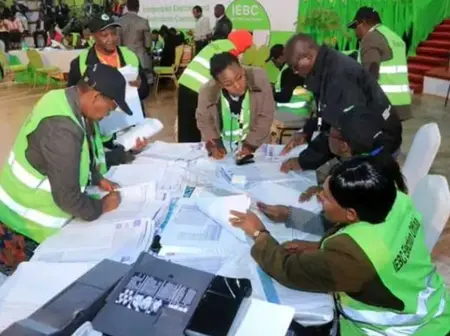
The dispute centres on the Elections (Amendment) Bill, 2024, which seeks to change provisions governing the transmission, tallying, verification and announcement of election results.
At the heart of the disagreement is whether election results announced at polling stations should be livestreamed under a mandatory legal requirement or whether the law should instead provide alternative ways for candidates, agents and observers to document the process.
The Senate and National Assembly have taken different positions on the proposed changes, creating a legislative standoff that could complicate the implementation of electoral reforms before Kenyans head to the polls on August 10, 2027.
The National Assembly rejected a Senate proposal seeking to remove a clause connected to livestreaming and documentation of election results. By deleting Clause 22 from the Senate-approved version of the Bill, MPs effectively retained the contentious livestreaming provision, triggering renewed disagreement between the two Houses.
Senators, however, have criticised the National Assembly's decision, arguing that the amendments do not adequately address previous court rulings concerning Section 39 of the Elections Act, particularly provisions relating to livestreaming election results.
The Senate Justice, Legal Affairs and Human Rights Committee, chaired by Bomet Senator Hillary Sigei, raised concerns over the changes and recommended that the Senate reject the National Assembly's proposed deletion of Clause 22.
The committee argued that the amendments failed to adequately address court decisions that had invalidated parts of the existing law. It also maintained that the proposed changes should respect agreements reached during the National Dialogue Committee (NADCO) process.
The Senate had proposed replacing the livestreaming requirement with provisions allowing candidates, their agents, election observers and other authorised persons to record and document the tallying, announcement and declaration of results at polling stations and tallying centres.
The proposed arrangement would allow election stakeholders to independently document the process, but the two Houses remain divided over how the provision should be incorporated into the law.
The disagreement also touches on the electronic transmission of presidential election results from polling stations to constituency and national tallying centres, a process that has remained central to discussions about election transparency and accountability.
The Elections (Amendment) Bill was published on May 7, 2024, and introduced in the Senate in July of the same year. Senators passed it with amendments on December 5, 2024, before forwarding it to the National Assembly for consideration.
The National Assembly subsequently passed its amendments on October 22, 2026, returning the Bill to the Senate for reconsideration.
The dispute comes with approximately eight months remaining before the August 10, 2027, General Election, placing pressure on lawmakers to resolve the disagreements in time for the IEBC to prepare for the next nationwide vote.
Former Interior Cabinet Secretary Fred Matiang’i is preparing to visit Kirinyaga County alongside two influential political figures as opposition leaders continue efforts to expand their influence in the Mt Kenya region ahead of the 2027 General Election.
Matiang’i announced that he would travel to the county on Sunday, November 22, 2026, accompanied by People's Liberation Party (PLP) leader Martha Karua and PPK party leader Ndindi Nyoro.
The planned tour comes shortly after Matiang’i received a significant reception during his recent visit to Kisii, an event that attracted public attention and generated discussions about his growing political ambitions.
According to the announcement, the delegation will undertake several activities across Kirinyaga, starting with a church service before visiting different towns to engage residents.
Their first destination will be ACK Church of Faith in Ithare-ini, where the three leaders are expected to participate in a religious gathering. From there, they will proceed to Kimunye Town, followed by Kutus Town and Ngurubani Town, where they are scheduled to address members of the public.
The involvement of Karua and Nyoro has attracted additional interest, particularly as opposition figures continue exploring ways to establish stronger political connections within the Mt Kenya region.
Matiang’i described the planned engagement as an opportunity to interact with residents, strengthen relationships and exchange ideas about the country's future.
The visit also comes at a time when political activities are gradually intensifying across Kenya, with leaders from different political formations working to establish alliances and increase their grassroots support ahead of the next general election.
For the opposition, expanding its presence in Mt Kenya remains an important political objective, given the region's influence in national electoral outcomes.
The joint appearance by Matiang’i, Karua and Nyoro is therefore expected to attract attention from political observers monitoring the opposition's mobilisation efforts and emerging partnerships ahead of 2027.
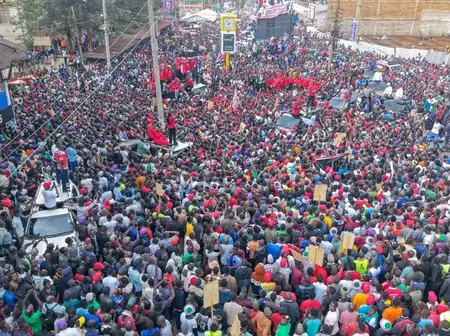
Amisi’s convoy moved slowly through the streets of the Trans Nzoia town as supporters turned out to catch a glimpse of the lawmaker and the leaders accompanying him.
The visit marked his return to his home area in his new capacity as party leader.
Among those reported to have joined Amisi were opposition figures Martha Karua, former Chief Justice David Maraga, Prof. George Wajackoyah, businessman Jimmy Wanjigi and Kiharu MP Ndindi Nyoro, alongside other leaders.
Their presence brought together politicians from parties and political backgrounds, with the event providing an opportunity for them to engage residents.
The homecoming follows Amisi’s efforts to build the profile of PM Party as political activity gathers pace ahead of the 2027 General Election.
The party had earlier announced that its November 17 tour would pass through Soy, Matunda, Moi’s Bridge, Kapkoi and Sirende before concluding at Kitale Town Main Stage.
The gathering comes amid heightened political mobilisation across the country, as parties and leaders position themselves ahead of the 2027 elections.
Kiambu Governor Kimani Wamatangi has outlined his administration’s achievements, seeking to convince residents to give him a second term in the 2027 general election.
Wamatangi, who is expected to defend his seat, cited increased enrolment in early childhood education and the construction of hospitals across the county as some of the key milestones of his administration.
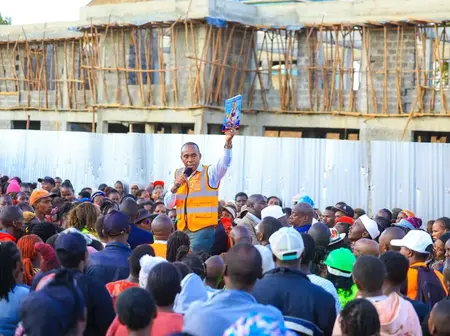
Speaking to residents of Kamenu Ward in Thika Town constituency, the governor said he was using a new booklet to account for promises he made before the 2022 elections and the progress achieved since taking office.
He recalled visiting the area in 2021 with a manifesto detailing what he intended to accomplish if elected governor.
“Remember I came here the year 2021 carrying a booklet called Wamatangi’s manifesto. I had written all what I will do when you elect me,” he said.
The governor said the new publication was a record of his administration’s performance, comparing the commitments made in the original manifesto with projects implemented during his tenure.
“You had not made me governor in 2021. You elected me in 2022. Now, after that, I have taken this booklet; after four years; what I had said in the first booklet, I have written in the new one,” he said.
Wamatangi singled out growth in early childhood education enrolment, saying the number of children attending nursery schools in Kiambu had increased significantly since he assumed office.
According to the governor, the county had about 30,000 children enrolled in nursery schools in 2022. The figure has since risen to 52,000, representing an increase of more than 22,000 learners.
“In 2022, we did a tally of the number of children in nursery schools in Kiambu County. We had 30,000 children. For three years that Wamatangi has been at the helm, we have 52,000 children in schools,” he said.
He attributed the increase to interventions by his administration, saying more children had benefited from expanded access to early childhood education.
On healthcare, Wamatangi said he had prioritised the construction and improvement of hospitals to ensure residents in every ward could access comprehensive medical services closer to their homes.
He cited ongoing hospital projects in Gatuanyaga and Munyu, adding that work at Maguguni Hospital was progressing while Ngoliba Hospital had been completed.
“At Gatuanyaga I am building a hospital. At Munyu, I am building a hospital; Maguguni hospital is ahead of this, I have finished Ngoliba hospital,” he said.
The governor further claimed that his administration had undertaken the construction of 26 hospitals across Kiambu County, describing the projects as part of efforts to strengthen healthcare delivery.
He said the facilities were intended to reduce the distance residents travel to seek treatment while improving access to essential medical services.
Wamatangi appealed to residents to support his administration for another term, saying he needed more time to complete ongoing projects and fulfil the promises contained in his manifesto.
“When 2027 comes, I will come to request you to vote for me so that we can complete the work,” he said.