Kenya’s selection of a US-led consortium for the mineral-rich Mrima Hill project raises questions over who controls the resources, how much the country will earn and whether local communities will benefit.
Kenya’s potentially Ksh7.8 trillion mineral opportunity at Mrima Hill in Kwale County has attracted international investors, but the selection of an American consortium raises a bigger question: who will ultimately benefit from the country’s mineral wealth?
On Thursday, November 19, 2026, the government named Frontier Minerals Consortium the preferred bidder for the Mrima Hill niobium and rare earth minerals project, beating seven other bidders, including companies from China and Australia.
The reported US$60 billion value of the deposits translates to approximately Ksh7.8 trillion at an indicative exchange rate of Ksh130.09 per dollar.
However, this represents estimated underground mineral wealth, not confirmed commercial reserves, government revenue or money Kenya is guaranteed to receive.
The actual economic returns will depend on recoverable mineral quantities, extraction costs, international prices, taxation, royalties and agreements negotiated with investors.
Frontier Minerals brings together three American companies: Bunker Hill Mining Corp, American Resources Corporation and ReElement Technologies Corporation.
The consortium proposes establishing mineral processing and refining facilities in Kenya, potentially allowing the country to capture more value instead of exporting raw minerals.
Brad Barnett of Frontier Minerals said the consortium wanted Kenya to retain greater economic benefits through domestic processing and refining.
“We intend to create lasting opportunities for Kenyan workers, businesses and the wider economy through capacity-building and targeted investment, while prioritising environmental management and performance,” Barnett said.
However, important financial details remain unclear, including proposed royalty payments, taxation arrangements, Kenyan participation and ownership of the processing infrastructure.
Who will control the refined minerals, negotiate international sales and determine where the final products are exported?
Building processing facilities locally does not automatically mean Kenya will control the resulting supply chain.
The government must demonstrate how the investment will translate into public revenue, technology transfer, local businesses and skilled employment.
The Mrima Hill project comes as Washington intensifies efforts to reduce dependence on China for critical minerals.
China dominates the processing of several important minerals, making alternative supply chains increasingly important to American manufacturing, electric vehicle and defence industries.
The selection of Frontier Minerals therefore represents more than a mining investment. It also allows American-linked companies to participate in developing a strategically important mineral deposit.
While domestic refining could strengthen Kenya’s industrial capacity, there is a risk that foreign investors could retain control over financing, technology, intellectual property and international marketing.
Kenya could consequently move from exporting raw minerals to processing them locally without necessarily controlling the most profitable parts of the supply chain.
The government must negotiate arrangements that guarantee technology transfer, local participation and meaningful economic returns while preserving its ability to engage investors from different international markets.
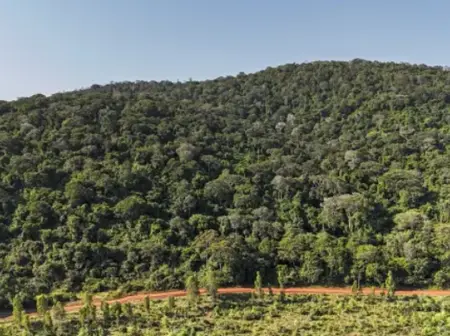
Beyond the financial and geopolitical stakes, the project faces concerns over the protection of Mrima Hill’s forest and cultural heritage.
The 390-acre forest in Kwale County has deep ancestral and spiritual significance to the local Digo community. Residents have raised concerns about potential environmental damage, loss of livelihoods and whether surrounding communities will benefit from mining.
Mrima Hill has been recognised as a national monument since 1992, adding to the heritage and environmental considerations surrounding development.
The government and consortium must demonstrate how exploration and eventual mining can respect community rights and comply with environmental protections.
Residents also need clarity on compensation, employment, land access and potential environmental damage.
The tender has attracted objections from unsuccessful bidders, including Australia’s RareX, whose consortium with Iluka Resources reportedly ranked second.
RareX claims that Frontier Minerals failed to submit its expression of interest within the prescribed deadline and intends to challenge the proposed award.
The company argues that its consortium should have been selected as the highest-scoring eligible bidder.
These allegations have not been independently established. Kenya’s government maintains that the procurement process was open and transparent.
The dispute raises questions about the evaluation criteria and whether all bidders were subjected to the same submission requirements.
Meanwhile, Kenya’s mining ministry considers the sector an important part of its strategy to diversify the economy beyond tourism, agriculture and financial services.
However, Frontier’s selection does not mean commercial mining can begin immediately. The consortium must still obtain the necessary prospecting licence and satisfy regulatory, technical, environmental and community engagement requirements.
For Kenya, the opportunity is significant, but success will depend on enforceable agreements that guarantee fair public revenue, local participation, technology transfer and environmental accountability.
The real measure of success will not be the Ksh7.8 trillion estimated value underground, but how much wealth Kenya retains and whether communities closest to the resource benefit from its development.
Leave a Reply