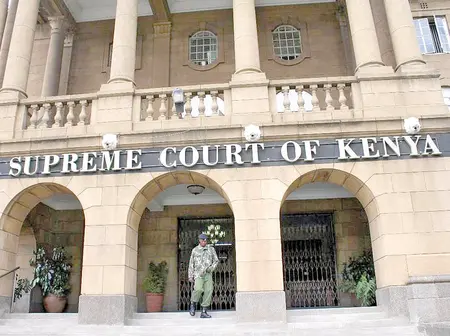
Chief Justice Martha Koome made the revelations on Friday, November 20, 2026, during the presentation of the 2025/2026 State of the Judiciary and Administration of Justice Report.
Lands Cabinet Secretary Alice Wahome formally handed over three title deeds to the Judiciary, covering the Supreme Court building and two other parcels of land.
Speaking during the ceremony, Koome recalled how individuals who had occupied part of the Judiciary's property challenged the institution to take legal action if it wanted the land back.
She expressed disbelief at the audacity of the occupants, saying they had even questioned where the Judiciary would seek justice over the disputed property.
Koome credited President William Ruto's intervention with helping resolve the ownership dispute after the Judiciary raised concerns about the land.
How the dispute started
The controversy surrounding the neighbouring parcel dates back several years.
In May 2015, former Chief Registrar of the Judiciary Anne Amadi informed Parliament that land reserved for the expansion of the Supreme Court had been registered under a private individual's name.
The property was reportedly being used by traders, complicating efforts by the Judiciary to reclaim it.
The issue remained unresolved for years, prompting further concerns from the institution's leadership.
During the 2025 State of the Judiciary presentation, Koome again highlighted the ownership problem.
Deputy President Kithure Kindiki subsequently instructed Wahome to address the matter and ensure the Judiciary obtained the necessary ownership documents before Christmas 2025.
Why the Supreme Court lacked ownership documents
Wahome disclosed that officials at the Lands Ministry discovered that even the parcel hosting the Supreme Court building lacked a title deed when they began processing the neighbouring property's documentation.
She raised concerns about the security implications of having commercial activities, including parking operations, on land adjoining the country's highest court.
Although she did not conclusively establish whether the neighbouring property had been illegally acquired, she acknowledged that the Judiciary had been unable to access it.
The new documents have been registered under the Judicial Service Commission.
https://peopledaily.digital/news/how-land-grabbers-took-over-property-belonging-to-kenyas-highest-court
Leave a Reply