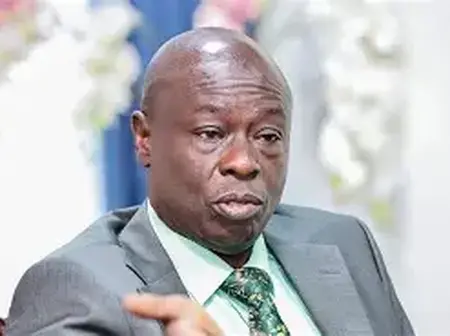
The poll indicates that 43 per cent of opposition supporters believe Gachagua is responsible for the disagreements affecting the opposition camp as political leaders continue struggling to agree on a common political direction ahead of the 2027 General Election.
President William Ruto and his United Democratic Alliance (UDA) Party follow with 15 per cent, while Nairobi Senator Edwin Sifuna accounts for seven per cent. Wiper Party leader Kalonzo Musyoka received six per cent.
The findings highlight the growing disagreements within the opposition, where several influential politicians have expressed interest in shaping the coalition's leadership and determining who should challenge President Ruto in the next general election.
Gachagua, who leads the Democracy for the Citizens Party (DCP), has become one of the most vocal critics of the current administration. Since his removal from the Deputy President's office in October 2024, he has increasingly positioned himself as a central figure in opposition politics.
However, his growing political influence has also attracted debate over the direction and leadership of the opposition coalition. Different leaders have expressed varying positions on how the alliance should be organised and when it should settle on a presidential candidate.
The question of who should lead the opposition ticket remains one of the major challenges facing the political camp. Leaders such as Gachagua, Kalonzo Musyoka, Fred Matiang'i and Edwin Sifuna have all featured in discussions about the coalition's future.
Kalonzo has repeatedly called for opposition unity, arguing that political parties must work together if they hope to defeat Ruto in 2027. However, disagreements over the selection of a presidential candidate and the distribution of political responsibilities have continued to complicate the unity efforts.
Sifuna has also emerged as an influential figure, particularly among supporters seeking a stronger opposition movement. His growing national profile has added another dimension to discussions about the coalition's leadership.
Meanwhile, President Ruto and UDA have continued defending the government's development agenda while monitoring the divisions within the opposition.
The 15 per cent who identified Ruto and UDA in the TIFA findings could suggest that some opposition supporters view the ruling party's political influence as a factor contributing to disagreements within their camp.
Nevertheless, the figures do not establish that any of the named politicians directly caused the divisions. They represent respondents' opinions about responsibility for the disagreements.
For the opposition, the challenge will be to manage competing political ambitions, agree on a common agenda and present a united front capable of attracting voters from different parts of the country.
Although the survey places Gachagua at the top of those blamed for the disagreements, whether the opposition can overcome its internal differences remains a key question as the election approaches.
Leave a Reply