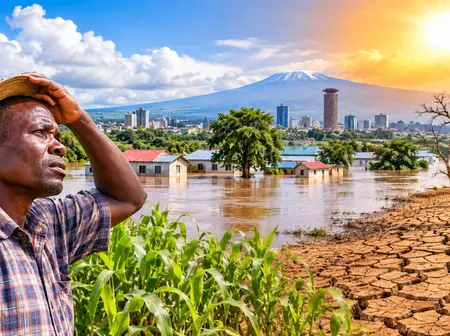
Triggered by the periodic warming of sea surface temperatures in the central and eastern equatorial Pacific Ocean, El Niño disrupts global wind and rainfall circulation.
When combined with human-induced global warming and local systems such as the Indian Ocean Dipole, this natural cycle amplifies weather volatility rather than producing uniform rainfall nationwide.
According to the Kenya Meteorological Department (KMD), Kenyans should understand that El Niño does not simply translate to continuous rain everywhere.
While many regions face above-average short rains during the October–November–December season, several counties—particularly along the Coast and in arid northern areas—are simultaneously experiencing warmer-than-average daytime temperatures exceeding 35°C.
Furthermore, intense downpours in highland catchment areas can trigger severe downstream riverine flooding even in communities receiving minimal local rainfall.
For households, farmers, and county authorities, preparedness spans four critical areas. First, urban centres with strained drainage and low-lying river basins face heightened risks of flash floods, landslides, and infrastructure damage.
Second, while rains replenish dams and regenerate pasture, excessive downpours can waterlog soils, disrupt ongoing harvests, and increase post-harvest aflatoxin contamination.
Third, stagnant floodwaters and contaminated supplies heighten the threat of waterborne and vector-borne illnesses, including cholera, typhoid, malaria, and Rift Valley fever.
Close monitoring of regular KMD advisories, clearing drainage channels, and securing post-harvest storage remain essential safeguards.
What are your thoughts about this article? Share your reactions in the comment section and don't forget to share and follow for more updates.
https://peopledaily.digital/news/el-nino-what-kenya-needs-to-know-as-the-world-gets-hotter
Leave a Reply