The World Meteorological Organization (WMO) has issued an urgent warning over accelerating global temperatures, revealing in its State of the Climate Update 2026 that this year is set to rank among the four warmest years ever recorded.
Released on the opening day of the UN Climate Change Conference in Antalya, Türkiye, the science-based assessment underscores a rapidly warming planet, noting explicitly that the current state of the climate is “off the charts.” According to the agency’s findings, the past 12 years are now on track to stand as the twelve warmest years on record.
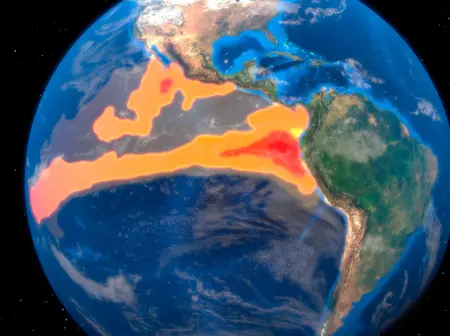
A major driver behind the surging heat is the El Niño weather pattern, which has steadily strengthened since August and is projected to reach record intensity by December 2026. In a statement shared on X on Monday, November 16, 2026, the WMO noted that global average surface temperatures are expected to climb even further toward the end of the year as the phenomenon develops.
By releasing vast amounts of trapped heat from the ocean into the atmosphere, El Niño threatens to amplify climate hazards worldwide, elevating the risk of severe heatwaves, prolonged droughts, and destructive heavy rainfall well into 2027. Data compiled through September 2026 shows that the global average surface temperature stood at 1.47°C above the 1850–1900 pre-industrial baseline—a figure that does not yet capture the most recent late-year warming effects of El Niño, as rising greenhouse gas concentrations continue to disrupt Earth’s energy balance.
The WMO emphasized that the warming trend extends far beyond land surfaces, with sea surface temperatures and overall ocean heat reaching unprecedented levels. Preliminary observations collected through July indicate a tenth consecutive year of record ocean heat content.
At the same time, the global mean sea level has climbed to its highest mark since satellite measurements began in 1993, while glaciers and polar ice continue to retreat across colder regions of the globe. Warning that extreme weather events carry staggering human and economic costs, the agency stressed that timely meteorological forecasts and early warning systems remain critical to guiding life-saving action.
Leave a Reply