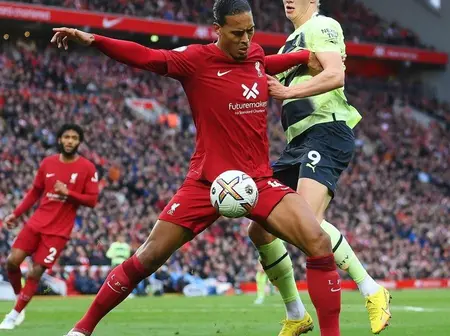
Football has changed significantly over the years, and defenders have had to evolve alongside the game. Gone are the days when a centre-back only needed physical strength and the ability to clear dangerous balls. Modern defenders must read the game, handle technically gifted attackers, contribute to attacking moves, and make intelligent decisions under pressure.
They also need the physical and mental qualities to maintain high performance throughout 90 minutes. At the highest level, these demands separate dependable defenders from truly exceptional ones. But what exactly makes a modern defender so difficult to beat?
One of the most important qualities of an elite defender is the ability to read the game. Rather than waiting for attackers to make their moves, intelligent defenders anticipate danger and position themselves to prevent opportunities from developing.
Good positioning allows defenders to close passing lanes, track attacking runs, and maintain the right distance from opponents. It also helps them avoid unnecessary challenges that could leave gaps in the defensive line. For example, a centre-back who recognises an opponent's intention to play a through ball can adjust their position before the attacker releases the pass.
Modern defenders must also understand their team's tactical system. They need to know when to push forward, drop deeper, cover teammates, or step into midfield. This awareness makes them difficult to exploit, even when opponents attempt to create numerical advantages in dangerous areas.
Modern attackers possess excellent dribbling skills, quick footwork, and the confidence to take defenders on. Consequently, defenders must develop the ability to handle one-on-one situations without panicking or committing unnecessary fouls.
Effective tackling requires patience, timing, and precision. Instead of rushing towards an opponent, experienced defenders often slow down the attacker's movement, narrow their available options, and wait for the right moment to challenge for the ball.
Body positioning also plays an important role. Defenders can guide attackers towards less dangerous areas by adjusting their stance and controlling the space around them. They must also recognise when to stay on their feet rather than attempt a risky sliding tackle.
The best one-on-one defenders combine aggression with discipline. They know when to challenge, when to delay an attack, and when to rely on their teammates for support.
Physical attributes remain essential in modern defending. Even the most tactically intelligent defender can struggle against quick attackers if they lack the speed to recover or the strength to compete in physical battles.
Pace allows defenders to track forward runs, recover their positions, and deal with counterattacks. This becomes particularly important for teams that maintain a high defensive line, where opponents frequently attempt to exploit the space behind the back four.
Strength helps defenders compete for possession, protect the ball, and challenge opponents during aerial duels. However, physical dominance involves more than simply having a powerful frame. Balance, agility, coordination, and body control also help defenders remain competitive against technically gifted forwards.
Stamina matters just as much. Modern football demands constant movement, particularly for full-backs who regularly support attacking moves before recovering defensively. Strong physical conditioning helps defenders maintain their concentration and effectiveness throughout the match.
The modern defender must do more than prevent opponents from scoring. They also play an important role in helping their teams control possession and build attacks from the back.
Centre-backs and full-backs frequently receive the ball under pressure, making composure and technical ability essential. A defender who panics when opponents press aggressively can easily surrender possession in dangerous areas.
Accurate short passing helps teams maintain possession, while progressive passes allow them to bypass opposition midfielders and create attacking opportunities. Some defenders also possess the confidence to carry the ball forward, forcing opponents to leave their defensive positions and create space for teammates.
This ability has become particularly valuable in teams that favour possession-based football. Coaches increasingly expect defenders to contribute to their attacking structures without neglecting their primary responsibilities.
Defending requires coordination, and even talented individuals can struggle when they fail to communicate effectively. Modern defenders must constantly exchange information with their teammates to maintain defensive organisation.
Centre-backs often take responsibility for directing the defensive line, identifying approaching threats, and ensuring teammates maintain appropriate positions. Full-backs must communicate with wingers and midfielders to manage overlapping runs and prevent opponents from creating overloads.
Communication also becomes crucial during transitions. When a team loses possession, defenders must quickly organise their teammates and identify potential threats before opponents exploit the available space.
Leadership strengthens these qualities. Experienced defenders often provide reassurance during difficult periods, encourage teammates after mistakes, and maintain discipline when opponents increase the pressure. Their influence can help an entire defensive unit perform more consistently.
Defending demands constant concentration because one mistake can change the outcome of a match. Modern defenders must remain mentally alert, even when their teams dominate possession or spend long periods away from their own penalty area.
Quick decision-making helps them respond to unpredictable situations. They must determine whether to intercept a pass, challenge an attacker, hold their position, or clear the ball. Making the wrong choice can expose teammates and create scoring opportunities for opponents.
Mental strength also helps defenders recover from mistakes. Rather than allowing one poor challenge or misplaced pass to affect their confidence, they must refocus and continue performing their responsibilities.
Composure under pressure separates dependable defenders from exceptional ones. The best players remain disciplined against aggressive attackers, manage difficult situations calmly, and make sensible decisions when the stakes are highest.
Modern defending requires a combination of tactical intelligence, technical ability, physical strength, and mental resilience. The best defenders anticipate danger, win individual battles, communicate effectively, and contribute to their teams' attacking play.
Ultimately, what makes a defender difficult to beat is not one outstanding attribute but the ability to combine these qualities consistently throughout a match.
Leave a Reply