Tag: Prince William

  • Government Breaks Silence on SHA Cancer Changes, Explains What Happens to KSh800,000 Cover

    Government Breaks Silence on SHA Cancer Changes, Explains What Happens to KSh800,000 Cover

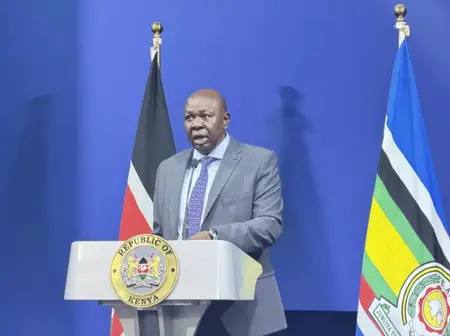
    Government Spokesperson Charles Owino said the reforms were aimed at improving accountability, reducing unnecessary medical expenses and ensuring patients receive quality healthcare without exhausting their insurance benefits prematurely.

    Speaking during a media briefing at the Government Spokesperson's Media Centre in Nairobi on Thursday, November 26, Owino also addressed questions surrounding the controversial two per cent Health Information Management System (HIMS) utilisation fee.

    He said the government remained committed to complying with court directives concerning the levy following a High Court ruling in Vihiga that declared the charge on SHA pre-authorised claims invalid.

    However, the court suspended the declaration for 120 days, allowing the Health Cabinet Secretary an opportunity to consider subjecting the fee to public participation, if advised to do so.

    Owino maintained that digital health systems should support healthcare facilities rather than introduce financial difficulties for providers.

    "Digital health systems must facilitate healthcare delivery and must not undermine the financial sustainability of the healthcare facilities," he said.

    The government also defended the financing arrangement behind the Digital Health Superhighway, a major programme expected to transform how medical information and services are managed across the country.

    The 10-year project was launched in February 2025 and is being implemented by a consortium comprising Safaricom, Apeiro Limited and Konvergenz Network Solutions.

    It is projected to cost KSh104.8 billion.

    According to Owino, the arrangement operates through a service-based model rather than the conventional purchase of information technology equipment.

    Under the agreement, the consortium finances the development, installation, maintenance and technical support of the digital infrastructure, while the government makes payments for services delivered through monthly deductions from SHA funds.

    The arrangement covers equipment, internet connectivity, cloud hosting, cybersecurity, technical support, staff training and system maintenance.

    The service provider is also responsible for upgrading and maintaining the infrastructure throughout the contractual period. At the end of the 10 years, the system is expected to be handed over to the government.

    Owino explained that the programme was designed to replace fragmented, paper-based healthcare processes with an integrated digital platform.

    The infrastructure is expected to support biometric patient identification, electronic processing of medical claims, secure sharing of medical records, authentication of healthcare providers and registration of medical facilities.

    It will also support emergency response services, including the National Ambulance Dispatch Centre.

    The system is expected to facilitate the administration of three major health financing programmes: the Social Health Insurance Fund, Primary Healthcare Fund and Emergency, Critical and Chronic Illness Fund.

    The government believes the changes will reduce administrative delays, strengthen fraud prevention and improve the timely reimbursement of healthcare facilities.

    Owino said the success of the investment would ultimately be judged by improvements in patient outcomes, healthcare delivery and the responsible use of public funds.

    On cancer treatment, the government sought to reassure patients that the approved benefit had not been reduced despite recent changes to treatment approvals and reimbursement arrangements.

    Owino confirmed that the KSh800,000 cancer benefit per patient remained unchanged.

    The package consists of KSh400,000 provided through the Social Health Insurance Fund and another KSh400,000 through the Emergency, Critical and Chronic Illness Fund.

    He explained that the review followed complaints about differences in the amounts hospitals charged for similar cancer treatments.

    In some cases, patients reportedly exhausted their available benefits before completing their treatment because of variations in hospital charges.

    The revised approach is intended to standardise treatment costs, align medical services with national cancer treatment guidelines and ensure the available funds cover patients more effectively.

    The changes were developed through consultations led by the Ministry of Health's National Cancer Control Programme.

    The discussions involved oncologists, pharmacists, nurses, healthcare providers and relevant professional associations.

    Under the revised arrangements, patients seeking cancer treatment through SHA must meet the approved treatment guidelines, tariffs and eligibility requirements.

    Hospitals are also required to explain any additional charges for services falling outside the approved benefit package before treatment begins.

    The government maintained that patients should not be charged separately for services already covered by SHA.

    The latest clarification comes amid public scrutiny of SHA's implementation, particularly concerns about medical charges, treatment approvals and the financial sustainability of the new health insurance system.

    Source
  • Government Responds to SHA Controversies, Clarifies Sh800,000 Cancer Treatment Cover

    Government Responds to SHA Controversies, Clarifies Sh800,000 Cancer Treatment Cover

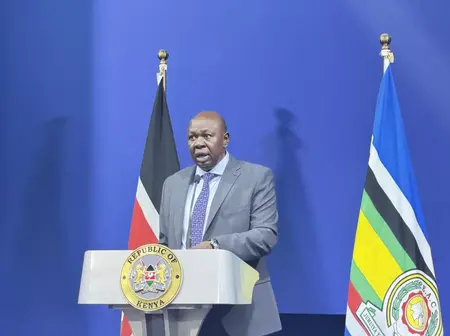
    Government Spokesperson Charles Owino said the State was working to improve the health financing system, strengthen accountability in hospitals and ensure patients do not incur unnecessary medical expenses.

    Speaking during a media briefing in Nairobi on Thursday, November 26, Owino addressed concerns surrounding the two per cent Health Information Management System (HIMS) utilisation fee.

    His remarks follow a High Court decision in Vihiga that declared the levy imposed on SHA pre-authorised claims invalid. However, the court suspended the declaration for 120 days, allowing the Health Cabinet Secretary an opportunity to consider public participation before taking further action.

    Owino maintained that the government would respect the court's directives while pursuing improvements to the country's digital healthcare infrastructure.

    He also defended the Sh104.8 billion Digital Health Superhighway programme, explaining that it operates through a service-based arrangement rather than a conventional government purchase of ICT equipment.

    The 10-year project, launched in February 2025, is being implemented by a consortium involving Safaricom, Apeiro Limited and Konvergenz Network Solutions.

    The government says the system will improve patient identification, electronic claims processing, medical records management and the tracking of medicines while reducing fraud in healthcare facilities.

    Meanwhile, Owino addressed public concerns over changes to cancer treatment approvals and payments under SHA.

    He clarified that the approved cancer treatment benefit of Sh800,000 per patient had not been reduced. The amount consists of Sh400,000 from the Social Health Insurance Fund and another Sh400,000 from the Emergency, Critical and Chronic Illness Fund.

    According to the spokesperson, the review was prompted by differences in hospital charges for similar cancer treatments, which sometimes forced patients to exhaust their benefits before completing treatment.

    The revised arrangements seek to standardise treatment costs and ensure patients receive maximum value from their available cover.

    Hospitals have also been directed to explain additional charges for services outside the approved package before administering treatment. Patients should not pay separately for services already covered by SHA.

    https://www.the-star.co.ke/news/2026-11-27-state-defends-sha-digital-fee-clarifies-cancer-treatment-costs

  • Ruto orders breastfeeding rooms at State House

    Ruto orders breastfeeding rooms at State House

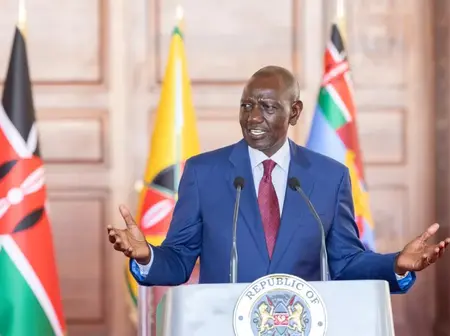
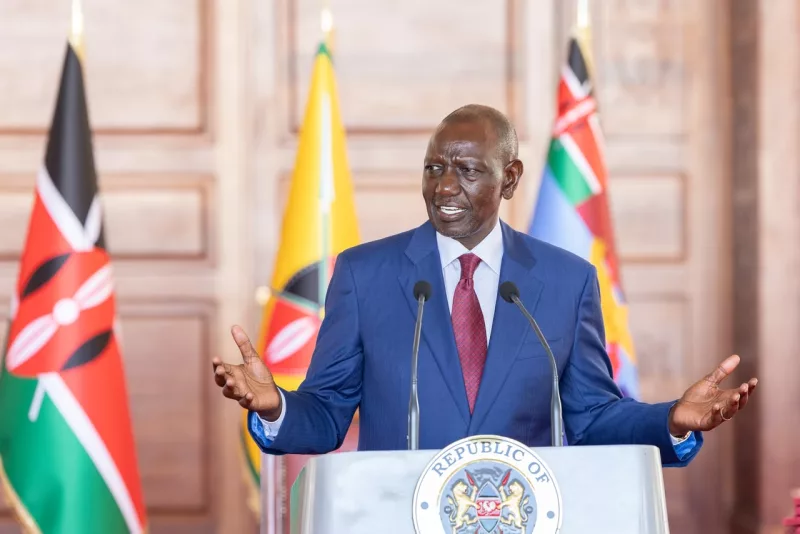
    President William Ruto has ordered the establishment of breastfeeding facilities and flexible working arrangements for mothers employed at State House following the signing of the Breastfeeding Mothers Bill, 2024, into law.

    Ruto said he would immediately direct State House staff to set up private and decent spaces where women can breastfeed their babies while continuing with their duties.

    He also wants working mothers with young children to have flexible schedules to help them balance their professional responsibilities with childcare.

    “I will immediately instruct staff in State House to make sure that we become an institution, I know there are those who may be ahead of us, to make sure that in this State House, there are spaces for those who work here, especially for mothers and women who work here, to find decent places for breastfeeding and all the other related activities,” he said.

    The President added that mothers should not face unnecessary strain as they combine work with raising children.

    “There must be flexibility to allow our mothers to undertake the noble responsibility of bringing up our children but also being able to attend to their work,” he said.

    The Breastfeeding Mothers Bill seeks to remove workplace barriers facing breastfeeding women and improve maternal and child health.

    The law requires employers to provide clean, private and appropriately equipped lactation spaces. It also provides for reasonable breastfeeding breaks and flexible working arrangements.

    It further requires owners, tenants and lessees of buildings accessible to the public, with an occupancy capacity of at least 50 people, to provide baby-changing facilities.

    Ruto congratulated MPs who supported the legislation and singled out nominated Senator Sabina Chege, who sponsored the Bill, for her role in pushing it through Parliament.

    “Let me congratulate Sabina Chege. I know this piece of legislation has been in Parliament for a while; thank you very much for the push and to all the MPs who supported the Bill,” he said.

    The Breastfeeding Mothers Bill was among six pieces of legislation Ruto signed at State House Thursday, November 26.

    The other five are the East African Development Bank (Amendment) Bill, 2026; Environmental Professionals Institute of Kenya Bill, 2024; Public Service Superannuation Scheme (Amendment) Bill, 2025; and two Sexual Offences (Amendment) Bills, of 2023 and 2025.

    The East African Development Bank amendment strengthens parliamentary oversight of public funds committed to the regional lender. It requires National Assembly approval before money is released from the Consolidated Fund to the bank.

    The Environmental Professionals Institute of Kenya law establishes a framework for registering, licensing and regulating environmental professionals. It also provides for professional standards, development and disciplinary processes.

    The Public Service Superannuation Scheme amendment changes the management of retirement savings and benefits. Among its provisions is an option for public servants on fixed-term contracts to transfer accrued gratuity into retirement savings accounts.

    The two Sexual Offences amendments address different areas of protection. The 2023 legislation provides for nationwide public awareness campaigns on sexual offences and programmes to protect the education rights of victims, including those affected by teenage pregnancies.

    The 2025 amendment seeks to ensure sexual offences are handled through formal judicial processes. It provides that agreements or settlements purporting to resolve such offences outside the courts will have no legal effect.

    The six laws cover workplace welfare, retirement benefits, environmental regulation, public finance oversight and the handling of sexual offences.